Ingredients
For the Braising Base
- 1 pound (450g) pork belly, cut into similar sized chunks
- 2 tablespoons tauchu (fermented soybean paste)
- 6 garlic cloves, chopped
- 1 tablespoon palm sugar, chopped
- 1 tablespoon soy sauce
- 1 ½ cups (360ml) water
- 2 medium potatoes, peeled and cut into chunks
Optional Garnishes
- Fried shallots
- Sliced green onions
- Cilantro (fresh coriander)
Equipment
- Heavy pot or Dutch oven
- Wooden spoon
- Chef’s knife
- Cutting board
Method
- Heat a heavy pot or Dutch oven over medium heat. Add the pork belly and brown the pieces lightly, turning them so several sides make contact with the pot.
- Add the garlic and cook briefly until fragrant. Stir in the tauchu and mash some of the beans against the pot with the spoon.
- Add the palm sugar, soy sauce and water. Stir well and scrape up any browned pieces from the bottom. Bring the liquid to a gentle simmer and cook until the pork begins to soften.
- Add the potatoes. Continue simmering gently until the pork is fork tender, the potatoes are cooked through and the liquid has reduced to a thick gravy.
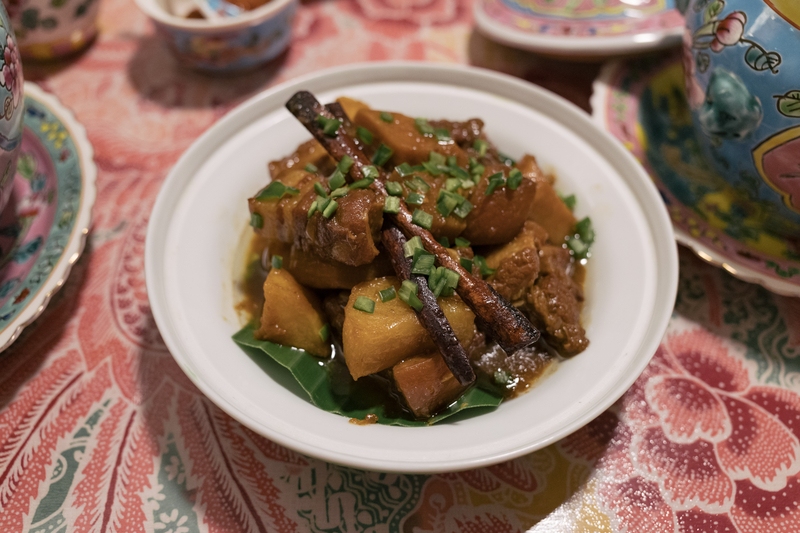
- Transfer the babi pongteh to a serving bowl. Add fried shallots, green onions or cilantro if desired. Serve hot with steamed rice.
Notes
- Tauchu brands vary in saltiness. I strongly recommend that you taste the cooked sauce before adding any salt.
- Add a little water if the sauce reduces before the pork is fully tender.
- Fresh pork is safe when it reaches at least 145°F (63°C), followed by a 3 minute rest. Pork belly in a braise should continue cooking until it's fork tender.
- Refrigerate cooled leftovers in an airtight container for up to 3 days.