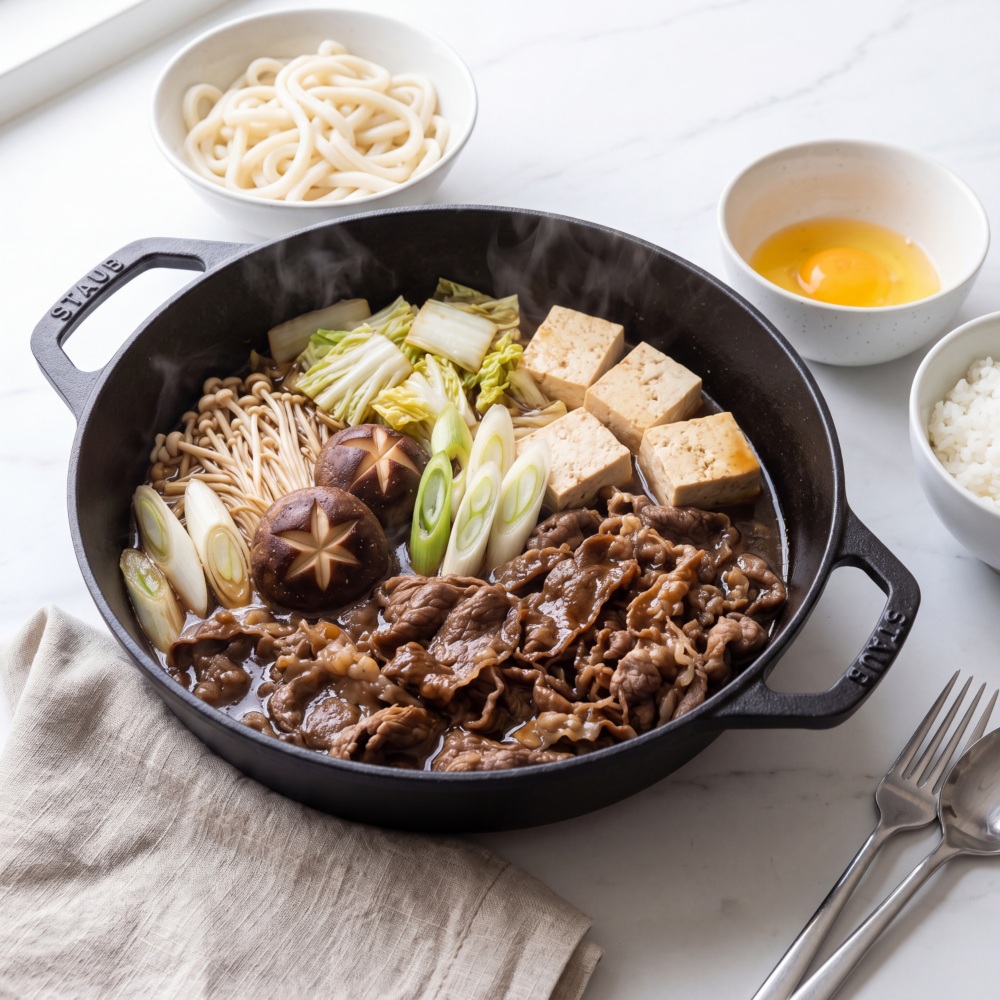
Ingredients
For the Sukiyaki
- 1 pound (450g) sukiyaki beef or ribeye, sliced very thinly
- 14 ounces (400g) firm tofu
- 1 pound (450g) napa cabbage (Chinese cabbage)
- 4 ounces (115g) fresh shiitake mushrooms
- 3 ½ ounces (100g) enoki mushrooms
- 4 green onions (spring onions)
- 1 tablespoon neutral cooking oil
- 2 packages cooked udon noodles, about 7 ounces (200g) each
For the Homemade Sukiyaki Sauce
- ½ cup (125ml) soy sauce
- ⅓ cup (80ml) sake
- ⅓ cup (80ml) mirin
- ⅓ cup (80ml) water
- 3 tablespoons white sugar
Optional Additions
- 1 carrot, sliced
- Baby corn
- Bean sprouts
- Chrysanthemum greens
To Serve
- 4 portions hot cooked white rice
- 4 pasteurized eggs, lightly beaten, optional
Equipment
- 12-inch cast iron skillet or shallow hot pot
- Chef’s knife
- Cutting board
- Liquid measuring cup
- Small saucepan
- Tongs or cooking chopsticks
- Small dipping bowls, optional
Method
- Combine the soy sauce, sake, mirin, water and sugar in a small saucepan. Heat gently, stirring until the sugar dissolves, then take the sauce off the heat.
- Cut the tofu into bite-size pieces. Chop the napa cabbage, trim the mushrooms and slice the green onions diagonally. Prepare any optional vegetables.
- Prepare the udon according to the package directions, drain and set aside.
- Heat the oil in a large shallow pot or 12-inch skillet over medium heat.
- Add about half the beef and cook briefly until browned around the edges.
- Pour in the sukiyaki sauce. Add the tofu, napa cabbage, shiitake, enoki, green onions and any optional vegetables.
- Bring the sauce to a gentle simmer and cook for about 5 minutes, or until the vegetables have softened.
- Add the remaining beef and simmer just until it is cooked through.
- Serve the beef, tofu and vegetables with hot white rice. Serve beaten pasteurized egg in individual bowls for dipping if you like.
- When most of the beef and vegetables have been eaten, add the cooked udon to the remaining sauce. Heat for a minute or two, then divide the noodles between the serving bowls.
Notes
- Beef sold specifically for sukiyaki or hot pot is already sliced to the right thickness. Thinly sliced ribeye or sirloin also works.
- Firm tofu is easier to handle in a skillet than silken tofu which tends to fall apart.
- Shirataki noodles are traditional in sukiyaki, but I deliberately left them out, as I'm not a fan! In this recipe, udon is served at the end as the finishing course instead. You can absolutely use shirataki though if you like them or you want a more low-carb or keto sukiyaki.
- If you don't have sake, replace it with the same amount of water or dashi.
- If the sauce gets too concentrated as the sukiyaki cooks, just add a small splash of water.
- If you're in the US or somewhere eggs aren't routinely considered suitable for eating raw, use pasteurized eggs if you're serving them for dipping.