Ingredients
For the Fish Stock
- 2 small whole mackerel, gutted and cleaned, heads on, about 1 ¼ pounds (570 g) total
- 6 ⅓ cups (1 ½ liters) water
For the Asam Laksa Paste and Broth
- 6 dried red chilies, stemmed, soaked in hot water for 20 minutes and drained
- 3 fresh red chilies, stemmed
- 4 shallots, peeled and quartered
- 3 garlic cloves, peeled
- ¾ inch (2 cm) fresh galangal, peeled and sliced
- 1 teaspoon ground turmeric
- 2 stalks lemongrass, tender inner parts sliced
- 1 fresh torch ginger bud, thinly sliced, divided
- 1 tablespoon (15 g) belacan, toasted
- ½ cup packed (about 1 ounce or 30 g) laksa leaves (daun kesum or Vietnamese coriander)
- 2 to 3 tablespoons standard tamarind concentrate, divided or to taste (not double-strength concentrate)
- 1 tablespoon granulated sugar, plus more to taste
- 1 ½ teaspoons kosher salt, plus more to taste
For the Noodles and Toppings
- 14 ounces (400 g) dried thick rice noodles, cooked according to the package directions
- 1 small cucumber, julienned
- 1 small red onion, thinly sliced
- ½ cup fresh mint leaves
- ½ cup fresh cilantro (coriander) leaves
- 1 cup thinly sliced fresh pineapple
- 2 limes, cut into wedges
- 1 fresh red chili, thinly sliced, optional
- ¼ cup hae ko or petis udang, thinned with enough hot water to make it pourable, optional
Method
- Put the mackerel and water in a large pot. Bring to a gentle boil, then reduce the heat and simmer for 8 to 10 minutes, or until the fish is opaque, flakes easily and reaches 145°F (63°C) at the thickest part. Transfer the fish to a plate and let it cool until it can be handled safely.
- Remove the flesh from the fish and check it carefully for small bones. Cover and set the flesh aside. Return the heads, skin and bones to the pot. Simmer gently for 15 minutes, then strain the stock through a fine-mesh sieve into a clean bowl. Discard the solids and rinse the pot.
- While the stock simmers, put the soaked dried chilies, fresh chilies, shallots, garlic, galangal, turmeric, lemongrass, half the torch ginger and the toasted belacan in a blender or food processor. Add ½ cup of the fish stock and blend to a smooth paste.
- Return the strained stock to the clean pot. Stir in the spice paste, laksa leaves, the remaining torch ginger, 2 tablespoons tamarind concentrate, sugar and salt. Bring to a simmer and cook uncovered for 15 minutes, stirring occasionally.
- Add the flaked mackerel and simmer for 5 minutes. Taste the broth. Add some or all of the remaining tablespoon of tamarind concentrate if it needs more sourness, then adjust the sugar and salt as needed.
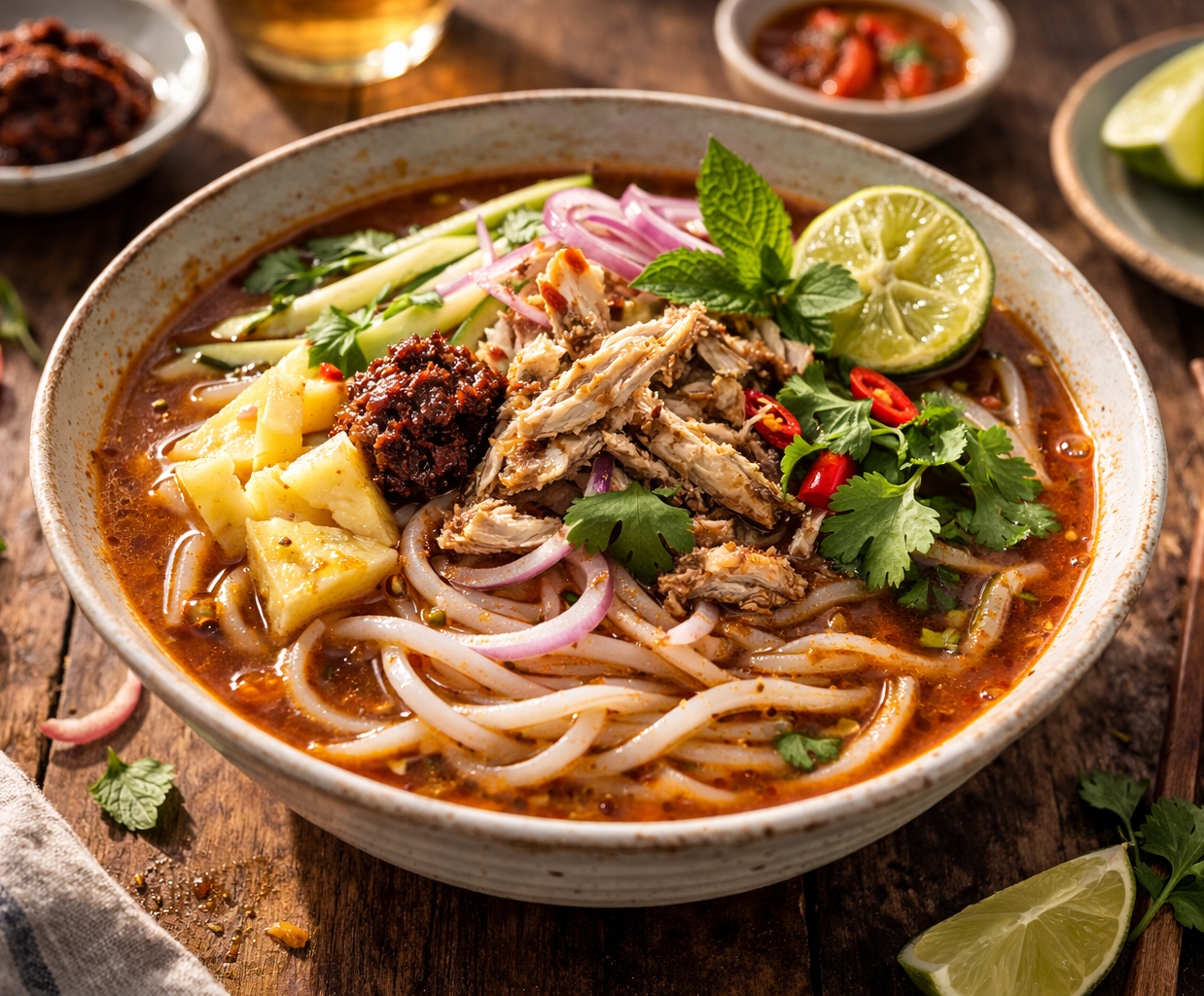
- Divide the cooked rice noodles among 4 bowls. Ladle the fish broth over the noodles, making sure each serving gets flaked mackerel. Top with cucumber, red onion, mint, cilantro and pineapple. Serve with lime wedges, sliced chili and thinned hae ko on the side.
Notes
- Tamarind concentrates vary in strength. I usually begin with about 2 tablespoons and add more if needed only after the broth has simmered.
- Belacan is the firm, salty shrimp paste blended into the broth. Hae ko or petis udang is a dark, sweet shrimp paste served as a condiment. They are not interchangeable.
- Small sardines can replace chub mackerel. Large lean fish and canned tuna will not give the stock the same body.
- Fresh ginger can replace the galangal in a pinch, though the aroma will be different.
- A fine-mesh sieve is important because mackerel can contain many small bones.
- Cool and refrigerate leftover broth within 2 hours. Keep the broth, noodles and raw toppings separate. Use the broth within 3 days and reheat it to 165°F (74°C).