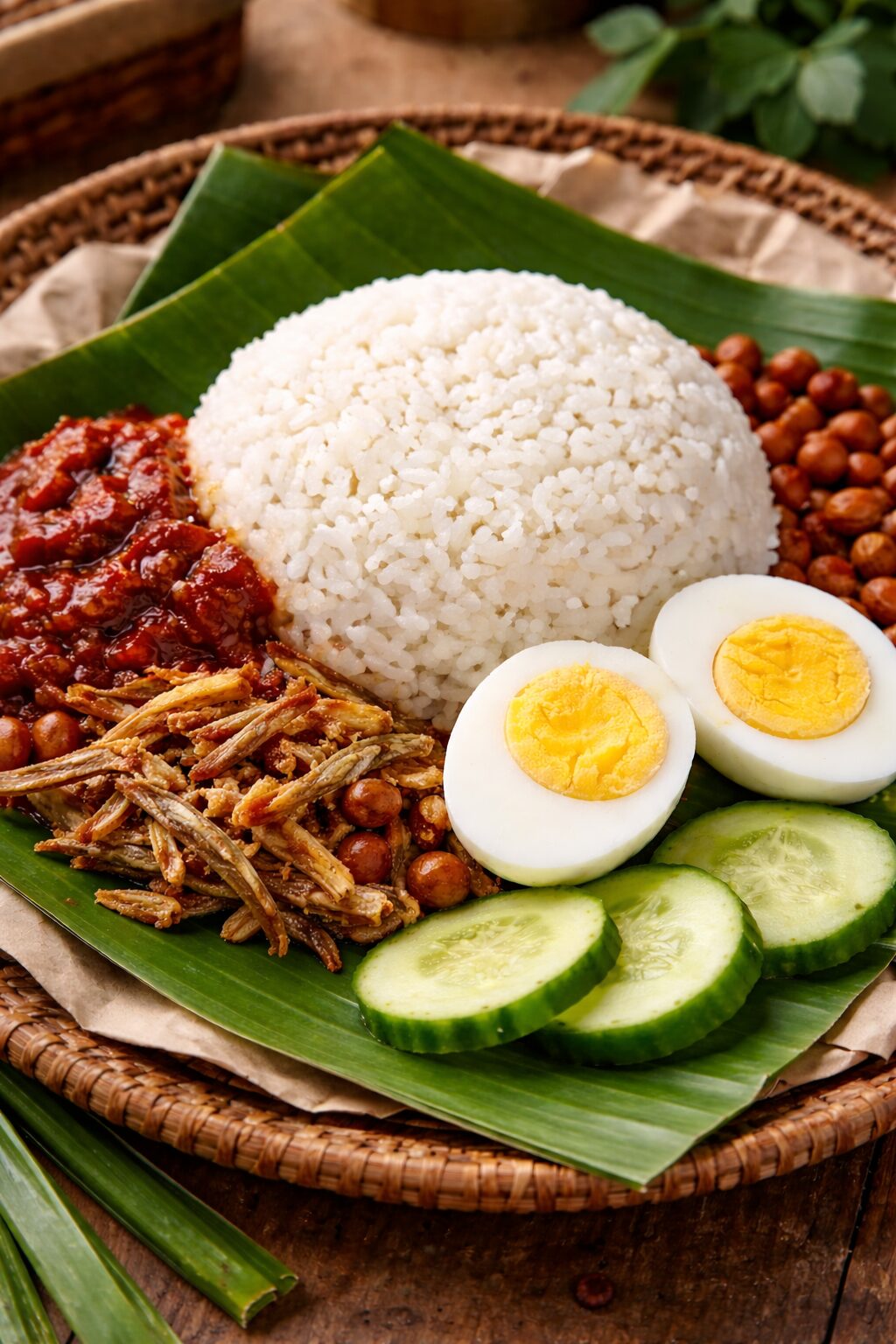
Ingredients
For the Coconut Rice and Accompaniments
- 2 cups (400g) jasmine rice, uncooked
- 1 cup (240ml) coconut milk
- 1 cup (240ml) water
- 2 pandan leaves, tied into a knot
- ½ teaspoon (2.5ml) fine salt
- ½ cup (75g) roasted peanuts
- ½ cup (50g) dried anchovies (ikan bilis)
- 4 large eggs
- 1 cucumber, sliced
- 2 tablespoons (30ml) vegetable oil, for frying the anchovies
For the Sambal
- 6 dried red chilies
- 2 garlic cloves
- 1 small shallot
- 1 tablespoon (15ml) tamarind paste
- 1 tablespoon (15ml) palm sugar, grated or finely chopped
- 2 tablespoons (30ml) vegetable oil
Optional Garnishes
- Food-safe banana leaf squares
- Extra sambal
- Fried shallots
Method
Prepare the Chilies
- Put the dried chilies in a heatproof bowl, cover them with freshly boiled water and soak for 10 to 15 minutes.
- Cut off the stems. Remove some or all of the seeds for a milder sambal.
Prepare the Rice
- Meanwhile, rinse the jasmine rice in several changes of cool water until the water is mostly clear.
- Drain well.
If Using a Saucepan
- Combine the rice, coconut milk, water, pandan leaves and salt in a heavy saucepan. Heat over medium heat until gently simmering, stir once and cover tightly.
- Reduce the heat to low and cook for 15 minutes.
- Remove the pan from the heat and rest, covered, for 10 minutes. Remove the pandan and fluff the rice gently.
If Using a Rice Cooker
- Put the rice, coconut milk, water, pandan leaves and salt in the cooker. Run the regular white-rice cycle. Rest for 10 minutes after the cycle ends, then remove the pandan and fluff the rice.
Cook the Eggs
- While the rice cooks, lower the eggs into simmering water and cook for 10 minutes for firm yolks.
- Transfer them to cold water, then peel and halve.
Make the Sambal
- Drain the chilies, reserving a little soaking water. Blend the chilies, garlic and shallot into a paste.
- Heat the 2 tablespoons of vegetable oil for the sambal in a small skillet (frying pan) over medium-low heat.
- Add the chili paste and cook for 10 to 12 minutes, stirring often, until the raw smell has gone and a little oil appears around the edge.
- Stir in the tamarind paste and palm sugar. Cook for another 2 or 3 minutes until the sugar dissolves and the sambal thickens.
- Taste carefully, adjust flavors if needed and set aside.
Add 1 or 2 tablespoons of soaking water only if needed to get the blender moving.
Add a spoonful of soaking water if it becomes too thick.
Cook the Anchovies
- Heat the remaining 2 tablespoons of vegetable oil in a clean skillet over medium heat.
- Pat the ikan bilis dry if they were rinsed. Shallow-fry for 2 to 3 minutes, stirring often, until crisp.
- Drain on paper towel and leave uncovered.
Assemble the Nasi Lemak
- Divide the coconut rice among four plates. Add sambal, ikan bilis, roasted peanuts, egg and cucumber.
- Add banana leaf, extra sambal or fried shallots if liked.
Notes
- Use a standard 240ml measuring cup for both the rice and liquid. A cup supplied with a rice cooker is often smaller.
- A rice cooker can cook the coconut rice on its regular white-rice setting.
- Check the dried anchovy package before cooking. I buy the smaller ikan bilis that are already cleaned. Some larger whole fish may need their heads and innards removed.
- Keep the fried anchovies away from the hot rice and sambal until serving so steam doesn’t make them soft.
- For storage, cool the rice quickly and refrigerate it in a shallow covered container within 2 hours. Keep the rice, sambal and eggs separate and eat them within 2 days. Reheat rice to 165°F (74°C) before serving.