Nasi Lemak Recipe (Malaysian Coconut Rice)
This post contains affiliate links. As an Amazon Associate I earn from qualifying purchases.
Nasi lemak is the Malaysian meal I remembered long after coming home. Coconut rice scented with pandan is served with sambal and several small accompaniments. It’s commonly described as Malaysia’s national dish and its popularity reaches far beyond breakfast.
I first tried nasi lemak in Malaysia and soon found myself ordering it again. The crispy anchovies were the part I was most curious to try and became the part I looked forward to most.
Crispy fried anchovies gave the soft rice a salty crunch and tasted especially good with a little sambal. I like the sambal around the mild to medium mark, so it doesn’t drown out the more delicate flavors of coconut and pandan.
Rice, sambal and the smaller accompaniments already make a complete meal. Fried chicken, grilled fish or beef rendang can be added for a larger lunch or dinner.
Nasi Lemak at a Glance
- Prep time: 15 minutes
- Cook time: 25 minutes
- Total time: 40 minutes
- Servings: 4
- Cuisine: Malaysian
- Main ingredients: Jasmine rice, coconut milk, pandan, sambal, ikan bilis, peanuts, eggs and cucumber
- Best cooking method: Saucepan or rice cooker
- Storage: Refrigerate the rice, sambal and eggs separately for up to 2 days
Why It’s Worth Making
- The accompaniments have a purpose: Sambal seasons the rice, ikan bilis and peanuts supply crunch and cucumber cools the chili heat.
- You control the sambal: Remove some chili seeds for a milder sauce or leave them in for more heat.
- No special cooker is required: The coconut rice can be cooked on the stove or in a rice cooker.
- It works at any hour: Nasi lemak is famous as a Malaysian breakfast and is also eaten for lunch, dinner and late-night meals.
What is Nasi Lemak?
Nasi lemak comes from Malay cooking. Nasi means rice, while lemak concerns fat or richness. Here it refers to the coconut milk used to cook the rice, so “coconut rice” is the most natural English description.The name technically describes the rice, although people generally use it for the complete meal.
Until I researched the recipe, I thought lemak referred to the fish and even had a goldfish called Lemak (along with Moses, Rainbow II and I forget the fourth!) To be fair, this was largely pre-internet!
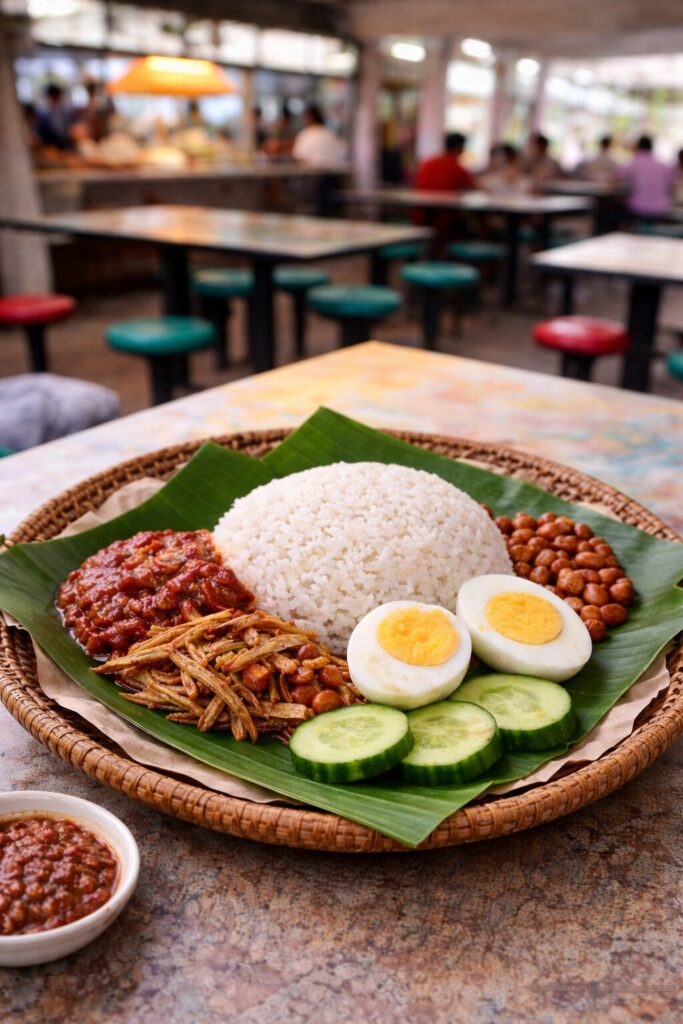
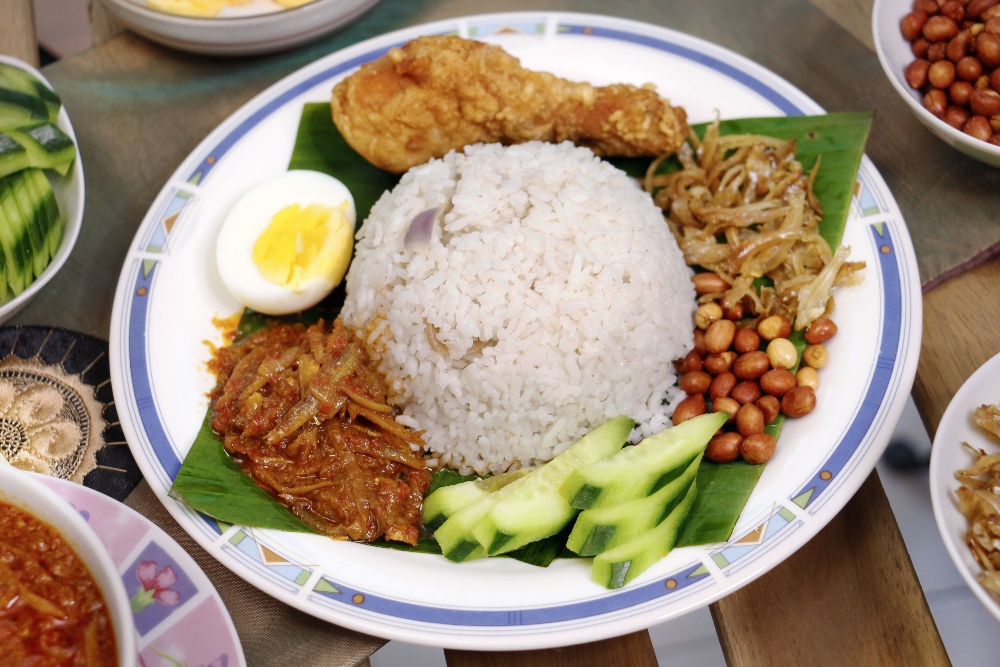
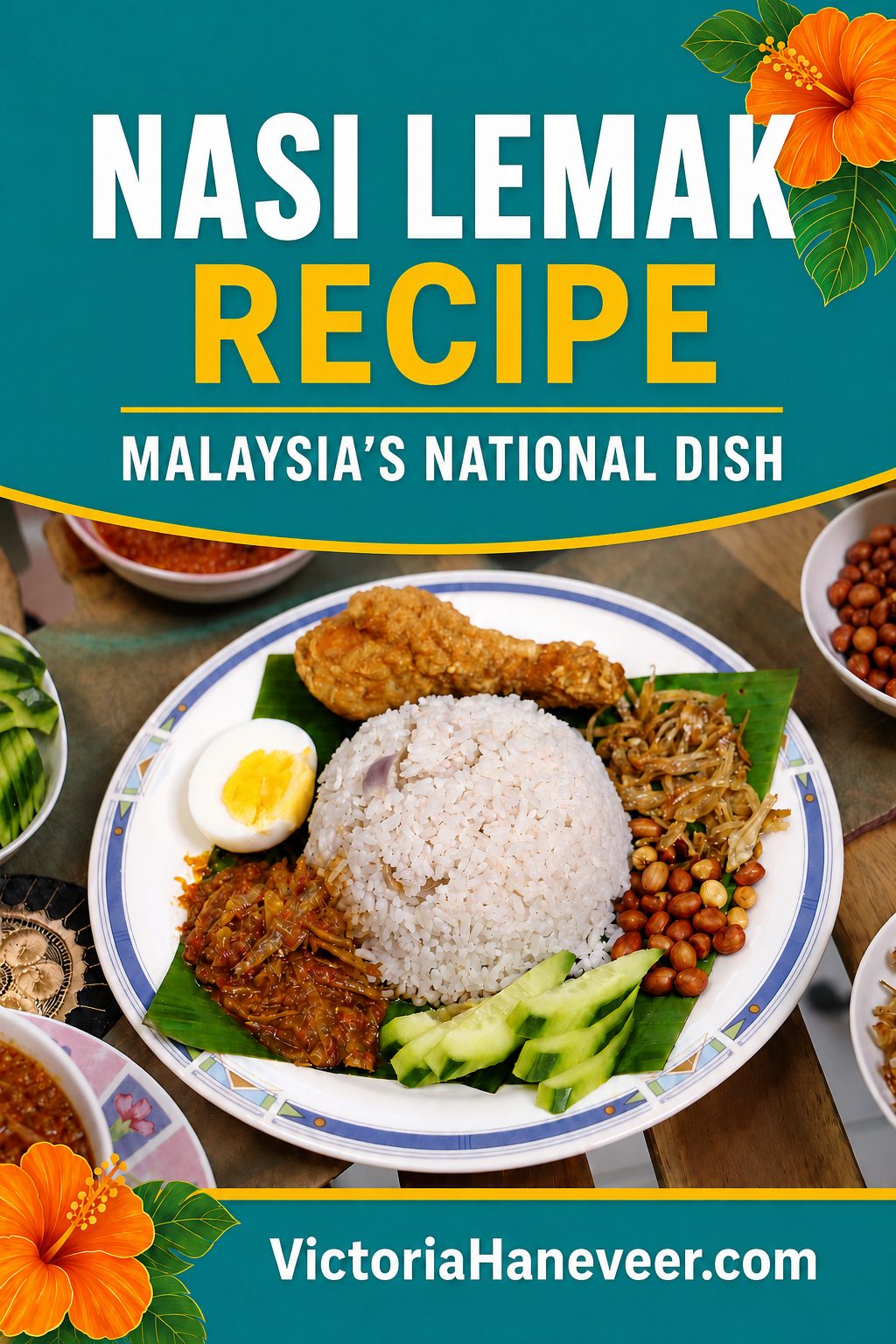
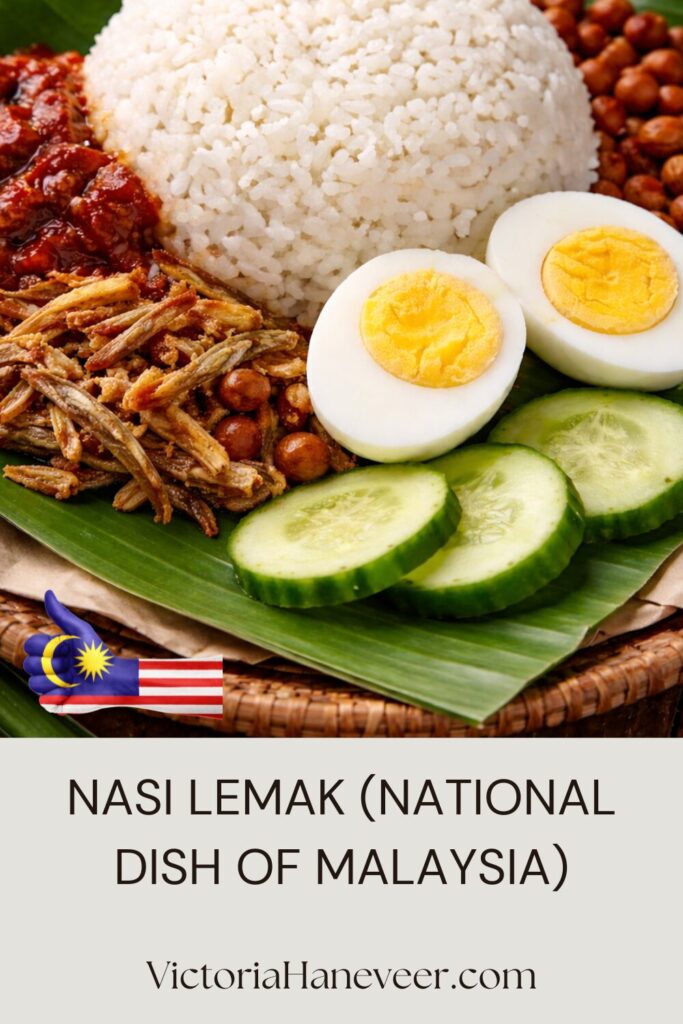
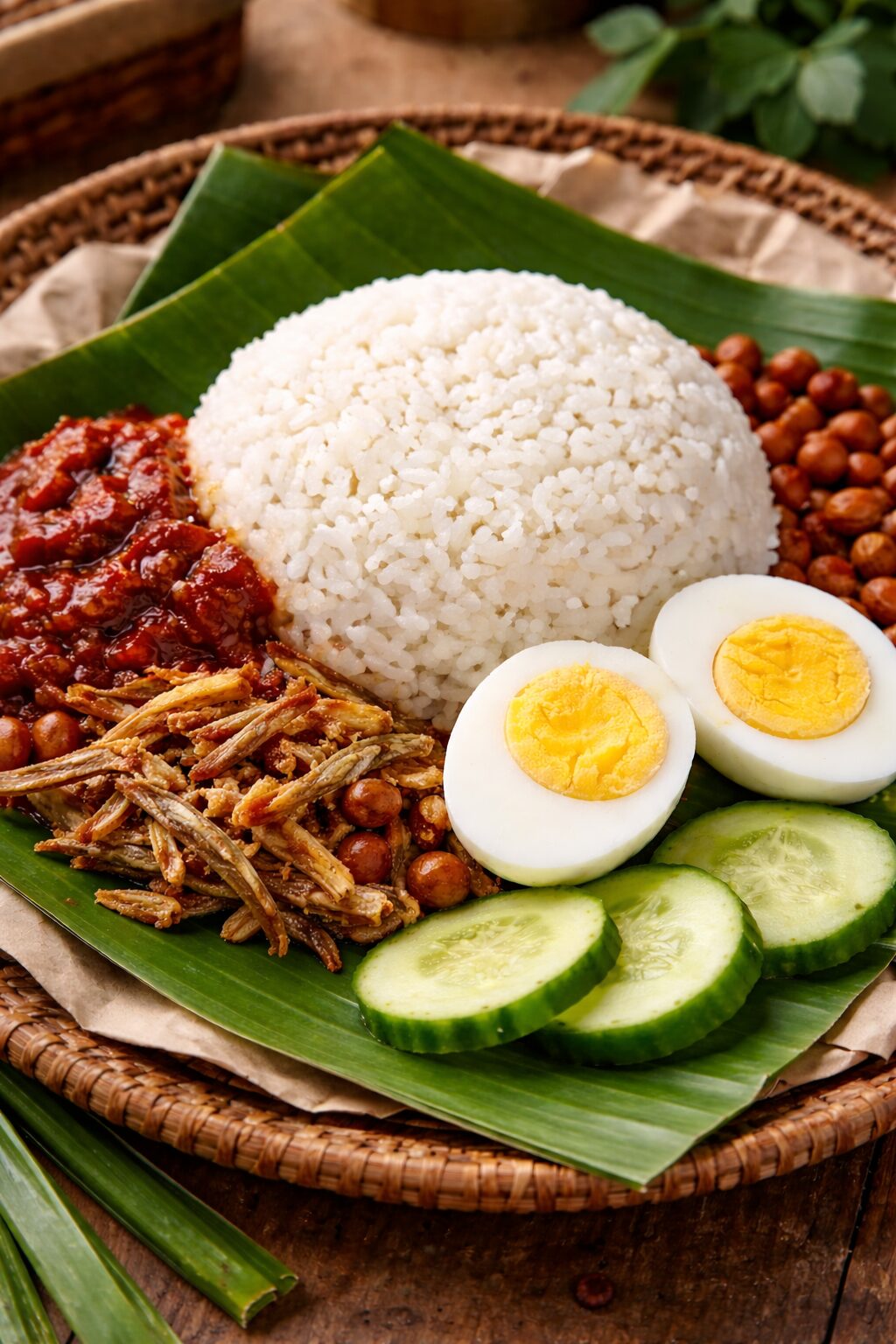
Traditional servings usually include sambal, fried dried anchovies, peanuts, cucumber and egg. Small banana leaf packets known as nasi lemak bungkus are sold for takeout, while restaurants and food courts serve larger plates with optional chicken, fish, curry or rendang.
Nasi lemak also has an official place in the country’s living heritage. Malaysian breakfast culture was added to UNESCO’s Representative List in 2024, with nasi lemak named as one of its staple foods.
Ingredient Notes
- Jasmine rice: Its natural aroma works well with coconut and pandan. Rinsing removes loose surface starch that can make the cooked rice gummy.
- Coconut milk: Shake the can well before measuring. Coconut cream is much thicker and shouldn’t be swapped in at the same quantity unless it is diluted first.
- Pandan leaves: Look for fresh or frozen leaves in an Asian grocery store. Tie them in a knot so they’re easy to remove after cooking.
- Dried red chilies: Soaking softens them enough to blend. Cut off the stems and shake out some or all of the seeds if you want to dial down the spice a bit.
- Tamarind paste and palm sugar: Tamarind supplies the sour part of the sambal and palm sugar supplies sweetness. The finished sauce shouldn’t taste sugary but have enought sweetness to balance the savory and spicy flavors.
- Ikan bilis: These small dried anchovies are sold in Asian grocery stores and online. Check whether yours have already been cleaned. Larger whole anchovies may need their heads and innards removed.
- Peanuts, egg and cucumber: Roasted peanuts can go straight on the plate. Boiled egg is convenient, while a fried egg or strips of omelet are also common. Cucumber is served raw.
How to Make Nasi Lemak
Soak the chilies first, then start the eggs and rice. While the rice cooks, blend and fry the sambal. Cook the ikan bilis near the end and drain them well. I find this order gets every component ready at about the same time and keeps the fried anchovies away from steam.
Serve each item in its own part of the plate. That’s how I ate nasi lemak in Malaysia and it lets you choose how much sambal goes into each mouthful. It also protects the crunch that made those little fried anchovies my best bit!
How to Make Coconut Rice So It’s Not Gummy
- Rinse before cooking: Swish the rice in several changes of water until the water’s mostly clear, then make sure to drain it well.
- Use a heavy saucepan: Coconut milk can catch on a very thin pan. Once the liquid simmers, lower the heat and cover the pan tightly.
- Let it rest: Give the covered rice 10 minutes off the heat before fluffing it. The steam finishes the center of the grains, so every grain is equally tender.
- Fluff gently: Remove the pandan leaves and loosen the rice with a fork or rice paddle. Vigorous stirring can crush the rice grains.
How to Cook Nasi Lemak Rice in a Rice Cooker
Put the rinsed rice, coconut milk, water and knotted pandan leaves in the rice cooker, then run the regular white-rice cycle. Let the rice rest for 10 minutes after the cycle ends before opening the lid and fluffing.
Rice cookers vary, so check the instructions for yours if it normally needs a different liquid ratio. A rice-cooker cup is often 180ml; the US cup used in this recipe is 240ml. Measure the rice and liquid with the same type of cup.
Getting the Sambal Right
It’s important to give your dried chilies enough soaking time to become flexible. A regular blender may need a spoonful or two of the chili soaking water to get the blades moving. Add only what’s necessary or the sambal will take longer to cook down.
Fry the blended paste until its raw garlic and shallot smell has gone and a little oil starts to appear around the edge. Stir often and lower the heat if it begins to stick. Tamarind and palm sugar go in after the paste has cooked. It’s a good idea to taste once the sugar dissolves (be careful as it’s very hot!) I prefer mild-to-medium heat here because I find that very hot sambal masks the pandan and coconut.
How to Keep Ikan Bilis Crisp
Pat the dried anchovies dry if you rinsed them, since water makes hot oil spit. Shallow-fry them until crisp, drain them on paper towel and leave them uncovered until serving. Don’t mix them into the sambal or place them on hot rice in advance. Steam softens them quickly.
I wouldn’t leave the ikan bilis off my own plate. The crisp, salty anchovies were the reason I kept ordering nasi lemak for breakfast in Malaysia. If you’ve never eaten dried anchovies this way, they taste quite different from the soft canned anchovies used on pizza.
What to Serve with Nasi Lemak
The classic rice, sambal, anchovies, peanuts, egg and cucumber are enough for breakfast or a light meal. Nasi lemak ayam adds fried or spiced chicken. Beef rendang, grilled fish and sambal prawns are good choices for a larger plate. You can also offer sambal belacan at the table in case anyone wants more chili.
Nasi Lemak Variations
- Nasi lemak ayam: Add Malaysian fried chicken or chicken curry.
- Sambal ikan bilis: Stir some fried anchovies into the sambal and reserve the rest for serving. The anchovies in the sauce will soften.
- Egg choices: Serve boiled eggs, fried eggs or sliced omelet.
- Vegetarian plate: Omit the ikan bilis and check any purchased sambal for shrimp paste or fish. Fried tempeh can add substance, although it isn’t part of the basic combination.
- Banana leaf serving: Food-safe banana leaf makes an attractive liner or wrapper. Pandan leaves scent the rice and aren’t a substitute for the banana leaf wrapper. It can be hard to find banana leaves, depending where you are. I ended up order some from an African shop in London and they sent me about 24 huge leaves, most of which are still in the freezer! (They do freeze well).
How to Store
- Refrigerate: Cool the rice quickly, transfer it to a shallow covered container and refrigerate it within 2 hours. Keep the rice, sambal and eggs in separate containers and eat them within 2 days.
- Keep dry items separate: Store completely cooled ikan bilis and peanuts in airtight containers away from the moist components. Refrigerate the anchovies if the package directs you to do so.
- Reheat: Add a small splash of water to the rice, cover it and heat it until it reaches 165°F (74°C). Reheat it only once. Serve the cucumber, peanuts and ikan bilis at room temperature.
- Freeze: Freezing isn’t ideal because coconut rice can be oily and soft after thawing. If necessary, freeze individual portions for up to 1 month and reheat from frozen. Don’t freeze the cucumber, cooked eggs or fried anchovies though.
- Make ahead: Prepare the sambal up to 2 days early. Boil the eggs and toast the peanuts a day ahead. Fry the ikan bilis shortly before serving for the best crunch.
Nasi Lemak FAQs
The closest English translation is coconut rice. The name describes the rice cooked with coconut milk, while nasi lemak usually refers to the complete serving with sambal and accompaniments.
The coconut rice isn’t spicy. Heat comes from the sambal and you decide for yourself how much you want to add. You can always remove some chili seeds for a milder sambal. I like a mild-to-medium heat so I can still taste the pandan and coconut but I know some people like more spice (and others much less!)
Yes. The coconut rice will still cook, although it won’t have the fragrance associated with nasi lemak. Frozen pandan leaves are a good choice when fresh leaves aren’t available.
Yes. Add the rinsed rice, coconut milk, water and pandan leaves to the cooker and select the regular white-rice setting. Check your cooker’s instructions if it calls for a different liquid ratio.
Nasi lemak comes from Malay cooking and is strongly associated with Malaysia, where it’s commonly known as the national dish. It also has a long history in Singapore and other places with Malay communities.
More Malaysian Recipes
Try otak-otak, spiced fish paste cooked in banana leaf, babi pongteh which is a braised pork dish and roti canai, a flaky flatbread that goes well with curry.
The Malaysian Breakfast I Kept Ordering
Nasi lemak was one of the dishes I returned to in Malaysia and I usually had it for breakfast. I’ve always preferred savory breakfasts to sweet, but especially loved the saltiness and spice in this one.
The ikan bilis were a large part of the reason. I liked mixing a little sambal into the coconut rice, then adding a few crisp anchovies and peanuts. Explore more of my Malaysian recipes or try char kway teow next.
Nasi Lemak
Ingredients
- 2 cups (400g) jasmine rice, uncooked
- 1 cup (240ml) coconut milk
- 1 cup (240ml) water
- 2 pandan leaves, tied into a knot
- ½ teaspoon (2.5ml) fine salt
- ½ cup (75g) roasted peanuts
- ½ cup (50g) dried anchovies (ikan bilis)
- 4 large eggs
- 1 cucumber, sliced
- 2 tablespoons (30ml) vegetable oil, for frying the anchovies
- 6 dried red chilies
- 2 garlic cloves
- 1 small shallot
- 1 tablespoon (15ml) tamarind paste
- 1 tablespoon (15ml) palm sugar, grated or finely chopped
- 2 tablespoons (30ml) vegetable oil
- Food-safe banana leaf squares
- Extra sambal
- Fried shallots
Method
- Put the dried chilies in a heatproof bowl, cover them with freshly boiled water and soak for 10 to 15 minutes.
- Cut off the stems. Remove some or all of the seeds for a milder sambal.
- Meanwhile, rinse the jasmine rice in several changes of cool water until the water is mostly clear.
- Drain well.
- Combine the rice, coconut milk, water, pandan leaves and salt in a heavy saucepan. Heat over medium heat until gently simmering, stir once and cover tightly.
- Reduce the heat to low and cook for 15 minutes.
- Remove the pan from the heat and rest, covered, for 10 minutes. Remove the pandan and fluff the rice gently.
- Put the rice, coconut milk, water, pandan leaves and salt in the cooker. Run the regular white-rice cycle. Rest for 10 minutes after the cycle ends, then remove the pandan and fluff the rice.
- While the rice cooks, lower the eggs into simmering water and cook for 10 minutes for firm yolks.
- Transfer them to cold water, then peel and halve.
- Drain the chilies, reserving a little soaking water. Blend the chilies, garlic and shallot into a paste.
- Heat the 2 tablespoons of vegetable oil for the sambal in a small skillet (frying pan) over medium-low heat.
- Add the chili paste and cook for 10 to 12 minutes, stirring often, until the raw smell has gone and a little oil appears around the edge.
- Stir in the tamarind paste and palm sugar. Cook for another 2 or 3 minutes until the sugar dissolves and the sambal thickens.
- Taste carefully, adjust flavors if needed and set aside.
- Heat the remaining 2 tablespoons of vegetable oil in a clean skillet over medium heat.
- Pat the ikan bilis dry if they were rinsed. Shallow-fry for 2 to 3 minutes, stirring often, until crisp.
- Drain on paper towel and leave uncovered.
- Divide the coconut rice among four plates. Add sambal, ikan bilis, roasted peanuts, egg and cucumber.
- Add banana leaf, extra sambal or fried shallots if liked.
Notes
- Use a standard 240ml measuring cup for both the rice and liquid. A cup supplied with a rice cooker is often smaller.
- A rice cooker can cook the coconut rice on its regular white-rice setting.
- Check the dried anchovy package before cooking. I buy the smaller ikan bilis that are already cleaned. Some larger whole fish may need their heads and innards removed.
- Keep the fried anchovies away from the hot rice and sambal until serving so steam doesn’t make them soft.
- For storage, cool the rice quickly and refrigerate it in a shallow covered container within 2 hours. Keep the rice, sambal and eggs separate and eat them within 2 days. Reheat rice to 165°F (74°C) before serving.