Malaysian Nasi Goreng Recipe (Chili Garlic Fried Rice)
This post contains affiliate links. As an Amazon Associate I earn from qualifying purchases.
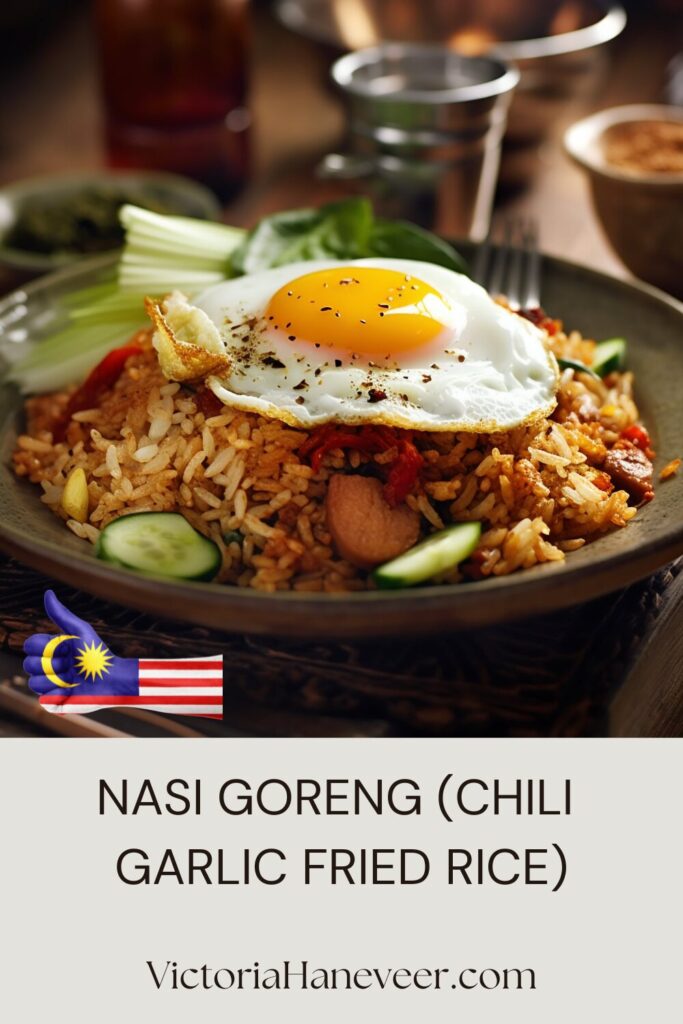
Nasi goreng means fried rice, and this Malaysian nasi goreng recipe makes excellent use of cooked jasmine rice. Garlic, red chili and belacan form the spice paste, while kecap manis and light soy sauce season the rice as it fries.
I like the contrasts in this dish, namely the hot chili garlic rice, a soft fried egg and cool cucumber. Sambal’s a great addition on the side for anyone who wants more heat.
The short ingredient list leaves plenty of room for those distinctive Malaysian seasonings. Belacan adds fermented shrimp flavor, kecap manis adds sweetness and high heat lightly toasts the rice. It’s similar to Chinese fried rice and Thai fried rice but with Malaysian flavors.
Malaysian Nasi Goreng at a Glance
- Prep time: 10 minutes
- Cook time: 25 minutes
- Total time: 35 minutes
- Servings: 2
- Cuisine: Malaysian
- Main ingredients: Jasmine rice, eggs, garlic, chili, belacan and kecap manis
- Best cooking method: High heat wok frying
- Storage: Refrigerate promptly and use within 3 days of cooking the rice
Why You’ll Love Malaysian Nasi Goreng
- It’s made with cooked rice: Rice from the previous day has less surface moisture and fries more readily than hot, freshly cooked rice, so if you have some leftover in the fridge, this is a great recipe to pick.
- The homemade spice paste: Garlic, chili and belacan create the base, so you don’t need a packaged nasi goreng paste.
- Each plate has its own fried egg: The yolk mixes into the seasoned rice as you eat.
- You control the heat: Reduce the chili in the paste or add sambal at the table.
Ingredient Notes
- Cooked jasmine rice: Cold rice from the refrigerator separates more easily in the wok. Break up firm clumps before you start cooking.
- Belacan: This Malaysian fermented shrimp paste has a concentrated salty flavor. You can order belacan from Amazon if it isn’t available locally.
- Kecap manis: This thick sweet soy sauce seasons and darkens the rice. It is sweeter than ordinary soy sauce, so one can’t replace the other in equal amounts. Here is the kecap manis used for this recipe.
- Red chili and garlic: Blend them with the belacan to make the nasi goreng paste. Chili heat varies, so adjust the amount to suit you.
- Eggs: Fry the 2 eggs separately and add one to each serving once the rice is ready.
- Shallot and scallions: Shallot cooks with the spice paste. Scallions (green onions) go in near the end.

How to Make Nasi Goreng
Blend the garlic, red chili and belacan into a rough paste before heating the wok. Fry the eggs first and transfer them to a plate, then cook the spice paste and shallot in the same wok. Add the cold rice, kecap manis and light soy sauce. Stir-fry over high heat until the rice is hot and the grains have separated, then add the scallions and serve immediately.
What is Nasi Goreng?
Nasi goreng literally means fried rice in both Malay and Indonesian. You’ll find many forms of it in homes, restaurants and street-food stalls across Malaysia and Indonesia. There isn’t one universal list of nasi goreng ingredients because seasonings and additions vary by region and cook, much like other Asian fried rice recipes.
This dish features belacan, garlic, chili, kecap manis and light soy sauce. For more background on the country’s cooking and its regional influences, see my guide to Malaysian recipes.
Malaysian and Indonesian Nasi Goreng
Malaysia and Indonesia both have long-established nasi goreng traditions, with numerous local varieties in each country. Malaysian cooks may use belacan, while Indonesian recipes often call the equivalent fermented shrimp paste terasi. Kecap manis also appears in recipes from both countries.
This Malaysian recipe is separate from my Indonesian chicken and shrimp nasi goreng, which includes both proteins and a different ingredient list.
Tips for Separate, Fried Rice Grains
- Start with cold rice: Refrigeration dries the surface slightly, which reduces clumping in the wok.
- Loosen it before cooking: Break up rice clumps with clean hands or a fork before the rice reaches the heat.
- Preheat the wok: Don’t add the ingredients until the wok’s hot enough to fry them quickly.
- Have everything ready: The cooking moves quickly, so blend the paste and measure the sauces first.
- Don’t overcrowd the wok: An overloaded wok traps steam. Cook in 2 batches if your wok is small or if you’re doubling the recipe.
High heat can also add some of the toasted aroma associated with wok hei. A home burner won’t match the flame beneath a hawker-stall wok, though preheating the pan and avoiding overcrowding will make a noticeable difference.
Substitutions and Variations
- No belacan? Replace it with another Southeast Asian shrimp paste. For a shellfish-free dish, omit it and adjust the soy sauce after tasting.
- Less chili heat: Use less chili or remove the seeds before blending the paste.
- Add chicken or shrimp: Cook the protein first, transfer it to a plate and return it to the wok once the rice is hot. Cook chicken to 165°F (74°C).
- Use cauliflower rice: My cauliflower nasi goreng explains how to make a lower carb variation.
Equipment
- Wok: The wide cooking surface makes it easier to move the rice over high heat.
- Mini food processor or blender: Use this for the garlic, chili and belacan paste.
- Wok spatula: Choose a sturdy spatula that will lift and separate the rice easily.
What to Serve with Nasi Goreng
A fried egg and sliced cucumber make the rice a complete meal. Add sambal belacan for more chili heat or serve Malaysian acar for a tangy, crunchy side. If you want something crunchy, try Malaysian popiah which are Malaysia’s answer to crispy egg rolls!
How to Store
- Make ahead: Cook the rice in advance, cool it promptly and refrigerate it within 2 hours. Store it in a shallow covered container.
- Refrigerator: Refrigerate leftover nasi goreng in an airtight container and use it within 3 days of the date the rice was first cooked.
- Reheating: Reheat the rice in a hot skillet (frying pan) or microwave until it reaches 165°F (74°C). Add a freshly fried egg before serving.
- Freezer: Freeze the rice without the egg or cucumber for up to 1 month. The grains may soften slightly once thawed and reheated.

Nasi Goreng FAQs
Yes. Basmati or another long-grain white rice will work, although jasmine rice has the closest flavor and texture. Avoid short-grain or sticky rice because the grains are more likely to clump.
It can be mild or hot. This recipe uses 1 red chili in the spice paste, and the final heat depends on the type of chili. Reduce it or remove the seeds for a milder plate, then offer sambal separately.
Yes, as long as you cool it first. Spread the cooked rice on a tray so steam can escape, then refrigerate it promptly. Warm rice contains more surface moisture and is more likely to clump.
Both Malaysia and Indonesia have their own nasi goreng traditions, and each country has many regional varieties. This recipe is made using Malaysian belacan with chili, garlic, kecap manis and light soy sauce.
No. A large skillet or frying pan will work. Preheat it thoroughly and cook the rice in batches if the pan is too small to move the grains easily.
Warm rice, excess moisture or an overcrowded wok can all cause a soft or clumpy result. I always use cold rice and loosen the grains before cooking. It’s also best to fry in batches if your wok is small.
You don’t need a separate toasting step for this recipe. Blend the belacan into the spice paste, then cook it in the hot oil until fragrant.
More Malaysian Rice Dishes to Try
Nasi goreng is a speedy option when cooked rice is waiting in the refrigerator! For a different Malaysian rice dish, try nasi lemak with coconut rice, nasi dagang with fish curry or herb-filled nasi kerabu.

Malaysian Nasi Goreng
Ingredients
- 3 cups (600g) cooked jasmine rice, chilled
- 2 tablespoons (30 ml) oil
- 2 eggs
- 2 tablespoons (30 ml) sweet soy sauce (kecap manis)
- 1 tablespoon (15 ml) light soy sauce
- 1 small shallot, finely chopped
- 1 tablespoon chopped scallions (green onions)
- 3 garlic cloves
- 1 red chili
- 1 teaspoon belacan
- Cucumber slices
- Sambal
Equipment
- Measuring Cups and Spoons
- Mini food processor or blender
- Wok
- Wok spatula
- Knife
- Chopping board
Method
- Blend the garlic, red chili and belacan into a rough paste.
- Heat 1 tablespoon of the oil in a wok over high heat. Fry the eggs to your preferred doneness, then transfer them to a plate.
- Add the remaining tablespoon of oil to the wok. Add the spice paste and cook until fragrant, then add the shallot and cook until it begins to soften.
- Add the cold rice. Break up any clumps with the spatula and stir-fry until the grains separate.
- Add the kecap manis and light soy sauce. Continue stir-frying until the rice is evenly coated and piping hot.
- Stir in the scallions. Divide the rice between plates, add the fried eggs and serve with cucumber slices and sambal if liked.
Notes
- Cold cooked rice works best because its surface has less moisture than freshly cooked rice. If you need to cook the rice on the same day, spread it on a tray to release steam and refrigerate it promptly before frying. Cool cooked rice promptly and refrigerate it within 2 hours.
- Store leftover nasi goreng for up to 3 days from the date the rice was originally cooked. Reheat leftovers to 165°F (74°C).
- Fry the rice in 2 batches if you’re using a small pan. You want it to fry, not steam.