Nasi Kerabu (Malaysian Blue Rice with Herbs)
This post contains affiliate links. As an Amazon Associate I earn from qualifying purchases.
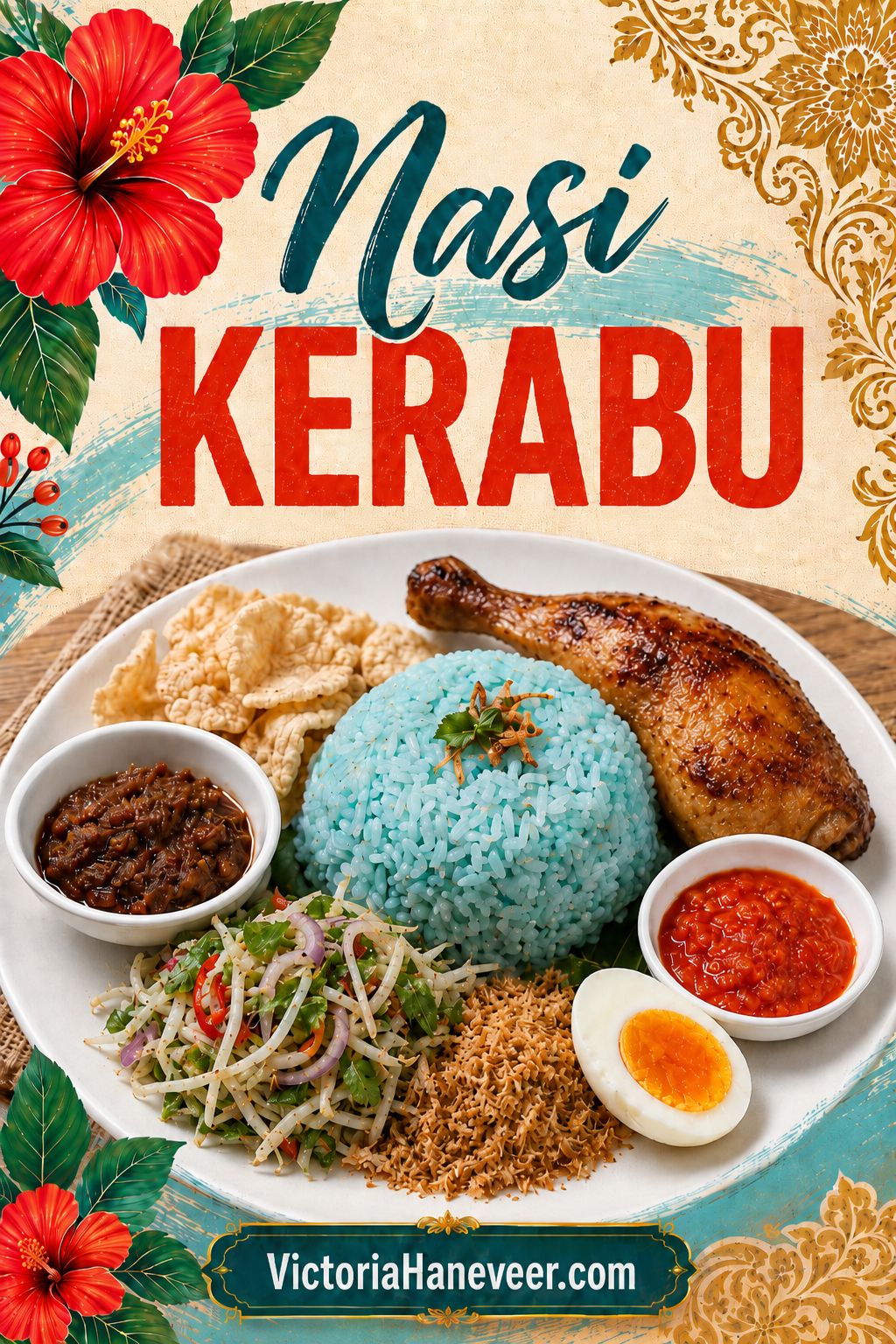
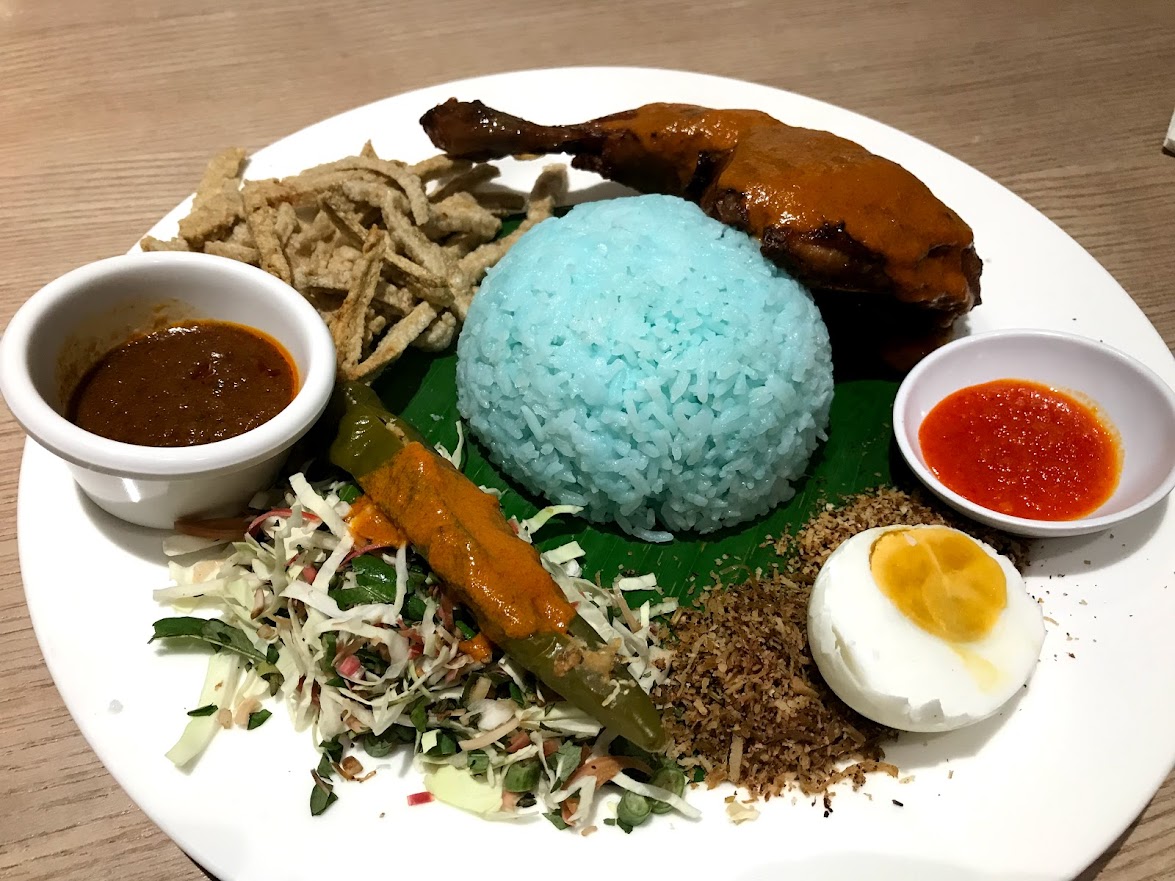
Nasi kerabu is a Malaysian rice dish that brings blue butterfly pea rice, finely sliced vegetables, fresh herbs and sambal together on one plate. It comes from the east coast of Peninsular Malaysia, particularly Kelantan and Terengganu, where it’s served with accompaniments such as fish, chicken, salted egg, crackers and budu.
This is a streamlined home recipe built around the dish’s best-known components. The rice is mild, so the vegetables, herbs and chile sambal provide most of the flavor. Toasted coconut adds richness and lime juice adds some acidity. Everything is prepared separately, which lets you mix the components in different proportions as you eat, or serve everything individually so everyone can assemble their own portion.
I find this dish a great pick when I have fresh herbs or cooked protein to use. Most of the hands-on work is slicing and arranging the toppings. I didn’t actually try this dish when I was in Malaysia, unlike nasi goreng, nasi lemak and popiah, but I love making it at home.
Nasi Kerabu at a Glance
- Prep time: 25 minutes
- Cook time: 20 minutes
- Total time: 45 minutes
- Servings: 2
- Cuisine: Malaysian, especially Kelantan and Terengganu
- Main ingredients: Jasmine rice, butterfly pea flower tea, vegetables, fresh herbs and sambal
- Best cooking method: Rice cooked in butterfly pea flower tea with separately prepared toppings
- Storage: Refrigerate the rice, sambal, vegetables and protein in separate containers
Why You’ll Love Nasi Kerabu
- You control every bite: Add more sambal for heat, more herbs for freshness or extra coconut for a richer flavor.
- Most components are flexible: The blue rice and sambal give the dish its identity while the protein and vegetable selection can be what you have on hand.
- You can get ahead: Cook the rice and prepare the sambal first. Slice the vegetables and herbs shortly before serving.
- There’s plenty of crunch: Cabbage, bean sprouts, cucumber and toasted coconut add crunch to the soft rice.
What is Nasi Kerabu?
Nasi kerabu is an east-coast Malaysian rice dish closely associated with Kelantan and Terengganu. “Nasi” means rice while “kerabu” refers to a style of herb or vegetable salad. The dish is built around rice and ulam, a mixture of raw herbs and vegetables, with flavorful additions that often include sambal, coconut, budu and a cooked protein.
Blue is the best-known color, and you can make it by steeping butterfly pea flowers, also called bunga telang, in water. Nasi kerabu isn’t always blue. Regional preparations can use white rice or yellow rice colored with turmeric.
Nasi Kerabu Ingredients
- Jasmine rice: Its light texture suits the raw vegetables and herbs. Rinse it before cooking to remove excess surface starch.
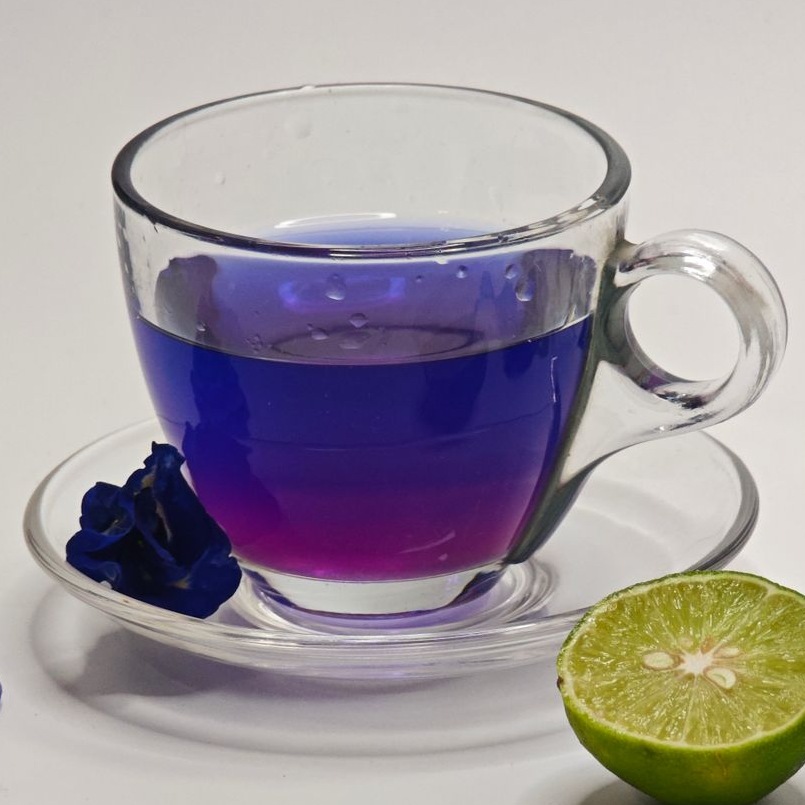
- Butterfly pea flower tea: This naturally colors the rice blue. Steep dried butterfly pea flowers in hot water until the liquid is strongly colored, then strain it before measuring.
- Cabbage, bean sprouts and cucumber: Slice the cabbage and cucumber thinly so they mix easily through the rice. Keep all three chilled until you’re ready to assemble the plates.
- Fresh herbs: Mint and Thai basil contribute fragrance and a fresh, green flavor. Dry the leaves well after washing so they don’t make the other toppings wet.
- Dried red chiles, garlic and shallots: These form the body of the sambal. The dried chiles determine most of its heat.
- Belacan: Malaysian fermented shrimp paste gives the sambal its savory depth. Its aroma is strong, so the small amount in the recipe is enough.
- Lime juice: Stir it into the sambal after blending for acidity and brightness.
- Grilled fish or chicken: Either works to make it a main dish. You can also use fried fish or salted egg. I usually go for chicken since whenever I cook chicken I tend to make extra deliberately.
- Toasted coconut: This optional garnish adds a nutty, rich flavor. Watch it closely because coconut darkens quickly.
How to Make Nasi Kerabu
Start by making a strong butterfly pea flower infusion and use it in place of plain cooking water for the jasmine rice. While the rice cooks, blend the dried chiles, garlic, shallots and belacan, then stir in the lime juice.
I like to slice my veggies and herbs while the rice is resting. Spoon some blue rice onto each plate, arrange the fresh components and cooked protein around it and add sambal just before serving. Part of the fun of this dish is how pretty you can make it look.
Tips for the Best Blue Rice
- Make the tea stronger than you would for drinking: A light-colored infusion is going to give you very light blue rice. The liquid should be a deep blue before it goes into the pot for a more vibrant rice color.
- Measure the strained tea: Steep the flowers first, strain them out and measure the amount of liquid the recipe requires.
- Let the rice rest: Leave it covered for a few minutes after cooking, then fluff it gently so the grains don’t become compressed.
- Slice the toppings finely: Cut the cabbage, cucumber and herbs into thin strips so you get a little of each one in every bite.
- Assemble at the last minute: This keeps the herbs fresh and the veggies crisp.
Variations and Substitutions
- Plain rice: Use plain jasmine rice if you can’t find butterfly pea flowers. The rice won’t be blue, though it will still work with the herbs, vegetables and sambal.
- Sambal on the side: You can serve the sambal on the side in case anyone doesn’t want the heat.
- Different proteins: Grilled chicken, fried fish and salted egg are all good accompaniments.
- Vegetarian version: For a vegetarian nasi kerabu, use fried tofu or tempeh and replace the belacan with a vegetarian sambal. I recommend checking any prepared sambal carefully since shrimp paste is a common ingredient in there.
What to Serve with Nasi Kerabu
Traditional nasi kerabu may include grilled or fried fish, chicken, salted egg, crackers and budu, a fermented anchovy sauce with an assertive salty flavor. Add budu sparingly, especially if your sambal and protein are already well seasoned. A spoonful of sambal belacan is another option if you want more chile heat.
If you’re preparing a larger Malaysian meal, pair smaller servings with otak-otak or offer a contrasting noodle dish such as kolo mee. For more regional dishes and cooking ideas, browse my Malaysian recipes hub.
How to Store
- Refrigerator: Cool the rice promptly and refrigerate it in an airtight container for up to 2 days. Keep the sambal, cooked protein, vegetables and herbs in separate containers so the fresh ingredients don’t become soggy.
- Reheating: Reheat only the amount of rice and protein you plan to eat. Warm them thoroughly, adding a small splash of water to the rice before covering it if it seems dry. Add the chilled herbs, vegetables and sambal after reheating.
- Freezing: Freeze the cooled rice in an airtight container for up to 1 month. The fresh vegetables and herbs aren’t good candidates for freezing because they lose their crispness. Freeze cooked fish or chicken separately only if its original preparation is suitable for freezing.
- Make ahead: Prepare the sambal and protein in advance, then chill them separately. For the best texture, slice the cucumber and herbs near serving time.
Nasi Kerabu Recipe FAQs
Butterfly pea flowers, known as bunga telang in Malay, release a natural blue pigment into hot water. The strained infusion replaces plain water when the rice cooks so you end up with a pretty Malaysian blue rice dish that’s as pretty as it is delicious.
No. Butterfly pea flower has a mild flavor, so the blue pea rice is still a neutral base for the herbs, veggies, sambal and protein. I tried it as a drinking tea but am not really a fan of the earthy taste.
Yes. Use plain jasmine rice if butterfly pea flowers aren’t available. Nasi kerabu can also be served with white rice, and some regional versions use turmeric-colored yellow rice.
The rice and fresh toppings aren’t spicy. Most of the heat comes from the sambal, so serve it on the side or use less if you prefer a milder plate.
Yes. Replace the fish or chicken with tofu or tempeh and use a vegetarian sambal. Traditional belacan is fermented shrimp paste, so it must also be omitted or replaced.
Nasi Kerabu
Ingredients
- 1 cup (200g) jasmine rice
- 1 cup (240ml) butterfly pea flower tea
- 1 cup (70g) shredded cabbage
- 1 cup (100g) bean sprouts
- ½ cup (50g) sliced cucumber
- ½ cup (15g) loosely packed fresh herbs, such as mint and Thai basil
- 2 servings grilled fish or chicken, to serve
- 4 dried red chiles
- 2 garlic cloves
- 2 shallots
- 1 teaspoon belacan
- 1 tablespoon lime juice
- toasted coconut
- sliced chiles
- keropok
- budu (fermented anchovy sauce)
Method
- Rinse the jasmine rice until the water runs mostly clear. Cook it with the butterfly pea flower tea in place of plain water.
- Blend the dried chiles, garlic, shallots and belacan until smooth.
- Stir the lime juice into the sambal.
- Prepare the cabbage, cucumber and fresh herbs.
- Prepare the bean sprouts and your choice of grilled fish or chicken.
- Divide the blue rice between 2 serving plates. Arrange the vegetables, herbs and grilled fish or chicken around the rice.
- Add the sambal and any optional garnishes just before serving.
Notes
- For a deeper blue color, make strong butterfly pea flower tea and strain it before measuring the 2 cups (480ml) you need for your rice.
- Serve the sambal on the side so people can add however much they want.
- Keep leftover rice, sambal, fresh toppings and protein in separate airtight containers. Refrigerate the rice and eat within 2 days.
- I like to add keropok (Malaysian prawn crackers) for some crunch.
- Use any veggies you want and any protein.
Nasi kerabu is the kind of dish that rewards a little organized preparation: vividly colored rice, a bold sambal and plenty of finely sliced fresh ingredients. Once those elements are ready, everyone can customize their own plates.
For traditional nasi, kerabu Kelantan or Terengganu are the places to go, although a delicious version is straightforward to make in your own kitchen if you want to try this blue rice dish for yourself.
Image credit: Nasi kerabu from Serai, Paradigm Mall via Wikimedia Commons