Cambodian Sour Soup with Pork (Samlor Machu Kroeung)
This post contains affiliate links. As an Amazon Associate I earn from qualifying purchases.
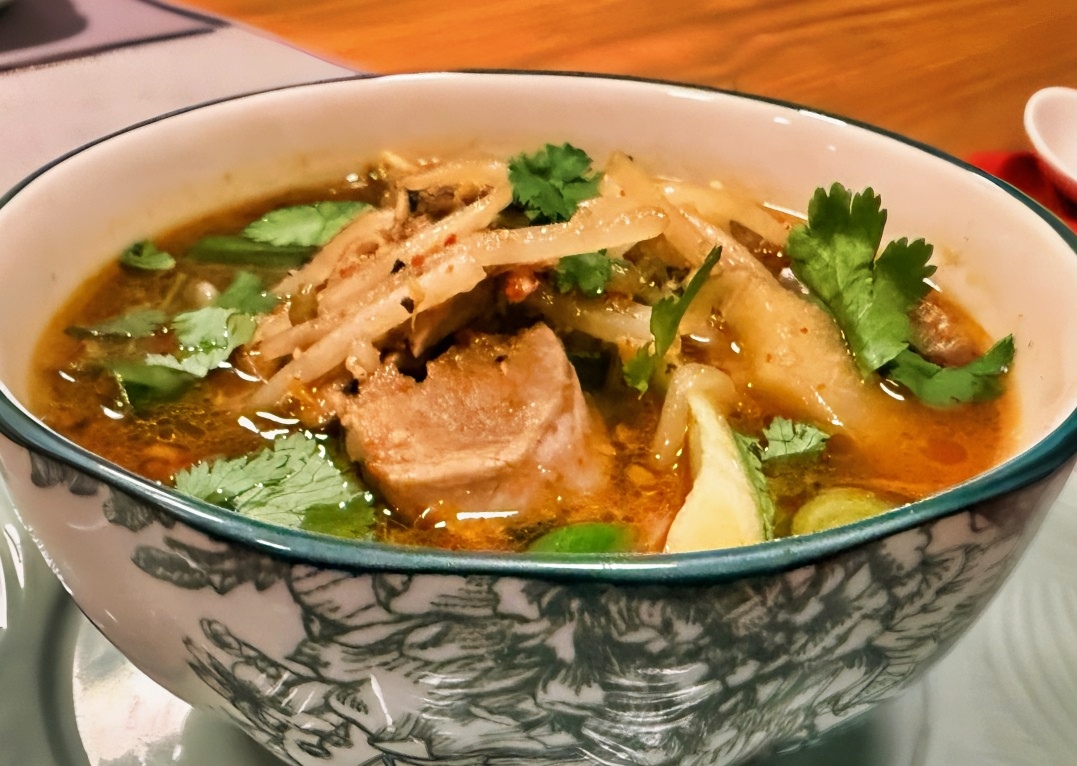
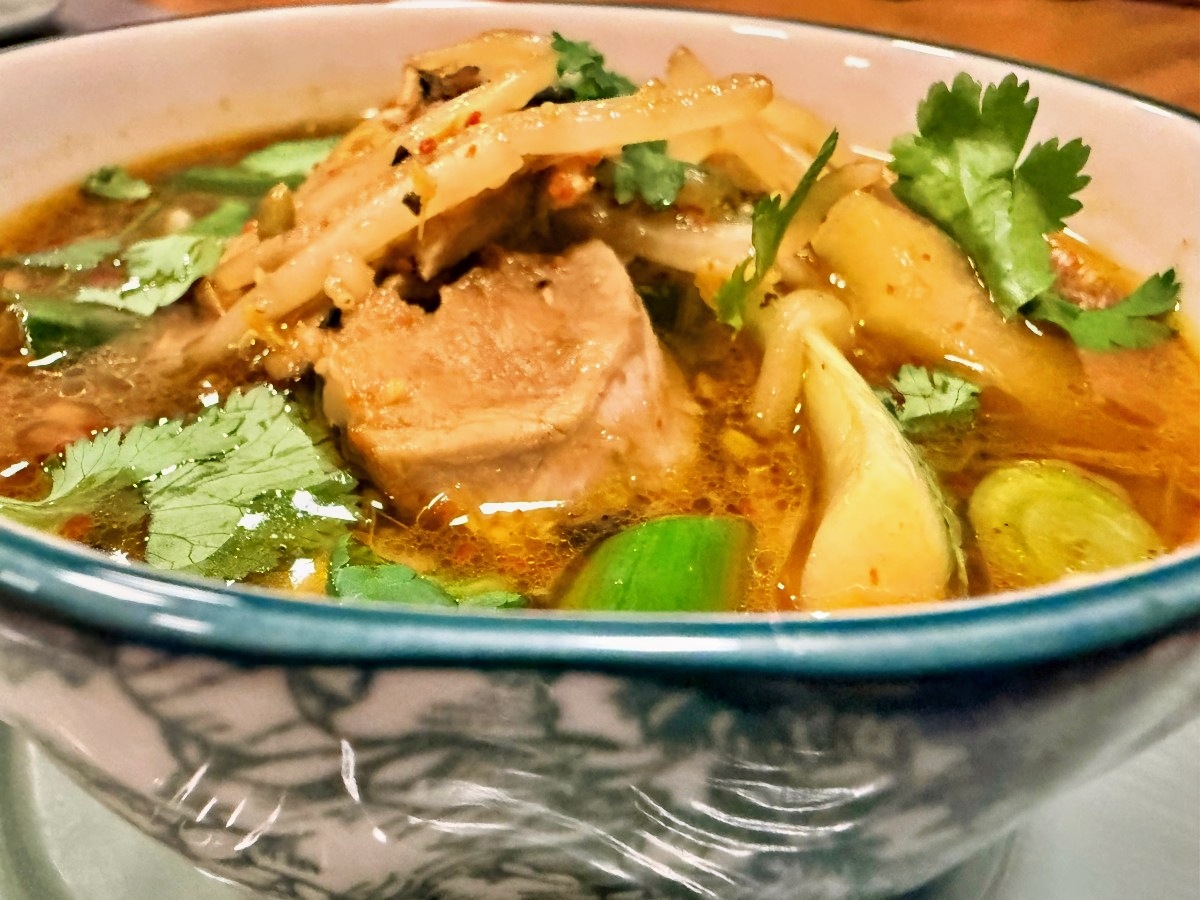
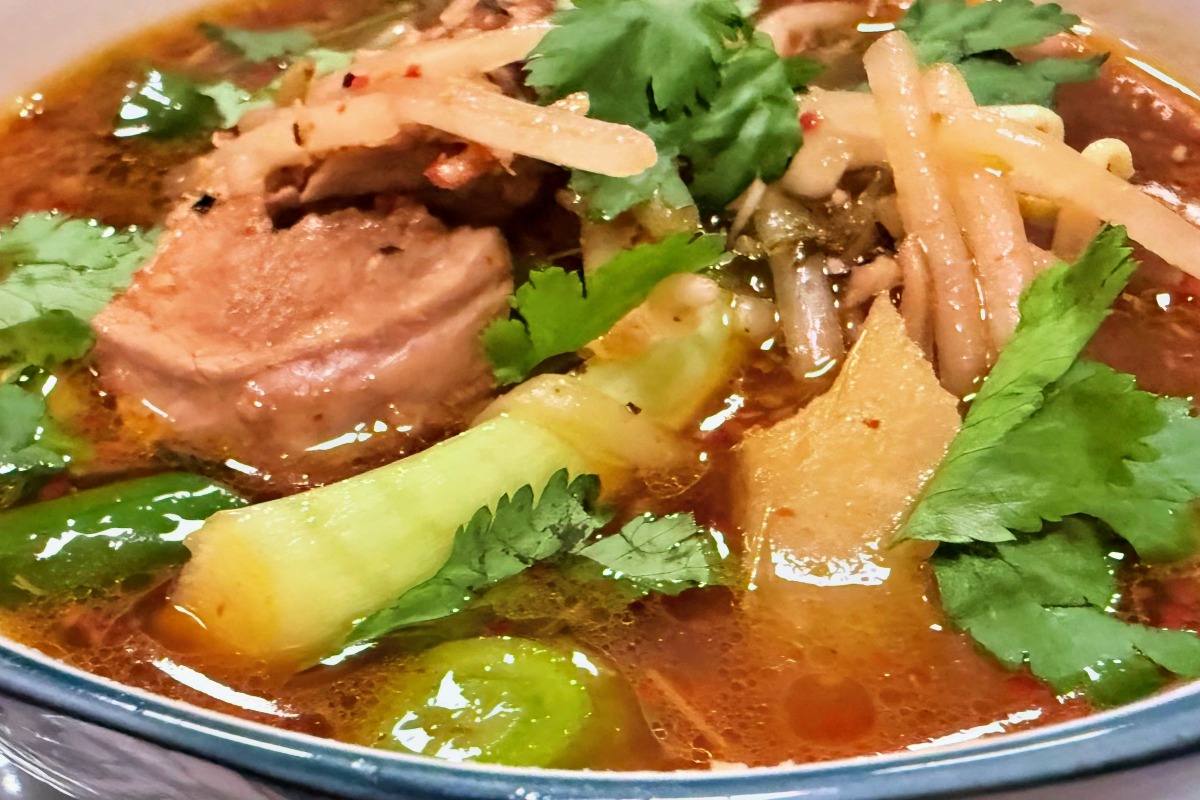
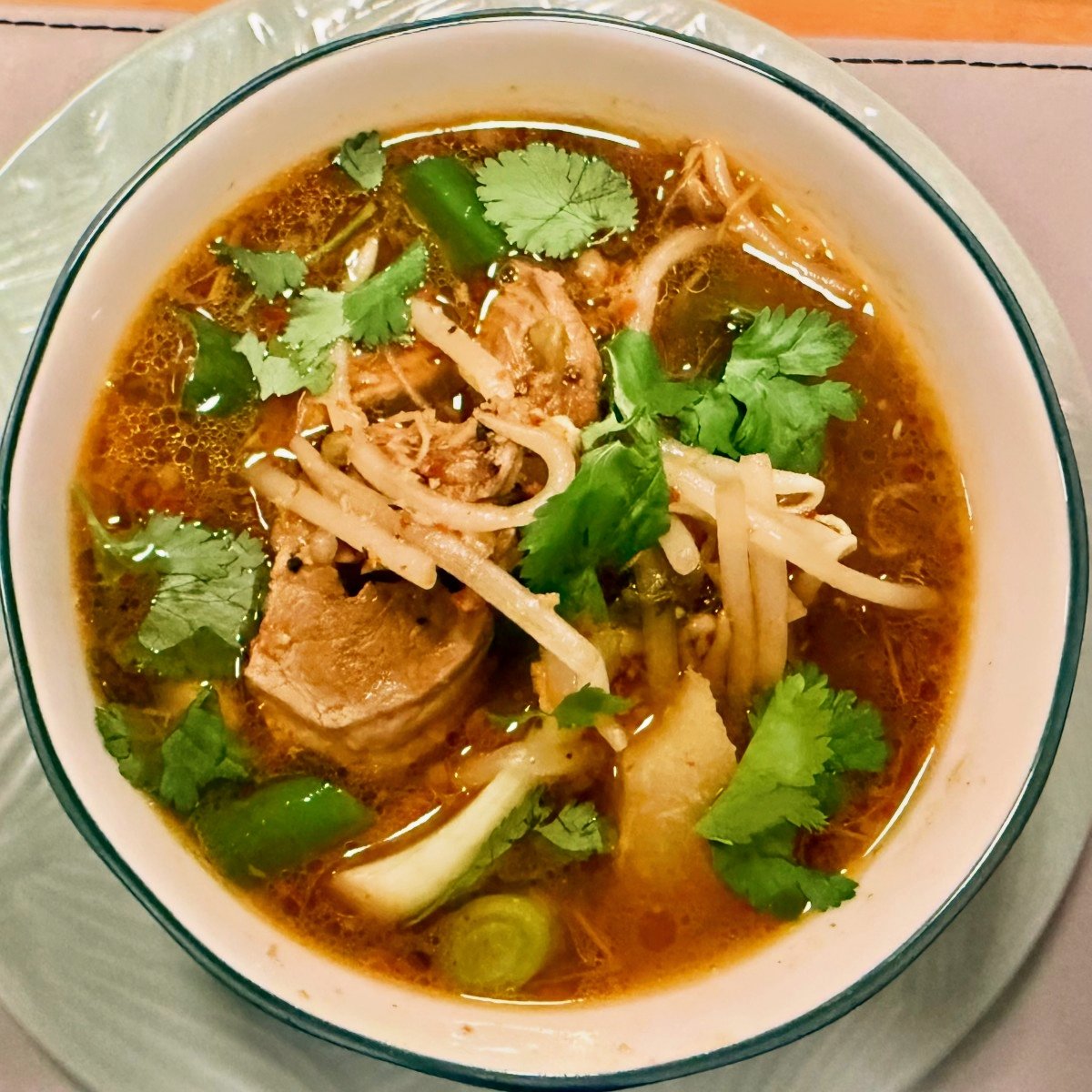
Cambodian sour soup with pork combines tender pork shoulder with pineapple, bean sprouts and bok choy in a broth that’s flavored with yellow kroeung and prahok. Tamarind and fresh lime juice give it its sour taste, and chili adds as much heat as you want. The full Cambodian name is samlor machu kroeung sach chrouk, a sour soup recipe with aromatic paste and pork.
I cooked the pork shoulder steak whole and gave it about an hour to get fully tender before finishing the soup. I added extra lime juice at the end and enjoyed the tender pork and sour broth. You can taste the broth before serving and adjust it to your own preference, as I know heat and sourness preferences vary.
Cambodian Sour Soup at a Glance
Prep time: About 15 minutes, including homemade kroeung
Cook time: About 1 hour 15 minutes, including a 60-minute pork braise
Total time: About 1 hour 30 minutes
Servings: 2 appetizer portions
Cuisine: Cambodian
Main ingredients: Pork shoulder, kroeung, prahok, tamarind and pineapple
Best cooking method: Covered stovetop braise, then a short simmer with the vegetables
Storage: Refrigerate for up to 2 days or freeze promptly
Why You’ll Love It
- Adaptable flavors: You can adjust the chili and sourness independently, so you don’t have to settle for a broth that’s too mild for your taste.
- Tender pork: The slow braise gives you soft pork shoulder that’s easy to pull apart with a fork.
- Ideal for two: The recipe makes 2 appetizer servings, so you can cook a small batch without having to scale a larger recipe down.
Ingredient Notes
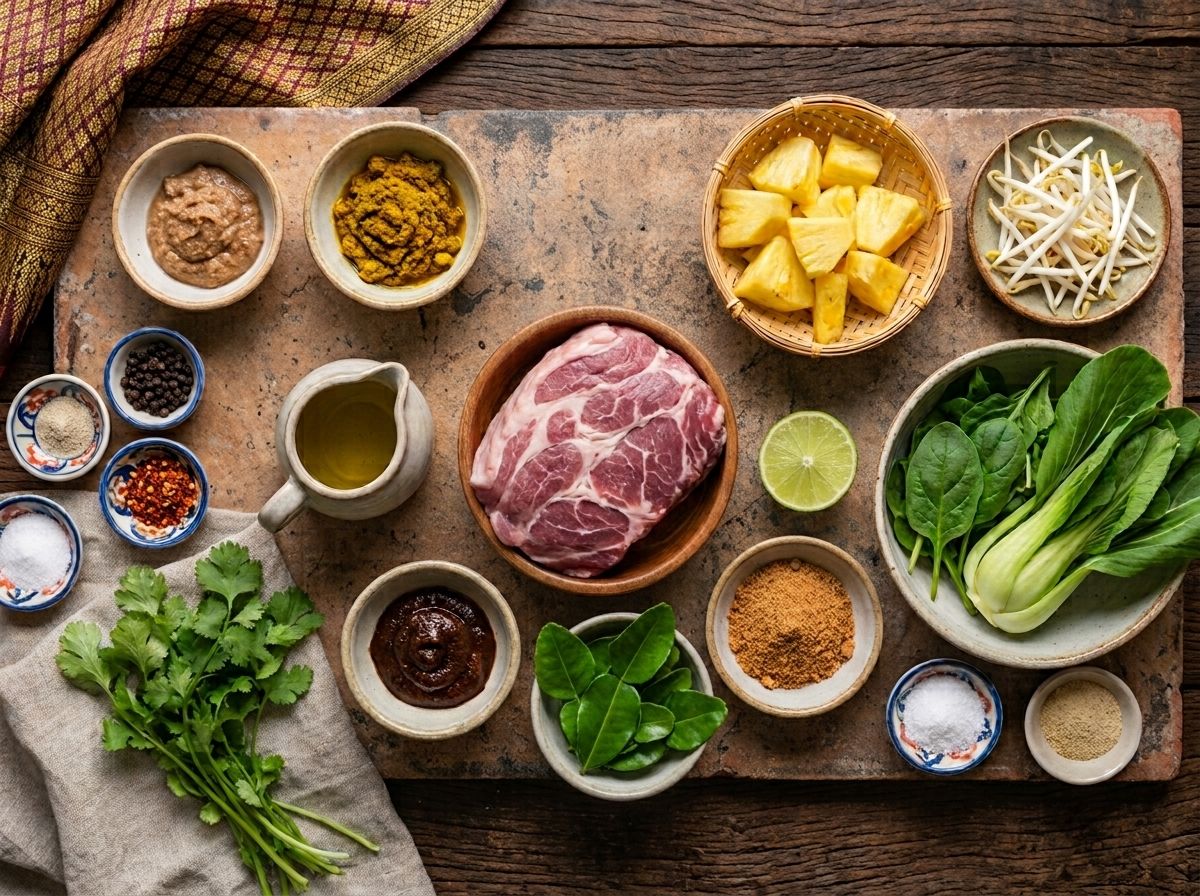
- Pork shoulder: I used a boneless shoulder steak weighing about 7 ounces (200g). I cooked it whole and sliced it into bite-size pieces later, but you can shorten the cook time by dicing it before cooking if you like.
- Yellow kroeung: This is the aromatic paste made here with lemongrass, galangal, garlic and turmeric, plus chili to taste. The homemade batch makes more than what’s needed for the soup, but it freezes well for future dishes.
- Prahok: This is a Cambodian fermented fish paste that seasons the broth. Look for it at a Cambodian or Southeast Asian grocery store. It contains fish, even though the main meat in the soup is pork. I find a lot of Asian recipes pair meat and fish (pork and shrimp wonton soup, anyone?) but it’s not limited to Asian cuisine. Surf ‘n turf is pretty delicious too!
- Tamarind paste: Start with the recipe amount and taste before adding more. Products vary in strength, so check whether yours is a concentrated paste.
- Lime leaves: I add 2 makrut lime leaves, also sold as kaffir lime leaves, directly to the soup instead of grinding them into the kroeung. If doing this, remove them before serving. Makrut is the Thai name but they’re the right ingredient for this recipe. If using dried lime leaves, you may need more, in case they’re less fragrant as fresh ones. It depends on their age and storage conditions.
- Pineapple: Cut it into small chunks. The handful in my original recipe is approximately ¼ cup, so a slightly more generous or smaller amount would be fine.
- Bean sprouts and greens: Use approximately ¼ cup of bean sprouts and ¼ cup of chopped bok choy (pak choi), spinach or a mixture of both. If you’re using spinach, I recommend adding it near the end so it only cooks until just wilted.
- Palm sugar and stock powder: I recommend starting with my listed quantities, then tasting before adding any more salt. Prahok and stock powder already add salt to the soup.
What Does Samlor Machu Kroeung Sach Chrouk Mean?
The name describes the dish: samlor (សម្ល) means soup or stew, machu (ម្ជូរ) means sour and kroeung (គ្រឿង) refers to the aromatic herb and spice paste in this cooking context. Sach (សាច់) means meat and chrouk (ជ្រូក) means pig or pork. Together, sach chrouk means pork meat.
You may also see the sour-soup name written as samlor machou or samlor mchou. Yellow kroeung recipes commonly include makrut lime rind or leaves. I kept the leaves separate from the paste for this soup, so the homemade paste below reflects what I used, with the lime leaves listed among the soup ingredients.
How to Make Cambodian Sour Soup with Pork
- Cook the prahok and kroeung briefly in oil, then coat the pork with the paste.
- Braise the shoulder steak gently with a small amount of water and the lime leaves until tender.
- Cut or pull the tender pork into smaller pieces, then finish the broth with the remaining water, tamarind and seasonings.
- The pineapple and vegetables go into the soup next.
- Finish with lime juice and cilantro (aka fresh coriander), tasting the soup before you serve it and adjust anything that needs it.
Tips for Tender Pork and a Sour Broth
- Use tenderness as your guide: My whole shoulder steak took about an hour to braise. Thickness and heat affect the time, so continue cooking if the pork still resists a fork.
- Check the braising liquid: The initial ¼ cup (60ml) of water is a small amount. Keep the heat low and add a splash more whenever the soup mixture seems to be drying out.
- Taste before adding more sugar: Pineapple adds sweetness. If your broth tastes too sweet, you can add a little more tamarind or fresh lime juice and taste it again.
- Increase heat gradually: Add chili flakes a pinch at a time to achieve your preferred spiciness level. If serving a mixed crowd, you can offer extra lime wedges and hot sauce at the table so everyone can adjust their own.
Substitutions and Variations
- Galangal or ginger: Use ginger if you can’t find galangal. The paste will taste different, but ginger is an option if galangal isn’t possible.
- Bok choy or spinach: Choose either or combine them. Cook the bok choy until tender and add spinach at the end. Neither of these ingredients takes more than a few minutes to cook.
- Fresh or ground turmeric: You can use the same amount of either finely chopped fresh turmeric or ground turmeric.
- Cut pork: You can cut the raw shoulder into 1-inch (2.5cm) cubes or cook it whole. Start checking tenderness earlier if you’re dicing it before cooking, as smaller pieces tend to cook faster than a larger piece.
Handy Equipment
- Cooking pot with a lid: A 2-quart (1.9-liter) pot or Dutch oven gives the small batch room to simmer. Make sure to use a pan wide enough to hold your shoulder steak if cooking as one piece.
You’ll also need a knife and cutting board, measuring cups and spoons, a stirring spoon, tongs and a ladle. A mortar and pestle is the simplest option for the small homemade paste batch. If you use a blender, check that it can process a small quantity without adding a large amount of liquid.
Serving Ideas
Divide the soup between 2 warmed soup bowls and finish each with fresh cilantro. Offer extra lime and chili flakes at the table so everyone can adjust their own serving. If you want a larger meal, serve it with steamed rice or some popiah if you don’t mind a crispy Malaysian snack joining the party!
How to Store Cambodian Sour Soup
- Refrigerate: Divide leftovers into shallow containers, cool promptly and refrigerate within 2 hours. Keep covered and eat within 2 days.
- Reheat: Reheat only as much as you need in a saucepan, stirring until the soup and pork are steaming hot throughout.
- Freeze and thaw: Freeze cooled leftovers promptly in an airtight container. Thaw in the refrigerator and use within a day of fully thawing. The vegetables will be a bit softer after thawing.
- Make ahead: You can braise the pork and prepare the broth a day ahead, then cool and refrigerate it as above. Reheat thoroughly before adding and cooking the vegetables. Add the fresh lime juice and cilantro before serving.
Cambodian Sour Soup FAQs
No, I find the flavors very different. This Cambodian pork soup uses kroeung and prahok, with tamarind and lime for sourness. Chinese hot and sour soup is a different dish. If you want to try something different, you might enjoy my Chinese-style hot and sour squid soup.
No. Cambodian sour soup describes a group of soups. This recipe is the pork version, identified by sach chrouk in its full name.
It won’t give you the same flavor and I haven’t tried it. It might be good though – let me know if you try it!
Check the labels on the prahok, stock powder, tamarind paste and any packaged kroeung before describing it as gluten-free. The homemade paste alone doesn’t establish that every ingredient in the finished soup is gluten-free.
Cambodian Sour Soup with Pork
Ingredients
- 7 ounces (200g) boneless pork shoulder steak
- 1 teaspoon prahok
- 2 teaspoons yellow kroeung, from the batch below or prepared paste
- 2 teaspoons tamarind paste, plus more to taste
- ¼ cup (about 40g) pineapple chunks
- ¼ cup (about 25g) bean sprouts
- ¼ cup chopped bok choy (pak choi, about 18g) or loosely packed raw spinach (about 8g), or a mixture
- 2 teaspoons palm sugar
- ½ teaspoon chicken stock powder
- 1 ½ cups (360ml) water, divided, plus extra as needed for braising
- 2 makrut lime leaves (kaffir lime leaves)
- A splash of cooking oil
- Fresh lime juice, to taste
- Fresh cilantro (coriander), to finish
- Salt, black pepper and chili flakes, to taste
- 2 stalks lemongrass, tender white parts only, finely minced
- 1 tablespoon chopped galangal or ginger
- 3 garlic cloves, peeled
- 1 teaspoon finely chopped fresh turmeric or ground turmeric
- 1 teaspoon chopped red chili or chili paste, or to taste
Equipment
- Saucepan with lid, about 2 quarts (1.9 liters), wide enough for the pork steak
- Knife
- Cutting board
- Measuring cups
- Measuring spoons
- Stirring spoon
- Tongs
- Ladle
- Mortar and pestle, or a blender capable of processing a small paste batch
- Food thermometer
- Clean plate for the cooked pork
Method
- Pound the homemade kroeung ingredients together with a mortar and pestle until you have a fine paste. Alternatively, use a blender that can process a small batch. Measure 2 teaspoons for the soup; the batch makes more than you need.
- Heat a splash of oil in a saucepan over medium heat. Add the prahok and the measured 2 teaspoons of kroeung and stir for about 1 minute.
- Add the pork shoulder steak and cook for 2 to 3 minutes, flipping it to coat both sides with the paste.
- Add ¼ cup (60ml) of the water and the 2 lime leaves. Cover, reduce the heat to low and braise gently until the pork is tender, about 60 minutes for the whole steak I used.
- Check that the pork is cooked through.
- Transfer the cooked steak to a clean plate, cut or pull it into bite-size pieces and return it to the saucepan.
- Add the remaining 1 ¼ cups (300ml) water and bring to a boil. Stir in the tamarind paste, chicken stock powder and palm sugar, then add the pineapple, bean sprouts and bok choy, if using.
- Reduce the heat and simmer until the vegetables are tender. Allow approximately 5 to 10 minutes as a guide, depending on the size of the bok choy pieces.
- Remove and discard the lime leaves. Stir in fresh lime juice to taste. Taste the broth and adjust with salt, black pepper, chili flakes, extra tamarind, lime juice or palm sugar as needed.
- Divide between 2 warmed soup bowl, top with cilantro and serve hot.
Notes
- Timing: I braised the pork shoulder steak whole for about an hour. The listed prep, finishing and total times are estimates. Cubed shoulder may become tender sooner, so I recommend you check doneness with a fork.
- Extra paste: The kroeung batch makes more than you need for this Cambodian soup recipe. Freeze unused paste in small portions promptly; thaw in the refrigerator.
- Lime leaves: I chose to add the 2 lime leaves directly to the soup, so they aren’t included in the paste recipe.
- Seasoning: I added extra lime juice to mine before serving. If you want to increase the heat and/or sourness, I suggest you add the relevant ingredients gradually before serving.
- Quantities: The vegetable and pineapple quantities are approximate and don’t need to be exact. I added a handful of each.
More Asian Soup Recipes
My Penang asam laksa has a tamarind-based fish broth with rice noodles. Bok choy soup with eggs and noodles gives you a different way to use the greens, while tom kha gai combines chicken with a coconut milk broth. You might also like to explore more Cambodian cuisine.