Asam Pedas (Malaysian Sour and Spicy Fish Stew)
This post contains affiliate links. As an Amazon Associate I earn from qualifying purchases.
Asam pedas is a really tasty, sour and spicy Malaysian fish stew. Tamarind, dried chilies, lemongrass and belacan flavor the broth and firm pieces of fish simmer with tomato and okra.
I like making this when I don’t feel like pan-frying or grilling fish. The combination of sourness, chili heat and salty shrimp paste is very satisfying. Steamed rice absorbs the broth and calms the chilies a bit.
This asam pedas recipe follows a boiled style, so the spice paste goes directly into the water with tamarind and lemongrass. Some cooks fry the paste in oil, although methods differ between regions and families. Simmering the paste gives this recipe its light broth.
Asam Pedas at a Glance
- Prep time: 20 minutes
- Cook time: 25 minutes
- Total time: 45 minutes
- Servings: 4
- Cuisine: Malaysian
- Main ingredients: Firm fish, tamarind, dried chilies, lemongrass, tomatoes and okra
- Best cooking method: Gentle stovetop simmer in a nonreactive pot
- Storage: Refrigerate for up to 2 days or freeze the broth without fish for up to 1 month
Why Asam Pedas is Worth Making
- No frying step: The blended spice paste simmers in the broth, so you don’t need any cooking oil.
- Several fish choices work: Mackerel, snapper, cod, sea bass and stingray can all handle a gentle simmer without falling apart.
- You control the chili heat: Remove the chili seeds or choose a milder dried variety if you don’t want it too hot.
What is Asam Pedas?
Asam pedas means “sour spicy” in Malay. Fish is the most common main ingredient, which is why you’ll also see the dish called ikan asam pedas or asam pedas ikan. A stingray preparation is known as asam pedas ikan pari.
The dish is strongly associated with Melaka (Malacca) and Johor in Malaysia, as well as Malay and Peranakan cooking more broadly. Related sour and spicy fish dishes appear elsewhere in the Malay world and in Sumatra, Indonesia.
Tamarind and chilies give this dish its defining sourness and heat. Many preparations also contain lemongrass, belacan, shallots, garlic, ginger and/or turmeric. Tomatoes, okra and eggplant (aubergine) are common veggie additions.
Ingredient Notes
- Firm fish: Mackerel, snapper, cod, sea bass and stingray are all good here. Thick pieces hold together better than small cubes. You can also read more about affordable basa or pangasius fish before deciding if it suits your stew.
- Tamarind paste: The recipe below assumes ordinary tamarind paste rather than a highly concentrated double-strength product. Brands differ, so taste yours before adding the full amount if the label describes it as concentrate.
- Dried red chilies: I like to soak them to make them soft for the blender. You can remove some or all of the seeds for less heat.
- Belacan: Malaysian belacan is a firm fermented shrimp paste. It seasons the broth with salty, savory flavor. The first time I smelled belacan, I wasn’t sure if I’d like it because it’s pretty pungent, but it does soften a bit when cooked.
- Lemongrass: Bruise the thick lower section with the side of a knife so it releases more aroma during simmering.
- Tomato and okra: Add these shortly before the fish. They need a little longer than the fish to soften.
- Shallots, garlic and ginger: Blend these thoroughly with the soaked chilies and belacan. Try to get rid of any large chunks.
How to Make Asam Pedas
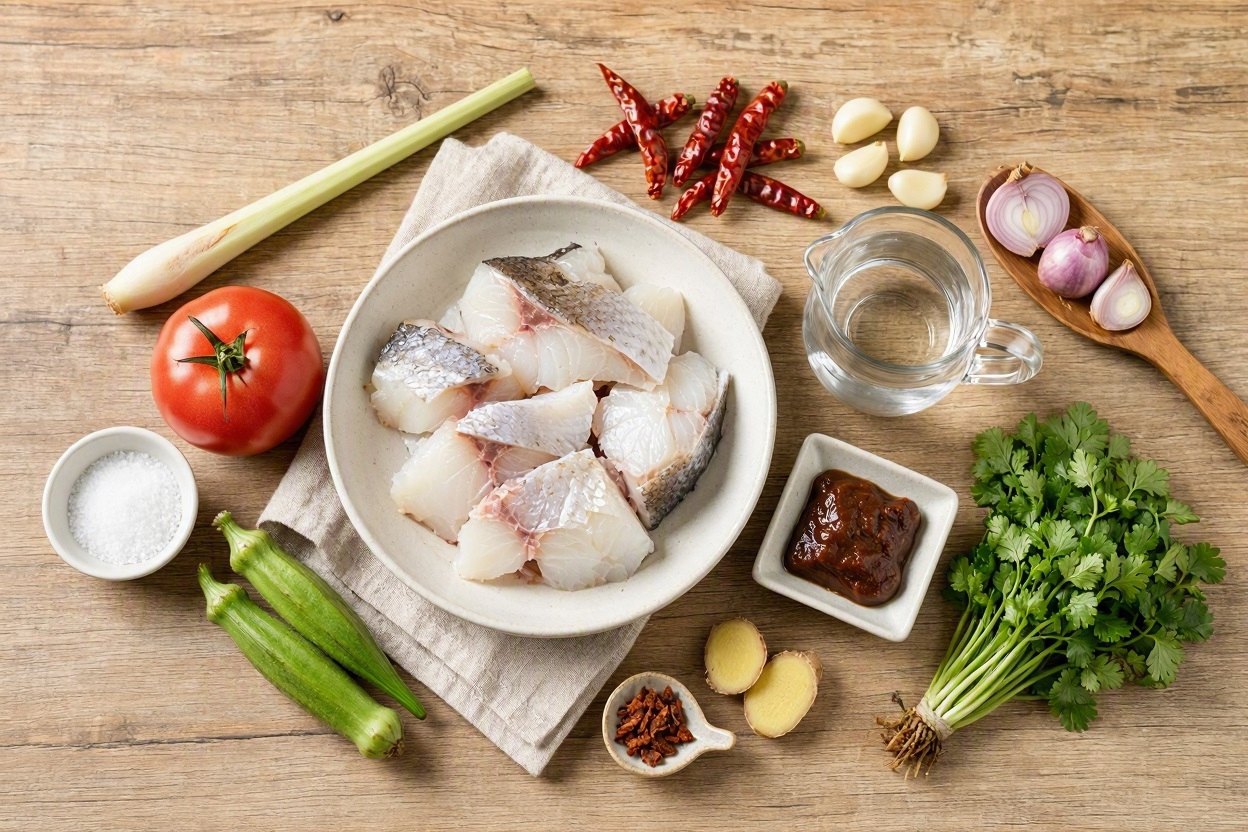
Soak the dried chilies first, then blend them with the shallots, garlic, ginger and belacan. Add only enough of the measured water to help the blender move the ingredients.
Add the paste to a nonreactive pot with the remaining water, tamarind and bruised lemongrass. Simmer the broth before adding the tomato and okra. The fish goes in last because thick pieces need only a short, gentle simmer to cook through.
Avoid stirring once your fish starts cooking. You can swirl the pot gently if the broth needs moving, then lift each piece out with a wide spoon or fish slice.
Boiled Spice Paste vs Fried Rempah
Asam pedas recipes don’t all treat the spice paste in the same way. Some fry the blended rempah in oil before adding tamarind water. Others simmer the raw paste directly in the broth.
My recipe uses the second method. Simmering the paste before adding the fish gives the shallots, garlic and chilies enough time to cook. The other method is good too, but I typically boil instead of frying when making this.
Melaka, Johor and Regional Variations
Melaka and Johor are the Malaysian regions most closely associated with asam pedas, although recipes still differ between towns and households. The spice paste might contain turmeric, galangal, candlenuts and/or black pepper, while the broth can include Vietnamese coriander, torch ginger and/or kaffir lime leaves.
The choice of fish also depends on what’s available. Stingray is popular for asam pedas ikan pari, while mackerel and snapper are common alternatives. A related Minangkabau dish from Sumatra is called asam padeh.
Choosing Fish for Asam Pedas
Choose fish with flesh that won’t disintegrate as soon as it hits the broth. Skin-on steaks and thick fillets are easier to handle than small skinless pieces. Mackerel has a stronger taste and more natural richness, while cod, snapper, sea bream and sea bass are milder.
Stingray or skate has a distinctive fibrous texture and works especially well with tamarind. I love stringrays and used to catch them fishing in Gran Canaria but it’s quite a long time since I had stingray (or skate). I do remember they were pretty gross (and slimy) to prepare! If you buy frozen fish, thaw it completely in the refrigerator and pat away excess moisture before cooking.
Tips for the Best Asam Pedas
- Use a nonreactive pot: Stainless steel, enameled cookware or glazed clay can handle the acidic tamarind. Avoid extended cooking in bare aluminum or unseasoned cast iron.
- Blend thoroughly: A smooth paste disperses more evenly through the light broth.
- Simmer before adding fish: Give the raw aromatics time to cook before the delicate fish goes into the pot.
- Keep the heat gentle: Hard boiling and frequent stirring can break the fish apart.
- Check the thickest piece: Fish is safely cooked once it reaches 145°F (63°C) and flakes easily.
Variations and Substitutions
- For less heat: Remove the chili seeds or replace some of the dried chilies with a milder variety.
- For asam pedas ikan pari: Use cleaned stingray or skate pieces and check the thickest part before serving.
- If belacan isn’t available: Thai shrimp paste or Indonesian terasi is probably the closest practical substitute. Leaving it out changes the broth noticeably.
- If okra isn’t available: Leave it out or add a few pieces of eggplant (aubergine). Eggplant may need a longer simmer before the fish is added.
- For asam pedas ayam: Use a dedicated chicken recipe rather than making a direct substitution. Chicken needs a longer cooking time and must reach 165°F (74°C).

Asam Pedas vs Asam Laksa
Asam pedas is a fish stew served with rice. Penang asam laksa is a noodle soup with flaked fish, tamarind, herbs and fresh garnishes. Both are sour and spicy, although the noodles and fish-based stock give asam laksa a different consistency.
Curry laksa is further removed from asam pedas because its broth has a coconut milk base. It’s creamy and typically served with noodles, tofu puffs, shrimp or chicken.
What to Serve with Asam Pedas
Steamed white rice is the main accompaniment. Spoon plenty of broth over the rice and serve the fish in large pieces so it doesn’t fall apart before reaching the plate.
A little sambal belacan can go on the table for anyone who wants more chili heat. Chilled Malaysian acar is a crisp, pickled condiment which contrasts well.
How to Store
- Refrigerator: Cool the stew and refrigerate it in a covered container within 2 hours. Eat it within 2 days.
- Reheating: Reheat gently on the stove until the broth and fish reach 165°F (74°C). Avoid repeated stirring because cooked fish breaks easily.
- Freezer: Fish and okra lose quality after freezing. For better results, freeze the broth without the fish and vegetables for up to 1 month.
- Make ahead: Blend the spice paste up to 2 days ahead and refrigerate it in an airtight container. You can also cook the broth base a day ahead, then add fresh tomato, okra and fish while reheating.
Asam Pedas FAQs
Yes. Thaw the fish overnight in the refrigerator, pat away excess moisture and cut it into thick pieces before adding it to the broth.
Yes. A small cleaned whole mackerel is suitable, provided it fits comfortably in the pot. Simmer it gently and check that the thickest part reaches 145°F (63°C).
You can use fresh chilies, although the broth may have a lighter color and less concentrated chili flavor. Add them according to their heat because fresh chili varieties differ considerably.
The basic ingredients are naturally gluten-free. Check the labels on packaged tamarind paste and belacan for additives or cross-contamination if you need the finished dish to be strictly gluten-free.
Not the same, but they’re closely related sour and spicy dishes. Asam padeh is associated with Minangkabau cooking in Sumatra, while Malaysian asam pedas has many Melaka, Johor and Peranakan variations. The ingredients aren’t identical in every recipe.
The acid in tamarind can react with exposed metal. With bare cast iron, it may strip some of the seasoning and give the broth a metallic taste or darker color. Bare aluminum can also discolor or develop light pitting. Stainless steel, enamel and glazed clay won’t affect the flavor. The dish only simmers for a short time though, so you can try it in a reactive pot and it should be okay.
More Malaysian Fish Dishes to Try
For another Malaysian fish preparation, try otak-otak, where seasoned fish cooks in banana leaves, or ikan bakar with its spicy grilled coating. If you’re ready to move beyond seafood, babi pongteh is a mild Nyonya pork braise. Kolo mee and char kway teow cover two very different Malaysian noodle styles.
Browse my Malaysian recipes guide for regional background, or go straight to the Malaysian recipes archive for the latest additions.
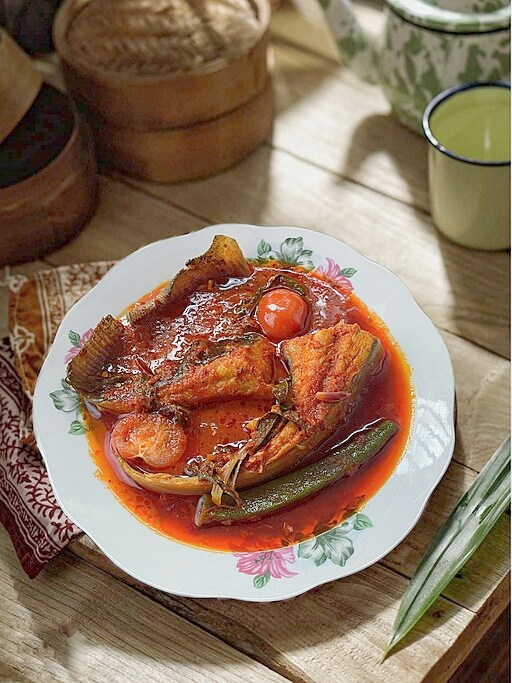
Asam Pedas
Ingredients
- 1 pound (450g) firm fish, cut into large pieces
- 3 cups (720ml) water, divided
- 2 tablespoons standard tamarind paste
- 1 lemongrass stalk, bruised
- 1 tomato, quartered
- 2 okra pods, halved
- Fine salt, to taste
- 6 dried red chilies
- 3 garlic cloves
- 2 shallots
- 1 inch (2 ½ cm) fresh ginger
- 1 teaspoon belacan
- Sliced red chilies
- Fresh Vietnamese coriander (daun kesum) or cilantro (coriander)
Equipment
- Blender
- Medium nonreactive pot or Dutch oven
- Sharp knife
- Cutting board
- Measuring Cups and Spoons
- Wooden or silicone spoon
- Wide serving spoon or fish slice
- Instant-read thermometer, optional
Method
- Remove the stems from the dried chilies. Shake out some or all of the seeds if you want less heat. Cover the chilies with hot water, soak for 10 minutes and drain.
- Add the soaked chilies, garlic, shallots, ginger and belacan to a blender. Add 2 or 3 tablespoons of the measured water and blend until smooth. Add another tablespoon of water if the blades need help moving the paste.
- Add the remaining measured water to a medium nonreactive pot. Scrape in the spice paste, then add the tamarind paste and bruised lemongrass. Stir well and bring to a gentle simmer.
- Simmer uncovered for 10 minutes, stirring occasionally, so the raw aromatics cook into the broth.
- Add the tomato and okra. Simmer gently for 3 minutes.
- Add the fish pieces. Keep the broth at a gentle simmer and cook for 5 to 8 minutes, or until the thickest piece reaches 145°F (63°C) and flakes easily. Swirl the pot rather than stirring the fish.
- Taste the broth and add salt as needed. Remove the lemongrass, add the optional garnishes and serve with steamed white rice.
Notes
- I find that tamarind products can differ considerably in strength. If yours is labeled concentrate or double strength, I recommend that you begin with less and add more only after tasting the simmered broth.
- I like to use thick fish pieces because small cubes can break apart before the tomato and okra have finished cooking.
- Belacan is fermented shrimp paste, so this recipe isn’t suitable for anyone with a shellfish allergy.
- This recipe deliberately simmers the spice paste in the broth. You don’t need oil or a separate frying step.
- Cool leftovers and refrigerate them within 2 hours. Eat within 2 days and reheat to 165°F (74°C). Freeze the broth without the fish and vegetables for up to a month.
Image credit: Elly Suhailee / Wikimedia Commons, CC BY-SA 4.0. Cropped.