Babi Pongteh Recipe (Nyonya Braised Pork)
This post contains affiliate links. As an Amazon Associate I earn from qualifying purchases.
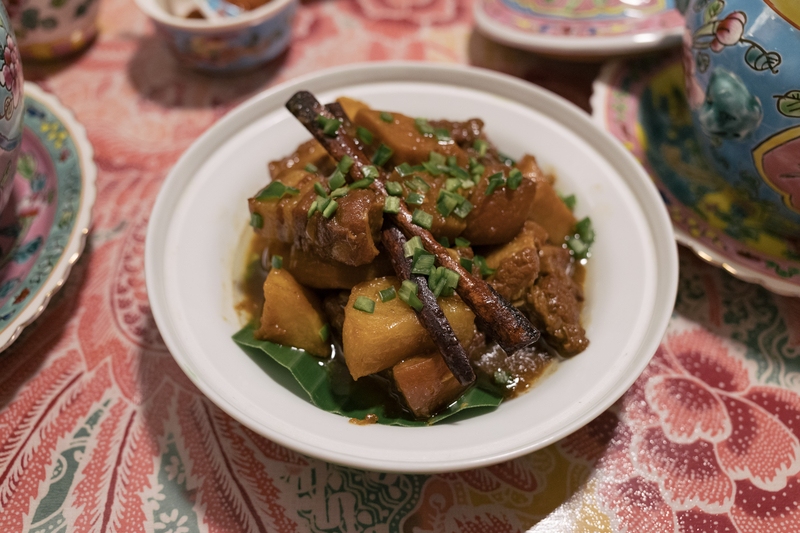
Babi pongteh is a Nyonya pork stew braised with tauchu, garlic and palm sugar. The pork cooks gently until tender and the fermented soybean paste breaks down and seasons the thick brown sauce.
I’d describe it as a mild braise rather than a chili-based dish. Tauchu adds salt and a pronounced fermented-bean taste while palm sugar tempers it. Potatoes cook in the same pot and absorb the gravy during the braise.
Serve this babi pongteh recipe with steamed rice and don’t forget to give the sauce time to settle before eating. I like that it’s a make-ahead dish because the pork and sauce reheat gently and seem to be even tastier the next day.
Babi Pongteh at a Glance
- Prep time: 20 minutes
- Cook time: 1 hour
- Total time: 1 hour 20 minutes
- Servings: 4
- Cuisine: Malaysian Peranakan/Nyonya
- Main ingredients: Pork belly, tauchu, garlic, palm sugar and potatoes
- Best cooking method: Gentle stovetop braise
- Storage: Refrigerate for up to 3 days or freeze for up to 2 months
Why Nyonya Pork Braise is Worth Trying
- Focused seasoning: Tauchu, garlic and palm sugar create the main flavor without you having to make a complicated spice paste or needing a cupboard full of seasonings.
- Everything cooks in one pot: The potatoes cook in the braising liquid and absorb the tauchu sauce.
- A make-ahead cooking favorite: The sauce settles as the dish rests and the pork reheats well over low heat.
- There’s no chili heat: It is a nice choice if you’re in the mood for something that’s salty and slightly sweet rather than chili-hot.
Ingredient Notes
- Tauchu: This salted fermented soybean paste may also be labelled taucheo, yellow bean paste or preserved soybean paste. Choose a salty paste with visible whole or partly crushed beans. It is not interchangeable with natto, which has a very different texture and use.
- Pork belly: The fat renders during browning and helps the meat remain tender during the braise. I take the time to cut it into similar-sized chunks so the pieces cook at the same rate.
- Garlic: I used six medium sized cloves for the aromatic base. Cook the garlic briefly before adding the liquids, just until it’s fragrant. Don’t let it get dark or bitter.
- Palm sugar or gula melaka: This balances the salty paste and gives the sauce a subtle sweetness. I find that chopping firm blocks before measuring makes them dissolve more easily.
- Soy sauce: It adds more salt and soybean seasoning. Tauchu brands vary in saltiness, so avoid adding extra salt before the sauce has simmered.
- Potatoes: Use waxy or all-purpose potatoes that will get tender but not disintegrate. I keep the chunks fairly even. The potatoes go in after the pork’s begun to tenderize.
What is Babi Pongteh?
Babi pongteh is a Peranakan pork stew associated with Nyonya cooking in Malaysia and Singapore. It’s got Chinese roots and uses tauchu, also called taucheo, as the main seasoning. Garlic and palm sugar support the fermented bean paste while slow braising tenderizes the pork.
Recipes vary between households. Some include mushrooms, bamboo shoots or other veggies while this recipe has pork belly and potatoes. Fermented soybean paste and slow braising define this Malaysian recipe more clearly than one rigid list of additions.

How to Make Babi Pongteh
Begin by browning the pork belly so some of its fat renders and the outside browns a bit. Cook the garlic briefly, then stir in the tauchu and crush some of the beans against the pot. Add the palm sugar, soy sauce and water before bringing everything to a gentle simmer.
Add the potatoes when the pork’s begun to soften. Continue simmering until the meat is fork-tender, the potatoes are cooked through and the liquid has reduced to a gravy that coats the pork.
Tips for the Best Babi Pongteh
- Brown the pork in batches if necessary: Give the pieces enough room to touch the hot surface. Crowding the pot causes them to steam.
- Mash only some of the tauchu: Crushing some of the beans helps them disperse through the gravy while leaving a little texture in there.
- Keep the simmer gentle: Hard boiling can make the pork tighten before the connective tissue has had time to soften. I learned this one the hard way!
- Check the sauce before adjusting it: Tauchu and soy sauce both contain salt. Taste after the sauce has simmered before deciding whether it needs dilution.
- Watch the potatoes near the end: They should be tender enough for a knife to slide through while still holding their shape.
- Adjust the gravy at the end: Simmer uncovered a little longer if it’s thin. You can add a small splash of water if it has reduced too far.
Variations and Substitutions
- Pork shoulder: This is leaner than pork belly, although the cooking time may differ.
- Chicken thighs: These are also used in pongteh dishes and cook more quickly than pork belly.
- Miso and light soy sauce: A small amount of each can replace tauchu if necessary. The result won’t have the same texture or taste but it kind of works.
- Natto: Avoid using it as a substitute because its sticky texture and strong aroma don’t work for this braise at all.
What to Serve with Babi Pongteh
Steamed white rice is the simplest accompaniment because it absorbs the tauchu gravy. I like the vinegar and crunch Malaysian acar adds to the plate. Want something crispy to start? Popiah is Malaysia’s answer to egg rolls (spring rolls)!
And you may want to finish the meal with cendol, a cold dessert made with coconut milk and gula melaka.
How to Store
- Refrigerator: Cool the babi pongteh promptly and store it in an airtight container for up to 3 days.
- Reheating: Warm it in a covered pot over low heat until hot throughout. Add a splash of water if the chilled sauce is too thick.
- Freezer: Freeze cooled portions for up to 2 months. The pork and sauce freeze well, although the potatoes may become softer or slightly grainy after thawing.
- Make ahead: Prepare the dish a day in advance, refrigerate it and reheat gently before serving. Remove any firm layer of excess fat from the chilled sauce first if preferred.
Babi Pongteh and Peranakan Cooking
Babi pongteh reflects the Chinese roots and Southeast Asian development of Peranakan cooking. Chinese-style braising is combined with ingredients strongly associated with the region, particularly tauchu and palm sugar.
The dish appears in family cooking as well as festive and ceremonial settings. Household recipes have evolved in different directions, which helps explain why one cook may add potatoes while another uses mushrooms, bamboo shoots or a different cut of pork.
Easy Babi Pongteh FAQs
Usually not. Spoon it from the jar and mash it lightly before cooking. Follow the package directions if your brand specifically recommends rinsing.
Yes. Leave them out and monitor the sauce near the end because there will be less starch to thicken the gravy and less food absorbing the braising liquid.
Tauchu brands vary in saltiness and soy sauce adds more salt. Stir in a little water, simmer briefly and taste again before making another adjustment.
Keep it at a gentle simmer and add a small amount of water if the mixture’s getting dry. Pork belly needs enough time for its connective tissue to soften.
No. The standard dish is salty and gently sweet rather than hot. You can serve sambal separately if anytime at the table wants chili heat.
Storage instructions differ between brands. Close the jar securely and follow its label, including any refrigeration guidance and use-by period.
Babi Pongteh
Ingredients
- 1 pound (450g) pork belly, cut into similar sized chunks
- 2 tablespoons tauchu (fermented soybean paste)
- 6 garlic cloves, chopped
- 1 tablespoon palm sugar, chopped
- 1 tablespoon soy sauce
- 1 ½ cups (360ml) water
- 2 medium potatoes, peeled and cut into chunks
- Fried shallots
- Sliced green onions
- Cilantro (fresh coriander)
Equipment
- Heavy pot or Dutch oven
- Wooden spoon
- Chef’s knife
- Cutting board
Method
- Heat a heavy pot or Dutch oven over medium heat. Add the pork belly and brown the pieces lightly, turning them so several sides make contact with the pot.
- Add the garlic and cook briefly until fragrant. Stir in the tauchu and mash some of the beans against the pot with the spoon.
- Add the palm sugar, soy sauce and water. Stir well and scrape up any browned pieces from the bottom. Bring the liquid to a gentle simmer and cook until the pork begins to soften.
- Add the potatoes. Continue simmering gently until the pork is fork tender, the potatoes are cooked through and the liquid has reduced to a thick gravy.
- Transfer the babi pongteh to a serving bowl. Add fried shallots, green onions or cilantro if desired. Serve hot with steamed rice.
Notes
- Tauchu brands vary in saltiness. I strongly recommend that you taste the cooked sauce before adding any salt.
- Add a little water if the sauce reduces before the pork is fully tender.
- Fresh pork is safe when it reaches at least 145°F (63°C), followed by a 3 minute rest. Pork belly in a braise should continue cooking until it’s fork tender.
- Refrigerate cooled leftovers in an airtight container for up to 3 days.
More Nyonya and Malaysian Recipes
Another Nyonya main dish is kari kapitan, a chicken curry built around a cooked spice paste. Otak otak is seasoned fish wrapped in banana leaves and shows another side of Peranakan cooking.
If you enjoy slow-cooked Malaysian mains, beef rendang reduces into a concentrated spiced sauce. Penang assam laksa is well worth trying and is a tasty dish with tamarind, fish and fresh herbs.
You may also like to browse my Malaysian recipes hub for more dishes from Malaysia’s different regional and cultural cooking traditions.
A Slow Braise Worth Serving with Rice
Babi pongteh shows how much character can come from a short seasoning list and patient cooking. Keep the simmer gentle, allow the pork time to soften and serve plenty of rice for the tauchu gravy.