Otak Otak Recipe (Malaysian Spiced Fish in Banana Leaves)
This post contains affiliate links. As an Amazon Associate I earn from qualifying purchases.
I know this otak otak recipe looks quite unusual if you haven’t cooked with banana leaves before, although you’ll find the method itself pretty straightforward.
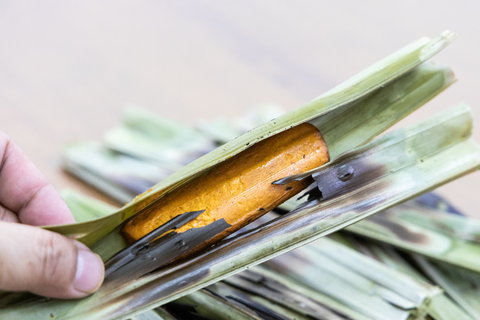
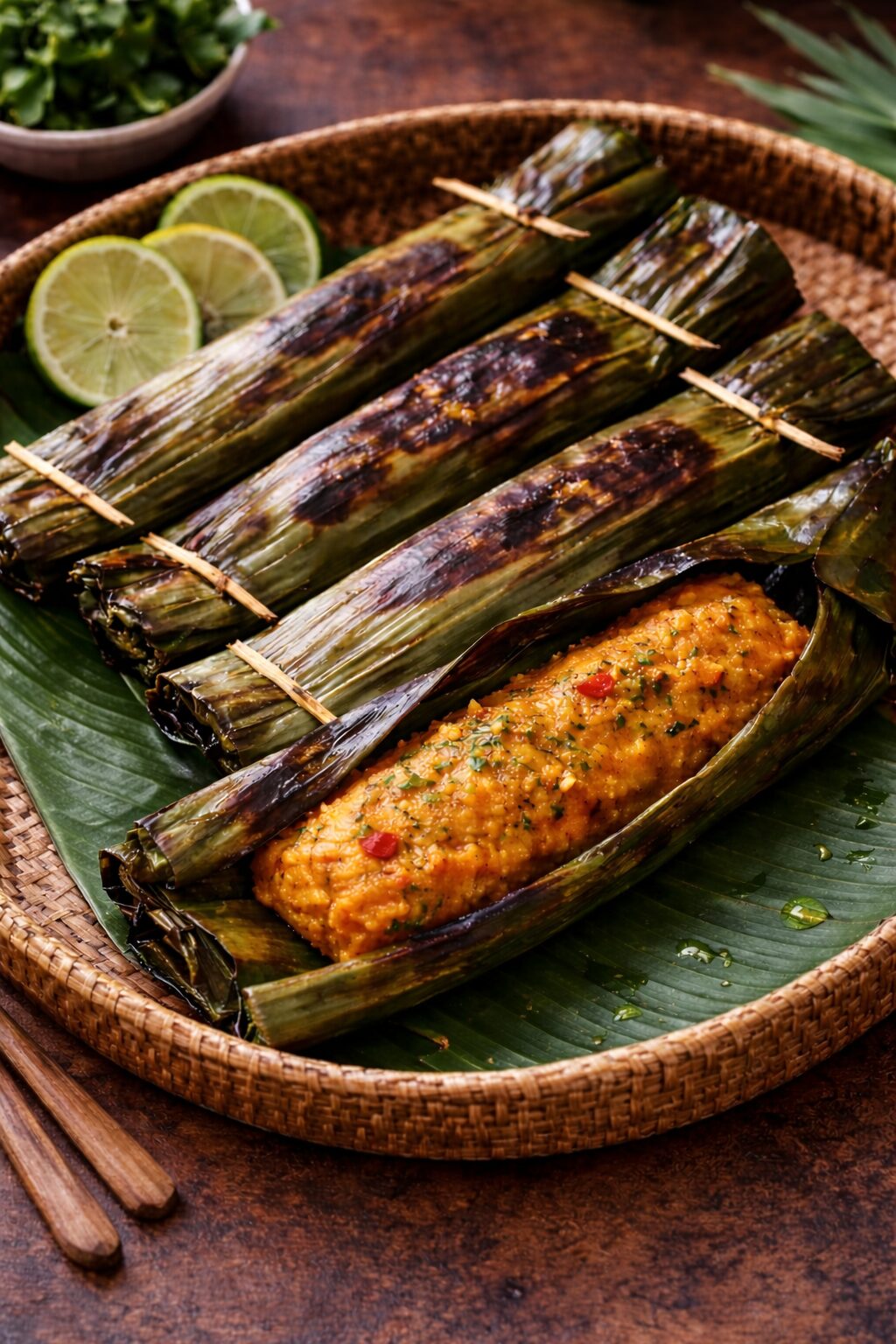
Fish is blended with coconut milk, chilies, lemongrass, galangal, turmeric and a little belacan, then spread onto banana leaves and grilled until the filling sets. The leaves darken and char in places as the fish cooks inside.
This recipe is similar to the grilled otak otak bakar associated with Muar in Johor rather than the softer steamed Nyonya style found in Penang. You don’t eat the banana leaves, although heating them gives the fish a distinctive aroma that’s part of what makes this dish so recognizable.
Otak Otak at a Glance
- Prep time: 25 minutes
- Cook time: 15 minutes
- Total time: 40 minutes
- Servings: 4
- Cuisine: Malaysian
- Main ingredients: Fish, coconut milk, chilies and aromatics
- Best cooking method: Grilled in banana leaves
- Storage: Refrigerate cooked otak otak for up to 2 days
Why It’s Worth Trying
Otak otak isn’t quite like a conventional fish cake. Instead of shaping the mixture into patties and frying them, the seasoned fish paste is spread onto banana leaves and cooked inside them. The filling sets while the leaves scorch in places, so you get the fragrance of the banana leaf as well as the chilies, lemongrass, galangal and belacan in the fish mixture.
It’s also a good recipe to try if you’ve bought frozen banana leaves for another Malaysian dish and have plenty left over. They’re commonly sold in large packages and you only need relatively small pieces for each parcel. I find that banana leaves freeze very well, which is just as well since I ordered some and got 30 huge leaves! Guess what one drawer of my freezer is full of.
What is Otak Otak?
Otak-otak is a Southeast Asian seasoned fish paste cooked inside leaves. Different versions are found in Malaysia, Indonesia and Singapore, and the preparation varies by region. Some are grilled while others are steamed.
Muar in Johor is especially well known for grilled otak-otak. The fish mixture is spread fairly flat inside the leaf so it cooks quickly over the heat. Penang-style Nyonya otak-otak is generally steamed and has more of a soft fish custard consistency, so it makes more sense to treat them as separate regional styles rather than assuming all otak-otak is prepared the same way.
Otak Otak Bakar and Otak Otak Ikan
You might also see this dish described as otak otak ikan or otak otak bakar. Ikan means fish, while bakar refers to grilling or roasting over heat. Since this recipe is made with fish and cooked in banana leaves on a grill, both terms are relevant.
Otak otak goreng is different. Goreng refers to frying and this particular recipe is grilled not fried.
What Does Otak Otak Taste Like?
You can still taste the fish even with all the aromatics added to it. Chili and turmeric give the filling its characteristic color, while lemongrass and galangal add fragrance. Coconut milk adds richness and belacan contributes the salty fermented flavor that’s common in Malaysian cooking.
The fish mixture is soft rather than bouncy like some fried fish cakes. The outer surface firms up more where the filling is closest to the hot banana leaf.

Otak Otak Recipe Ingredients
- Fish: I really like the bold flavor of Spanish mackerel. That’s a good choice if you can find it but there are alternatives that are just as good, including red snapper, cod, bream or hake.
- Coconut milk: I always use full-fat coconut milk because it gives the fish mixture more richness than a light version.
- Dried red chilies: These add chili heat as well as color. Soaking them before blending makes them easier to process. I recommend Kashmiri dried chilies because they give the otak otak plenty of red color with relatively mild heat. Other long dried Asian red chilies also work, especially medium or mild varieties. I’d avoid very hot Thai bird’s eye chilies unless you reduce the quantity, and skip smoky Mexican chilies such as chipotle because they’ll change the flavor of the dish.
- Shallots and garlic: These form part of the spice paste and are blended with the chilies and other aromatics.
- Lemongrass: Use the tender inner part of the stalk and slice it before blending.
- Galangal: Fresh galangal has a distinctive flavor that’s different from ginger. Peel and slice it before adding it to the blender.
- Turmeric: Ground turmeric works well here and adds both flavor and color.
- Belacan: Malaysian fermented shrimp paste has a very strong aroma on its own, although only a small amount is needed in the fish mixture.
- Tapioca starch: This helps bind the fish mixture in this otak otak recipe as it cooks.
- Makrut lime leaves: Also sold as kaffir lime leaves, these fragrant citrus leaves are used widely in Malaysian and other Southeast Asian cooking. Fresh or frozen leaves are best here because they’re finely sliced into the fish mixture.
- Banana leaves: Frozen banana leaves are fine. Thaw them, wipe them clean and warm them briefly before folding so they don’t split. You can get banana leaves from Amazon or check out whether any ethnic or Asian stores nearby sell them.
How to Prepare Banana Leaves
Banana leaves can crack if you try to fold them while they’re cold and stiff. Cut them into rectangles first, then briefly pass each piece over a gas flame or press it against a hot dry skillet (frying pan). It only takes a few seconds for the leaf to become more flexible.
If you’re using frozen banana leaves, thaw them before separating the sheets. Wipe away any moisture before warming them. You can cut around small tears or damaged edges rather than discarding a large sheet.
If you don’t have toothpicks or want a more rustic looking approach (like mine!) twine works just as well. It’s a little fiddly. If you have someone to lend a hand or at least a finger, that makes things simpler, for sure.

How to Make Otak Otak
Start by soaking the dried chilies, then blend them with the shallots, garlic, lemongrass, galangal, turmeric and belacan. Blending the aromatics before adding the fish helps break down the more fibrous ingredients.
The fish, coconut milk, egg, tapioca starch, sugar and salt are then blended into the spice paste. Stir in the finely sliced makrut lime leaves, spoon the mixture onto prepared banana leaves and spread it fairly flat. Fold the leaves around the filling and grill the parcels until the fish mixture is cooked through.
Otak Otak Recipe
Ingredients
- 14 ounces (400g) skinless fish fillet, preferably Spanish mackerel, snapper or cod
- ½ cup (120ml) full-fat coconut milk
- 1 large egg
- 1 tablespoon tapioca starch
- 1 teaspoon granulated sugar
- ¾ teaspoon fine salt
- 2 makrut lime leaves, center ribs removed and leaves very finely sliced
- 8 banana leaf rectangles, about 8 x 6 inches (20 x 15cm)
- 4 dried red chilies
- 3 shallots, roughly chopped
- 2 garlic cloves
- 1 lemongrass stalk, tender inner part sliced
- 1 inch (2.5cm) piece fresh galangal, peeled and sliced
- 1 teaspoon ground turmeric
- 1 teaspoon toasted belacan
Equipment
- Blender or food processor
- Sharp knife
- Cutting board
- Heatproof bowl
- Grill or grill pan
- Tongs
- Instant-read thermometer
- Toothpicks for securing the banana leaves if needed
Method
- Put the dried chilies in a heatproof bowl and cover them with freshly boiled water.
- Soak for 15 minutes, then drain well.
- Cut the banana leaves into 8 rectangles about 8 x 6 inches (20 x 15cm).
- Warm each piece briefly over a gas flame or in a hot dry skillet until it becomes flexible. Set aside.
- Put the drained chilies, shallots, garlic, lemongrass, galangal, turmeric and belacan in a blender or food processor.
- Add 2 tablespoons of the measured coconut milk and blend until smooth.
- Add the fish to the spice paste and blend in short bursts until finely chopped.
- Add the remaining coconut milk, egg, tapioca starch, sugar and salt.
- Blend briefly until you have a thick fish paste.
- Stir in the sliced makrut lime leaves.
- Spoon about 2 to 3 tablespoons of fish mixture onto the center of each banana leaf.
- Spread it into a narrow strip about ½ inch thick.
- Fold the leaf over the filling. Secure the ends with toothpicks if needed.
- Heat a grill, barbecue or grill pan over medium heat.
- Arrange the parcels on the hot surface and cook for about 6 to 8 minutes.
- Flip and cook for another 5 to 7 minutes, or until the filling reaches 160°F/71°C in the center.
- Rest for 2 minutes, then open the leaves and serve hot.
Notes
- Frozen banana leaves work well. Thaw them before cutting and warming.
- A food processor is easiest for the fish mixture, but a blender also works. Stop and scrape down the sides as necessary rather than adding lots of liquid.
- For an oven version, bake the parcels at 400°F/200°C for 15 to 18 minutes, or until the centers reach 160°F/71°C.
- Use fewer dried chilies for a milder version.
- Thai shrimp paste can replace the belacan if necessary.
Tips for the Best Otak Otak
- Blend the aromatics first: Lemongrass and galangal need more blending than fish, so process the spice paste before adding the fish.
- Don’t make the parcels too thick: A flatter layer of fish paste cooks more evenly.
- Expect some scorching: Brown and black patches on the outside of the banana leaves are normal when they’re cooked over direct heat.
- Keep the fish mixture cold: Refrigerate it while you prepare the banana leaves if your kitchen is warm.
- Check the center: The outside can look ready before a thick parcel has cooked through. The filling should reach 160°F/71°C in the center.
Can You Make Otak Otak without an Outdoor Grill?
Yes. A grill pan works well because you can cook the banana leaf parcels directly on the hot ridges. This gives you some of the scorching you’d get from an outdoor grill.
You can also bake the parcels at 400°F/200°C for about 15 to 18 minutes, checking that the filling reaches 160°F/71°C in the center. For more color on the leaves, put them briefly under the broiler (grill) at the end and watch them closely.
Substitutions and Variations
- Different fish: Spanish mackerel, snapper and cod are all suitable. You can also replace part of the fish with shrimp.
- Less chili: Reduce the number of dried chilies if you prefer less heat.
- No galangal: Fresh ginger can be substituted if necessary, although the flavor won’t be exactly the same.
- No belacan: Thai shrimp paste is a reasonable substitute if Malaysian belacan isn’t available.
- No banana leaves: For an oven-baked version, use parchment paper or foil packets. If you’re cooking over direct heat, use foil rather than parchment. You won’t get the banana leaf aroma.
What to Serve with Otak Otak
Otak otak can be eaten on its own as a snack or appetizer. I also like the idea of serving it as part of a larger Malaysian meal where everyone can open their own banana leaf parcel at the table.
Try it with sambal belacan if you want more chili heat. Nasi lemak or nasi kerabu can provide the rice component, while Malaysian acar adds a sharp pickled vegetable side.
For a bigger selection of grilled Malaysian food, you could also make Malaysian satay.

How to Store
- Make ahead: You can prepare the spice paste up to 1 day ahead and keep it covered in the refrigerator. Blend in the fish, coconut milk and egg when you’re ready to finish the recipe.
- Refrigerator: Put cooked otak otak in a sealed container and refrigerate it for up to 2 days.
- Freezer: Cooked parcels can be frozen for up to 1 month. Thaw them overnight in the refrigerator before reheating.
- Reheat: Reheat cooked otak otak until the center reaches 165°F/74°C.
Otak Otak FAQs
Spanish mackerel is a particularly good choice for otak otak. Snapper and cod can also be used if mackerel isn’t available.
Otak otak bakar is grilled otak otak. Bakar refers to grilling or roasting, so this recipe is an otak otak bakar preparation.
Ikan means fish, so otak otak ikan refers to fish otak otak. Fish is the main ingredient in the traditional preparation, although some recipes include shrimp or other seafood.
Muar otak otak from Johor is particularly associated with thin leaf-wrapped parcels cooked over a grill. Penang Nyonya otak otak is generally steamed and has a softer fish custard consistency.
Yes. Bake the banana leaf parcels at 400°F/200°C for about 15 to 18 minutes, or until the filling reaches 160°F/71°C in the center.
Otak otak goreng is a fried preparation. It’s different from the grilled banana leaf otak otak in this recipe, so the terms aren’t interchangeable.

More Malaysian Recipes to Try
If you enjoyed cooking fish in banana leaves, try my ikan bakar next. The fish is kept whole or in larger pieces rather than being blended into a paste, so it’s quite a different dish despite sharing the banana leaf cooking method.
Asam pedas is another Malaysian fish dish, this time with tamarind and chilies. My Penang asam laksa is a good one to try if you like the combination of fish, chilies and sour flavors as much as I do.
Explore more Nyonya cooking with babi pongteh, a gentle pork braise seasoned with fermented soybean paste. There are plenty more regional dishes in my Malaysian recipes collection if you want to keep exploring Malaysian cooking.