
Ikan Bakar (Malaysian Grilled Fish with Spicy Marinade)
This post contains affiliate links. As an Amazon Associate I earn from qualifying purchases.
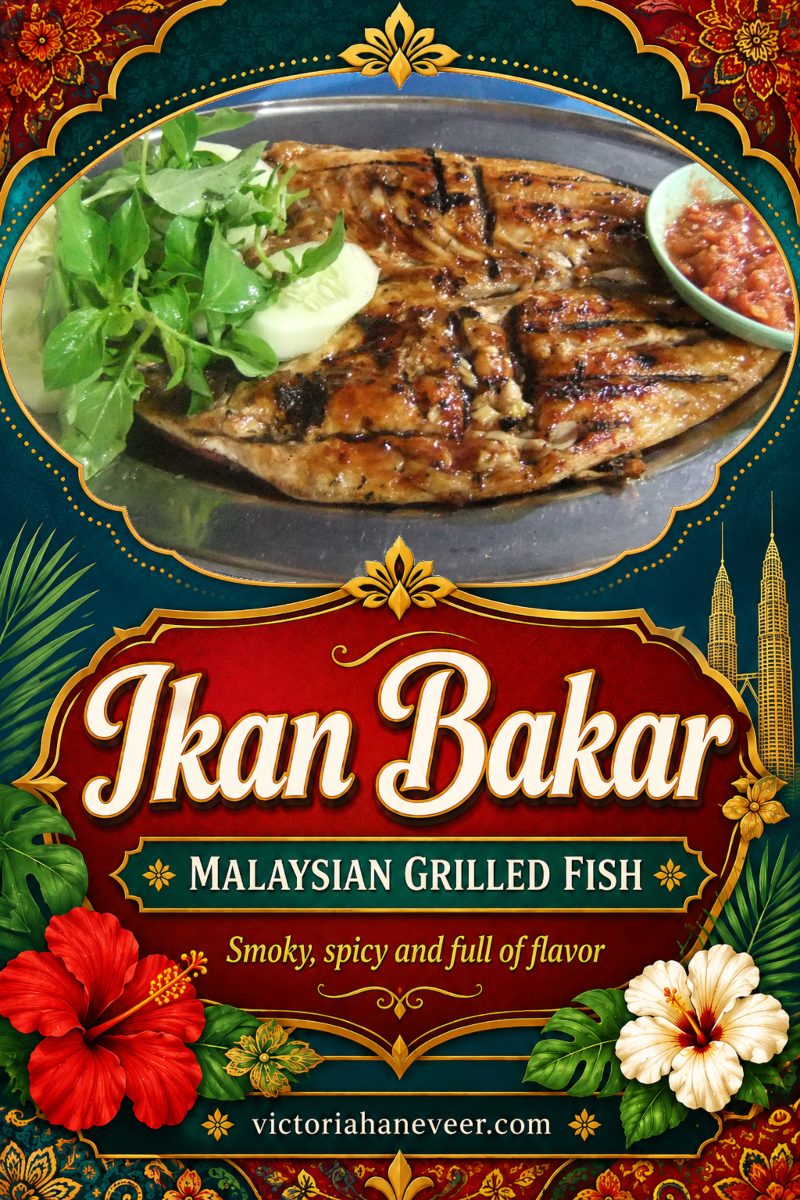
Ikan bakar is Malaysian grilled fish coated in a spicy paste and cooked over the heat. The outside picks up a little char and the flesh inside comes out juicy, easily flaking away from the bones. Chili heat, tamarind and fermented shrimp paste give it a lot more character than simply seasoning a fish and putting it on the grill.
The marinade combines heat and sourness with savory flavor and an aromatic note of lemongrass. The paste darkens on the fish during grilling and will catch a little around the edges. I usually serve this ikan bakar recipe with lime wedges and add a spoonful of sambal belacan for those who want more heat.
I like whole fish for this because it handles the grill better than delicate fillets and doesn’t dry out as fast. Scoring it before adding the paste also gives the seasoning somewhere to settle rather than leaving all of it on the skin.
Ikan Bakar at a Glance
- Prep time: 20 minutes
- Cook time: 15 minutes
- Total time: 35 minutes
- Servings: 4
- Cuisine: Malaysian
- Main ingredients: Whole fish, dried chilies, belacan, tamarind and lemongrass
- Best cooking method: Grill over medium-high heat
- Storage: Refrigerate cooked fish for up to 2 days
Why Grilling is Best for Ikan Bakar
- Using whole fish gives you more leeway before the flesh starts drying out.
- Scoring the fish means some of the spice paste gets underneath the skin.
- The paste darkens over the heat and gives the fish its characteristic spicy coating.
- You can serve lime and sambal at the table, so everyone can adjust their own heat and sourness.
Ingredient Notes
The complete ingredients list and quantities are in the recipe card below.
- Best fish for ikan bakar: Snapper or sea bass are good picks for this recipe. If you’re buying your fish from a fish counter, you can ask for it to be cleaned and scaled for you.
- Dried red chilies: Soak them in hot water until softened, then drain before blending the paste. Different varieties vary quite a lot in heat, so adjust them if you know yours are particularly hot.
- Belacan: This Malaysian fermented shrimp paste adds a salty, richly savory flavor. Asian grocery stores are usually the easiest place to find it.
- Tamarind paste: Tamarind provides the sour part of the marinade and balances out the chili and belacan.
- Lemongrass: I only use the more tender lower part of the stalk to ensure it’s easy to blend into the paste.
Ikan Bakar Sauce and Marinade
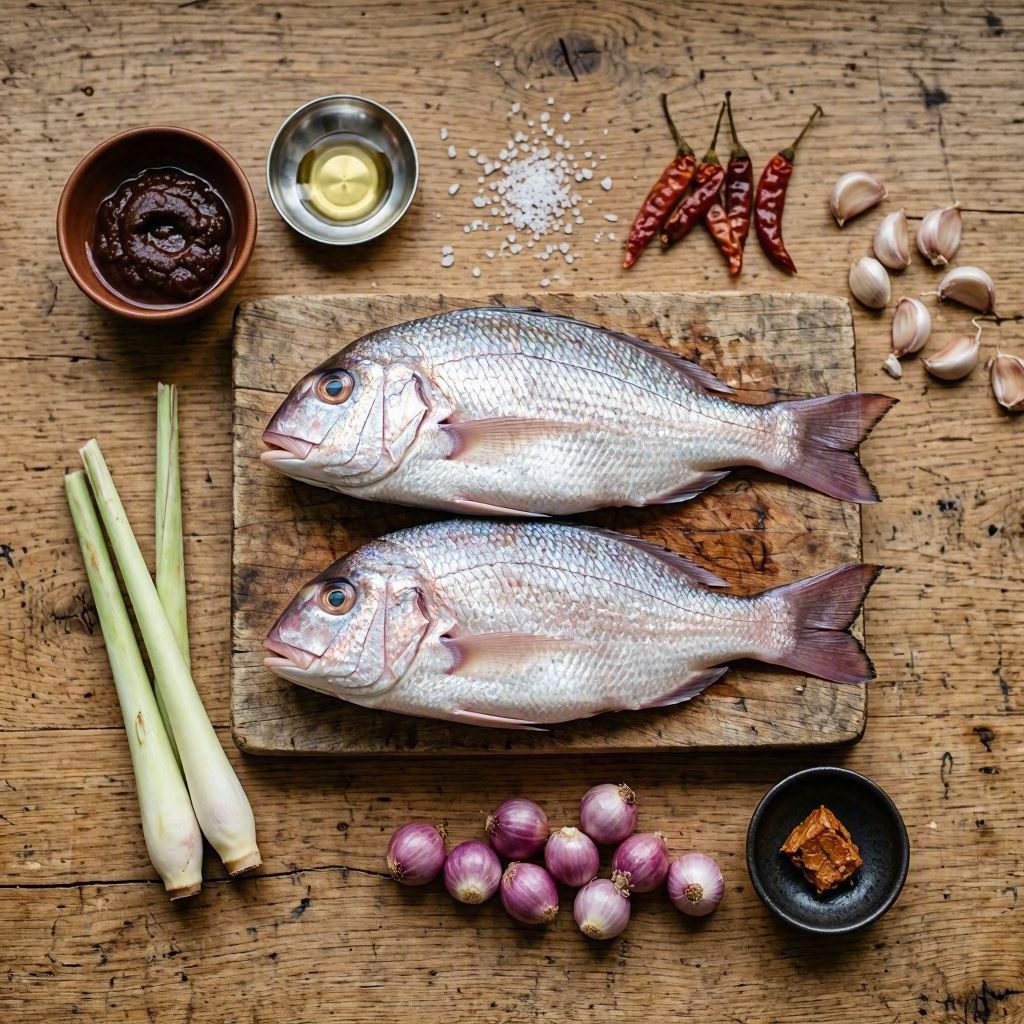
The ikan bakar sauce in this recipe is more of a thick spice paste than something pourable. Dried chilies, garlic, shallots, belacan and lemongrass are blended together, then combined with tamarind, oil and salt. This is the mixture you rub over the fish. It cooks directly onto the surface, darkening and charring a bit over the heat.
How to Make Ikan Bakar
The full instructions with weights and measurements are in the recipe card below.
The basic method is simple: make the spice paste, work it over the scored fish and grill over a steady medium-high heat. I watch for light charring around the edges and check the thickest part of the fish with a thermometer rather than relying only on its appearance.
Ikan Bakar Meaning: What is Ikan Bakar?
Ikan bakar means “grilled fish” in Malay and Indonesian. There are many variations across Malaysia and Indonesia, using different fish, seasonings and grilling methods. Malaysian versions typically use a spicy paste and are served with rice, sambal and lime.
Whole fish is common, although other seafood can be prepared in a similar way. The important part is the combination of seasoned fish and strong heat, rather than one fixed list of ingredients that every ikan bakar recipe has to follow.
What About Banana Leaves?
Banana leaves are often associated with ikan bakar because they can be used between the fish and the heat or wrapped around the fish during cooking. They also protect the fish from sticking directly to a hot surface.
You don’t need banana leaves for this particular recipe, so I haven’t added them to the ingredient list. If you’re interested in another Malaysian fish recipe that does use them, my otak otak is made from seasoned fish paste and cooked in banana leaf parcels.
Tips for the Best Ikan Bakar
- Pat the fish dry: Removing surface moisture helps the paste adhere to the fish.
- Keep the scoring shallow: Cut through the skin and into the flesh without cutting so deeply that the fish begins to fall apart on the grill.
- Preheat the grill: Get the cooking surface properly hot before adding the fish. You might like to brush up on your grilling techniques if you don’t grill very often.
- Oil the grates: Whole fish has a habit of sticking, when the spice paste starts cooking against the metal.
- Use a wide spatula: Support as much of the fish as possible when you flip it so the skin and flesh don’t break apart.
- Check the thickest part: Fish is safely cooked when the center reaches 145°F/63°C.
Variations and Substitutions
- Try a different fish: Mackerel is another good option if snapper or sea bass isn’t available.
- Use fish fillets: Thick cod or snapper fillets can be used instead of whole fish. Keep a close eye on them because the cooking time will depend on how thick they are.
- Make it milder: Reduce the dried chili amount if you don’t want so much heat.
- Try other seafood: You can use the same style of spicy marinade with shrimp or squid, although these cook much faster than a whole fish.
Equipment
- Weber gas grill: A compact gas grill that works well for cooking the fish over direct heat.
- Ninja Professional Blender: Use it to blend the chilies, shallots, belacan and lemongrass into a smooth spice paste.
- OXO Good Grips fish spatula: The wide, flexible head makes it easier to get underneath the fish when you flip it.
- ThermoPro instant-read thermometer: Use it to check the thickest part of the fish for doneness.
- Chef’s knife: Score the fish and prepare the paste ingredients.
- Cutting board: Prepare the fish and aromatics on a stable surface.
- Measuring cups and spoons: Measure the tamarind, oil, salt and belacan.
Serving Suggestions
Steamed rice, fresh vegetables and lime wedges are all you really need with ikan bakar. If you want to make more of a meal of it, nasi kerabu gives you rice, herbs and vegetables in one Malaysian dish that’s always good with grilled fish.
How to Store
- Refrigerate: Keep leftover cooked fish in an airtight container in the refrigerator for up to 2 days.
- Reheat: Warm it gently in the oven or in a covered skillet (frying pan) until the center reaches 165°F (74°C). High heat can dry out already-cooked fish.
- Freeze: I don’t recommend freezing the cooked fish because the texture can become dry after thawing and reheating.
- Make ahead: Blend the spice paste several hours before you need it and keep it covered in the refrigerator until you’re ready to cook.
Ikan Bakar FAQs
Ikan bakar means grilled fish. Ikan means fish and bakar refers to grilling or roasting over heat.
Snapper and sea bass work particularly well for this recipe because they can be grilled whole. Mackerel is another option.
No. Banana leaves are common in some ikan bakar preparations, although this recipe is cooked directly on the grill and doesn’t require them.
It can be, although the heat depends on the dried chilies you use. Reduce the number of chilies if you want a milder marinade.
Yes. A grill pan works if you don’t have an outdoor grill. You won’t get quite the same smoky flavor as charcoal cooking but it should still taste good.

Ikan Bakar
Ingredients
- 2 whole fish such as snapper or sea bass, about 1½ pounds (700g) each
- 1 tablespoon tamarind paste
- 1 tablespoon oil
- 1 teaspoon salt
- 4 dried red chilies
- 3 garlic cloves
- 2 shallots
- 1 teaspoon belacan
- 1 stalk lemongrass
- Lime wedges (as needed, to serve)
- Sambal (as needed, to serve)
- Sliced chilies (as needed, to serve)
Equipment
- Outdoor grill or grill pan
- Blender
- Fish spatula
- Instant-read thermometer
- Chef’s knife
- Cutting board
- Measuring cups and spoons
Method
- Clean the fish and pat it dry. Make a few shallow scores across each side of the fish.
- Soak the dried chilies in hot water for about 10 to 15 minutes, until soft, then drain. Trim the lemongrass to its tender lower part and slice it finely. Blend the softened chilies with the garlic, shallots, belacan and lemongrass until smooth, adding a little water only if needed to help the blades.
- Mix the spice paste with the tamarind paste, oil and salt. Rub it all over the fish, including into the scored areas.
- Grill over medium-high heat for 6 to 8 minutes per side, flipping carefully, until lightly charred and cooked through. The thickest part of the fish should reach 145°F/63°C.
Notes
- A charcoal grill gives the fish the smokiest flavor, but you can also use a gas grill or grill pan.
- Oil the grill grates before adding the fish so it doesn’t stick and use a wide fish spatula when flipping it so it doesn’t break.
- Dried chilies vary in heat, so reduce the amount if yours are particularly hot.
- Check the fish at its thickest point and avoid touching the thermometer probe against the bone.
More Malaysian Recipes to Try
- asam pedas: Fish cooked in a sour chili and tamarind broth.
- Penang asam laksa: Rice noodles with sour, spicy fish broth.
- kolo mee: Sarawak noodles with pork and char siu.
- cendol: A chilled coconut dessert after a spicy meal.
- Malaysian recipes hub: More Malaysian dishes from my collection.
Image credit: Ikan kakap bakar madu via Wikimedia Commons