Sambal Belacan (Malaysian Chili Paste)
This post contains affiliate links. As an Amazon Associate I earn from qualifying purchases.
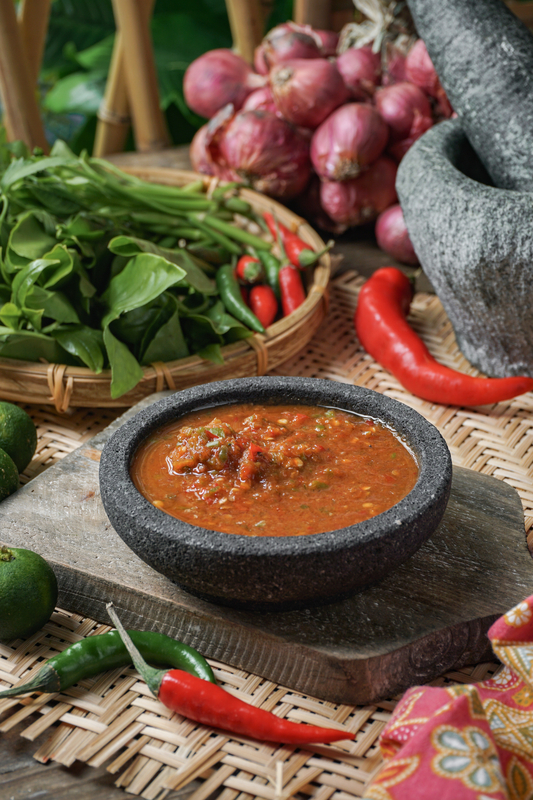
Taking only ten minutes to make, sambal belacan is a fresh Malaysian chili condiment that pairs well with a variety of dishes. It’s made by pounding red chilies with toasted fermented shrimp paste, shallot, sugar and lime or calamansi juice.
This sambal belacan recipe is a small-batch condiment because you only need a little at a time. I recommend starting with a teaspoon beside your rice or grilled food, then adding more once you know how much heat you’re dealing with.
It’s hot, salty and citrusy with a coarse texture that sets it apart from a smooth bottled chili sauce. Fresh ingredients make up most of the condiment. Only the belacan is toasted before everything is pounded together, so the finished paste keeps the bright flavors of fresh chilies and citrus.
Sambal Belacan at a Glance
- Prep time: 10 minutes
- Cook time: N/A
- Total time: 10 minutes
- Servings: About 3 tablespoons
- Cuisine: Malaysian
- Main ingredients: Red bird’s eye chilies, belacan, shallot and lime or calamansi juice
- Best cooking method: Toast the belacan, then pound the ingredients with a mortar and pestle
- Storage: Refrigerate in an airtight container for up to 4 days
Why You’ll Love It
- It takes only 10 minutes: The only stovetop step in this belacan sambal recipe is briefly toasting the shrimp paste.
- The coarse texture: Pounding leaves small pieces of chili and shallot in the condiment. Personally, I like this homemade chili sauce much better than bottled which tends to be completely smooth.
- You control the heat: You can use all bird’s eye chilies for a very fiery paste or replace some with a milder red chili.
- The batch is practical: About 3 tablespoons is enough for several servings when this Malaysian shrimp paste chili sauce is offered at the table a teaspoon at a time.
What is Sambal Belacan?
Sambal is a broad name for chili-based condiments found across Southeast Asia. Sambal belacan is the Malaysian preparation made with belacan, a fermented shrimp paste that’s commonly sold in firm blocks. Fresh chilies and citrus give it a raw, lively character, while the shrimp paste is the salty, savory base.
This condiment isn’t the same thing as a cooked sambal that’s fried in oil and reduced. This one is pounded and served as a fresh side condiment, with only the belacan exposed to heat during the prep.
Authentic Sambal Belacan Ingredients
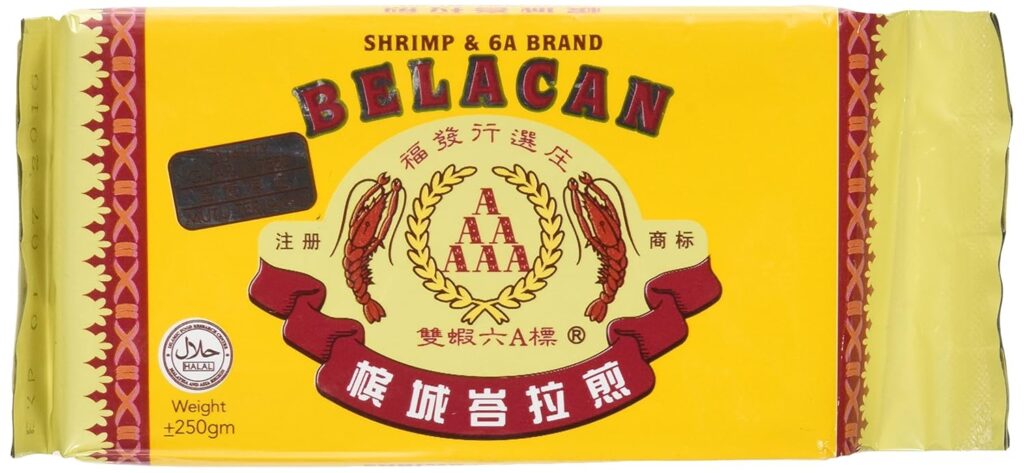
- Belacan: This Malaysian fermented shrimp paste gives the sambal its saltiness and concentrated savory flavor. It’s sold in blocks and needs to be toasted before pounding.
- Red bird’s eye chilies: These small fresh chilies provide most of the heat. I recommend weighing these rather than using a set number of them, since sizes do vary. And, trust me, a little goes a long way!
- Shallot: A small shallot gives the paste more body and a subtle sweetness.
- Lime or calamansi juice: Citrus balances the salty shrimp paste and adds a zesty flavor. Calamansi is traditional, while ordinary lime is easier to find in many US grocery stores.
- Sugar: One teaspoon softens chili spiciness, shrimp paste and citrus. It shouldn’t make the sambal taste sweet, so don’t add more than you need.
- Water: This is optional. Add only enough to help the ingredients move under the pestle if the mixture’s too dry to grind.
How to Make Sambal Belacan
Start by toasting the belacan in a dry pan until it smells fragrant and becomes slightly crumbly, then let it cool. Pound the chilies and shallot to a coarse paste before working in the toasted belacan and sugar. Stir in the lime or calamansi juice last so you can taste and adjust the acidity.
A mortar and pestle gives you the best control over the texture. A small food processor works too, though it should be pulsed briefly rather than run continuously.
Tips for the Best Texture and Flavor
- Open a window before toasting: Belacan has a very strong aroma when it first hits the hot pan. Good ventilation makes this quick step much more comfortable.
- Keep the sambal coarse: Stop pounding while small pieces of chili and shallot are still visible. A completely smooth puree loses the characteristic hand-pounded texture.
- Use water sparingly: Too much water dilutes the condiment and makes it loose. Add a little only if the pestle can’t catch the ingredients.
- Add the citrus gradually: Begin with the smaller amount, taste and add more if you want a sharper sambal.
- Serve a small amount first: Bird’s eye chilies can be extremely hot. It’s easier to add another spoonful than to calm down a whole plate.
Variations and Substitutions
- For less heat: Replace some of the bird’s eye chilies with a larger, milder red chili. The exact heat will still depend on the chilies you buy.
- If calamansi isn’t available: Fresh lime juice is the most practical substitute and is already included as an option in this recipe.
- If you can’t find Malaysian belacan: Indonesian terasi or Thai shrimp paste have a similar fermented shrimp flavor, although your final sambal won’t taste exactly the same.
- For a smoother paste: Use a small food processor and pulse just until combined. Don’t add extra water unless the blades can’t move the mixture.
What to Serve With Sambal Belacan
There are plenty of tasty sambal belacan uses. Set the sambal on the table with plain rice so everyone can control the heat. It’s particularly good with coconut rice dishes such as nasi lemak or the herbs and vegetables in nasi kerabu. You can also try it with Malaysian nasi goreng.
For seafood, serve it with ikan bakar or otak otak. Fresh or fried Malaysian popiah, which are like crunchy little egg rolls, are also good with it. Add Malaysian acar if you want a cool, sweet-sour pickle to contrast with the chili heat.
How to Store
- Make ahead: Prepare sambal belacan a few hours before serving and keep it covered in the fridge.
- Store: Transfer it to a clean airtight container and refrigerate for up to 4 days. Use a clean spoon each time you take some out. You can serve it chilled or bring it to room temperature first. The amount used is typically tiny so it shouldn’t make much difference.
- Freezer: When I tried freezing some, I found the fresh chilies softened and some of the coarse, fresh texture from before was lost, so I wouldn’t recommend making extra and freezing it if you love the raw, coarse texture too.
Sambal Belacan FAQs
That’s up to you! It can be extremely spicy when it’s made entirely with bird’s eye chilies. I like to replace some with a larger, milder red chili for less heat. Also, serve the sambal a teaspoon at a time. A little does go a long way.
No, the finished sambal isn’t cooked. Only the belacan is toasted before it’s pounded with the other ingredients.
Yes. Pulse the ingredients in a small food processor and stop while it’s still coarse. A large processor will probably struggle with this small quantity.
Sambal belacan contains fermented shrimp paste and citrus juice. Sambal oelek is usually a simpler chili condiment and doesn’t normally contain belacan, although recipes and commercial products vary.
No. Belacan is made from fermented shrimp, so sambal belacan isn’t vegetarian and isn’t suitable for someone with a shellfish allergy.
Bring This Malaysian Chili Paste to the Table
Sambal belacan is the kind of condiment that changes a meal one little spoonful at a time! Pound it coarse, keep the citrus lively and let each person add as much heat as they want. If you’d like to explore where sambal fits into the wider cuisine, browse my Malaysian recipes collection for rice dishes, grilled foods, curries and regional specialties.
Sambal Belacan
Ingredients
- 6 red bird’s eye chilies, about 1 ounce or 30 grams
- 1 small shallot, chopped
- 1 teaspoon belacan
- 1 teaspoon sugar
- 1 to 2 tablespoons lime or calamansi juice
- 1 tablespoon water, only if needed for grinding
- Lime wedges
- Sliced red chilies
- Cucumber slices
Equipment
- Small dry skillet or frying pan
- Mortar and pestle
- Measuring spoons
- Small serving dish
Method
- Add the belacan to a small dry skillet over medium heat. Toast briefly until fragrant and slightly crumbly, then let it cool.
- Add the chilies and shallot to a mortar. Pound them with the pestle until a coarse paste forms. If the ingredients are too dry to grind, add only as much water as needed.
- Add the toasted belacan and sugar. Continue pounding until they are evenly distributed while the paste remains coarse.
- Stir in 1 tablespoon of lime or calamansi juice. Taste and add more citrus if you prefer a sharper sambal.
- Spoon the sambal into a small dish. Add any optional garnishes and serve with rice, grilled fish or vegetables.
Notes
- I like to use a mortar and pestle to achieve the traditional coarse texture but you can use a small food processor if needed. If so, pulse briefly so the sambal doesn’t get too smooth – it should have some texture.
- This is a small batch recipe because sambal belacan is intense and is usually served about a teaspoon at a time. You can double or triple the recipe without changing the method though, if you do want to make more.
- Refrigerate the sambal in a clean airtight container for up to 4 days. I wouldn’t freeze it. I did once but the fresh chilies soften after thawing, which didn’t taste anywhere near as good as freshly made sambal.