Curry Laksa Recipe (Malaysian Coconut Noodle Soup)
This post contains affiliate links. As an Amazon Associate I earn from qualifying purchases.
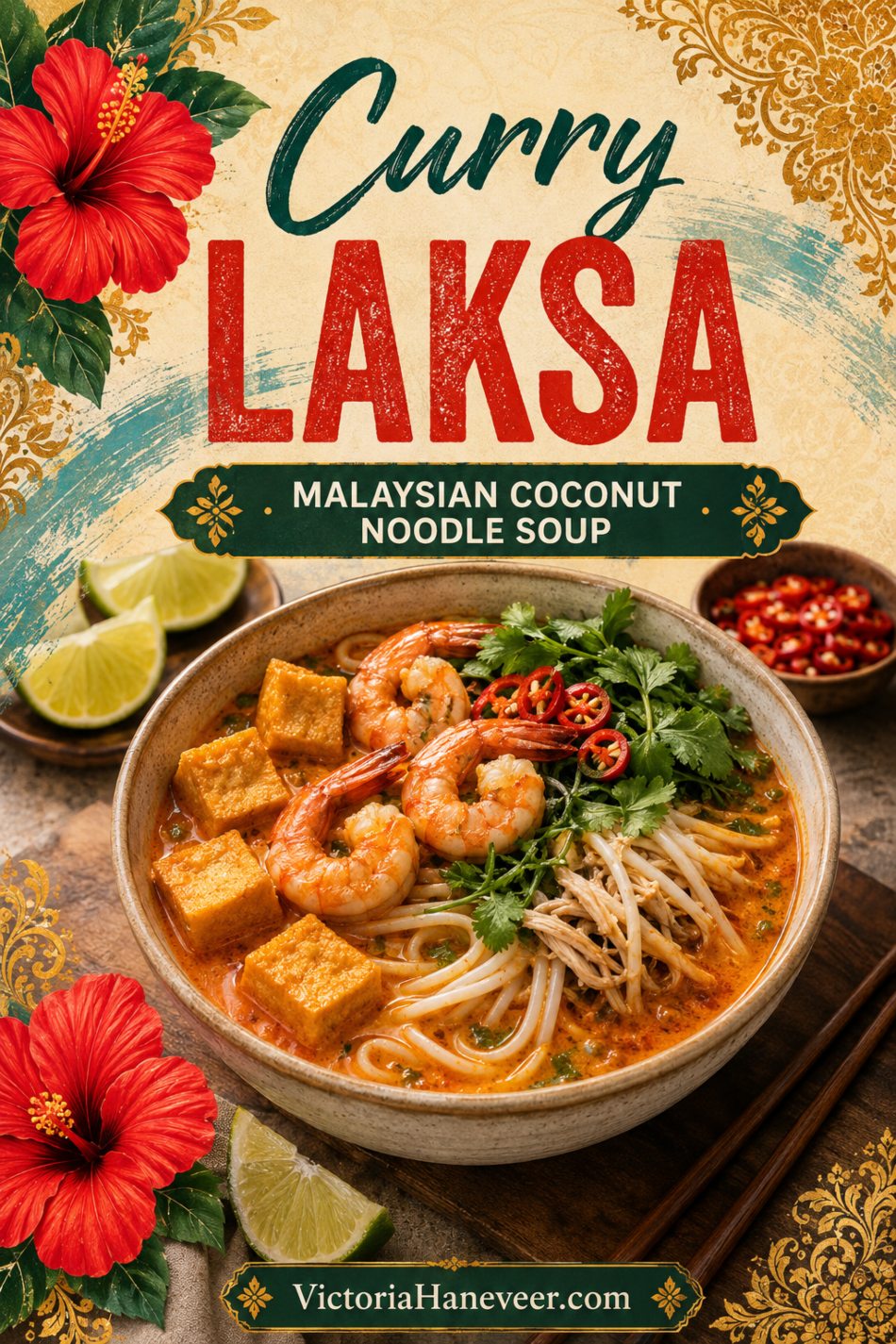
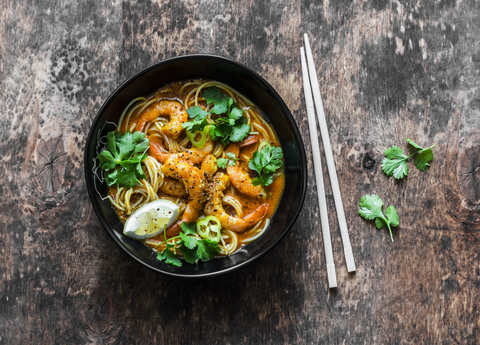
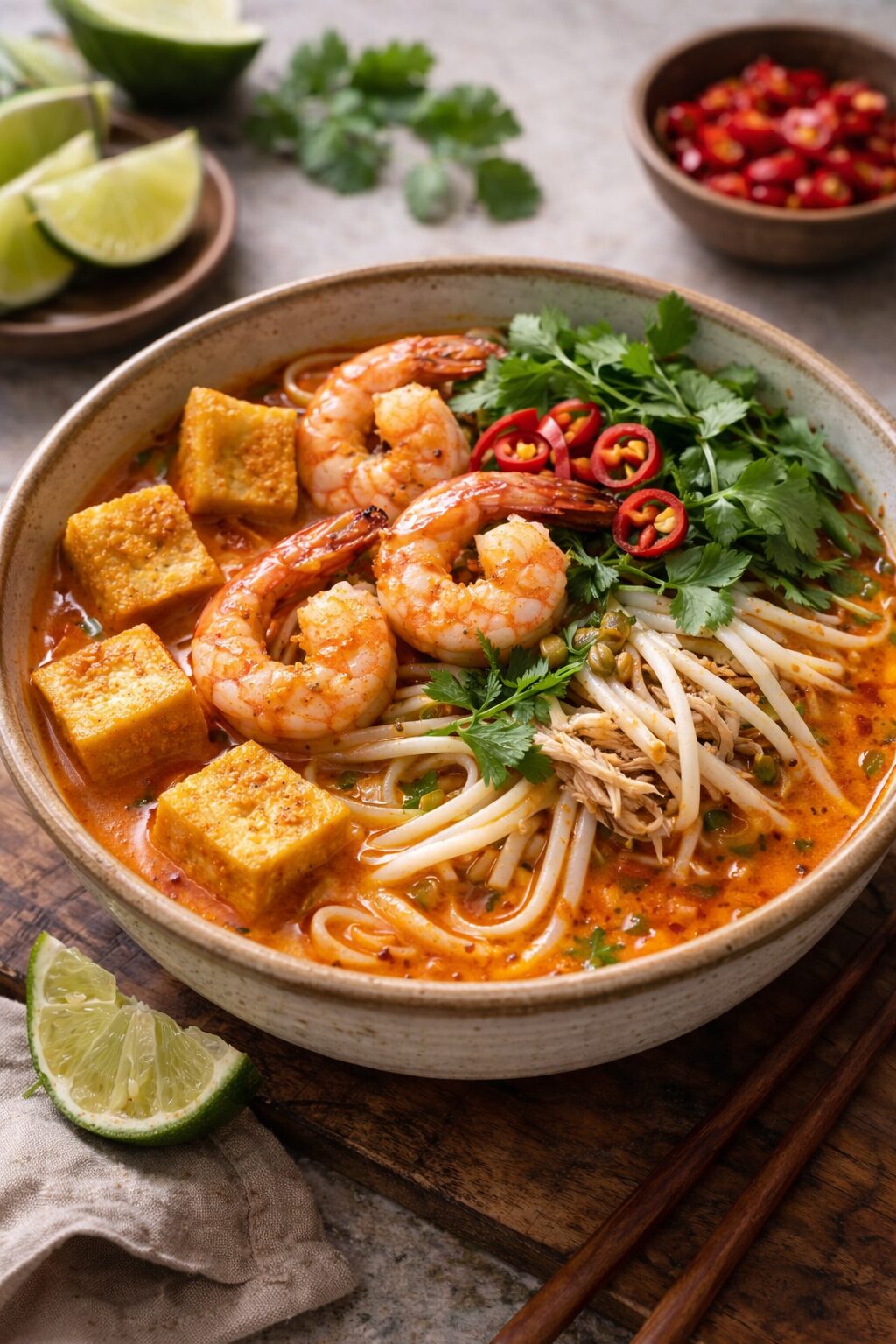
This curry laksa recipe is a Malaysian coconut curry noodle soup with rice noodles, shrimp, tofu puffs and bean sprouts. Curry laksa paste, coconut milk, garlic, shrimp paste and fish sauce form the broth, with fresh lime, chilies and cilantro (fresh coriander) added just before serving.
This is the creamy coconut style of laksa and quite different from Penang asam laksa, which has a sour fish broth made with tamarind. In Malaysia I heard the name curry mee for closely related curry noodle soups, especially in Penang where the word laksa is strongly associated with asam laksa.
I use prepared curry laksa paste here rather than blending a rempah from scratch. It kept the ingredients list shorter and the extra garlic and shrimp paste give the broth plenty of depth. If you’re exploring this cuisine further, my Malaysian recipes collection has rice dishes, curries, noodle soups, snacks and regional specialties you might like to check out.
Malaysian Curry Laksa at a Glance
- Prep time: 20 minutes
- Cook time: 30 minutes
- Total time: 50 minutes
- Servings: 4
- Cuisine: Malaysian
- Main ingredients: Rice noodles, shrimp, curry laksa paste, coconut milk, tofu puffs and bean sprouts
- Best cooking method: Stovetop in a large pot or Dutch oven
- Storage: Refrigerate the broth and noodles separately for up to 3 days
Why You’ll Love It
- Prepared laksa paste saves a lot of prep: You don’t need to buy and grind a long list of fresh aromatics for the curry base when you can simply use laksa paste. It keeps for a long time in the fridge too; I’ve had mine in there for months.
- Tofu puffs are perfect for this kind of soup: Their porous texture soaks up some of the coconut curry broth. Even if you aren’t a fan of regular tofu, either the chewy firm kind or the silky kind, you might like the texture of the puffs!
- The protein is flexible: Shrimp’s the main protein here and there’s an option to add shredded cooked chicken too. You can also experiment with whatever leftover protein you have in the fridge.
- Most of the work happens in one pot: The noodles cook separately and everything else comes together in the broth pot, so you aren’t going to have piles of washing up afterwards.
Curry Laksa Soup Ingredients
- Curry laksa paste: Commercial pastes vary in heat, salt and ingredients. I use prepared paste for this recipe. Tean’s curry laksa paste is one Malaysian option. Check the label if you have a shellfish allergy because some brands contain dried shrimp.
- Rice noodles: Thick rice noodles are common with curry laksa but I’ve also used rice vermicelli with success. Cook whichever type you’re using according to the package directions.
- Shrimp: Use peeled and deveined shrimp. They only need a few minutes in the hot broth. You can use fresh or thawed. I used thawed and they came out well.
- Tofu puffs: These are fried pieces of tofu with a porous middle. Look for them at an Asian grocery store, often in the refrigerated or frozen section. If tofu’s new to you, I have a guide explaining what tofu is.
- Shrimp paste: Malaysian shrimp paste is known as belacan. I only used about a teaspoon because the curry paste and fish sauce also added salt to the soup and I didn’t want to overdo it.
- Coconut milk: I recommend full-fat canned coconut milk for the right consistency in this style of laksa.
- Bean sprouts: I usually just add these when I’m assembling the soup rather than simmering them in there. They just need to heat through in the hot soup and a bit of crunch is good.
What is Curry Laksa?
Curry laksa is one of the coconut-based members of the laksa family. Rice noodles are served in a spiced coconut broth with ingredients that can include shrimp, chicken, fish cake, tofu puffs and bean sprouts. Recipes and toppings vary by region and by cook.
The terminology can be confusing because curry laksa and curry mee overlap. Curry mee is sometimes used instead of curry laksa. In Penang, curry-based noodle soup is commonly called curry mee, while the local dish usually meant by laksa is the sour fish-based asam laksa.
How to Make Curry Laksa
Cook the rice noodles separately so they don’t spend the entire cooking time sitting in the broth. Fry the curry laksa paste with the garlic first, then add the shrimp paste before pouring in the chicken broth. Coconut milk, fish sauce and sugar go in once the broth is simmering.
Add the tofu puffs and optional cooked chicken before the shrimp. The shrimp needs only a short cooking time, so it goes in near the end. Divide the noodles between bowls, ladle in the broth and add the bean sprouts, cilantro, sliced chilies and lime.
Curry Laksa vs Asam Laksa
The word laksa covers several quite different noodle soups. Curry laksa has a coconut milk and spice-based broth. Penang asam laksa is based on fish and tamarind, giving it a pronounced sour flavor with no creamy coconut broth.
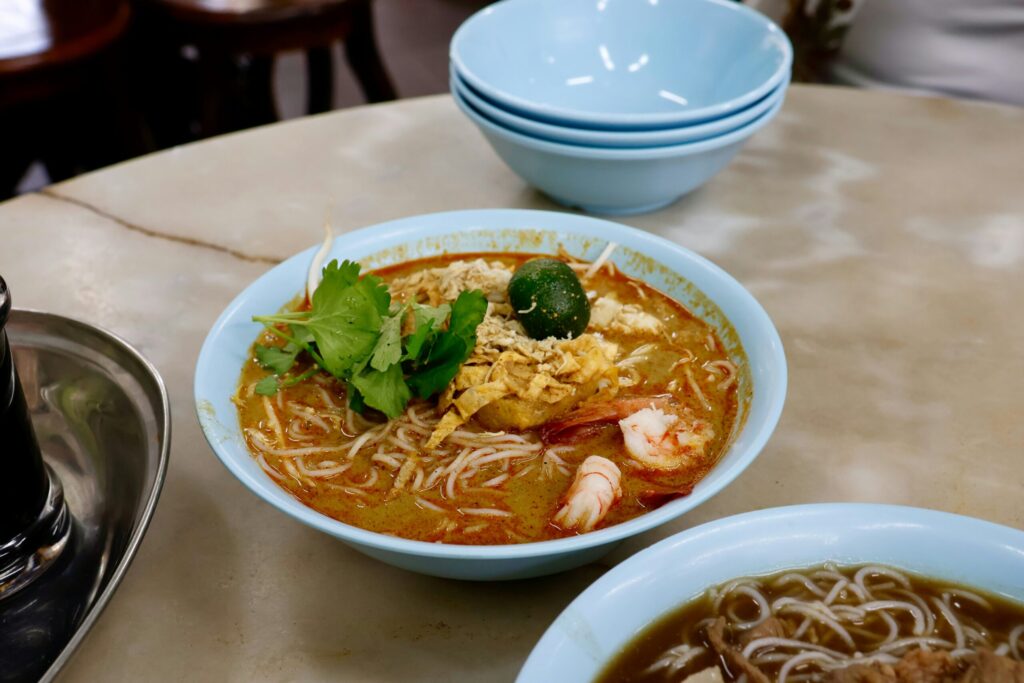
Sarawak laksa is another distinct style, with a fragrant sambal-based broth made with coconut milk, tamarind and spices. It’s richer than Penang asam laksa but not as creamy as curry laksa.
If you’re trying Malaysian laksa recipes for the first time, making both is an interesting comparison because they share the laksa name without tasting much alike. My chicken laksa is another coconut-based soup if you’d rather use chicken as the main protein.
Tips for the Best Curry Laksa
- Fry the curry paste before adding liquid: Give it 2 or 3 minutes in the oil with the garlic. The first time I made this, I added the liquid too soon and the broth separated almost immediately.
- Remember that laksa pastes vary: One brand can be noticeably saltier or hotter than another, so I recommend that you always taste the broth before deciding it needs more seasoning.
- Cook the curry laksa noodles separately: Noodles left in the soup continue absorbing liquid and become much softer during storage. Leftover curry laksa is delicious but if you leave the noodles in there, they do get a bit mushy.
- Add the shrimp near the end: Once they’re pink and opaque, they’re done. Longer cooking can make them rubbery.
- Keep the coconut broth at a gentle simmer: A hard boil can make the coconut fat separate more noticeably.
Curry Laksa Paste
Curry laksa paste is a concentrated mixture of chilies, aromatics and spices used as the base for the broth. The exact ingredients depend on the brand. The Tean’s paste contains ingredients including onion, lemongrass, galangal, chili, curry spices, garlic, dried shrimp, curry leaf, ginger and turmeric.
Because commercial pastes differ, don’t assume 2 brands will give identical results from the same amount. I used 3 tablespoons of the laksa paste, then added garlic and a small amount of shrimp paste separately.
Variations and Substitutions
- Chicken curry laksa: Add the optional shredded cooked chicken or use my chicken laksa recipe if you want chicken to be the main protein.
- Without shrimp: Leave out the shrimp and increase the tofu or chicken. Remember that laksa paste, shrimp paste and fish sauce can still contain seafood.
- Less heat: Curry laksa paste brands vary considerably. Choose a milder paste rather than drastically reducing it, since the paste supplies more than chili heat.
- Vegetarian curry laksa: Choose a curry laksa paste without dried shrimp, use vegetable broth, omit the belacan and replace the fish sauce with a vegetarian alternative. It won’t taste identical to this shrimp-based recipe.
- No laksa paste: Thai red curry paste can serve as an emergency substitute with shrimp paste, although the flavor won’t be the same as curry laksa paste.
What to Serve with Tofu Seafood Curry Laksa
Curry laksa is already a substantial noodle soup, so I prefer smaller Malaysian dishes with it rather than another full main course. Fried popiah or curry puffs work well if you want something crisp, while a small serving of sambal belacan adds extra chili and shrimp paste flavor.
I typically just put all the condiments and extras in the middle of the table and let people serve themselves to whatever they want. Oh, and don’t forget the napkins – I find that noodle soups do tend to splash a bit!
Otak otak is another option if you’re making several Malaysian dishes at once. It’s spiced fish cooked in banana leaves, so it’s very different from the noodle soup.
A Brief History of Curry Laksa
Laksa is strongly associated with the multicultural food traditions of Malaysia and Singapore, including Peranakan or Nyonya cooking. Chinese cooking techniques combined with ingredients used throughout the Malay world, including coconut milk, chilies, herbs and fermented shrimp products, and numerous regional forms of laksa developed.
There isn’t a single agreed origin story for every form of laksa, and the origin of the word itself is also disputed. I looked into a claim that the name came from the Persian word lakshah but that may or may not be the case. I didn’t find anything concrete. What is clear though is that laksa developed into a family of regional noodle dishes rather than one fixed recipe.
How to Store
- Make ahead: You can prepare the curry broth a day ahead. For the best texture, wait to cook the shrimp and noodles until you’re ready to serve it.
- Refrigerator: Keep leftover noodles separate from the broth and refrigerate both in covered containers for up to 3 days. Store bean sprouts and other fresh garnishes separately.
- Reheating: Warm the broth gently on the stovetop until piping hot. Add the noodles to the serving bowls rather than simmering them for a long time in the reheated broth.
- Freezing: If you’re cooking ahead specifically for the freezer, freeze the broth base before adding shrimp, tofu puffs, noodles and fresh garnishes. Freeze for up to 2 months. Coconut milk can look slightly separated after thawing, so reheat gently and stir well.
Curry Laksa FAQs
The names overlap. Curry mee is another term for curry laksa. In Penang, curry-based noodle soup is commonly called curry mee, while laksa often refers to the sour asam laksa.
No. Curry laksa has a coconut curry broth. Penang asam laksa has a sour fish broth flavored with tamarind and doesn’t have the same creamy coconut base.
Yes. You can leave out the shrimp and use chicken or extra tofu instead. If you need the dish to be completely shellfish-free, also check the laksa paste, shrimp paste and fish sauce to make sure.
Thick rice noodles are common, although rice vermicelli also works. Follow the cooking directions on the package because different rice noodles need different soaking or cooking times.
Coconut milk naturally contains fat that can separate, especially with vigorous boiling. Keep the finished broth at a gentle simmer and stir before serving. A little separation doesn’t mean the soup’s failed and won’t affect the flavor.
Explore More Malaysian Recipes
If this curry laksa has you digging further into Malaysian cooking, try Penang asam laksa next for a completely different style of laksa. Kari kapitan is a Nyonya chicken curry based around a cooked spice paste, while nasi kerabu and nasi lemak show 2 very different Malaysian rice dishes. You’ll find all of them in the Malaysian recipes hub.
Curry Laksa Recipe
Ingredients
- 8 ounces (225g) rice noodles
- 8 ounces (225g) shrimp, peeled and deveined
- 1 cup (about 150g) tofu puffs, halved
- 1 cup (140g) shredded cooked chicken, optional
- 1 cup (100g) bean sprouts
- 2 tablespoons vegetable oil
- 3 tablespoons curry laksa paste
- 3 cloves garlic, minced
- 1 teaspoon shrimp paste
- 4 cups (1 liter) chicken broth
- 1 ½ cups (360ml) coconut milk
- 1 tablespoon fish sauce
- 1 teaspoon sugar
- Cilantro (fresh coriander)
- Lime wedges
- Sliced red chilies
Equipment
- Large pot or Dutch oven
- Medium saucepan for the noodles
- Colander
- Cutting board
- Sharp knife
- Measuring Cups and Spoons
- Wooden spoon or silicone spatula
- Soup ladle
Method
- Cook the rice noodles according to the package directions until just tender. Drain well and set aside.
- Heat the vegetable oil in a large pot or Dutch oven over medium heat. Add the curry laksa paste and garlic. Cook for 2 to 3 minutes, stirring often, until fragrant and slightly darker.
- Add the shrimp paste and cook for another 30 seconds, breaking it up with the spoon as you stir.
- Pour in the chicken broth and stir well. Bring to a gentle simmer.
- Add the coconut milk, fish sauce and sugar. Stir well and simmer gently for 5 to 8 minutes.
- Add the tofu puffs and shredded cooked chicken, if using. Simmer for a few minutes so they're heated through and the tofu absorbs some of the broth.
- Add the shrimp and cook for 2 to 3 minutes, or until pink and opaque. Don't keep cooking them once they're done.
- Divide the rice noodles between 4 bowls. Ladle the hot curry broth, shrimp, tofu puffs and chicken over the noodles.
- Add the bean sprouts and any cilantro, sliced red chilies or lime wedges you want. Serve immediately.
Notes
- Curry laksa pastes vary considerably in salt, heat and ingredients.
- Check the label if shellfish is an issue because some brands contain dried shrimp.
- Keep the noodles separate from the broth until serving. This also makes leftovers easier to store without the noodles becoming excessively soft.
- Use a blender if you decide to make a fresh spice paste from scratch.
- For make-ahead curry laksa, prepare the broth base first and add the shrimp and noodles when you’re ready to serve it.
More Asian Recipes
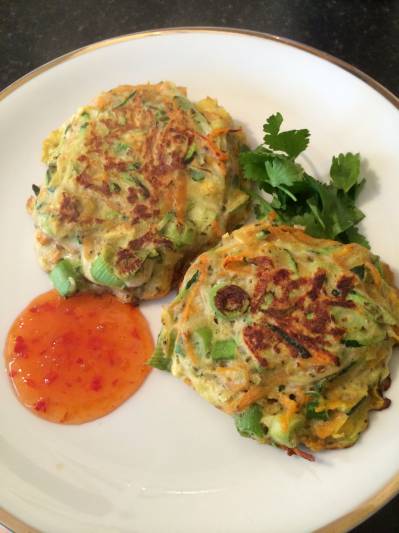
For something outside the Malaysian collection, try Thai vegetarian crackslaw or these vegetable jeon which are Korean vegetable pancakes.