Malaysian Satay Recipe (Chicken or Beef Skewers with Peanut Sauce)
This post contains affiliate links. As an Amazon Associate I earn from qualifying purchases.
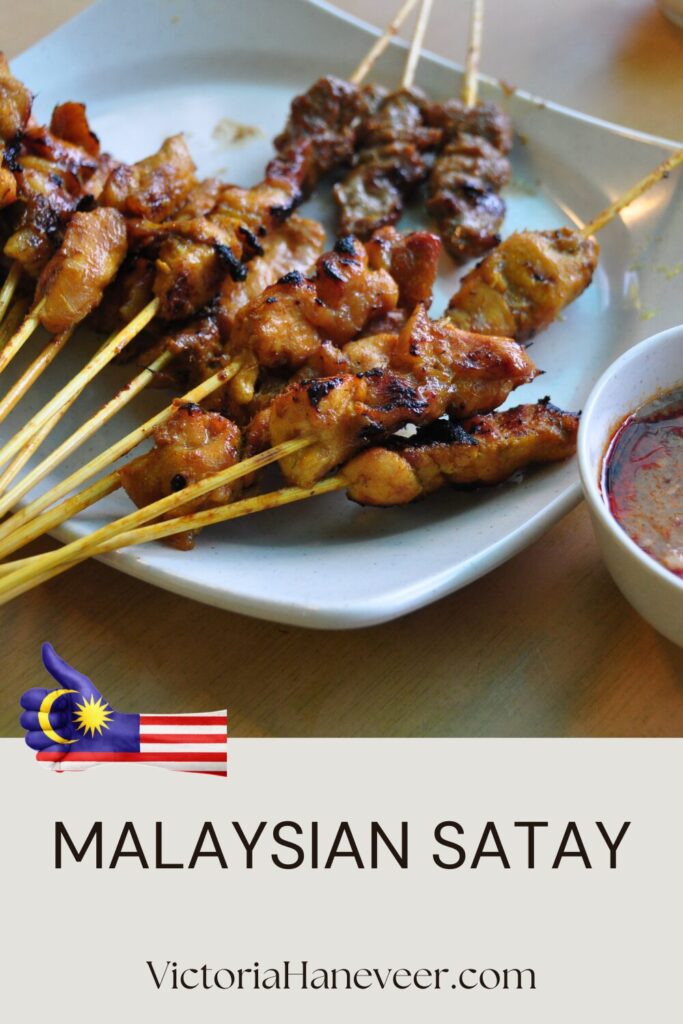
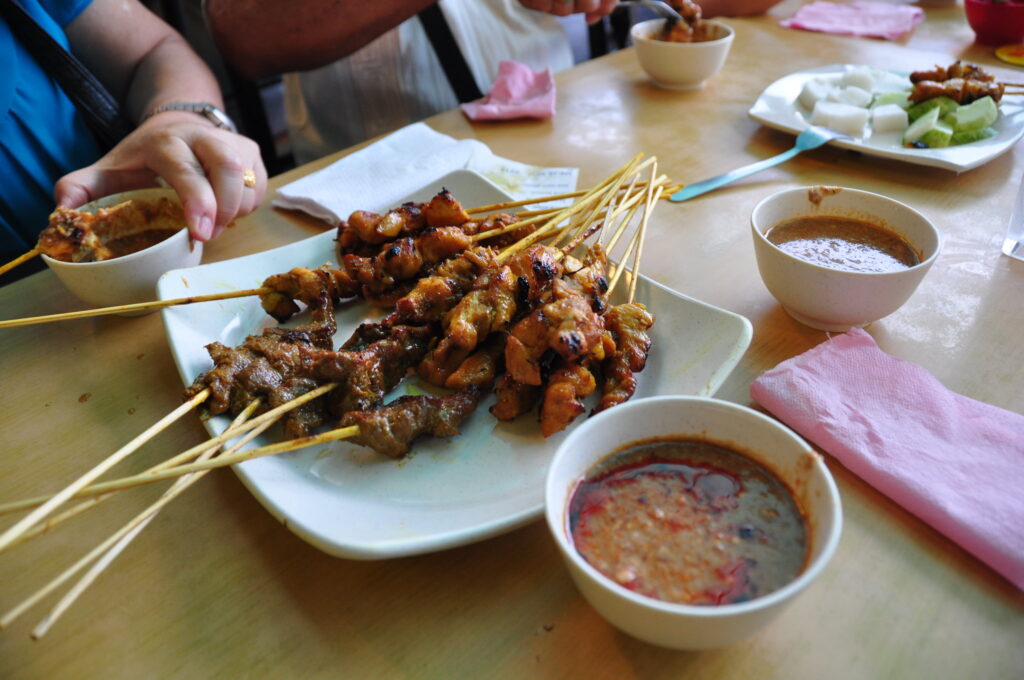
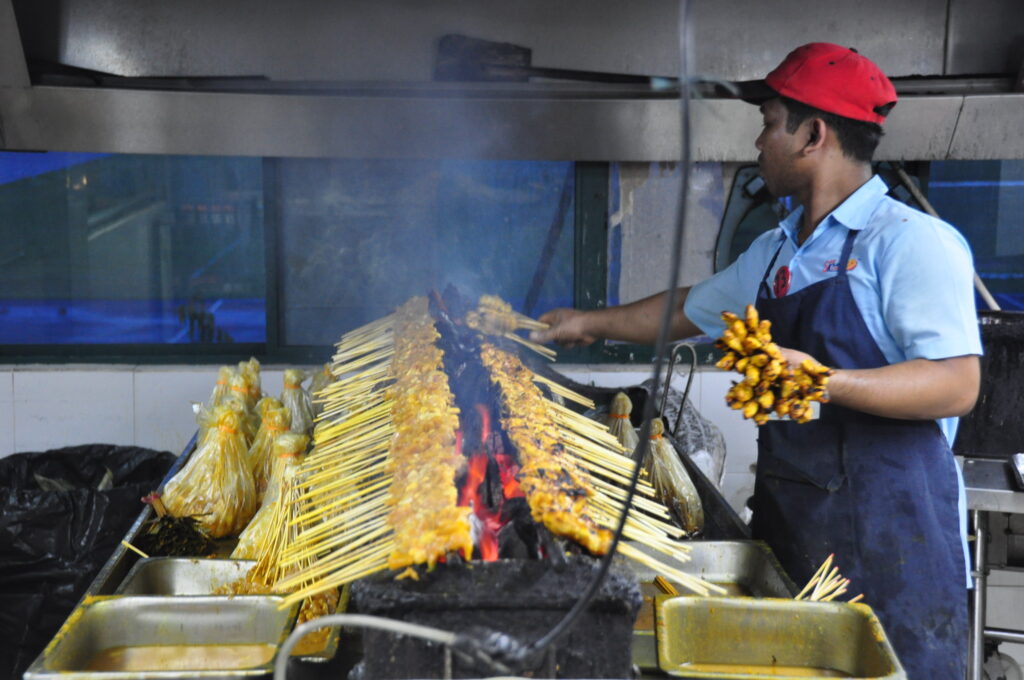
Malaysian satay is grilled meat on skewers, usually served with peanut sauce and fresh cucumber and onion. The smell of satay cooking over charcoal is one of the things I remember most clearly from eating it in Malaysia, especially when the edges of the meat start to char over the heat.
This recipe makes both chicken and beef satay with a turmeric, coriander and cumin marinade, then a peanut sauce made with roasted peanuts, tamarind, sambal and coconut milk. You can cook the skewers on an outdoor grill or grill pan, and the broiler is another option if you don’t have either.
Malaysian Satay at a Glance
- Prep time: 20 minutes
- Cook time: 20 minutes
- Marinating time: 20 minutes
- Total time: 1 hour
- Servings: 4
- Cuisine: Malaysian
- Main ingredients: Chicken thighs, beef, roasted peanuts, coconut milk, tamarind and turmeric
- Best cooking method: Outdoor grill or grill pan
- Storage: Refrigerate cooked satay and peanut sauce separately for up to 3 days
Why Malaysian Satay is Worth Making
- Chicken and beef: You can make both from the same batch of marinade, then cook them on separate skewers so each meat can be checked independently.
- Roasted-peanut sauce: The sauce starts with whole roasted peanuts rather than peanut butter, with tamarind and sambal in there too for acidity and heat.
- Indoor or outdoor cooking: An outdoor grill gives you the most direct char, though a grill pan or broiler also works at home.
- Easy to adjust: Reduce the sambal for a milder sauce or make only chicken or only beef if you prefer one meat.
What is Malaysian Satay?
Satay is marinated meat that’s threaded onto skewers and grilled over high heat. In Malaysia, chicken and beef are both popular choices, and the skewers are often served with peanut sauce, cucumber, onion and compressed rice cakes such as ketupat. Satay’s strongly associated with hawker stalls, markets and charcoal grilling.
The marinade I use for the satay sauce, or saté sauce, is pretty simple, with coconut milk, soy sauce, garlic, ginger, turmeric, coriander, cumin and chili powder.
Ingredient Notes
- Chicken thighs: Thigh meat is really good for quick grilling because it has enough fat to handle the heat without drying out as fast as chicken breast.
- Beef: Choose a tender cut that can cook quickly in small pieces. I find sirloin a good choice for satay skewers.
- Coconut milk: I used a small amount in the marinade and more in the peanut sauce added near the end of cooking.
- Roasted peanuts: These are blended with water for the sauce. I usually prefer to keep a little texture rather than processing them into a completely smooth paste.
- Tamarind water: This adds the sour part of the peanut sauce and helps balance the sugar and coconut milk.
- Sambal or chili paste: This controls most of the heat in the sauce. Start with less if you prefer a milder result.
- Turmeric, coriander and cumin: These vibrant spices season the meat and give the marinade its warm spice profile.
- Soy sauce and sugar: Soy sauce adds salt and the sugar helps the outside of the meat brown over the grill as well as adding sweetness.
How to Make Malaysian Satay
Mix the marinade first, then divide it between 2 bowls before adding the chicken and beef. Keeping the meats separate makes grilling easier because chicken and beef don’t necessarily finish cooking at the same time. Thread each meat onto its own skewers after marinating.
I make the peanut sauce while the meat’s marinating. Blend the roasted peanuts with water, cook the shallots, garlic, sambal and turmeric in oil, then add the peanut mixture, tamarind water, sugar and soy sauce. Coconut milk goes in near the end. Grill the skewers over good heat and rotate them regularly until the meat is cooked through. And I promise you’ll be salivating at this point!
Malaysian Satay Sauce
I like to use roasted peanuts to make the peanut sauce, although some recipes use peanut butter. Blending the nuts with water makes a sauce with some small peanut pieces left in it, while tamarind water adds acidity and sambal adds heat. Coconut milk softens the stronger flavors and gives the sauce more body.
If you need something quicker, my 3-ingredient satay sauce is the shortcut option. Use that recipe rather than swapping peanut butter directly into this sauce because the proportions are different.
Tips for the Best Results
- Keep chicken and beef separate: Thread them onto different skewers so you can remove each batch when it reaches the right temperature.
- Don’t pack the meat tightly: Leave a little room between pieces so more of the surface reaches the heat.
- Soak bamboo skewers: If you’re using wooden skewers, soak them before threading the meat, to make sure they don’t ignite on the grill and you lose your precious meat down the grates! Metal skewers don’t need soaking, of course. These 12-inch bamboo skewers are long enough for grilling.
- Baste safely: Use clean oil or marinade that you set aside before adding raw meat. Don’t brush marinade that has touched raw chicken back onto cooked satay unless you boil it first.
- Use a thermometer: Cook chicken to 165°F (74°C). Whole-cut beef pieces should reach at least 145°F (63°C), followed by a 3-minute rest. This instant-read thermometer is ideal.
- Watch the sugar: The marinade contains sugar, so the edges can darken quickly over very high heat.
Variations and Substitutions
- Chicken only: Replace the beef with the same weight of chicken thighs and keep the rest of the recipe the same.
- Beef only: Replace the chicken with the same weight of beef and cook it to your preferred doneness, keeping the USDA minimum temperature in mind.
- Chicken breast: You can use breast meat instead of thighs, though it needs closer attention because it can dry out more quickly.
- No outdoor grill: Use a grill pan on the stove or cook the skewers under the broiler (UK: grill) rotating them so the meat cooks on more than one side.
- Less heat: Reduce the sambal or chili paste in the peanut sauce.
What to Serve with Malaysian Satay
Cucumber, red onion and rice cakes are the classic choices with satay and peanut sauce. If you’re making a larger Malaysian spread, add Malaysian acar for something pickled, curry puffs as another street-food snack or roti canai with curry for dipping. A little sambal belacan at the table is good if you want more chili heat.
Nasi goreng can make the meal more substantial, and cendol works well as dessert after grilled food and peanut sauce.
Malaysian vs Indonesian Satay
There isn’t one neat rule that separates every Malaysian satay from every Indonesian sate. Both countries have regional variations, different meat choices and more than one type of sauce. Malaysian satay is commonly served with peanut sauce, cucumber, onion and ketupat, while Indonesian sate includes a very wide range of regional styles and can be served with peanut sauce, kecap manis-based sauces, sambal or other accompaniments.
That means color alone isn’t a reliable way to identify which style you’re eating. Some Indonesian versions are dark from kecap manis and repeated basting, though others look completely different. Malaysian versions also vary by cook and region.
The first satay I tried was in Malaysia. Later I had it in Indonesia and then often in the Netherlands, where Indonesian food is easy to find. When I lived in the Netherlands, I regularly saw satay served with bread or fries, which was quite different from the way I’d first eaten it in Malaysia.
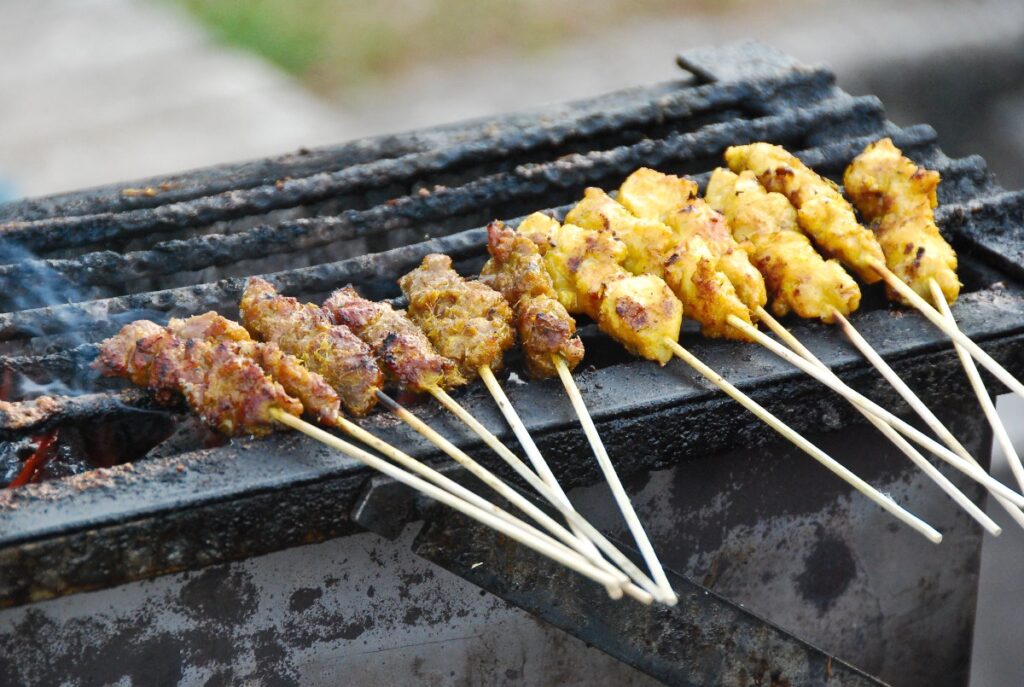
Photo Credit: 7041260 © Adlin Bin Hisyamuddin | Dreamstime.com
Satay in Malaysian Food Culture
Satay has a firmly established place in Malaysian food culture and appears on Malaysia’s National Heritage List. Kajang in Selangor is especially well known for it, with satay restaurants and stalls drawing people specifically to the town.
It’s also a food shared across Southeast Asia rather than a dish with one fixed formula. Malaysia, Indonesia and neighboring countries have their own versions, and the meat, marinade, sauce and serving style can change considerably from one place to another.
For another Malaysian grilled snack, try otak otak, a spiced fish mixture wrapped in banana leaves and cooked over the heat.
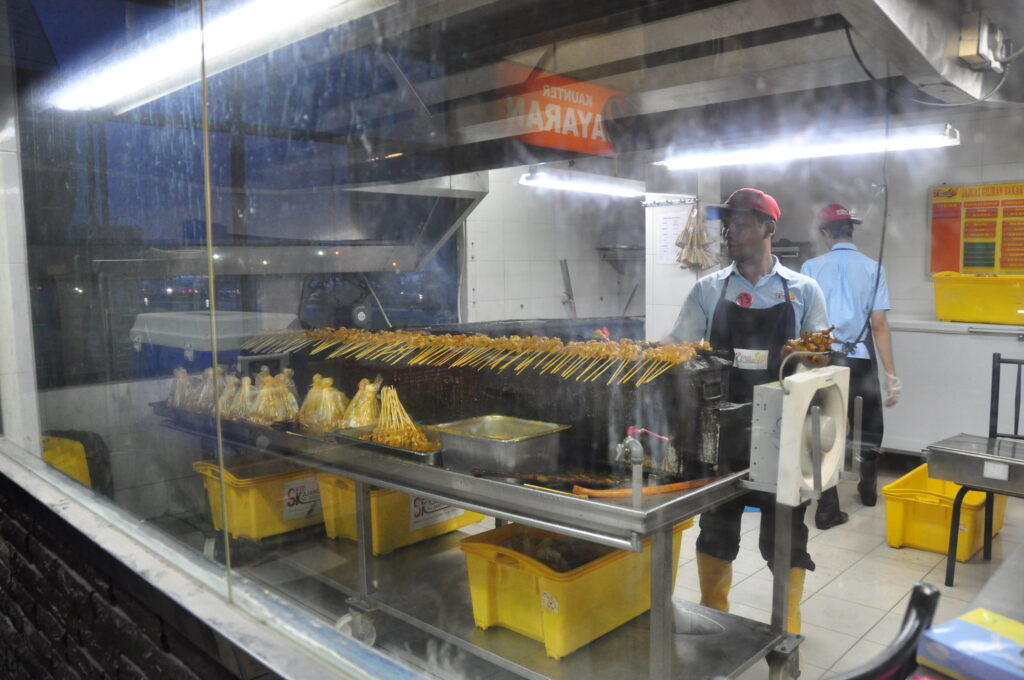
Images from: Marufish on Flickr
How to Store
- Refrigerate: Put cooked satay and peanut sauce into separate covered containers within 2 hours of cooking. Refrigerate for up to 3 days.
- Reheat: Reheat cooked satay to 165°F (74°C). Warm the peanut sauce separately over low heat and stir in a little water if it has become too thick.
- Freeze: Freeze the raw marinated chicken and beef separately for up to 1 month. Thaw them in the refrigerator before threading onto skewers and cooking.
- Make ahead: You can prepare the marinade and peanut sauce earlier in the day. Keep the meat refrigerated while it marinates.
Malaysian Satay FAQs
It can be mild or fairly hot. In this recipe, most of the heat comes from the sambal or chili paste in the peanut sauce, so reduce that amount if you prefer less chili.
Yes. A grill pan works well on the stove, and you can also use the broiler. Rotate the skewers as they cook and check the meat with a thermometer rather than judging it only by color.
I prefer separate skewers because chicken and beef can finish cooking at different times. Separate skewers also make it easier to check the chicken reaches 165°F (74°C) without overcooking the beef.
Not as a straight 1:1 swap in this sauce because peanut butter changes both the thickness and the balance of the other ingredients. If you want a peanut-butter version, use my separate 3-ingredient satay sauce recipe instead.
Choose a tender cut that cooks quickly when cut into small pieces. Sirloin is a good home-kitchen choice because you can cube it evenly and grill it without a long cooking time.
More Malaysian Street Food to Try
Satay is the kind of Malaysian street food that you’ll recognize as soon as you smell it cooking. The grill chars the edges of the meat, while the peanut sauce adds richness and the cucumber and onion give you something fresh as a contrast.
If you want to explore more Malaysian food, try nasi lemak, curry laksa or babi pongteh, or browse the Malaysian recipes hub.
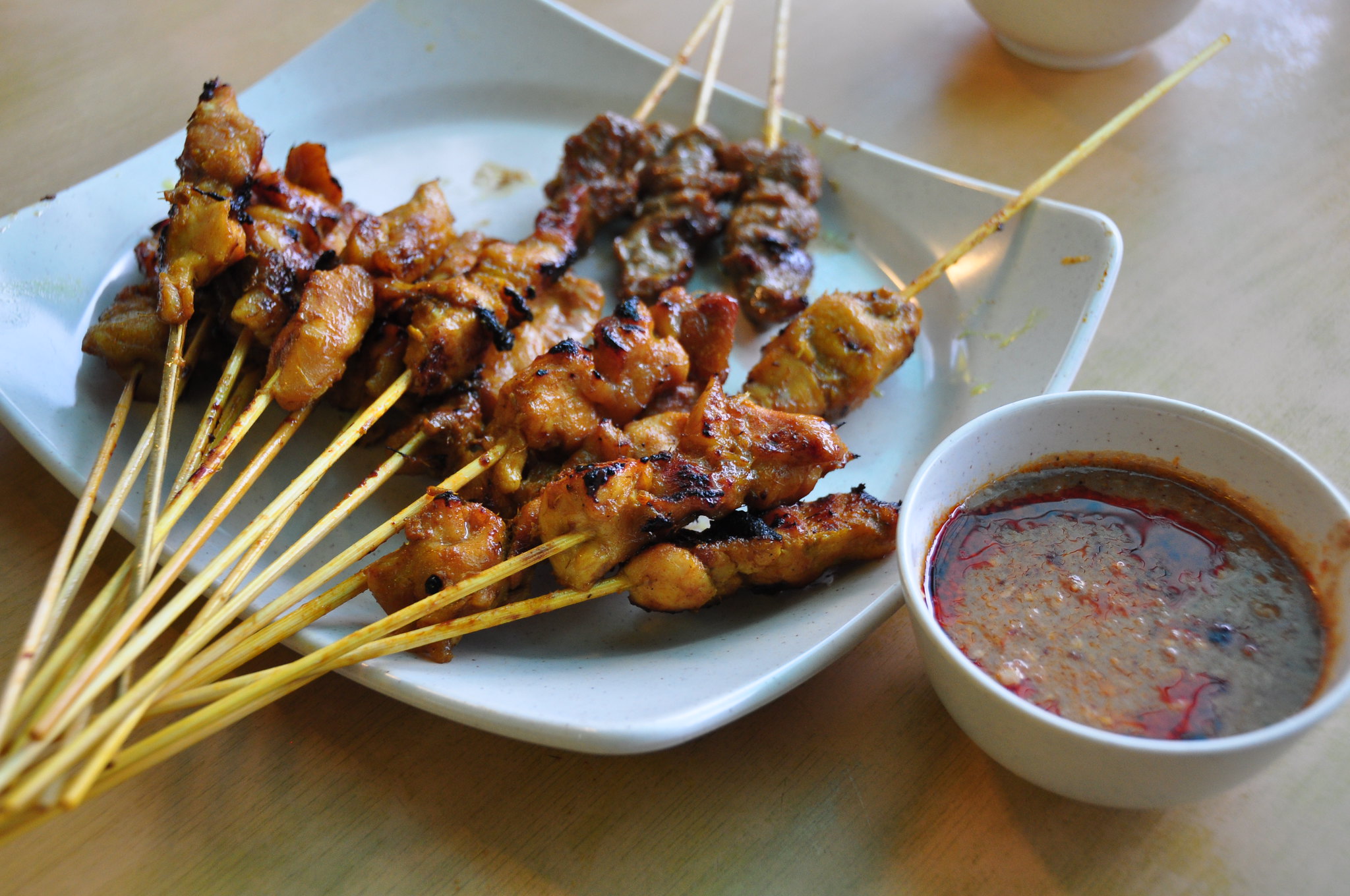
Malaysian Satay with Peanut Sauce
Ingredients
- 14 ounces (400g) chicken thighs, cut into small chunks
- 14 ounces (400g) beef, cut into small chunks
- 3 tablespoons coconut milk
- 2 tablespoons soy sauce
- 1 tablespoon sugar
- 1 tablespoon oil
- 2 cloves garlic, minced
- 1 tablespoon grated ginger
- 1 teaspoon ground turmeric
- 1 teaspoon ground coriander
- ½ teaspoon cumin
- ½ teaspoon chili powder
- Bamboo skewers, soaked in water
- 1 cup (250g) roasted unsalted peanuts
- 1 cup (240ml) water
- 2 tablespoons oil
- 2 tablespoons finely chopped shallots
- 2 cloves garlic, minced
- 2 tablespoons tamarind water
- 1 to 2 tablespoons sugar
- 1 tablespoon soy sauce
- 2 tablespoons chili paste or sambal
- ½ teaspoon ground turmeric
- ½ cup (120ml) coconut milk
- ½ cucumber, sliced
- ½ red onion, cut into wedges
- Rice cakes, optional
Equipment
- 2 large mixing bowls
- Sharp knife
- Chopping board
- Blender or food processor
- Small saucepan
- Bamboo skewers or metal skewers
- Outdoor grill or grill pan
- Long-handled tongs
- Instant-read food thermometer
Method
- Mix the coconut milk, soy sauce, sugar, oil, garlic, ginger, turmeric, coriander, cumin and chili powder in a large bowl.
- Divide the marinade evenly between 2 bowls. Add the chicken to one bowl and the beef to the other. Mix well, cover and refrigerate for at least 20 minutes.
- Thread the chicken and beef onto separate skewers, keeping the pieces close without packing them tightly.
- Blend the peanuts with the water until finely ground with some small pieces remaining.
- Heat the oil in a saucepan over medium heat. Add the shallots and garlic and cook until fragrant. Add the chili paste or sambal and turmeric. Stir briefly.
- Pour in the peanut mixture, then stir in the tamarind water, sugar and soy sauce. Simmer the sauce, stirring often, until it thickens. Stir in the coconut milk and cook for a few more minutes.
- Heat an outdoor grill or grill pan until hot.
- Grill the chicken and beef skewers separately, rotating them regularly.
- Serve the satay hot with peanut sauce, cucumber, red onion and rice cakes if liked.
Notes
- Skewers: Soak bamboo skewers before using them. Metal skewers don’t need soaking.
- Basting: If you want to baste the meat, use clean oil or marinade reserved before the raw meat was added. Don’t reuse marinade that has touched raw chicken unless you boil it first.
- Chicken and beef: Keep them on separate skewers because they can finish cooking at different times.
- Peanut sauce: If it becomes too thick, stir in a little water until it reaches the consistency you want.
- Make ahead: Marinate the chicken and beef in separate covered containers in the refrigerator.
- Storage: Refrigerate cooked satay and peanut sauce separately within 2 hours and use within 3 days. Reheat cooked satay to 165°F (74°C). You can freeze raw marinated chicken and beef separately for up to a month, then thaw in the refrigerator before cooking.
- Shortcut sauce: Use this 2-minute satay sauce if you want the quicker peanut-butter version.