What is Wok Hei? Meaning and How to Get It at Home
This post contains affiliate links. As an Amazon Associate I earn from qualifying purchases.
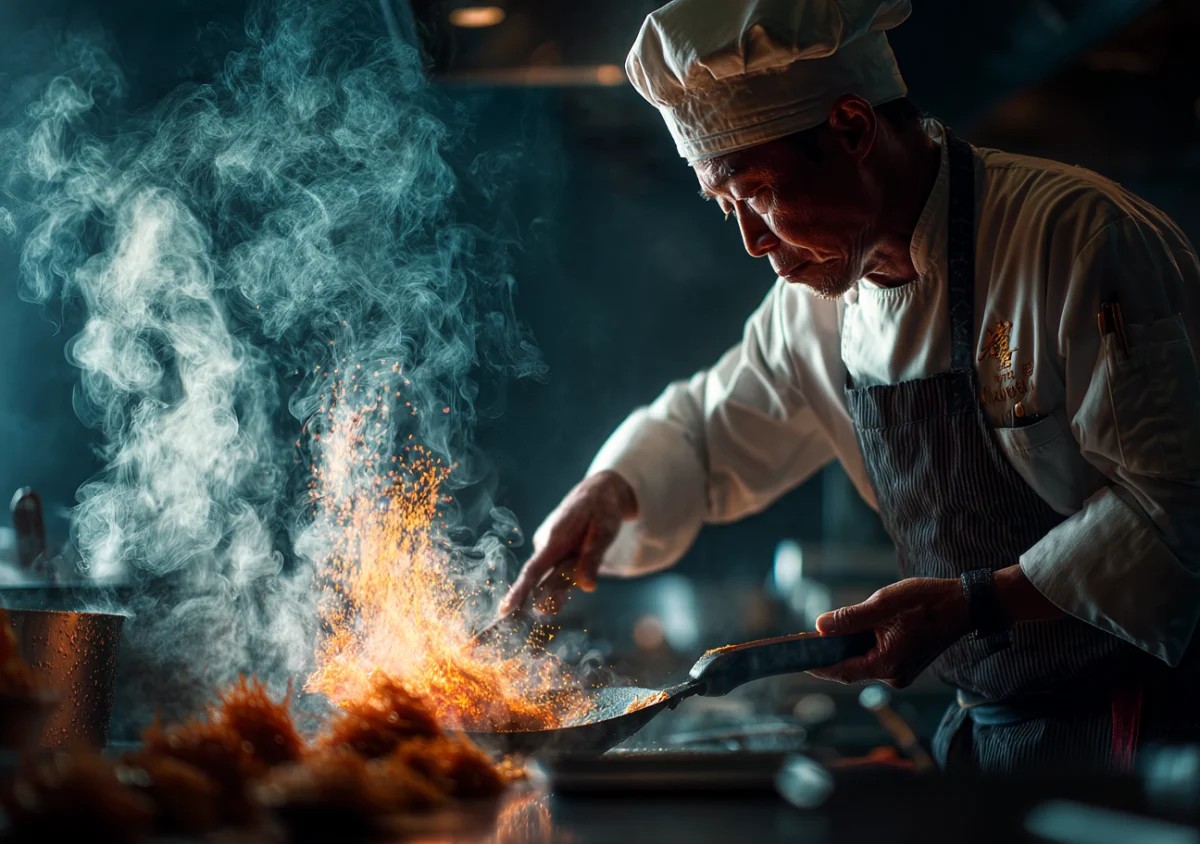
Wok hei is the smoky flavor and aroma you get from intense wok cooking. The Cantonese term is often translated as “breath of the wok,” and it helps explain why freshly stir-fried restaurant dishes can taste so different from those you cook at home.
My electric stove makes that restaurant finish harder to achieve, but there are ways to improve a home stir-fry. The first step is understanding what creates the flavor and where your equipment sets the limits. I used to have a gas burner which I loved. Hopefully my next stove will be that way too.
Wok Hei at a Glance
Meaning: “Breath of the wok.”
Origin: A Cantonese cooking term.
Method: Stir-frying over intense heat.
At home: Small batches help, but your stove limits how closely you can match a restaurant wok burner.
Wok Hei Meaning and Flavor
Wok hei tastes smoky and lightly singed, without the bitterness of burned food. It’s most apparent when a stir-fry reaches you straight from the wok. Dark soy sauce can color noodles, but color alone doesn’t tell you whether a dish has wok hei.
The MICHELIN Guide’s explanation of wok hei connects it with several processes, including browning reactions and changes in hot oil. That helps explain why adding a smoky seasoning can’t reproduce the whole cooking effect.
How to Get Wok Hei at Home
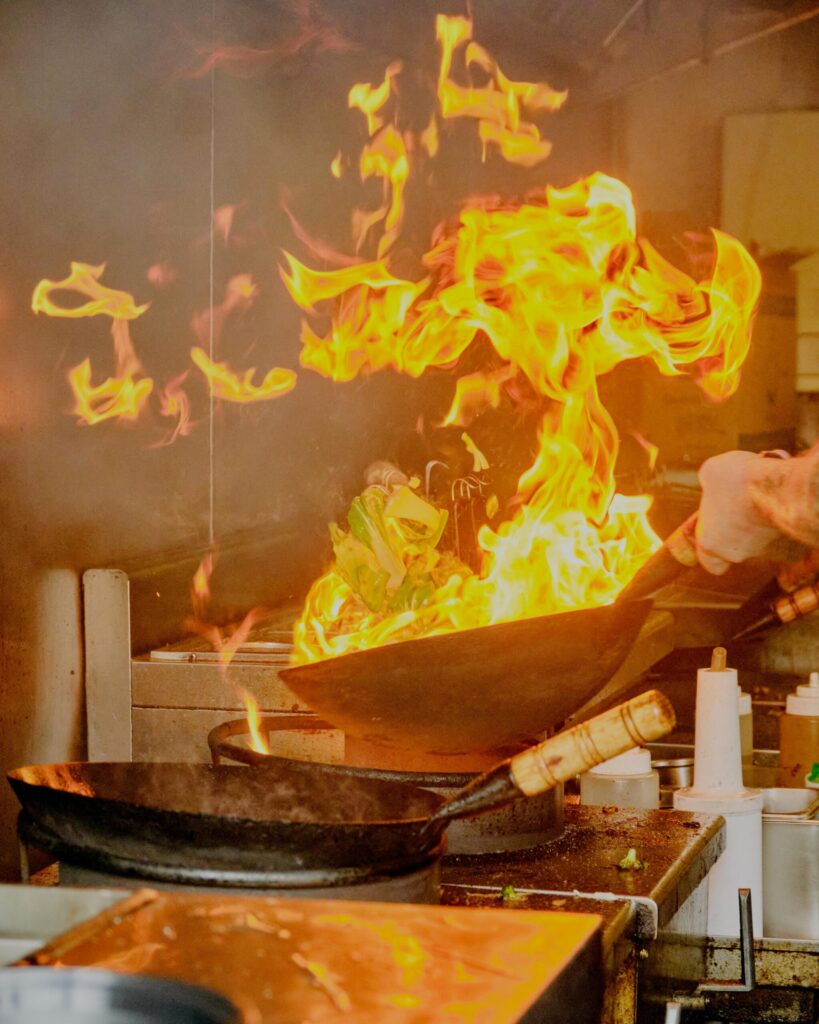
Have the ingredients chopped and the sauce measured out before you heat the wok, because wok hei happens fast! Heat a seasoned carbon steel wok until it’s hot enough for stir-frying, following its care instructions, then add the oil and cook in batches small enough for your burner to handle. Give meat a chance to sear before stirring, then follow the recipe’s cooking order and combine everything at the end.
- Reduce surface moisture: Drain noodles and dry washed vegetables before frying.
- Avoid crowding: Split a large batch so the wok doesn’t fill with food and liquid all at once.
- Control the sauce: Measure it first instead of repeatedly adding more while you cook.
- Watch the food: Stir and scrape as needed, giving ingredients contact with the hot surface without leaving them to burn.
These habits also help when you’re cooking a stir-fry that doesn’t need a pronounced smoky finish. These cooking tips cover more everyday kitchen techniques.
Handy Equipment for Stir-Frying
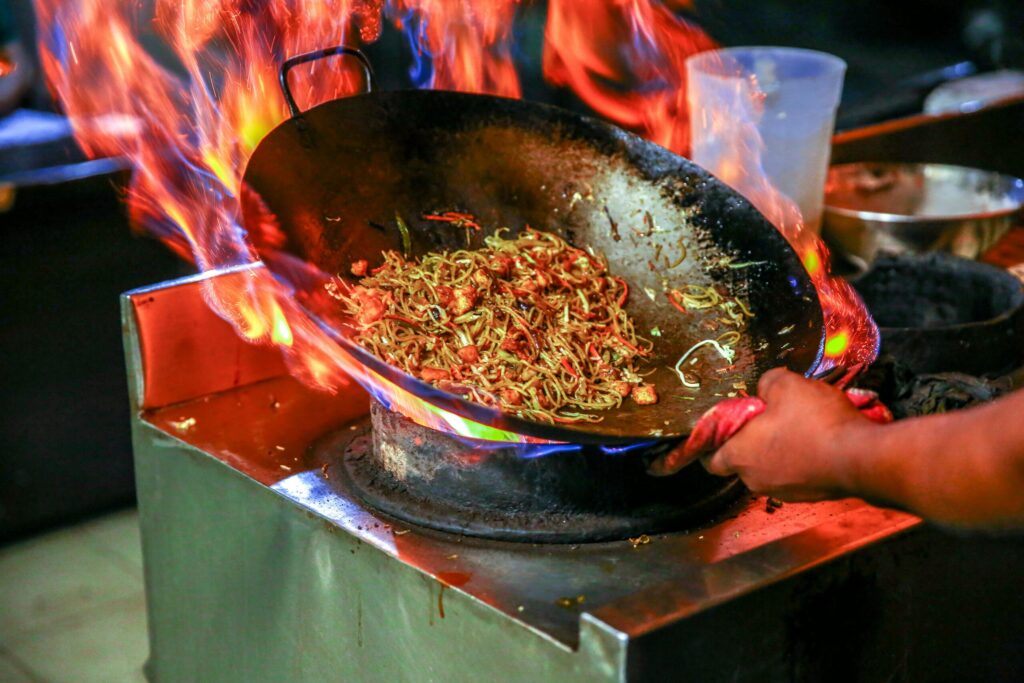
- Carbon steel wok: A seasoned, uncoated wok tolerates high-heat cooking. A flat base gives it contact with a flat cooktop; check compatibility with your stove. A rounded base is a better fit for some gas burners. Both kinds of wok are pretty easy to find. I have an electric wok here too but it takes quite a while to warm up and then to cool down, which is why I prefer gas by far, as you can change the temperature pretty much immediately when using gas.
- Wok spatula: A long-handled spatula helps you scrape the cooking surface and move food comfortably. This linked set also includes a ladle.
Marion’s Kitchen’s wok guide explains the advantages of carbon steel and flat-bottomed pans. A nonstick wok needs different handling, so follow its manufacturer’s heat limits instead of applying high-heat carbon steel instructions to it.
Cooking on Electric and Induction Stoves
A flat-bottomed wok is a practical starting point for either stove, provided the pan is compatible. On induction, keep the base in contact with the cooking zone while stirring. Lifting it repeatedly interrupts heating, so restaurant-style tossing isn’t necessarily going to work, depending on your cooktop type.
You can brown ingredients on electric or induction, but matching the smoky finish of a powerful flame-heated restaurant wok is trickier. Start with a smaller batch and judge how the food cooks before increasing the amount. Better browning is worthwhile even if your dish doesn’t develop the full restaurant aroma/flavor.
Wok Hei FAQs
Wok hei is a Cantonese term often translated as “breath of the wok.” It describes the smoky flavor and aroma associated with intense wok stir-frying.
You can improve browning and develop some smoky flavor at home, although the result depends on your stove and pan. A domestic burner may struggle to maintain enough heat once you add the ingredients.
There isn’t a single burner rating that guarantees wok hei. The amount of food, pan and technique also affect the result. A BTU figure describes burner output, not the temperature your food reaches.
No. Maillard reactions contribute browned flavors, but wok hei also involves other effects of high-heat cooking, including changes in oil. Browning alone doesn’t account for its smoky aroma.
I recommend a neutral oil that tolerates high-heat cooking, such as canola or refined peanut oil (groundnut oil). Save toasted sesame oil for seasoning if your recipe calls for it.
Yes. Tim Chin’s cooking tests show that a torch can approximate the smoky effect. A blowtorch is optional equipment, and this approach calls for care with an open flame. Follow the torch manufacturer’s instructions; you don’t need one to improve everyday stir-fries.
Getting More from Your Home Stove
Start with a dish you already enjoy cooking and pay attention to what happens when you reduce the batch size. Notice whether the food starts frying promptly or sits in liquid, and adjust the next batch accordingly. Your stove may not match a restaurant burner, but you can still improve the way you cook on it.
Recipes to Practice Your Wok Technique
Wok hei comes from Cantonese Chinese cooking, but you’ll find that smoky wok flavor in stir-fried dishes across Asia. You can practice the technique with fried rice or noodles from several cuisines, including the recipes in my Malaysian recipes guide.
My Chinese chicken stir-fry is a good place to practice cooking chicken and vegetables quickly in a hot wok. Or try my Chinese Napa cabbage stir-fry, a vegetable dish flavored with ginger and garlic and finished with sesame oil.
Malaysian dishes are also good for wok hei cooking. Char kway teow is known for its smoky finish. When cooking mee goreng or nasi goreng, small batches help the noodles or rice fry properly. Follow each recipe’s method, since wok hei isn’t essential to every stir-fry, and a wok can also cook dishes that don’t need this smoky character.