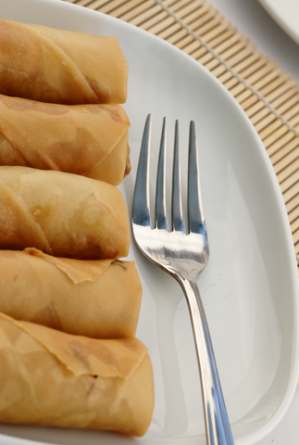
Malaysian popiah are soft or fried spring rolls filled with shredded vegetables and sometimes shrimp, egg or meat. The wrappers are thin and flexible, so they hold a lot of filling, and the balance between the filling and wrapper is what makes them so good.
The first time I made these, I overfilled them and they split as soon as they hit the oil.
Rolling them tighter with less filling fixed that straight away and gave a much cleaner result.
Popiah are common across Malaysia and Singapore, and you’ll see both fresh and fried versions depending on where you go. For more dishes like this, take a look at the Malaysian recipes hub.
What This Dish Is
Popiah are spring rolls with a thin wrapper and a vegetable-heavy filling. They’re usually filled with julienned vegetables and sometimes shrimp, egg or pork.
They’re eaten as street food and snacks, and the fillings vary slightly depending on region and what’s available.
What Malaysian Popiah Tastes Like
The filling is lightly seasoned and built around vegetables, so the texture is just as important as the flavor.
You get crunch from the vegetables and a soft bite from the wrapper if you don’t fry them.
If fried, the outside gets nice and crisp while the inside stays soft. If served fresh, the wrapper stays tender and slightly chewy.
Popiah vs Lumpia vs Egg Rolls
These are often grouped together, but they’re not the same once you look at how they’re made and served.
What a popiah recipe is: A Malaysian popiah recipe uses thin wrappers filled with finely shredded vegetables, sometimes with shrimp, egg or pork. The filling is kept fairly light and the rolls can be served fresh or fried. The balance between wrapper and filling matters, so they aren’t packed too full.
Popiah: The wrappers are soft and flexible, which makes them easy to roll tightly without tearing. Fresh versions stay soft and slightly chewy, while fried ones crisp up but are still relatively light.
Lumpia: Lumpia comes from the Philippines and is usually fried. The wrappers are similar, but the fillings often include more meat and stronger seasoning. Fresh lumpia exists too, though the fried version is more common.
Egg rolls: These use a thicker wrapper that becomes bubbly and crisp when fried. The filling is usually cabbage with meat, and the overall result is heavier than popiah. These are known as spring rolls in the UK.
Can I use egg roll wrappers for popiah? You can, but the result will be closer to egg rolls. The thicker wrapper gives a crunchier shell and changes the texture of the dish. If you want something closer to traditional popiah, use thinner spring roll wrappers.
Key difference: Popiah keeps the filling and wrapper balanced, while lumpia and egg rolls lean more on the fried exterior and richer fillings.
Key Ingredients
Popiah wrappers: Thin sheets that roll easily without tearing if handled gently – these are hard to find online, so I recommend getting them at an Asian grocery store. I did find them on Amazon but they’re $40 plus, so the Asian market idea is better!
Shredded vegetables: Usually cabbage, carrot and similar vegetables cut finely so they cook evenly.
Optional protein: Shrimp, egg or pork can be added depending on what you want in the filling.
Simple seasoning: Salt and pepper work, with optional additions like soy sauce or sesame oil.
How to Make Malaysian Popiah
Prepare the filling first by cooking the vegetables until just softened. Let it cool slightly so it doesn’t steam inside the wrapper.
Lay out a wrapper, add a small amount of filling, then roll tightly and seal the edge with a cornstarch and water paste.
Fry in hot oil until golden, or serve fresh depending on the version you’re making.
Tips for Best Results
Don’t overfill: Too much filling makes them hard to roll and they can break open while cooking.
Keep the filling fairly dry: Excess moisture softens the wrapper and makes it harder to seal.
Seal properly: The cornstarch paste keeps the rolls closed during frying.
Fry at the right temperature: Oil that isn’t hot enough leads to soggy wrappers.
Variations and Substitutions
Add more flavor: Soy sauce, sesame oil or five spice can be added to the filling.
Different proteins: Use shrimp, chicken or keep it vegetable-based.
Fresh version: Skip frying and serve with a dipping sauce.
Authentic Malaysian Popiah Recipe
Ingredients
- 1 package frozen popiah wrappers or spring roll wrappers
- 1 teaspoon cornstarch mixed with 2 tablespoons water
- Oil, for frying
- 1 cup (150g) green beans (finely cut diagonally)
- 2 medium carrots (julienned)
- 3 shiitake mushrooms (julienned)
- 2 minced garlic cloves
- 2 cups (125g) jicama (julienned)
- Salt and pepper, to taste
Method
- Heat some oil in a wok then stir-fry the garlic for 2 minutes.
- Add the mushrooms and stir-fry until the garlic is golden brown.
- Add the rest of the vegetables to the wok and then add a little water.
- Simmer for 12 minutes or until the vegetables are al dente but not soft.
- Add salt and pepper to taste.
- Let this mixture cool down.
- Spoon some of the filling into a popiah wrap.
- Tuck in the edges then roll it up.
- Use the cornstarch mixture to moisten the edge and help seal the roll.
- Heat oil in a wok over a moderately high heat.
- Drop in the popiah one by one and fry until golden brown.
- Drain them on paper towels and serve hot with chili sauce if liked.
How to Store It
Fridge: Store cooked popiah for up to 3 days.
Reheat: Reheat in a pan or oven to bring back crispness.
Freeze: Uncooked rolls freeze better than cooked ones and can be fried straight from frozen.
What to Serve with It
Serve popiah with chili sauce or a light dipping sauce. They also work well alongside other small dishes or as part of a larger Malaysian meal.
Malaysian Popiah FAQs
Are popiah always fried?
No. Some versions are served fresh with a soft wrapper.
Can I make them ahead of time?
Yes, but it’s better to fry them just before serving for the best texture.
Why did mine fall apart?
Usually from overfilling or not sealing the edge properly.
More Malaysian Recipes
If you like street food style dishes, char kway teow is a wok-fried noodle dish with a strong smoky flavor, while ikan bakar brings grilled fish with a chili-based marinade.
Nasi lemak is another staple, built around coconut rice and classic sides.
History of Malaysian Popiah
Popiah comes from Fujian in China and spread through Southeast Asia with Chinese migration. Over time, local ingredients and preferences shaped the versions found in Malaysia and Singapore.
Today it’s a common street food, with both fresh and fried styles widely available depending on the region and vendor.

2 thoughts on “Malaysian Popiah (Fresh or Fried Spring Rolls)”