How to Make a Cassoulet the French Way
This post contains affiliate links. As an Amazon Associate I earn from qualifying purchases.
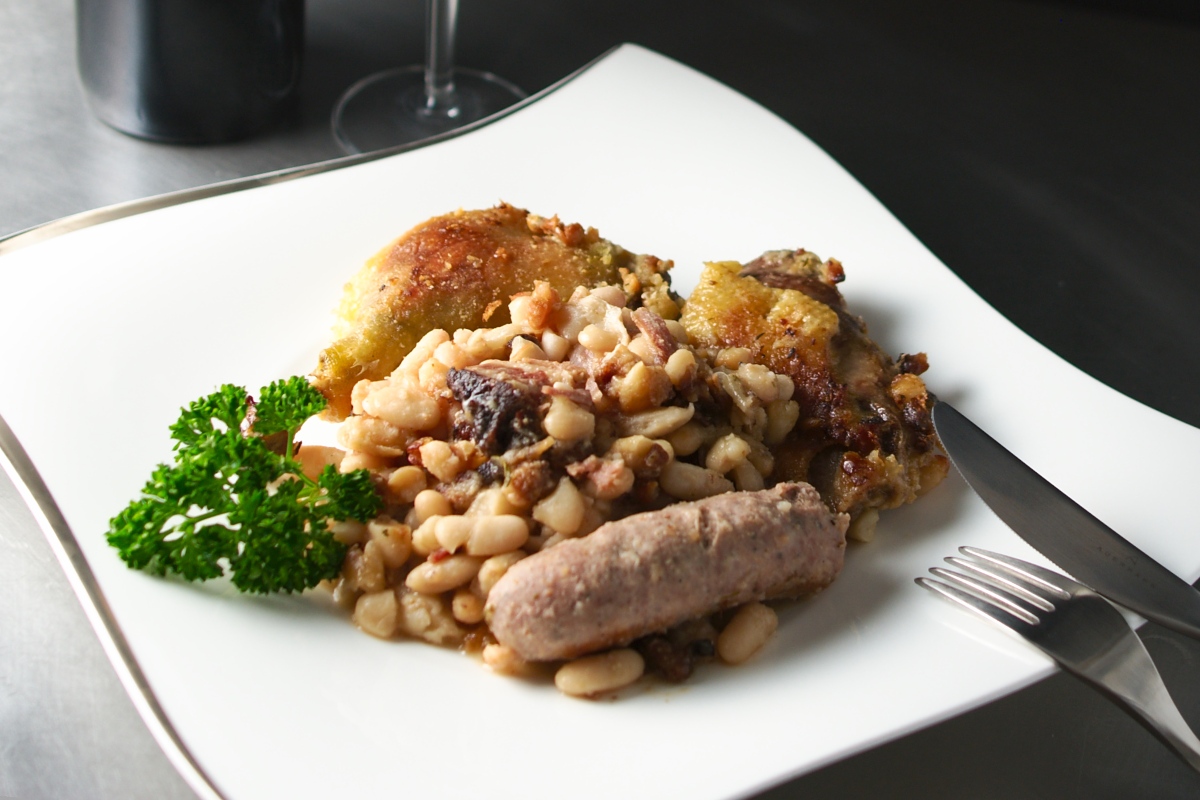
A cassoulet recipe is one of the great slow-cooked dishes of southwestern France, made with white beans and a mixture of meats that can include pork, sausage, duck confit or goose. A traditional cassoulet recipe takes time because the beans and meat cook slowly before the whole dish finishes in the oven.
Read on for two ways to make it. The first is a long, traditional-style French cassoulet with pork shoulder, ham hocks, duck confit and Toulouse-style sausage. The second is a much quicker sausage and cannellini bean cassoulet that takes under two hours from start to finish.
The beans are a main ingredient in both recipes. Tarbais or lingot beans are closely associated with cassoulet in France, while cannellini beans make a practical substitute and work especially well in the quicker recipe.
Cassoulet Recipe at a Glance
- Prep time: 1 hour for the traditional recipe or 15 minutes for the quick recipe
- Cook time: 7 hours for the traditional recipe or 1 hour 30 minutes for the quick recipe
- Total time: 8 hours plus 2 overnight rests for the traditional recipe, or 1 hour 45 minutes for the quick recipe
- Servings: 10 traditional or 6 quick
- Cuisine: French
- Main ingredients: White beans, pork, sausage and duck confit in the traditional recipe
- Best cooking method: Slow simmering followed by oven baking
- Storage: Refrigerate cooked cassoulet for 3 to 4 days
Why Two Cassoulet Recipes?
- The traditional recipe is a project: It uses dried beans, several cuts of pork, duck confit and sausage, with two overnight stages and a long cooking time.
- The quick recipe is more practical: Canned cannellini beans and Italian sausage reduce the work considerably while keeping the bean-and-meat idea that defines cassoulet.
- Both answer different searches: If you’re looking for a traditional cassoulet, you can make the first one, or if you want an easy cassoulet recipe or cannellini bean cassoulet, try the second.
- The traditional recipe can be made ahead: You can stop before adding and roasting the duck confit, then continue one to three days later.
What is Cassoulet?
Cassoulet is a slow-cooked white bean and meat dish from southwestern France. Its exact origin is debated, although it’s strongly associated with the Lauragais area and the towns of Castelnaudary, Toulouse and Carcassonne. The name comes from the cassole, the earthenware vessel traditionally used to cook it.
The meat varies by place and by cook. Pork and sausage are common, with duck or goose confit appearing in many versions. Toulouse-style cassoulet commonly includes pork, duck confit, Toulouse sausage and regional white beans. Castelnaudary cassoulet also centers on white beans, pork, pork rind, sausage and duck or goose confit.
Cassoulet Ingredient Notes
- White beans: Dried Tarbais or cannellini beans work in the traditional card. Tarbais and lingot beans are closely associated with French cassoulet. The quick recipe uses canned cannellini beans. For a broader guide to common bean varieties, see this bean guide.
- Duck confit: The traditional card uses 6 duck confit legs. Confit brings both meat and rendered duck fat to the dish. If you buy extra confit, you can also use it in these duck galettes.
- Pork: Pork shoulder, pork skin, salt pork, ham hocks, pancetta and prosciutto all appear in the traditional recipe. They cook in stages rather than going into the pot at once.
- Sausage: Toulouse-style fresh pork sausage belongs in the traditional card. The quick card uses Italian sausage, which is easier to find in US grocery stores.
- Aromatics: Onion, carrot, garlic, thyme, parsley, celery and bay leaf build the cooking liquid around the beans and meat.
- Breadcrumbs: Both recipes use breadcrumbs for the browned surface. Some regional cassoulet traditions omit breadcrumbs, so this is one area where recipes differ.
What are the Best Beans for Cassoulet?
White beans are essential. A cassoulet without beans becomes a different kind of meat stew. In southwestern France, lingot and Tarbais beans are traditional choices. They have thin skins and a creamy interior after long cooking.
Cannellini beans are the easiest substitute for many non-French home cooks and they’re already used in the quick recipe below. The traditional recipe starts with dried beans because they need to absorb the broth during the long simmer. The quick recipe uses canned beans because most of the cooking has already been done.
Beans also separate cassoulet from dishes such as chili con carne, where recipes may include beans or leave them out entirely.
How to Make Cassoulet
The traditional method starts the day before cooking. Season the pork and soak the dried beans overnight. The next day, cook the pork skin and salt pork, brown the pork shoulder and ham hocks, then simmer the meat with aromatics and broth. The beans cook separately at first before joining the meat.
After another overnight rest, remove excess fat and prepare the garlic and salt pork paste. The final assembly layers beans, meat and duck confit in a baking dish. Sausage and breadcrumbs go in later so they do not spend the entire long cooking time in the oven.
The quick version follows the same broad idea in a shorter format. Brown sausage, add vegetables, canned beans and broth, then simmer until the mixture thickens. A garlic, parsley and breadcrumb mixture finishes the dish in the oven.
Castelnaudary, Toulouse and Carcassonne Cassoulet Recipes
There’s no single recipe that every cook in southwestern France follows. Castelnaudary, Toulouse and Carcassonne each have their own traditions. The Castelnaudary Tourist Office describes a version based on lingot beans, duck or goose confit, Toulouse sausage, pork and pork rind. Toulouse tourism also describes duck confit, pork, Toulouse sausage and regional white beans as central ingredients in its local cassoulet.
That is why a search for cassoulet de Castelnaudary can look very similar to a Toulouse cassoulet at first glance. The differences are in the local ingredients, proportions and cooking traditions rather than a completely different dish.
Substitutions and Variations
- Beans: Use cannellini beans if you cannot find Tarbais or lingot beans.
- Sausage: Use a fresh garlic pork sausage if Toulouse sausage is unavailable. For the quick recipe, Italian sausage works as written.
- Duck: Duck confit is part of the traditional card. Chicken cassoulet is a separate variation rather than a direct swap because the fat content and cooking method are different.
- Breadcrumb topping: Leave it off if you prefer a regional style that does not use breadcrumbs.
- Quick version: The second recipe is the better option if you want a relatively fast bean and sausage cassoulet without the overnight stages.
Recommended Equipment for Cassoulet
- Deep baking dish: Use this for the final oven stage if you do not own a traditional cassole.
- Large enameled Dutch oven: The traditional recipe needs room for the pork, beans and broth.
- Large stockpot: Handy for blanching and simmering the beans.
- Large skillet: Use it for browning the sausage before the final oven stage.
- Food processor: Makes the cooked garlic, raw garlic and salt pork paste for the traditional recipe.
- Kitchen twine: Needed for the bouquet garni and pork skin bundles.
What to Serve with a Cassoulet
Cassoulet is rich enough to serve as by itself. A simple green salad with vinaigrette gives you something fresh on the plate, and crusty bread is good for the mopping up the broth.
If you want another French duck recipe for a different meal, try my duck breast à l’orange with Grand Marnier.
How to Store
- Refrigerator: Transfer leftovers to shallow containers and refrigerate promptly. Cooked casseroles and meat leftovers can be refrigerated for 3 to 4 days.
- Reheating: Reheat leftovers to 165°F (74°C) in the center.
- Freezing: Freeze cooked cassoulet in airtight portions for 2 to 3 months for best quality. The beans may soften slightly after thawing.
- Make ahead: For the traditional card, you can stop after the cooked meats are stirred back into the beans, refrigerate for 1 to 3 days and finish the duck, sausage and oven stages later.
USDA guidance recommends using most cooked leftovers within 3 to 4 days and reheating them to 165°F. Its freezer chart gives 2 to 3 months as the best-quality range for casseroles.
Cassoulet Recipe FAQs
Cassoulet is a slow-cooked dish from southwestern France made with white beans and meat. Pork and sausage are common, while duck or goose confit appears in many regional versions.
Casserole is a broad term for a dish cooked in a deep ovenproof vessel. Cassoulet is a specific French dish based on white beans and meat, and its name comes from the traditional cassole used to cook it.
Tarbais or lingot beans are traditional choices in southwestern France. Cannellini beans are a practical substitute and work especially well in the quicker recipe on this page.
Yes. The traditional recipe includes an overnight rest and can also be paused after the cooked meats go back into the beans. Refrigerate it for 1 to 3 days, then continue with the duck, sausage and final oven stages.
A green salad with vinaigrette and crusty bread are good choices because cassoulet already contains beans and several kinds of meat. You usually do not need another heavy side dish.
Cassoulet is associated with several places in southwestern France, especially Castelnaudary, Toulouse and Carcassonne. Each has its own local tradition, so there is no single regional recipe that covers every cassoulet.
Choose Your Cassoulet Recipe
The traditional cassoulet is the one to choose if you want the long French method with dried beans, duck confit, several pork cuts and sausage. The quick recipe is much easier to fit into an afternoon and gives you a cannellini bean and sausage cassoulet with far fewer stages.
Both start with the same essential idea: white beans cooked with meat until the beans absorb the cooking liquid and the dish becomes thick enough to serve as a main course.
Traditional Cassoulet Recipe
This is the long version with pork shoulder, ham hocks, pork skin, duck confit and Toulouse-style sausage. Plan for two overnight stages as well as the prep and cooking times. The ingredients won’t look exactly like the ones below, but it’s just to give you an idea.
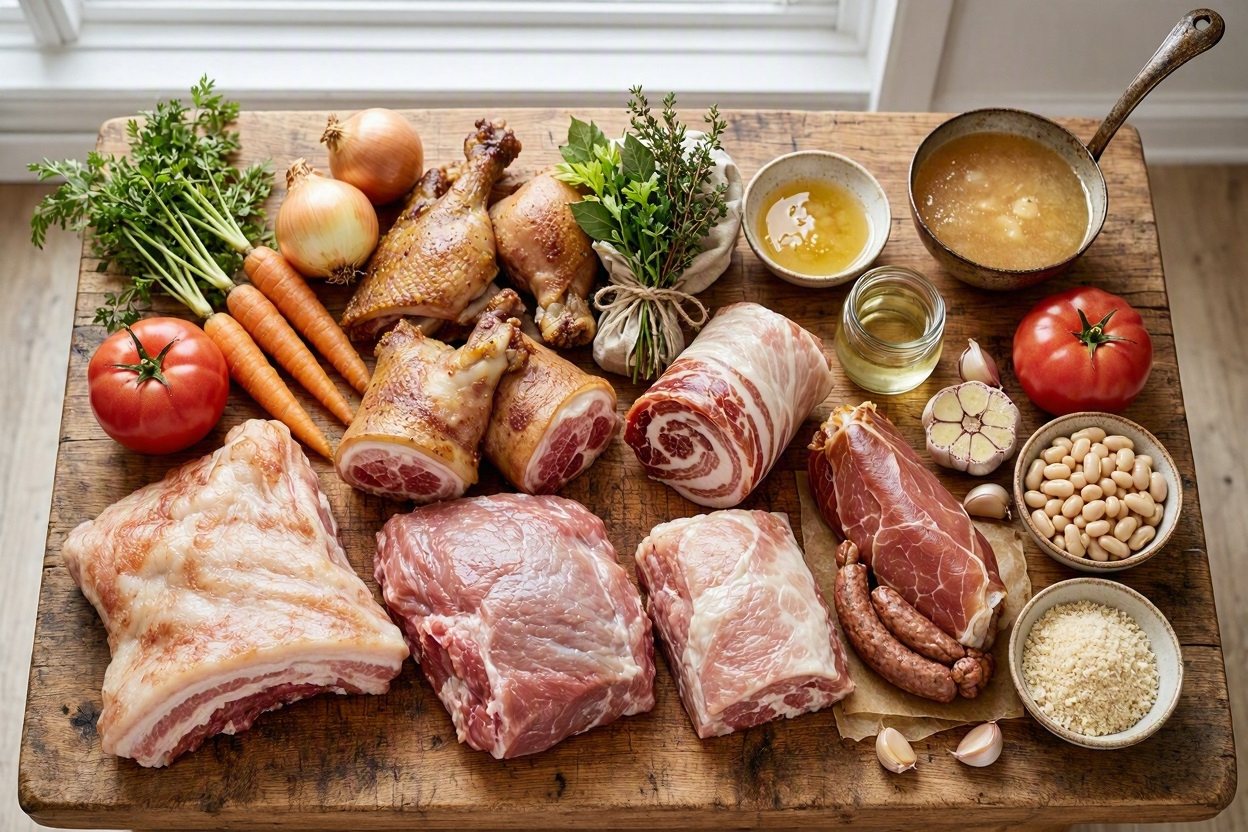
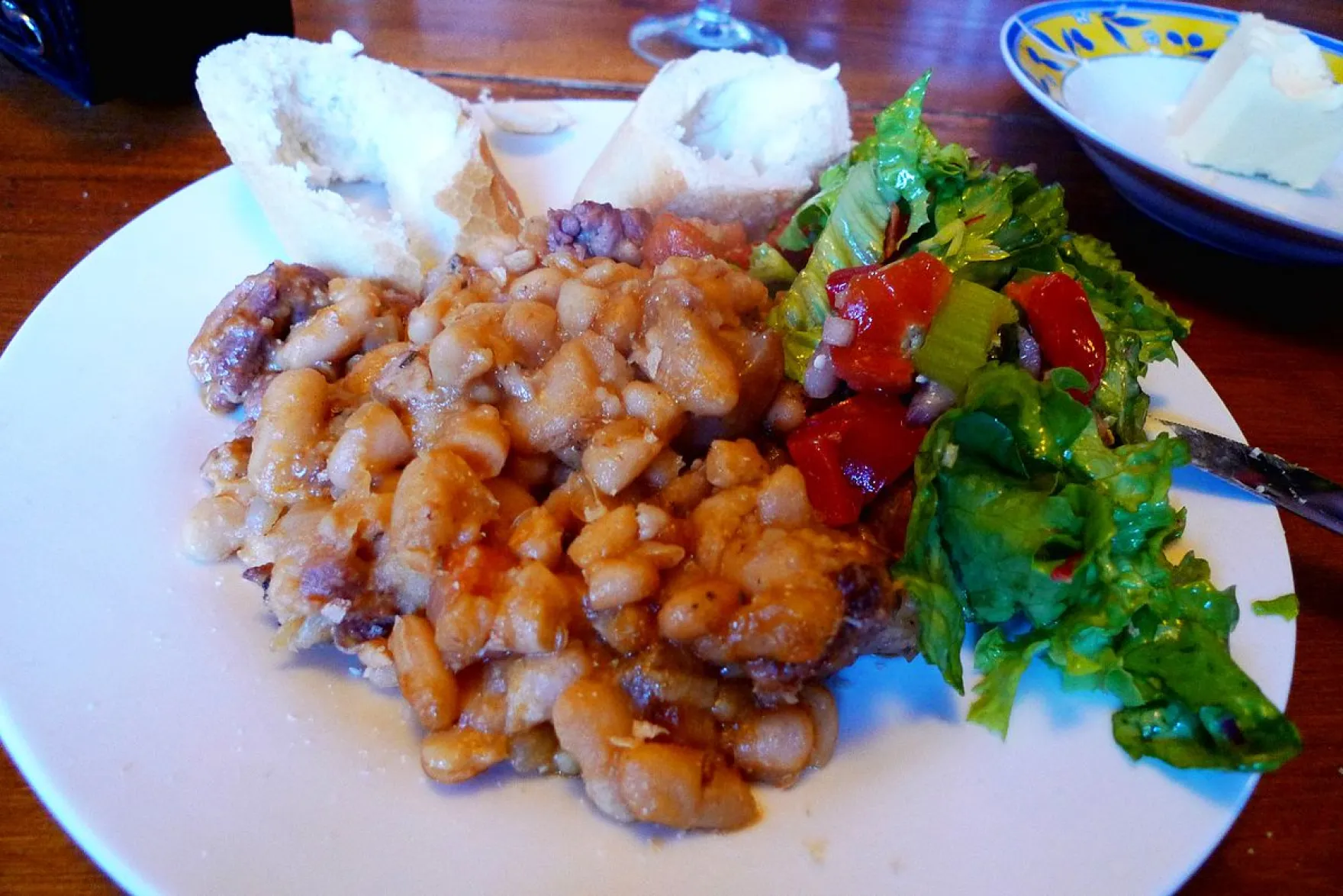
Traditional French Cassoulet Recipe
Ingredients
- 6 ounces (170g) fresh pork skin with ¼ inch (½cm) fat attached
- 1 pound (450g) boneless pork shoulder, cut into 1 ½-inch (3.75cm) cubes
- 2 pounds (900g) dried Tarbais or cannellini beans, rinsed
- 2 ounces (55g) skinless salt pork
- 2 fresh ham hocks
- 5 ounces (140g) pancetta, in 1 piece
- 5 ounces (140g) prosciutto, in 1 piece
- 1 unpeeled head garlic
- 4 small garlic cloves, peeled
- 1 plum tomato, chopped
- 3 small carrots, thinly sliced
- 2 onions, diced
- ⅓ cup (80ml) duck fat
- 2 quarts plus 2 cups (2.5 liters) chicken broth
- 1 bouquet garni made with 4 parsley sprigs, 3 small celery ribs, 2 thyme sprigs and 1 bay leaf, tied with kitchen twine
- Salt and freshly ground black pepper
- 6 duck confit legs
- 1 tablespoon vegetable oil
- 1 pound (450g) fresh French-style pork sausage, such as saucisse de Toulouse
- ¼ cup (30g) fresh breadcrumbs
Equipment
- Large dish or container for seasoning the pork overnight
- Large bowl for soaking the beans
- Large saucepan
- Large enameled cast-iron Dutch oven
- 5-quart baking dish or cassoulet dish
- Food processor
- Large skillet (frying pan)
- Slotted spoon
- Kitchen twine
Method
- Add the pork shoulder, pork skin and ham hocks to a large dish. Season with salt and black pepper, cover and refrigerate overnight.
- Add the beans to a large bowl and cover with about 3 inches (7.5cm) cold water. Leave them to soak overnight.
- Add the salt pork and seasoned pork skin to a saucepan and cover with water. Bring to a boil, reduce the heat and simmer for 30 minutes or until the skin is supple. Drain and cool.
- Refrigerate the salt pork. Cut the pork skin into 5 long pieces, roll each piece into a bundle and tie with kitchen twine.
- Pat the pork shoulder and ham hocks dry. Heat the duck fat in a large enameled cast-iron Dutch oven over medium-high heat. Brown the pork shoulder in 2 batches and transfer it to a plate.
- Brown the ham hocks in the same pot. Add the onions and carrots and cook over medium heat for about 7 minutes, stirring often, until the onions are golden. Add the pancetta and brown it.
- Add the unpeeled garlic head, tomato and prosciutto. Cook for 1 minute, stirring.
- Add the pork skin bundles, bouquet garni, 2 quarts (2 liters) of the chicken broth, browned pork shoulder and any juices from the plate. Bring to a boil, cover and simmer for 1 ½ hours, stirring occasionally.
- Drain the soaked beans. Add them to a separate pot, cover with fresh water and bring to a boil. Simmer for 3 minutes, then drain.
- Add the beans to the pork mixture and simmer for about 2 hours or until the beans are tender.
- Let the cassoulet cool.
- Refrigerate it overnight.
- Remove as much fat as possible from the surface, reserving ¼ cup (60ml). Let the cassoulet come back toward room temperature.
- Remove the pancetta, prosciutto and ham hocks. Cut the meat into bite-size pieces, discarding the gristle, skin and bones. Discard the bouquet garni.
- Remove and reserve the cooked garlic head and pork skin bundles.
- Preheat the oven to 400°F (200°C). Bring the cassoulet to a simmer on the stovetop.
- Cut the chilled salt pork into small pieces. Squeeze the cooked garlic cloves from their skins into a food processor. Add the 4 raw garlic cloves and salt pork, then process to a smooth paste.
- Stir the garlic and salt pork paste into the cassoulet. Simmer gently for 15 minutes, stirring occasionally, then stir the cooked pancetta, prosciutto and ham hock meat back in.
- Arrange the duck confit legs in a baking dish and roast for 15 minutes or until heated through. Remove the meat from the bones and cut up the skin. Discard the bones.
- Reduce the oven temperature to 325°F (160°C). Unroll the pork skin bundles and use them to line a 5-quart baking dish, skin side down.
- Add half the cassoulet to the baking dish with a slotted spoon. Add the duck confit, then spoon the remaining cassoulet over it.
- Add the remaining 2 cups (½ liter) chicken broth to the liquid left in the Dutch oven. Season with salt and black pepper, then pour it over the cassoulet. Drizzle with 2 tablespoons of the reserved fat.
- Bake for 1 ½ hours.
- Meanwhile, heat the vegetable oil in a skillet. Prick the sausages with a fork and brown them on all sides. Let them cool slightly, then cut into 3-inch (7.5cm) pieces.
- Reduce the oven temperature to 275°F (135°C). Stir the crust that has formed on top back into the cassoulet. Nestle in the sausage pieces and drizzle with another 2 tablespoons of the reserved fat.
- Sprinkle with breadcrumbs and bake for another hour or until deeply browned on top. Rest for 20 minutes before serving.
Notes
- This is genuinely a 3-calendar-day recipe as currently written, because there are 2 separate overnight rests. The actual hands-on and cooking time is about 8 hours.
- Tarbais beans are the traditional choice, while cannellini beans are a much easier substitute to find.
- The additional 1 to 3-day make-ahead pause in the instructions is optional. You don’t have to make this into a 4, 5 or 6-day cassoulet!
Quick and Easy Cassoulet
This quicker cassoulet uses canned cannellini beans and Italian sausage. It takes 1 hour 45 minutes and does not need any overnight soaking or resting.

Quick and Easy Cassoulet
Ingredients
- 3 parsnips, diced
- 3 carrots, diced
- 5 sprigs fresh thyme
- ½ teaspoon salt
- 1 ½ cups (355ml) chicken broth
- ¼ cup (15g) fresh parsley, chopped
- 3 garlic cloves, minced
- 1 tomato, chopped
- 1 cup (120g) breadcrumbs
- ⅛ teaspoon black pepper
- 2 tablespoons salted butter, melted
- 3 x 15-ounce (425g) cans cannellini beans, drained and rinsed
- 1 tablespoon olive oil
- 1 pound (450g) Italian sausage, casings removed
- 1 onion, thinly sliced
Equipment
- Large ovenproof Dutch oven
- Wooden spoon
- Medium bowl
Method
- Heat the olive oil in a large ovenproof Dutch oven over medium heat.
- Add the sausage and cook until browned, breaking it up with a wooden spoon.
- Transfer the sausage to a paper towel-lined plate and pour the excess fat from the pot.
- Add the parsnips, carrots, thyme, beans, chicken broth, 1 minced garlic clove, sausage, salt and black pepper to the pot.
- Stir well and scrape up the browned bits from the bottom. Bring to a boil, then reduce the heat.
- Cover and simmer for 1 hour, stirring every 15 minutes, until the vegetables are tender and the cassoulet has thickened.
- Preheat the oven to 400°F (200°C).
- Mix the breadcrumbs, parsley, melted butter and remaining 2 minced garlic cloves in a bowl.
- Sprinkle the breadcrumb mixture evenly over the cassoulet.
- Bake uncovered for about 12 minutes or until the top is golden brown.
- Check that the center reaches at least 165°F (74°C) before serving.
Notes
- Cannellini beans make this much faster than a cassoulet that starts with dried beans.
- Refrigerate leftovers for 3 to 4 days.
- Freeze for 2 to 3 months for best quality. The beans will be a bit softer after thawing.
- Reheat leftovers to 165°F (74°C) in the center.