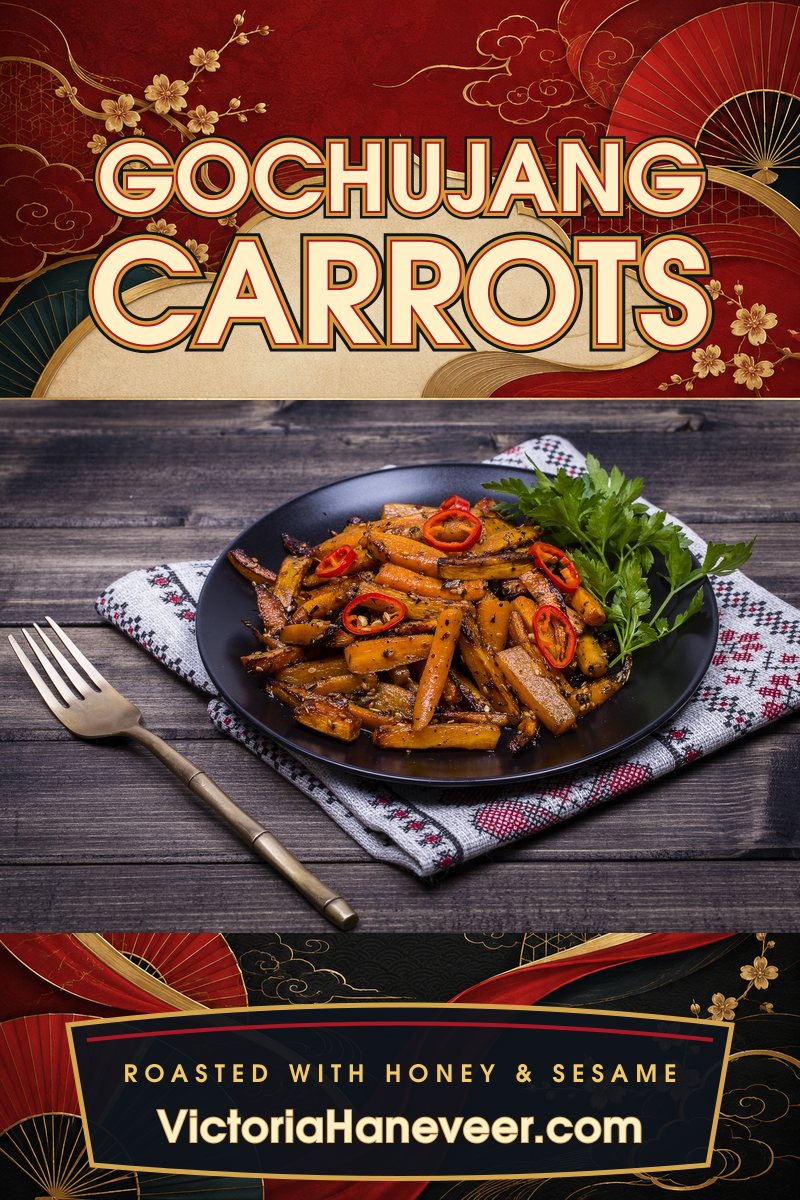
Gochujang Carrots with Honey and Sesame
This post contains affiliate links. As an Amazon Associate I earn from qualifying purchases.
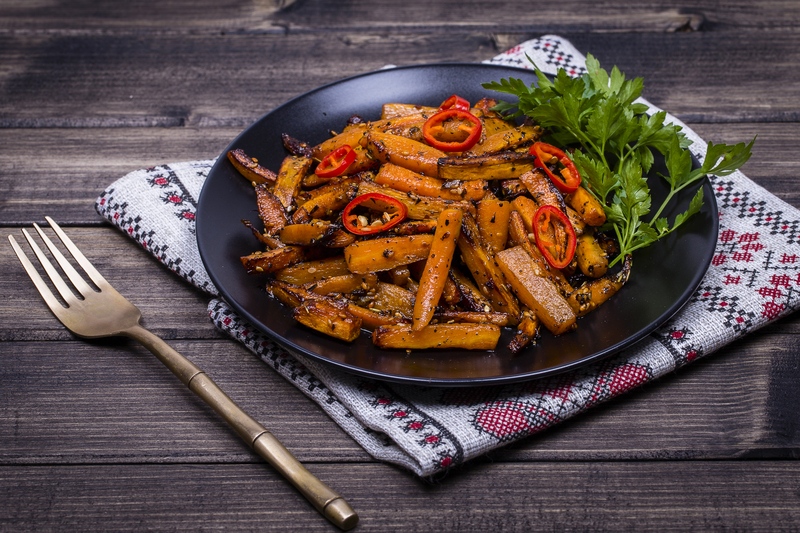
Gochujang carrots are roasted until almost tender, then coated with Korean chili paste, honey, rice vinegar, garlic, ginger and toasted sesame oil. Adding the glaze near the end gives it enough time to thicken without scorching the honey.
The carrots have some sweetness of their own, and the gochujang adds heat, saltiness and the deeper flavor that comes from fermentation. Honey makes the coating sweeter, while rice vinegar counters any over-sweetness. It’s a great example of a swicy recipe where neither the sweetness nor the chili takes over.
This is a Korean-inspired side dish rather than a traditional Korean carrot recipe. Serve it with rice, chicken, pork or tofu, or add it to a Thanksgiving or Christmas dinner if the usual glazed carrots feel a bit predictable.
Gochujang Carrots at a Glance
- Prep time: 10 minutes
- Cook time: 30 minutes
- Total time: 40 minutes
- Servings: 4
- Cuisine: Korean inspired
- Main ingredients: Carrots, gochujang, honey, rice vinegar and sesame
- Best cooking method: Roast first, then add the glaze
- Storage: Refrigerate for up to 4 days
What Makes Gochujang Roasted Carrots Different
- The glaze goes on later: The carrots roast in oil first. Gochujang and honey only need the final part of the cooking time, since both can get dark too fast otherwise.
- You can adjust the chili: Commercial gochujang ranges from mild to very hot. I strongly recommend you start with less if you don’t know the brand.
- Not only for Korean-inspired meals: The sweet-spicy seasoning works with roast meat and holiday dinners as well as rice bowls, noodles or tofu.
Ingredient Notes
- Carrots: Slender carrots cook evenly and look good served whole. Halve thicker carrots lengthwise so all the pieces finish roasting at about the same time.
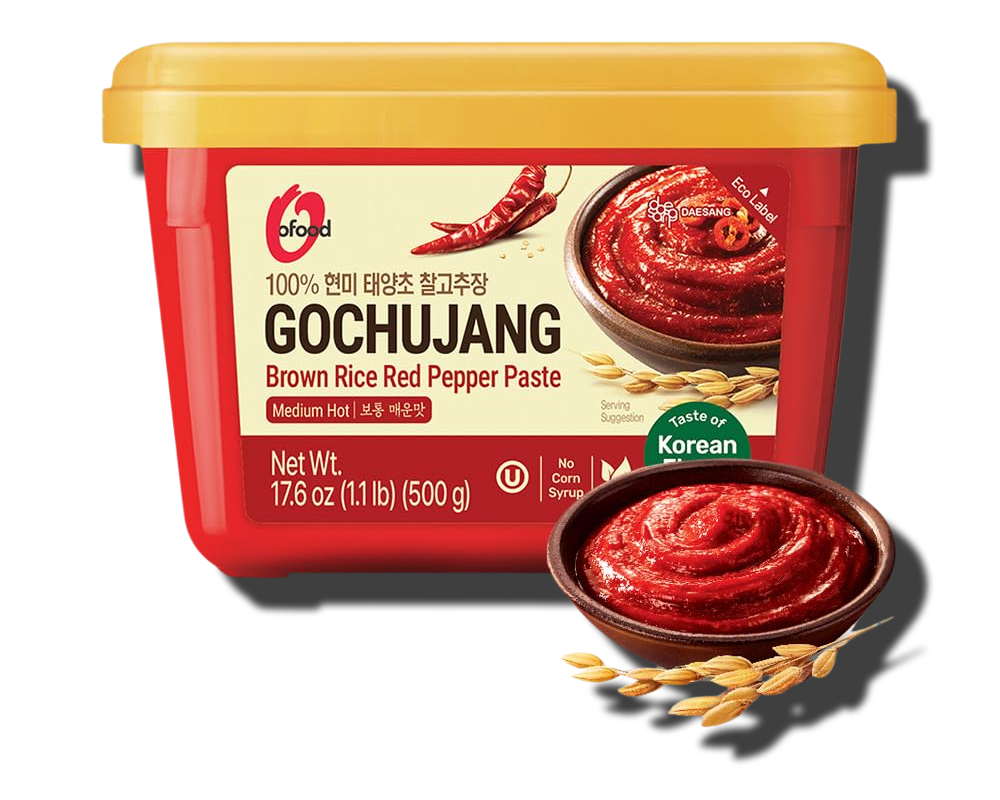
- Gochujang: This Korean fermented chili paste adds heat, sweetness and saltiness. Check the heat rating before using it. I like this medium-hot gochujang.
- Honey: Honey sweetens the glaze and helps it caramelize. Maple syrup works if you want a vegan option.
- Rice vinegar: A small amount balances the honey. I prefer using unseasoned rice vinegar because seasoned vinegar contains added sugar and salt.
- Soy sauce: Use low-sodium soy sauce so you can control the salt. Tamari works too if you need a gluten-free alternative.
- Toasted sesame oil: Add only a teaspoon. Its strong toasted flavor can overwhelm the carrots if you pour in too much.
- Garlic and ginger: Grate both finely so they mix through the glaze rather than leaving larger pieces that may burn.
- Sesame seeds and green onions: Add these after roasting. They’re optional, although I find they make a good contrast to the soft carrots.
How to Make Gochujang Glazed Carrots
Coat the prepared carrots with neutral oil and roast them in a single layer. Whisk the glaze ingredients while they cook. When the carrots are almost tender, mix them with the glaze and return them to the oven until the coating has thickened and the edges have browned in places.
What is Gochujang?
Gochujang is a Korean fermented chili paste traditionally made with Korean chili powder, glutinous rice, fermented soybeans and salt. It has its own sweetness as well as chili heat, unlike a generic hot sauce. Commercial brands offer different heat levels and some contain wheat. This guide to gochujang explains what it contains and how Korean cooks use it.
Tips for the Best Gochujang Glazed Carrots
- Cut the carrots evenly: Thick pieces take longer to soften, so halve or quarter the larger carrots lengthwise.
- Give them enough room: Spread the carrots over a large baking sheet. Crowding traps steam and reduces browning.
- Wait before adding the glaze: Honey, garlic and gochujang can scorch during a full roasting time. Add them once the carrots are nearly tender.
- Check them early: Carrot thickness affects the cooking time. Pierce the thickest piece with a small knife before adding the glaze.
- Watch the final few minutes: The glaze can go quickly from caramelized to burnt, especially near the edges of the baking sheet.
Substitutions and Variations
- Vegan gochujang carrots: Replace the honey with maple syrup for vegan spicy carrots.
- Gluten-free option: Use tamari instead of soy sauce and check the gochujang label because some brands contain wheat.
- Less heat: Reduce the gochujang to 1 tablespoon. Don’t replace the missing amount with extra sesame oil.
- More heat: Increase the gochujang to 2 tablespoons or add a pinch of gochugaru.
- No rice vinegar? Use apple cider vinegar. Start with 2 teaspoons, taste the glaze and add the final teaspoon if needed.
- No gochujang? Harissa can make a red chili glaze, although the carrots won’t have the fermented Korean flavor. Treat that as a different variation rather than a direct substitute.
Equipment
You’ll need a vegetable peeler, sharp knife, small bowl and whisk. Use a large rimmed baking sheet so the carrots have room to roast. Parchment paper or a silicone baking mat prevents the sticky glaze from baking directly onto the pan.
What to Serve with Gochujang Carrots
Serve them with the Korean sesame chicken in my chicken marinade collection, or add rice and tofu for a meat-free meal. They also work with Asian meatballs with sweet chili sauce as long as you have plain rice as a side dish so it’s not only sweet, spicy items on the plate.
For a larger Asian-inspired dinner, you could add egg fried rice. Roast chicken, pork tenderloin and baked salmon also go well with the sweet-spicy glaze. At Thanksgiving or Christmas, you can serve the carrots in place of an ordinary brown sugar or honey glaze.
How to Store
- Refrigerator: Put leftover carrots in a covered container within 2 hours and refrigerate them for up to 4 days.
- Reheating: Heat them in a 375°F (190°C) oven until hot, or use an air fryer at 350°F (180°C). The microwave works too, although the carrots will be softer.
- Freezing: Freeze the cooked carrots for up to 2 months if necessary. They’ll soften after thawing, so freezing isn’t the best choice for a holiday side dish.
- Make ahead: Peel and cut the carrots, then refrigerate them in a covered container for up to 1 day. Mix the glaze separately and refrigerate it. Roast and glaze the carrots shortly before serving.
Gochujang Carrots FAQs
That depends on the gochujang. Brands range from mild to very hot, and the honey reduces the impression of heat. Use a tablespoon for a mild-ish batch if you haven’t tried the brand before.
Yes, these work fine. Dry them well before adding the oil because bagged baby carrots can carry a lot of surface moisture. Check them early because very small carrots may cook faster.
Gochujang sauce is usually thinner and may contain sweeteners, vinegar and other seasonings. It could work, although you’d need to reduce the honey and rice vinegar according to the label and taste.
Not always. Traditional ingredients don’t require wheat, although some commercial brands include it. Check the label and choose certified gluten-free gochujang and tamari if necessary.
No. Gochujang is a traditional Korean ingredient, while roasted carrots with a gochujang and honey glaze are better described as Korean inspired.
A Different Glaze for Roasted Carrots
Gochujang changes the familiar honey-glazed carrot idea by adding fermented chili flavor and adjustable heat. The two-stage roasting method lets the carrots get tender before the sticky ingredients go into the oven. For another easy carrot side dish, try these caramelized carrots. Or browse my vegetable recipes for more side dishes and ways to cook seasonal produce.
Gochujang Carrots with Honey and Sesame
Ingredients
- 1 ½ pounds (680g) slender carrots
- 1 tablespoon neutral oil
- ¼ teaspoon kosher salt
- 1 ½ tablespoons gochujang paste
- 2 tablespoons honey
- 1 tablespoon unseasoned rice vinegar
- 1 teaspoon low-sodium soy sauce
- 1 teaspoon toasted sesame oil
- 1 garlic clove, finely grated
- 1 teaspoon finely grated fresh ginger
- 2 teaspoons toasted sesame seeds
- 1 green onion, thinly sliced
Equipment
- Large rimmed baking sheet
- Parchment paper or silicone baking mat
- Vegetable peeler
- Sharp knife
- Small bowl
- Whisk
Method
- Preheat the oven to 425°F (220°C). Line a large rimmed baking sheet with parchment paper or a silicone baking mat.
- Peel and trim the carrots. Leave slender carrots whole and halve thicker carrots lengthwise so the pieces have a similar thickness.
- Add the carrots to the baking sheet. Drizzle with the neutral oil, sprinkle with salt and mix until coated. Spread them out in a single layer.
- Roast for 18 to 20 minutes. Check the thickest carrot with a small knife. It should be nearly tender, with some resistance in the center.
- Whisk the gochujang, honey, rice vinegar, soy sauce, sesame oil, garlic and ginger together while the carrots roast.
- Remove the baking sheet from the oven. Spoon the glaze over the carrots and mix until each piece has a light coating. Spread them out again.
- Roast for another 8 to 10 minutes. Check frequently near the end and remove the carrots once they’re tender and the glaze has thickened.
- Transfer the carrots to a serving dish. Sprinkle with toasted sesame seeds and sliced green onion, then serve hot.
Notes
- Gochujang brands differ considerably in heat and sweetness. Use 1 tablespoon for a milder glaze or 2 tablespoons for more heat.
- For a vegan recipe, replace the honey with maple syrup.
- For a gluten-free version, use certified gluten-free gochujang and tamari.
- Refrigerate leftovers in a covered container for up to 4 days. The carrots will get soft if you freeze them, so refrigerating is a better option.