Japanese Milk Bread Buns Using the Yudane Method
This post contains affiliate links. As an Amazon Associate I earn from qualifying purchases.
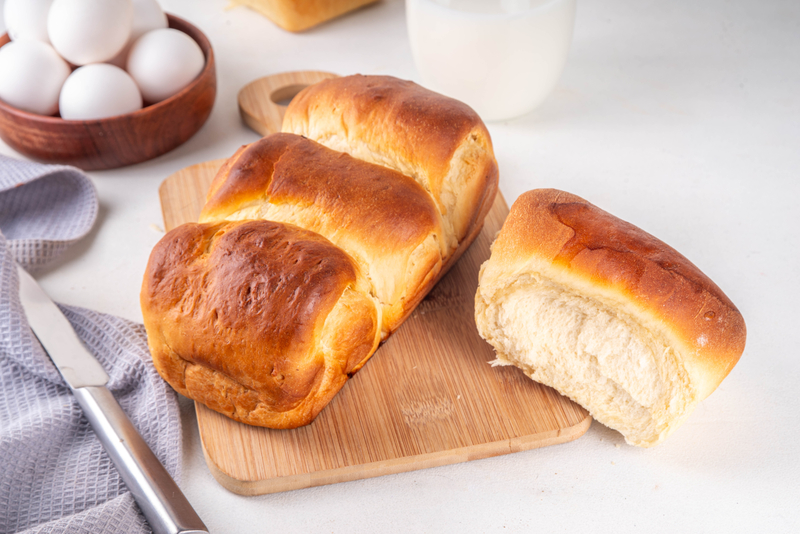
Japanese milk bread buns are soft, lightly sweet rolls with a fine, springy crumb. They pull apart easily and have enough structure for sandwiches or burgers without the buttery richness you get from brioche.
This recipe uses the yudane method. Part of the bread flour is mixed with an equal weight of boiling water, rested and then kneaded into the dough. It’s a simple extra stage that gives the flour the capacity to hold more water, which helps achieve the distinctive soft texture of Japanese milk bread.
Japanese Milk Bread Buns at a Glance
- Prep time: 35 minutes
- Cook time: 25 minutes
- Total time: About 7 hours using the minimum yudane rest
- Servings: 12 buns
- Cuisine: Japanese
- Main ingredients: Bread flour, milk, egg, butter and yeast
- Best cooking method: Oven baked in a 9 x 13-inch pan
- Storage: Keep covered at room temperature for 2 to 3 days or freeze for up to 1 month
Why Milk Bread Buns are Worth Making
- The yudane is straightforward: Mix bread flour with boiling water in a bowl, cover it and give it time to rest.
- The crumb is unusually soft: Good gluten development combined with the scalded flour gives the buns their fine, stretchy interior.
- They’re less rich than brioche: There’s butter and egg in the dough, although considerably less butter than you’d find in a typical brioche dough.
- One batch makes 12: Arrange the dough balls in a 9 x 13-inch pan and bake them as pull-apart Japanese milk bread rolls.
- The dough is adaptable: Shape larger individual rounds for Japanese milk bread burger buns or longer rolls for hot dogs.
Ingredient Notes
- Bread flour: Strong bread flour gives the dough enough gluten for the stretchy crumb associated with milk bread. I recommend weighing it rather than measuring it by volume. King Arthur unbleached bread flour is one option.
- Whole milk: Use whole milk for the main dough. It adds dairy flavor and contributes some of the fat needed for a tender roll.
- Instant yeast: Instant yeast can go directly into the flour mixture. SAF instant yeast works well for enriched doughs like this.
- Egg: One egg goes into the dough and a second is mixed with milk for the egg wash.
- Butter: Use softened unsalted butter. Add it after the dough has already had several minutes of kneading.
- Sugar and salt: The sugar gives the buns mild sweetness rather than making them dessert-like. Salt balances that sweetness and seasons the bread.
How to Make Japanese Milk Bread Buns
Start the yudane several hours ahead. Stir boiling water into part of the bread flour until all the dry flour is absorbed, cover the bowl and refrigerate it for at least 4 hours. Overnight works particularly well if you want to split the recipe between 2 days.
The main dough needs enough kneading to develop strong gluten before the buns are shaped. A stand mixer makes this easier because the dough is tacky. After the first rise, divide it into 12 equal portions, shape each portion into a smooth ball and arrange them in the baking pan. Give them their final proof, brush with egg wash and bake until the center bun reaches at least 190°F (88°C).

What is the Yudane Method?
Yudane is a Japanese bread-making technique in which boiling water is mixed directly with a portion of the flour. A common ratio is equal weights of flour and water. The hot water gelatinizes starch in the flour, allowing that portion of the dough to hold more moisture.
After resting, the yudane is incorporated into the remaining ingredients. The finished dough can contain more moisture while retaining enough strength to rise well, giving milk bread its characteristic soft crumb.
Yudane vs Tangzhong
Yudane and tangzhong are related bread-making techniques, although the preparation is different. Yudane is made by pouring boiling water directly over flour and mixing it together. The ratio is commonly around 1:1 by weight and the mixture is rested before it goes into the dough.
Tangzhong contains considerably more liquid. The flour and liquid are cooked together until they form a soft paste, commonly using about 5 parts liquid to 1 part flour. Both techniques gelatinize starch and help create soft bread. This Japanese milk bread recipe specifically uses yudane.
Are Milk Bread Buns the Same as Shokupan?
Shokupan is Japanese sandwich bread and is normally baked as a tall loaf for slicing. It has a soft white crumb and mild sweetness and may be baked with a rounded top or in a lidded Pullman-style pan.
Japanese milk bread buns belong to the same general bread tradition, although they’re individually shaped rolls rather than shokupan loaves. You’ll also see the term Japanese Hokkaido milk bread used outside Japan, especially for soft milk bread made in this style. The Hokkaido name refers to the Japanese region particularly well known for its dairy products.
Japanese Milk Bread vs Brioche
Both are enriched yeast breads, so there’s some overlap in their soft texture and mild sweetness. Brioche relies heavily on butter and eggs for its richness. Some brioche recipes contain an extraordinary amount of butter compared with ordinary bread dough.
Milk bread generally contains much less butter. Techniques such as yudane and careful gluten development play a larger part in its texture. This fluffy Japanese milk bread recipe works particularly well if you’re looking for a soft sandwich or burger bun that’s soft like brioche but without the buttery richness.

Tips for Soft, Fluffy Milk Bread Buns
- Weigh the flour: A digital kitchen scale is much more reliable than cups for bread dough.
- Use genuinely boiling water for the yudane: Add it to the flour as soon as the water boils and mix immediately.
- Don’t keep adding flour: The dough should feel tacky. Excess flour makes the baked buns denser.
- Check the gluten: Stretch a small piece of dough between your fingers. Properly kneaded dough stretches into a very fine membrane before tearing.
- Watch the dough rather than only the clock: Proofing speed changes with room temperature. The buns should look visibly puffy before baking.
- Check the center bun: An internal temperature of at least 190°F (88°C) gives you a more reliable indication than judging the browned tops alone.
Japanese Milk Bread Burger Buns and Hot Dog Buns
You can shape the same dough differently if you want individual sandwich buns. For Japanese milk bread burger buns, divide the dough into 8 equal portions instead of 12 and shape them into smooth rounds. Leave space between them on a lined baking sheet rather than arranging them closely in a baking pan.
For Japanese milk bread hot dog buns, divide the dough into 8 portions and shape each one into a short, even log. Larger buns may need a little longer in the oven, so check the center with a thermometer and bake to at least 190°F (88°C).
Substitutions and Variations
- Bread flour: All-purpose flour does work but I found that didn’t give the buns as much lift and they came out slightly softer in structure.
- Whole milk: You can use 2% milk instead. Whole milk gives the dough a richer flavor, so that’s what I always use.
- Unsalted butter: Salted butter works too. Reduce the added salt slightly to compensate.
- Instant yeast: Active dry yeast can replace it. Dissolve the yeast in the lukewarm milk with a pinch of the sugar before adding it to the dough.
- Burger buns: Divide the dough into 8 equal pieces and shape them into smooth rounds. Bake them spaced apart on a lined baking sheet.
- Hot dog buns: Divide the dough into 8 pieces and shape each one into a short log before the final proof.
- Pull-apart loaf: Shape the dough for a loaf pan instead of individual buns if you want something closer to Japanese shokupan.
- Sweeter buns: Add 1 extra tablespoon of sugar if you want a sweeter bread for breakfast or snacking.
- Soft buttered tops: Brush the hot buns with a little melted butter after baking for a softer finish.

What to Serve with Milk Bread Buns
You can enjoy this Japanese milk bread rolls recipe in various ways. Split them for burgers, fried chicken sandwiches, egg sandwiches or breakfast rolls. They’re also good warm with salted butter and jam, or served as soft dinner rolls.
If burgers are the plan, use them for my stovetop hamburgers. For something more Japanese, pair a bun with a small bowl of Japanese onion soup.
How to Store
- Room temperature: Cool the buns completely and keep them in a tightly closed container or food bag for 2 to 3 days.
- Reheating: Warm individual buns briefly in the microwave or put several in a low oven until warmed through.
- Freezing: Freeze completely cooled buns in a freezer bag or airtight container for up to 1 month. Thaw them at room temperature before warming.
- Refrigerator: Room-temperature storage or freezing is preferable because refrigeration speeds up the firming of ordinary bread starch.
- Make ahead: Prepare the yudane the night before, cover it and refrigerate it. Continue with the dough the following day.
Japanese Milk Bread Buns FAQs
No. Yudane is generally made by pouring boiling water directly over flour, commonly at a 1:1 ratio by weight. Tangzhong is made by cooking flour with a larger amount of liquid until it thickens into a paste.
Shokupan normally refers to Japanese sliced sandwich bread baked as a loaf. These buns are individual rolls made in the same broad style of soft Japanese milk bread.
Yes. Divide the dough into 8 portions, shape them into rounds and bake them spaced apart on a baking sheet. Check that the center reaches at least 190°F (88°C).
Yes. It will take longer than using a stand mixer because the enriched dough is quite tacky. Resist adding a lot of extra flour and keep kneading until a small piece can be stretched very finely without tearing immediately.
Yeast that is no longer active, adding too much flour or baking before the shaped dough has proofed enough are some reasons. I also found that insufficient kneading can make them dense, so don’t skimp on this! I recommend you check the dough itself rather than relying entirely on the suggested rising times.
You can substitute all-purpose flour if necessary, although bread flour is my first choice for this recipe because its higher protein content helps produce strong, elastic dough and a better rise.
A Soft Bun with Plenty of Possibilities
Learning the yudane method is probably the most interesting part of this recipe because you can use the same technique when you want other soft yeast breads. Here it gives you 12 light, springy rolls that work for breakfast, dinner or sandwiches.
I find Japanese milk bread recipes really good for burgers in place of brioche. They’re not so rich and buttery, which makes the filling the main event. You can also browse my bread recipes if you’re in the mood to do some more baking.
Japanese Milk Bread Buns
Ingredients
- ⅔ cup bread flour, 80g
- ⅓ cup boiling water, 80 ml
- 2 ⅔ cups bread flour, 320g
- ⅔ cup whole milk, 160 ml, lukewarm
- 1 large egg
- 3 tablespoons + 1 teaspoon granulated sugar, 40g
- 2 teaspoons instant yeast, 6g
- 1 ¼ teaspoons fine salt, 7g
- 3 tablespoons unsalted butter, 42g, softened
- 1 large egg
- 1 tablespoon whole milk, 15 ml
Equipment
- Digital kitchen scale
- Heatproof mixing bowl
- Stand mixer with dough hook or large mixing bowl
- Bowl cover or plastic wrap
- Bench scraper
- 9 x 13-inch (23 x 33cm) metal baking pan
- Pastry brush
- Instant-read thermometer
- Wire cooling rack
Method
- Put the 80g bread flour for the yudane in a heatproof bowl. Pour over the boiling water and stir firmly until there’s no dry flour left. Cover and cool, then refrigerate for at least 4 hours or overnight.
- Tear the cold yudane into small pieces and put it in the bowl of a stand mixer. Add the remaining bread flour, lukewarm milk, egg, sugar, instant yeast and salt.
- Fit the dough hook and mix on low speed for 2 to 3 minutes, until the ingredients form a rough dough.
- Knead on medium-low speed for about 5 minutes. Add the softened butter in 3 additions, letting each addition mix into the dough before adding more.
- Continue kneading for 7 to 10 minutes, until the dough is smooth, elastic and able to pass the windowpane test. It should still feel slightly tacky.
- Put the dough in a lightly greased bowl, cover and let it rise in a warm place for 60 to 90 minutes, or until it has nearly doubled in volume.
- Lightly grease a 9 x 13-inch (23 x 33cm) metal baking pan.
- Gently press the gas from the dough and weigh it. Divide it into 12 equal portions.
- Shape each portion into a smooth ball, pinching the seam closed underneath. Arrange the buns in the pan in 4 rows of 3.
- Cover and proof for about 45 to 60 minutes. They should look very puffy and the buns should be touching each other.
- Heat the oven to 350°F (175°C), or 160°C fan.
- Beat the egg with the tablespoon of milk and lightly brush the tops of the buns.
- Bake for 22 to 25 minutes, or until golden brown. Check the center bun with an instant-read thermometer. It should reach at least 190°F (88°C).
- Cool in the pan for 10 minutes, then transfer the buns to a wire rack.
Notes
- Weighing the flour gives more consistent results than measuring it with cups.
- The yudane can be prepared the night before.
- Don’t compensate for tacky dough by adding a lot of extra flour.
- Proofing times depend on the temperature of your kitchen, so judge the dough by its volume as well as the clock.
- For 8 burger buns, divide the dough into 8 portions and bake them spaced apart on a lined baking sheet.
- The same 8-portion method can be used for hot dog buns by shaping each portion into a short log.
- Cool leftovers completely before storing.
- Keep the buns covered at room temperature for 2 to 3 days or freeze for up to 1 month.