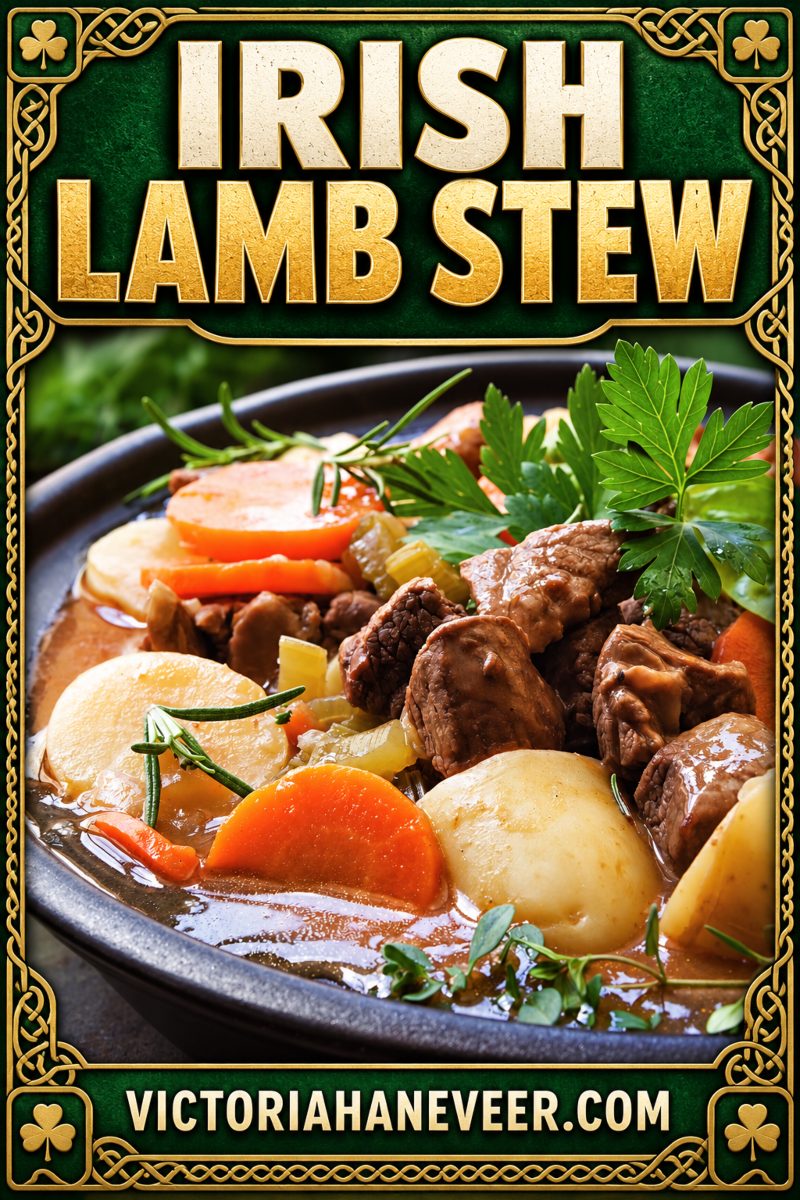
Irish Lamb Stew with Potatoes and Carrots
This post contains affiliate links. As an Amazon Associate I earn from qualifying purchases.
Irish lamb stew with potatoes and carrots is a lovely dinner to come home to on a chilly evening. There are generous chunks of lamb, tender vegetables and a beef stock broth seasoned with thyme and bay leaves. A little flour gives the broth some body, so you can enjoy it by the spoonful or mop it up with a thick slice of bread.
This Irish lamb stew recipe cooks on the stovetop in a large Dutch oven. The lamb has time to tenderize before the potatoes and carrots go in, and everything finishes cooking in the same pot. It makes enough for 6 people, so you can serve it for a family dinner or save a few portions for later in the week. Bring the pot to the table and let everyone help themselves.
Irish Lamb Stew at a Glance
Prep Time: About 25 minutes
Cook Time: About 2 hours 45 minutes, depending on the lamb
Total Time: About 3 hours 10 minutes
Servings: 6
Cuisine: Irish
Main Ingredients: Lamb shoulder, potatoes, carrots, onion, celery and beef stock
Best Cooking Method: Gentle stovetop simmer in a large Dutch oven
Storage: Refrigerate for 3 to 4 days or freeze for 2 to 3 months.
Why You’ll Love It
- A whole dinner in a bowl: With meat, potatoes and vegetables together, you don’t need to make side dishes too.
- One pot from start to finish: Brown the lamb, cook the onion and simmer the stew in the same Dutch oven.
- Enough for a crowd: There’s room around the table for a few extra people, or you can keep some portions for later.
- No wine or beer needed: Stock, herbs and the browned lamb give this stew its flavor, so you don’t need a bottle of Guinness.
Ingredient Notes
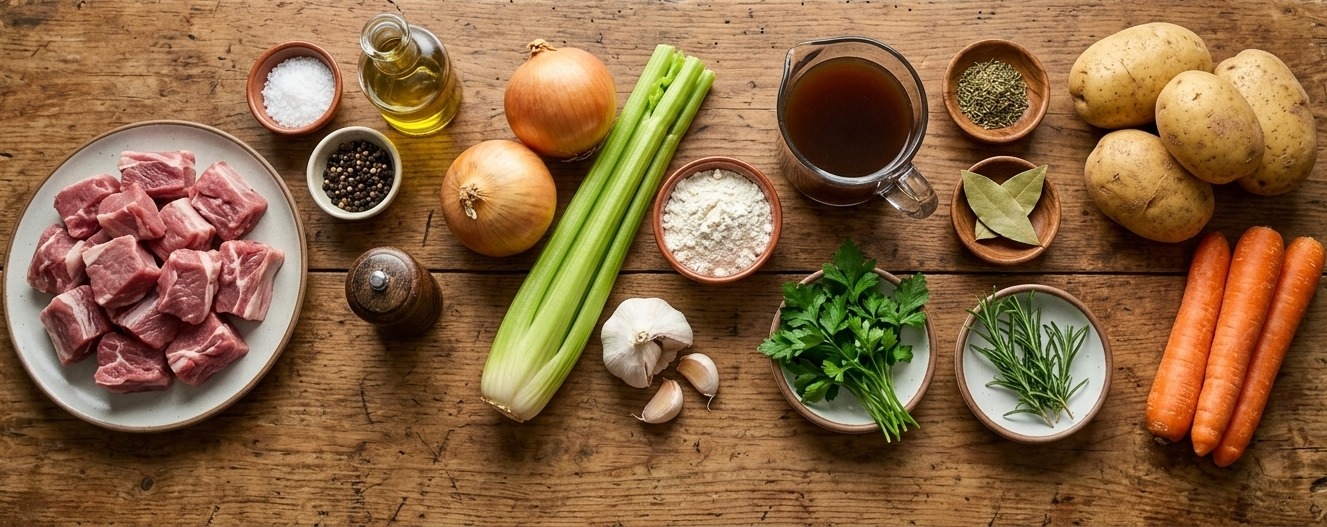
- Lamb shoulder: Buy boneless shoulder and trim away thick pieces of outer fat. Some marbling is good for slow cooking, so you don’t need to remove every bit. I usually ask the butcher to dice it for me as this saves some prep time.
- Small potatoes: Waxy yellow or red potatoes are a good choice if you don’t want disintegrating potatoes in the finished stew. Scrub them well and peel them if you like. I’d halve or quarter larger ones so the pieces are a similar size.
- Carrots, onion and celery: Slice your carrots into thick rounds. The onion and celery cook with the lamb, while the carrots go in later with the potatoes. I prefer to peel my carrots although I know now everyone does.
- Beef stock: I’d choose a low-sodium stock for more control over the seasoning.
- All-purpose flour (plain flour): A small amount lightly thickens the broth. Stir it into the cooked onion and celery before adding the stock.
- Herbs and garlic: Thyme and bay leaves go into the pot for the long simmer. Fresh parsley goes in at the end, and a small rosemary sprig is an optional garnish.
Shoulder is a good pick for this Irish stew recipe because it’s a cut that benefits from a long, gentle cook. If you enjoy lamb served on the bone, my braised lamb shanks in red wine sauce are another dinner to plan for a leisurely evening.
How to Make Irish Lamb Stew
Brown the lamb first and lift it onto a plate. Cook the onion and celery in the same pot, then add the garlic, flour and stock. Return the lamb to the pot with the thyme and bay leaves and simmer until it’s nearly tender. Add the potatoes and carrots, finish cooking the stew and stir in the parsley before serving.
Tips for Tender Lamb Stew
- Give the lamb space: Brown it in small batches so the pieces can make contact with the pot. Dry the meat with paper towels first.
- Keep the simmer gentle: Look for occasional small bubbles. A hard boil can break up the vegetables and reduce the broth too quickly. I like to use a heavy, thick-bottomed pot, since a thin-bottomed one can simmer the stew too hard, which you don’t want.
- Check the meat before adding vegetables: A fork should pierce the lamb with only a little resistance. If it’s still firm, give it more time before you add the potatoes and carrots.
- Skim excess fat: Spoon off any unwanted fat from the surface before serving. A little fat is expected with shoulder, but you don’t need to leave a heavy layer on top.
Substitutions and Variations
- Lamb stock: Use this in place of the beef stock if you have it. Choose low-sodium stock if possible and taste before adding extra salt. I used Knorr lamb stock but have also used beef stock in the past. And homemade bone broth would add a rich flavor.
- Leek instead of celery: Use the sliced white and light green parts of a small leek. Don’t forget to wash between the layers to remove any grit, before cooking it with the onion.
- Gluten-free Irish lamb stew: Omit the flour and use a gluten-free stock. At the end, you can mash a few cooked potato pieces into the broth to give it more body.
Handy Equipment
A 6-quart (5.7-liter) Dutch oven gives you room to brown the lamb in batches and stir the finished stew. You’ll also need a knife, cutting board, vegetable peeler, measuring cups and spoons, a large plate, a wooden spoon, a ladle and oven mitts. A kitchen scale is useful for weighing the meat and vegetables, and a food thermometer helps check reheated portions.
- Dutch oven with a lid: Use a heavy pot for both browning and simmering. The linked Lodge pot holds 6 quarts.
- Slotted spoon: Lift the browned lamb onto a plate while leaving the cooking fat in the pot. Avoid scraping the enamel with a metal spoon.
What to Serve with Irish Stew
Serve this Irish stew with lamb in deep bowls with soda bread, crusty bread or soft milk bread buns and butter. Homemade butter swim biscuits are delicious for dipping in the broth too. The potatoes already make it filling, so a simple garden salad or some steamed Hispi cabbage is enough if you want a vegetable side. A hot bowl of stew with bread to mop up the last of the broth is hard to beat on a chilly evening!
How to Store Irish Lamb Stew
- Refrigeration: Divide leftovers into small, shallow containers and refrigerate within 2 hours. Keep at 40°F (4°C) or below and eat within 3 to 4 days.
- Freezing: Freeze cooled portions in freezer-safe containers for 2 to 3 months for best quality. Leave a little space for expansion. The potatoes may soften further when thawed.
- Thawing: Thaw frozen portions in the refrigerator before reheating.
- Reheating: Warm in a saucepan, stirring regularly and adding a splash of stock if needed. Heat the stew to 165°F (74°C), checking the meat as well as the liquid.
- Make ahead: Cook the stew the day before you plan to serve it, refrigerate it as above and reheat thoroughly. Add the fresh parsley just before serving.
Irish Lamb Stew FAQs
Irish stew traditionally centers on lamb or mutton, potatoes and onions. Recipes vary, and many also include carrots and herbs. My recipe uses browned lamb, stock and a little flour for a fuller broth.
Yes, mutton is a traditional choice for Irish stew. It has a stronger flavor and will take a bit longer to cook. Simmer it until nearly tender before adding the potatoes and carrots, allowing extra time as needed.
No. Guinness is an addition in some versions, not a requirement for Irish stew. This recipe uses beef stock and contains no beer or wine.
The method here is for raw lamb shoulder. Already cooked roast lamb needs a different approach because the vegetables and broth would need to cook before you added the meat. Don’t give leftover roast lamb the full simmer if using it in this recipe.
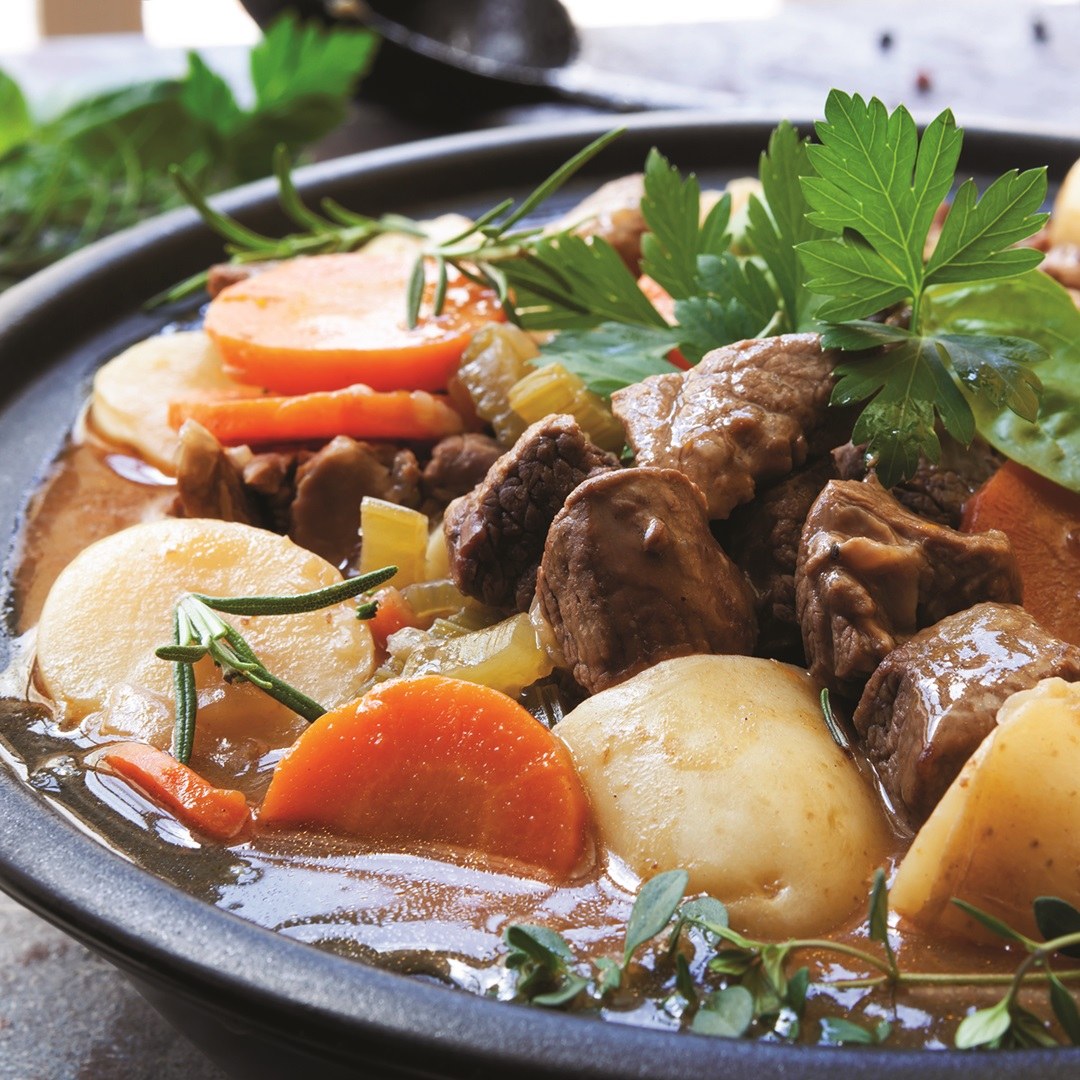
Irish Lamb Stew with Potatoes and Carrots
Ingredients
- 2 ½ pounds (1.13kg) boneless lamb shoulder, trimmed and cut into 1 ½-inch (4cm) chunks
- 1 teaspoon fine salt, plus more to taste
- ½ teaspoon freshly ground black pepper, plus more to taste
- 2 tablespoons olive oil, plus more if needed
- 1 large yellow onion, chopped
- 2 celery ribs, cut into ½-inch (1cm) pieces
- 3 garlic cloves, minced
- 2 tablespoons all-purpose flour (plain flour)
- 4 cups (950ml) low-sodium beef stock, plus more if needed
- 1 teaspoon dried thyme
- 2 bay leaves
- 1 ½ pounds (680g) small waxy potatoes, scrubbed or peeled and cut into roughly 1 ½-inch (4cm) pieces
- ¾ pound (340g) carrots, peeled and cut into ½-inch (1cm) rounds
- 2 tablespoons chopped fresh parsley
- Small fresh rosemary sprigs, optional, for garnish
Equipment
- 6-quart (5.7-liter) Dutch oven or heavy pot with a lid
- Slotted spoon
- Wooden spoon
- Large plate
- Chef’s knife
- Cutting board
- Vegetable peeler
- Measuring cups
- Measuring spoons
- Ladle
- Oven mitts
- Food thermometer, for reheating
- Digital kitchen scale, optional
Method
- Pat the lamb dry with paper towels and season with the salt and black pepper.
- Heat the olive oil in a 6-quart (5.7-liter) Dutch oven over medium to medium-high heat. Brown the lamb in about 3 batches, leaving space between the pieces and flipping them as needed. Allow about 6 to 8 minutes per batch and adjust the heat if the browned bits start to burn. Lift each batch onto a large plate with a slotted spoon.
- Reduce the heat to medium. Leave about 2 tablespoons of cooking fat in the pot and spoon off any excess. Add the onion and celery and cook for 5 to 7 minutes, stirring, until softened. Add the garlic and cook for 30 seconds.
- Stir in the flour and cook for 1 minute. Gradually pour in the beef stock, stirring with a wooden spoon and loosening the browned bits from the bottom of the pot.
- Return the lamb and any juices from the plate to the pot. Add the thyme and bay leaves. Bring to a gentle simmer, then reduce the heat to low and cover. The liquid should come most of the way up the meat; add a little extra stock if needed.
- Simmer gently for about 1 ½ hours, stirring occasionally, until the lamb is nearly tender. A fork should be able to pierce the meat with only a little resistance. If the lamb is still firm, continue simmering and check again every 15 to 20 minutes.
- Add the potatoes and carrots, stir and return to a gentle simmer. Cover and cook for 30 to 40 minutes, or until the vegetables are tender and the lamb yields easily to a fork. Stir occasionally and allow longer if needed.
- If you want to reduce the broth a little, simmer uncovered for a few minutes. If it has reduced too much, add a little stock. Remove the bay leaves and skim off any excess surface fat.
- Taste and add more salt or pepper if needed. Stir in the parsley and ladle into bowls. Add small rosemary sprigs as an optional garnish and remove the woody stems before eating.
Notes
- The 2-hour-45-minute cook time is an estimate that includes browning and simmering. Lamb shoulder can need longer, so check tenderness before adding the vegetables and again before serving.
- Use the same size lamb pieces throughout. Halve or quarter larger potatoes so the pieces cook evenly.
- This makes a lightly thickened broth. For a little more body, mash a few cooked potato pieces into the liquid.
- For a flour-free version, omit the flour and mash a few cooked potato pieces into the broth at the end. Choose gluten-free stock if required.
- To make ahead, cook the stew without the parsley, refrigerate promptly and add the parsley after reheating.
- Refrigerate leftovers in shallow containers within 2 hours and use within 3 to 4 days. Freeze for 2 to 3 months for best quality, thaw in the refrigerator and reheat to 165°F (74°C).
A Warming Dinner for Cold Evenings
There’s something very inviting about a pot of lamb stew in the middle of the table, with bowls and bread ready for everyone to help themselves. The potatoes and carrots make it a hearty dinner, and the lamb and herbs offer plenty of flavor. It’s a cozy meal for an unhurried evening at home. I nearly always make extra because the leftovers reheat so well.
More Hearty Dinner Recipes
Keep a few different stews on your cold-weather menu. My gnocchi beef stew includes little potato dumplings, while slow cooker beef stew and dumplings has a fluffy herb topping. Hungarian venison goulash is a paprika-rich option if you want to try another protein. And if you want to try another Irish favorite, colcannon with Irish cheddar is a hearty side dish that’s hard to beat.