
Roasted Duck Legs with Rosemary
This post contains affiliate links. As an Amazon Associate I earn from qualifying purchases.
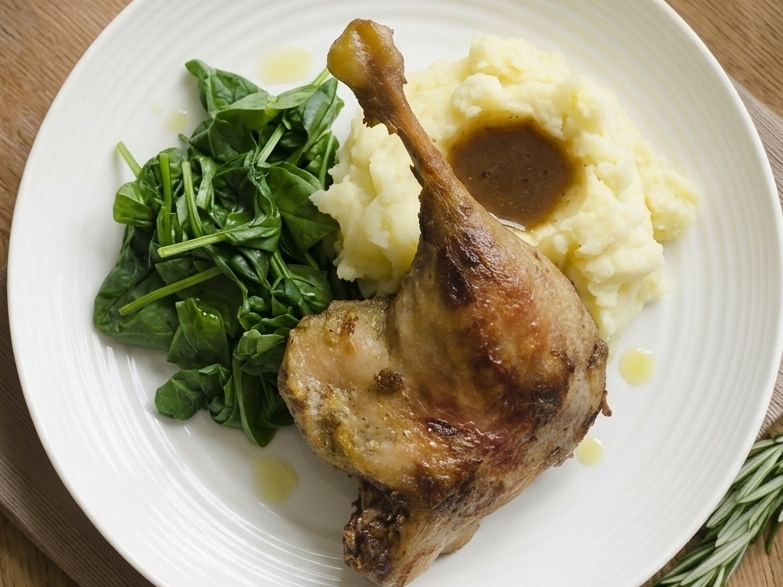
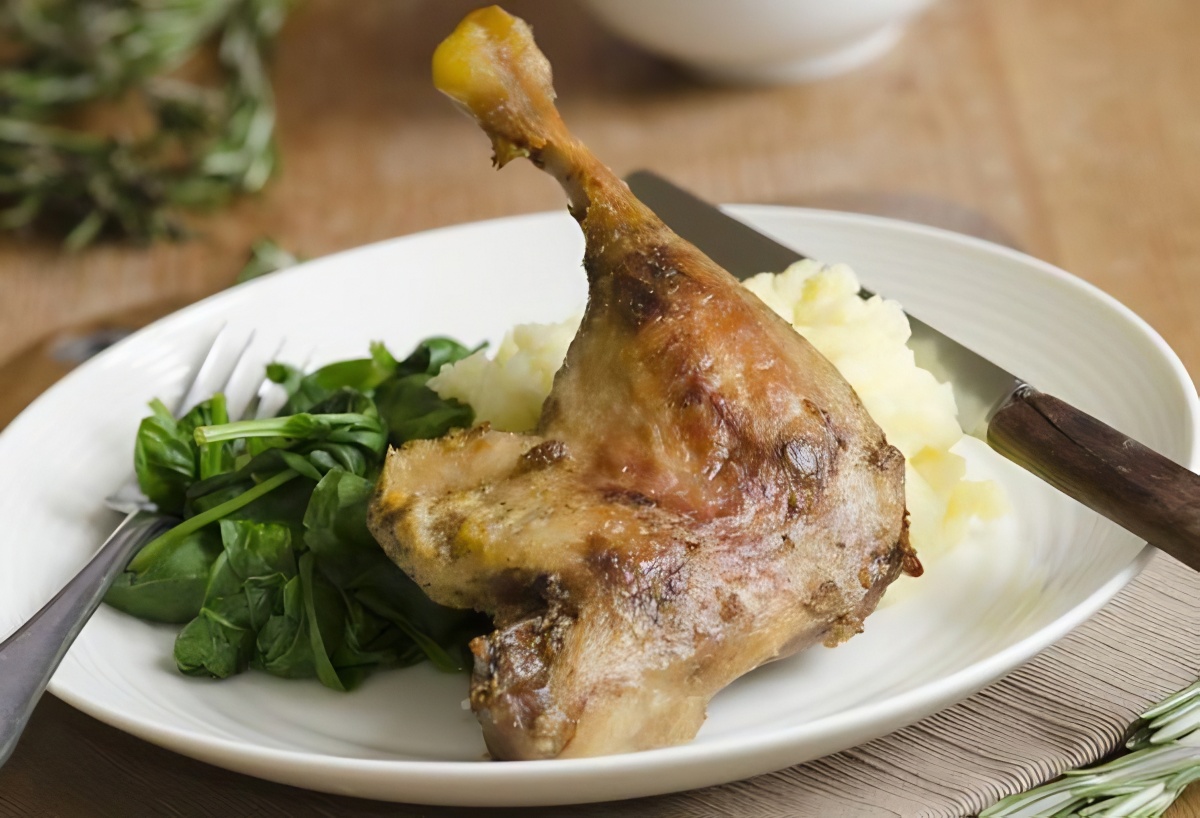
Roasted duck legs with mashed potatoes and spinach make a delicious Sunday dinner for two. Rosemary is really good with the duck, and a little gravy over the mash finishes off the dish. You can prep and roast the duck and then make the sides while it’s roasting.
I cook with Gressingham duck. Their duck-leg roasting method is my inspiration here. The duck legs go straight into the oven, so there’s no pan-frying first.
I always used to brown the duck and crisp the skin in a cast iron skillet before roasting, but when you’re roasting the duck, that takes care of the crisping and browning, and now I know that I don’t use the two-step process any more.
Roasted Duck Legs at a Glance
Why You’ll Love It
- A tasty roast dinner for two: You can cook individual legs without having to buy or prepare a whole duck.
- Suitable for a low-carb or keto diet: Swap the mashed potatoes for Carisma potatoes or cauliflower rice and this becomes a keto duck recipe.
- No stovetop searing: The duck cooks in a roasting pan, so there’s no hot skillet to deal with first.
- No overnight prep: Simply season the duck and put it straight into the oven.
Roasted Duck Legs Ingredients
The complete ingredients list and quantities are in the recipe card below.
- Duck legs: Choose raw, skin-on, bone-in legs. Ready-cooked confit legs need a different cooking time, so check the package before buying. I used these.
- Rosemary: I used fresh rosemary sprigs but thyme is good too, if that’s what you have.
- Salt and black pepper: Adds simple flavor to both sides of the legs.
- To serve: Mashed potatoes, cooked spinach and prepared gravy are optional sides. You can use for the mash or spinach, not for roasting the duck. Duck legs don’t need added fat, as they aren’t a lean protein.

How to Make Roasted Duck Legs
The full instructions with weights and measurements are in the recipe card below.
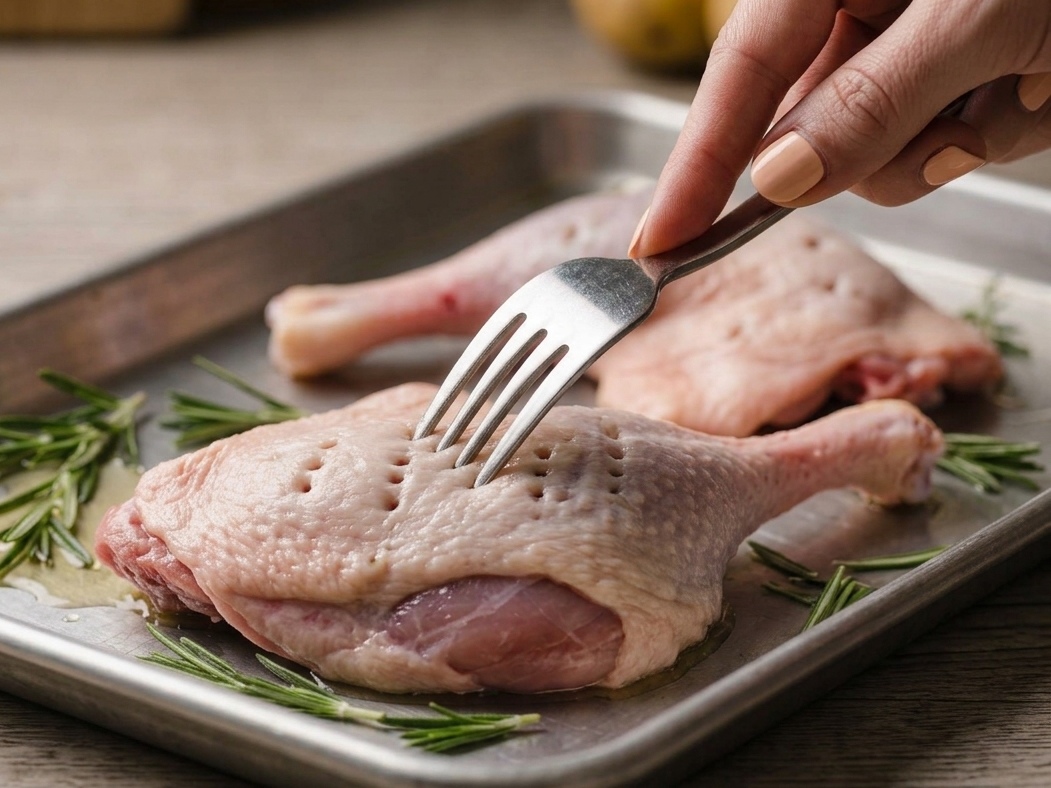
Pat the duck dry, prick the skin and season the legs. Arrange them skin side up in a roasting pan with the rosemary, then roast until the meat is tender, basting during cooking. Check the internal temperature and let the duck rest before serving with your chosen sides.
Tips for Oven Roasted Duck Legs
- Prick the skin gently: Pierce the skin and surface fat without pushing the fork deep into the meat.
- Give the legs space: Arrange them in a single layer with the skin facing up. Leave the pan uncovered.
- Check tenderness as well as temperature: A safe internal temperature doesn’t necessarily mean the leg meat is tender. If it still feels firm, continue roasting and check again.
- Allow for different sizes: Large legs can take longer than the suggested cooking time. It’s best to follow any specific instructions on your duck packaging.
Substitutions and Variations
- Different herbs: Swap the rosemary for fresh thyme.
- Roasted potatoes: My duck legs with roast potatoes recipe explains an alternative method of cooking potatoes in the duck fat.
- Different greens: Serve green beans or broccoli instead of spinach.
What to Serve with Roast Duck Legs
Mashed potatoes are a good choice if you’re serving gravy. Add cooked spinach, or choose a dish from my hispi cabbage recipes if you want to try something else. Spoon gravy over the potatoes just before serving so you don’t cover the crispy duck skin.
Handy Equipment for Roasting Duck Legs
- Roasting pan: Choose one with sides deep enough to hold the rendered fat and room for both legs. You don’t need a rack for this recipe.
- Fork: For gently pricking the skin before roasting.
- Large spoon: For basting the duck with the fat and juices in the pan.
- Instant-read meat thermometer: Check the thickest part of each leg without touching the bone.
How to Store
- Refrigerate: Transfer leftovers to a shallow covered container and refrigerate within 2 hours, or within 1 hour if the temperature is above 90°F (32°C). Use within 3 to 4 days.
- Freeze: Wrap the cooked duck well or seal it in a freezer-safe container. Freeze for up to 3 months and thaw in the refrigerator.
- Reheat: Put thawed duck in an ovenproof dish, cover and heat in a 325°F (165°C / 145°C fan) oven until it reaches 165°F (74°C) in the thickest part. Uncover near the end if you want to dry the skin.
- Make ahead: You can cook and refrigerate the duck ahead, although the skin is best straight after roasting. Store any sides separately.
Roasted Duck Legs FAQs
No. You don’t need extra oil for these skin-on duck legs. They release fat during roasting.
No. Duck confit involves cooking duck gently in fat, often after curing it with salt. These legs roast uncovered in the oven without a bath of added fat.
Yes. Allow one leg per person and use a larger roasting pan, or two pans, so the legs don’t overlap. Check each leg for doneness.
No. With this recipe, you need to thaw the raw legs in the refrigerator first.
Duck legs have a layer of fat under the skin, and some of it melts during roasting. The pan drippings aren’t ready-made gravy, so prepare your gravy separately.
Roasted Duck Legs with Rosemary
Ingredients
- 2 raw duck legs, skin-on and bone-in
- 2 small sprigs fresh rosemary
- Salt and freshly ground black pepper, to taste
- Prepared mashed potatoes
- Cooked spinach
- Prepared gravy, to serve (optional)
- Butter, for the mashed potatoes or spinach (optional)
Equipment
- Roasting pan
- Fork
- Large spoon
- Instant-read meat thermometer
Method
- Preheat the oven to 350°F (180°C / 160°C fan).
- Pat the duck legs dry with paper towels. Gently prick the skin all over with a fork, then season both sides with salt and black pepper.
- Arrange the legs skin side up in a roasting pan and add the rosemary sprigs beside them.
- Roast uncovered for about 90 minutes. The meat should be tender and the thickest part of each leg should reach at least 165°F (74°C).
- Continue cooking if the meat is still firm, checking again until tender.
- Rest the duck for 10 minutes and discard the rosemary sprigs. Meanwhile, heat your prepared mashed potatoes and spinach, stirring in butter if desired, and warm the prepared gravy if serving.
- Serve 1 duck leg per person with the sides. Spoon the gravy over the mashed potatoes.
Notes
- You can use fresh thyme instead of rosemary.
- Refrigerate leftover duck for up to 4 days or freeze for up to 3 months.
A Roasted Duck Dinner for Two
You’re going to love the amazing aroma in the kitchen while the duck is resting time and you’re finishing the spinach, gravy and potatoes, or whichever sides you’ve chosen to make. Make sure you bring everything to the table while it’s hot. This is one of the easiest ways to roast duck legs and definitely one of the tastiest. If you’re worried about duck coming out dry or tough, swerve duck breasts (which cook differently) and choose beginner-friendly duck legs instead.

Other Recipes to Try
- You might also enjoy pork steaks in mustard sauce.
- Homemade plum sauce is really delicious and well worth making.
- My creamy Elizabethan chicken is another dinner idea.
- Or you might like to check out some more duck recipes.