Easy Sukiyaki Recipe with Beef and Udon
This post contains affiliate links. As an Amazon Associate I earn from qualifying purchases.
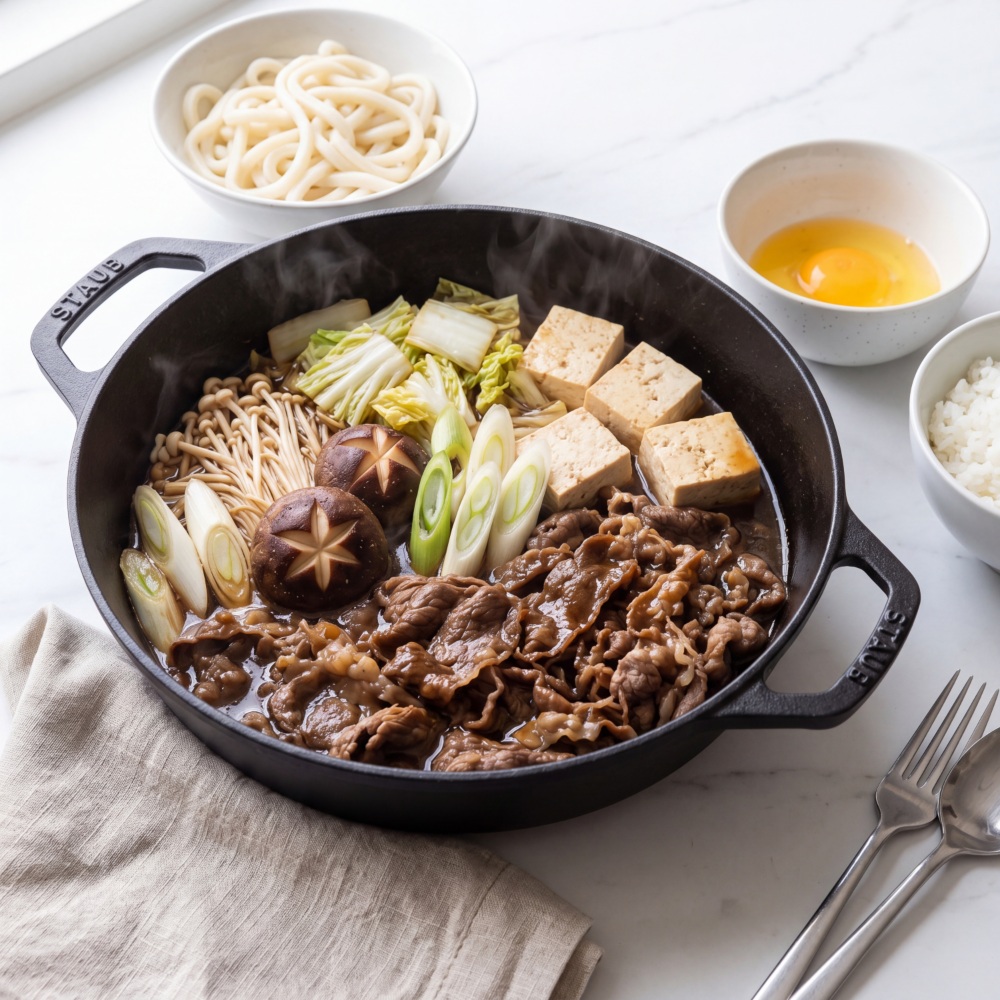
Sukiyaki is a Japanese hot pot made with thinly sliced beef, tofu, mushrooms and vegetables cooked in a sweet soy-based sauce. My 30-minute sukiyaki recipe is served from a shallow pot at the table, with rice and beaten egg on the side.
I love this sukiyaki recipe, although I absolutely do not love shirataki noodles. You’ll find them in many traditional sukiyaki recipes, but I’m not a fan of the texture, so you won’t find them in mine, but feel free to use them if you want.
I like to add udon at the end of the meal, which is also a traditional way to eat sukiyaki in Japan. Once most of the beef, tofu and veggies have gone, the cooked udon goes into the remaining sauce for the final course. That also saves me from having to eat shirataki, which is reason enough as far as I’m concerned!
Easy Sukiyaki Recipe at a Glance
- Prep time: 15 minutes
- Cook time: 15 minutes
- Total time: 30 minutes
- Servings: 4
- Cuisine: Japanese
- Main ingredients: Thinly sliced beef, tofu, mushrooms, napa cabbage and udon
- Best cooking method: Shallow hot pot or large skillet
- Storage: Refrigerate leftovers for up to 3 days and keep leftover udon separate
Why Make Sukiyaki at Home
- Thinly sliced beef cooks fast: Beef sold for sukiyaki or hot pot needs very little time in the pan. The entire recipe takes only half an hour.
- You don’t need a special pot: A wide cast iron skillet works well if you don’t own a Japanese sukiyaki pot.
- The sauce is easy to make: Soy sauce, sake, mirin and sugar make a simple homemade warishita, although bottled sukiyaki sauce is fine too.
- Two dishes in one: Udon noodles go into the remaining sauce after most of the beef and vegetables have been eaten, giving you a second course.
Beef and Tofu Sukiyaki Ingredients
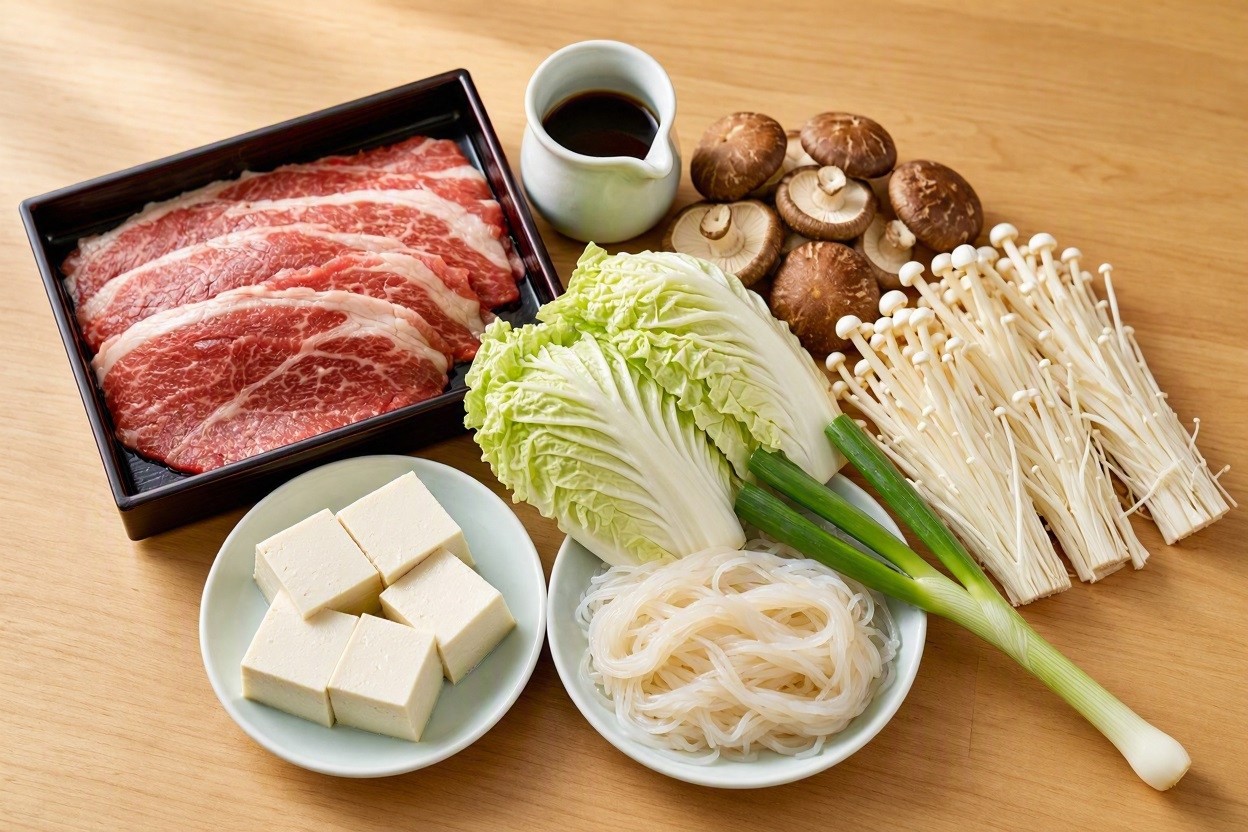
- Beef: Look for beef sliced specifically for sukiyaki or hot pot. Ribeye or sirloin also works if you can get it sliced very thinly. I used to live near a wonderful Japanese supermarket called Seiwa in Houston but sukiyaki beef’s a bit harder to find here in Newquay!
- Firm tofu: Firm tofu won’t break up like silken tofu and still absorbs plenty of the sauce.
- Napa cabbage: Also known as Chinese cabbage, this softens quickly in the hot sauce.
- Shiitake mushrooms: Fresh shiitake are good in sukiyaki. I also add enoki, although you can mix and match the mushrooms you use.
- Green onions: Spring onions in the UK. Cut them into fairly large diagonal pieces rather than chopping them finely.
- Udon noodles: I use cooked udon for the final course, adding it to the sauce left in the pan.
- Eggs: Dipping cooked sukiyaki into beaten raw egg is traditional in Japan. If you’re in the US or somewhere eggs aren’t routinely considered suitable for eating raw, use pasteurized eggs for dipping.
Homemade Sukiyaki Sauce
The seasoned cooking liquid used for Kanto-style sukiyaki is called warishita. Mine combines soy sauce, sake, mirin, sugar and water. You can make it before you start chopping the other ingredients or use bottled sukiyaki sauce instead.
The sauce for this sukiyaki recipe is supposed to be quite strong because the cabbage, tofu and mushrooms release moisture as they cook. If it gets too concentrated though, I just add a splash of water.
How to Make Sukiyaki
Get everything chopped and arranged before you heat the skillet because the cooking itself goes quickly. Start with some of the beef, then add the sukiyaki sauce, tofu, cabbage, mushrooms and green onions. You can add more beef toward the end so the thin slices don’t spend too long simmering.
Serve the cooked ingredients with hot white rice and beaten pasteurized egg if you’re using it. When most of the food has been eaten, add the cooked udon to the sauce left in the pan and heat it through.
What is Sukiyaki?
Sukiyaki is a type of Japanese nabemono, or hot pot. Beef is the usual meat, accompanied by tofu, mushrooms, leafy vegetables and other ingredients cooked in a sweet soy-based seasoning. Across Japan, the ingredients and exact method vary according to region and family tradition.
Sukiyaki and shabu-shabu sometimes get confused because both involve thinly sliced meat and tabletop cooking. They taste very different, though. Shabu-shabu cooks the meat briefly in a mild broth before it’s dipped in sauce, while sukiyaki cooks everything in a much sweeter, more strongly seasoned liquid.
Kanto vs Kansai Sukiyaki
Kanto-style sukiyaki is associated with eastern Japan and uses a prepared seasoning mixture called warishita. The sauce goes into the pot and the other ingredients cook in it.
In Kansai-style sukiyaki, the beef is traditionally cooked first before sugar, soy sauce and other ingredients are added. The recipe below borrows the convenient prepared sauce from Kanto cooking while still giving the beef a quick fry at the beginning.
Tips for Beef Sukiyaki
- Buy the beef pre-sliced: Japanese and Asian grocery stores often sell sukiyaki beef or hot pot beef already sliced thinly.
- Prepare everything first: Cut the tofu and veggies and mix the sauce before heating the skillet.
- Don’t overcook the beef: The slices are very thin and cook fast, so add some of the beef later rather than leaving all of it in the sauce from the beginning.
- Keep the udon until last: Cook or heat the noodles separately, then add them to the remaining sukiyaki sauce when you’re ready for the final course.
- Don’t forget the trivet: Since you’re serving the sukiyaki straight from the cooking pot, set the hot pan on a trivet to protect the table.
- Adjust the sauce as you eat: Add a little water if it gets too salty or concentrated.
Substitutions and Variations
- Try a different meat: Use pork or chicken instead of beef if you like. Cook either one completely before eating.
- Use shirataki instead: If you like shirataki noodles, you can use them in the main hot pot instead. Prepare them according to the package instructions first.
- Swap the mushrooms: Try shiitake, enoki, shimeji or another Japanese mushroom you like.
- Add other vegetables: Carrot, bean sprouts and baby corn can all go into the pot. Chrysanthemum greens are another traditional choice if you can find them.
- Make it vegetarian: Leave out the beef, add more tofu and mushrooms and check that your bottled sauce doesn’t contain fish-based dashi.
- Skip the egg: Omit the dipping egg altogether if you don’t fancy it.
What to Serve with Sukiyaki
White rice is the usual choice and is all you really need on the side. Give each person a small bowl if you’re serving beaten egg for dipping, plus another bowl or plate for the cooked beef, tofu and vegetables they take from the pan.

Handy Equipment for a Sukiyaki Recipe
- Lodge 12-Inch Cast Iron Skillet: Wide enough for the beef, tofu and vegetables and suitable for taking straight to the table.
- Kikuichi 8-Inch Chef’s Knife: A sharp knife makes quick work of the cabbage, mushrooms, tofu and green onions.
- OXO Good Grips Cutting Board Set: The 2-board set makes it easy to keep the raw beef separate from the vegetables during prep.
How to Store
- Refrigerate: Transfer cooled leftovers to an airtight container and refrigerate for up to 3 days. Keep any leftover udon separate if possible because it continues absorbing liquid in the refrigerator.
- Reheat: Reheat the beef, tofu, vegetables and sauce gently on the stove until steaming hot. Add the udon near the end.
- Freeze: I wouldn’t recommend freezing the complete dish because tofu and udon both change texture after thawing.
- Make ahead: Cut the vegetables and tofu and mix the sauce in advance. Keep the raw beef refrigerated separately until you’re ready to cook.
Sukiyaki Recipe FAQs
Yes, although napa cabbage is softer and cooks more quickly. Regular green cabbage is firmer, so slice it fairly thinly and give it a little longer in the pan.
Yes. Yaki-dofu is grilled tofu commonly used for sukiyaki in Japan, but ordinary firm tofu works well and is much easier to find in Western markets. Firm tofu is also sturdy enough to move around the pan without breaking easily.
Yes, but use two large skillets or cook in batches rather than crowding everything into one pan. The beef and veggies need enough room to cook in the sauce rather than being piled on top of one another.
Easy Sukiyaki Recipe with Beef and Udon
Ingredients
- 1 pound (450g) sukiyaki beef or ribeye, sliced very thinly
- 14 ounces (400g) firm tofu
- 1 pound (450g) napa cabbage (Chinese cabbage)
- 4 ounces (115g) fresh shiitake mushrooms
- 3 ½ ounces (100g) enoki mushrooms
- 4 green onions (spring onions)
- 1 tablespoon neutral cooking oil
- 2 packages cooked udon noodles, about 7 ounces (200g) each
- ½ cup (125ml) soy sauce
- ⅓ cup (80ml) sake
- ⅓ cup (80ml) mirin
- ⅓ cup (80ml) water
- 3 tablespoons white sugar
- 1 carrot, sliced
- Baby corn
- Bean sprouts
- Chrysanthemum greens
- 4 portions hot cooked white rice
- 4 pasteurized eggs, lightly beaten, optional
Equipment
- 12-inch cast iron skillet or shallow hot pot
- Chef’s knife
- Cutting board
- Liquid measuring cup
- Small saucepan
- Tongs or cooking chopsticks
- Small dipping bowls, optional
Method
- Combine the soy sauce, sake, mirin, water and sugar in a small saucepan. Heat gently, stirring until the sugar dissolves, then take the sauce off the heat.
- Cut the tofu into bite-size pieces. Chop the napa cabbage, trim the mushrooms and slice the green onions diagonally. Prepare any optional vegetables.
- Prepare the udon according to the package directions, drain and set aside.
- Heat the oil in a large shallow pot or 12-inch skillet over medium heat.
- Add about half the beef and cook briefly until browned around the edges.
- Pour in the sukiyaki sauce. Add the tofu, napa cabbage, shiitake, enoki, green onions and any optional vegetables.
- Bring the sauce to a gentle simmer and cook for about 5 minutes, or until the vegetables have softened.
- Add the remaining beef and simmer just until it is cooked through.
- Serve the beef, tofu and vegetables with hot white rice. Serve beaten pasteurized egg in individual bowls for dipping if you like.
- When most of the beef and vegetables have been eaten, add the cooked udon to the remaining sauce. Heat for a minute or two, then divide the noodles between the serving bowls.
Notes
- Beef sold specifically for sukiyaki or hot pot is already sliced to the right thickness. Thinly sliced ribeye or sirloin also works.
- Firm tofu is easier to handle in a skillet than silken tofu which tends to fall apart.
- Shirataki noodles are traditional in sukiyaki, but I deliberately left them out, as I’m not a fan! In this recipe, udon is served at the end as the finishing course instead. You can absolutely use shirataki though if you like them or you want a more low-carb or keto sukiyaki.
- If you don’t have sake, replace it with the same amount of water or dashi.
- If the sauce gets too concentrated as the sukiyaki cooks, just add a small splash of water.
- If you’re in the US or somewhere eggs aren’t routinely considered suitable for eating raw, use pasteurized eggs if you’re serving them for dipping.
Making This Sukiyaki Recipe at Home
Sukiyaki looks like the sort of dinner that ought to involve a lot of work, but most of the effort is simply cutting everything up before you start. Once the pan’s hot, the thinly sliced beef, tofu and vegetables cook fast in the sauce. Then there’s the udon at the end. The whole thing is served family style at the table, so everyone can take what they like from the pot.
More Japanese Recipes
Another Japanese-inspired dinner idea is my sesame teriyaki chicken thighs. I also have a Japanese omuraisu recipe made with rice and egg, or this cold soba noodle salad if you want noodles without the hot pot.