Easy French Macaron Recipe for Beginners
This post contains affiliate links. As an Amazon Associate I earn from qualifying purchases.
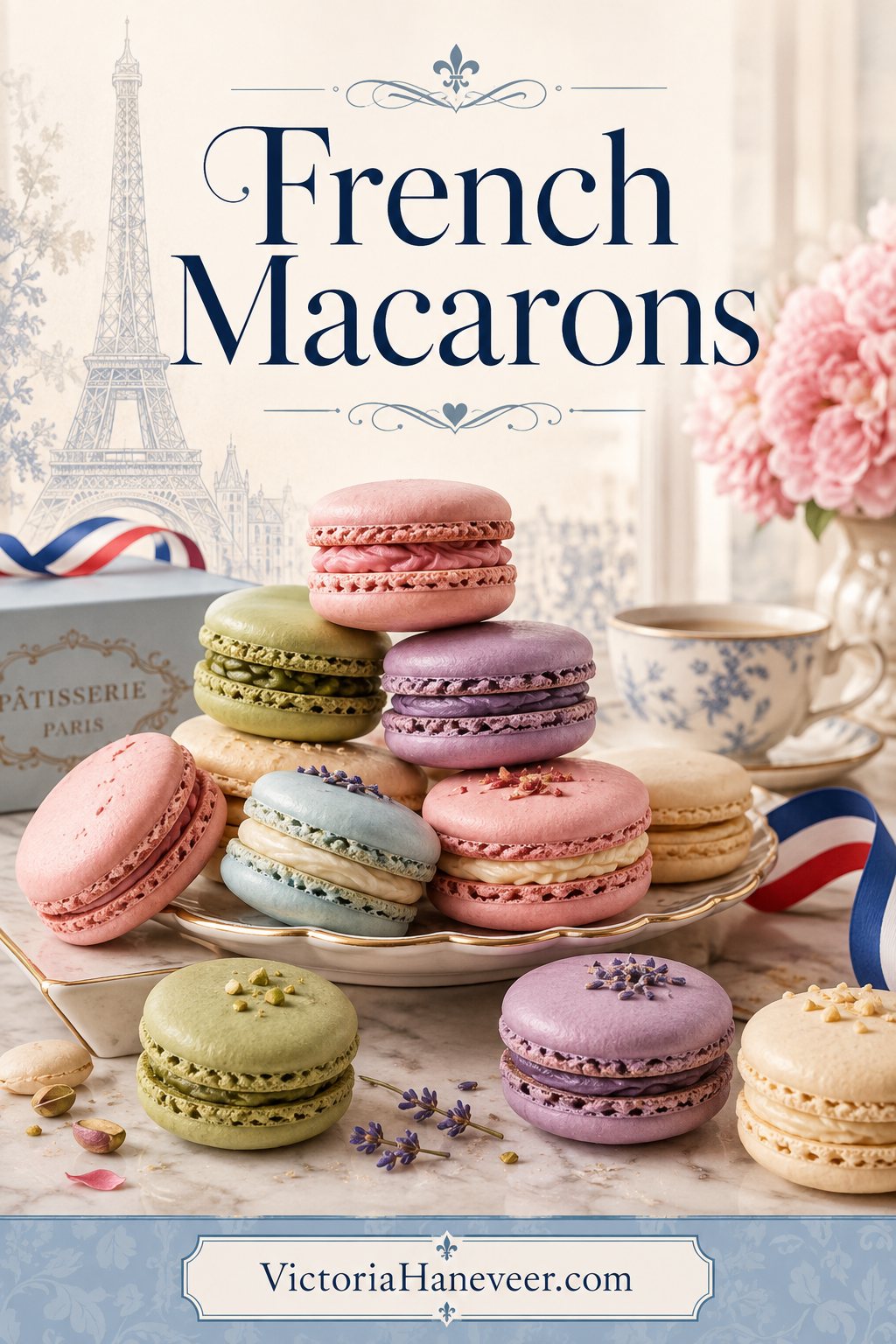
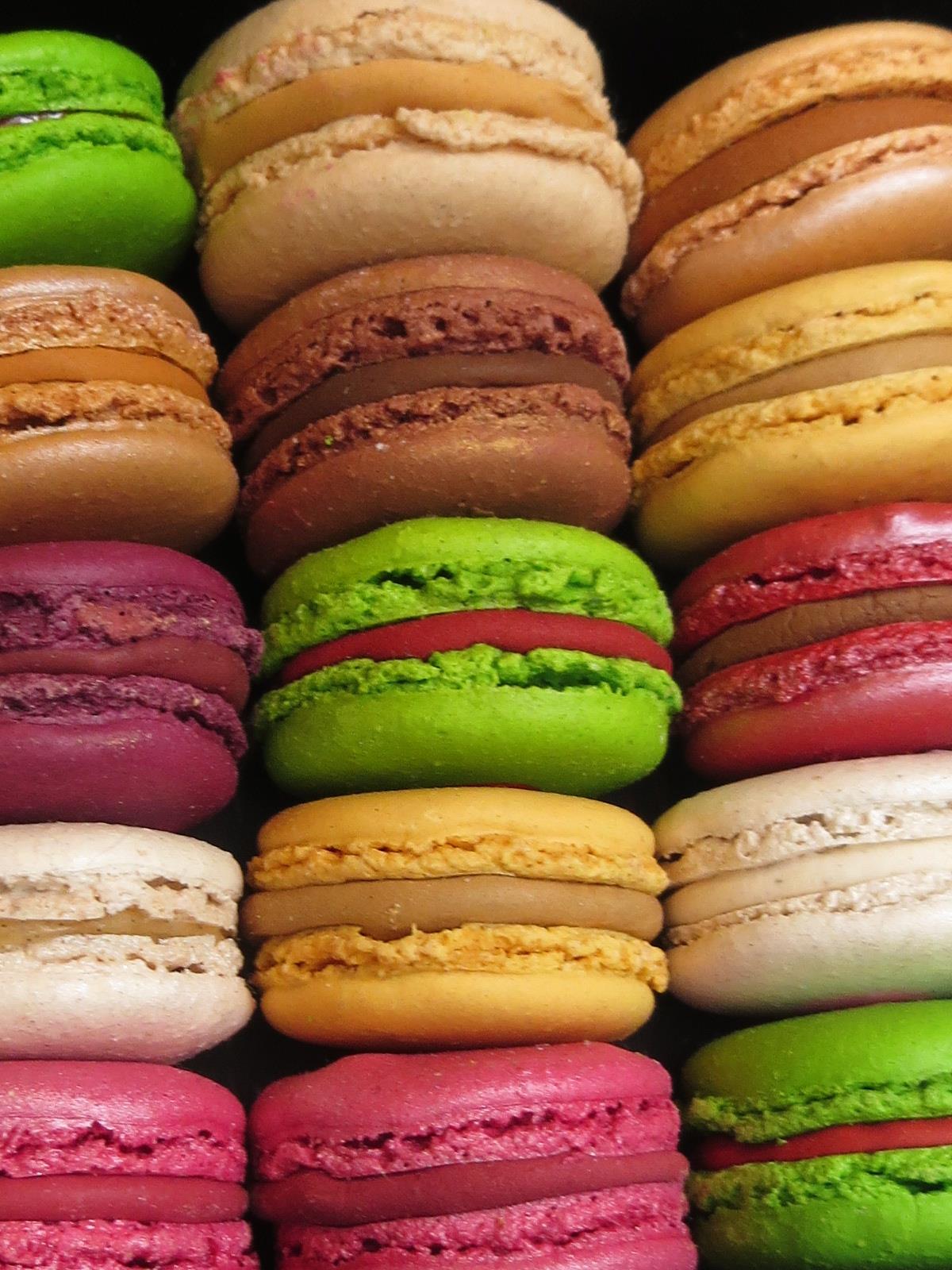
French macarons are delicate sandwich cookies with smooth meringue shells, ruffled “feet” and a soft filling. The shells are made with almond flour, powdered sugar, egg whites and superfine sugar, then paired with jam, ganache, buttercream or another thick filling. They’re quite different from coconut macaroons, despite the similar names.
This easy French macaron recipe uses the French meringue method, which means the sugar is gradually beaten into the egg whites rather than cooked into a syrup. Macarons are still a precision bake, so “easy” refers to the simpler method and clear instructions. A digital scale, careful mixing and patience while the shells rest will give you the best chance of success.
I especially like the freedom you have once the shells are mastered. One batch can become raspberry, chocolate, mint or lavender macarons simply by changing the extract, gel coloring and filling. Start with one uncomplicated flavor, learn how the batter behaves and experiment from there. It’s fun to find new flavor and color combinations!
Easy French Macarons at a Glance
- Prep time: 40 minutes
- Cook time: 36 to 42 minutes for three batches
- Total time: About 2 hours 30 minutes, including resting and cooling
- Servings: 36 filled macarons
- Cuisine: French
- Main ingredients: Almond flour, powdered sugar, egg whites and superfine sugar
- Best cooking method: French meringue, piped and baked one tray at a time
- Storage: Refrigerate airtight for up to one week or freeze for up to one month

Why You’ll Love This French Macaron Recipe
- No hot sugar syrup: The French method is more approachable than the Italian method because the meringue doesn’t require a thermometer or cooked syrup.
- Clear visual cues: The method explains what to look for at the meringue, macaronage and resting stages instead of relying only on the clock.
- Plenty of flavor options: Choose a simple jam filling or try chocolate ganache, white chocolate mint, blueberry cheesecake, lavender honey, pineapple or cream cheese filling.
- Useful troubleshooting: The guide explains the most likely causes of cracked, flat, hollow or sticky shells.
French Macarons vs Macaroons
A macaron, pronounced roughly “mack-ah-ROHN,” is a smooth almond meringue sandwich cookie. A macaroon, pronounced “mack-ah-ROON,” is usually a chewy coconut cookie.
French Macaron Ingredients
- Powdered sugar: Also called confectioners’ sugar or icing sugar, this sweetens the shells and combines with the almond flour to create a fine, smooth mixture.
- Almond flour: Use blanched, superfine almond flour, not coarse almond meal. A fine grind makes smoother shells and passes through the sieve more readily.
- Egg whites: Large egg whites at room temperature whip more readily. The bowl and whisk must be completely clean, dry and free from grease.
- Superfine sugar: Also sold as caster sugar, its small crystals dissolve into the meringue more easily than regular granulated sugar.
- Cream of tartar and salt: Cream of tartar helps stabilize the meringue while a small pinch of salt balances the sweetness.
- Gel food coloring: I find gel coloring gives a stronger shade without adding as much liquid. Add it sparingly because the color can intensify as you mix.
- Extract and filling: Vanilla, almond and mint extract all work with the base. Choose a thick filling that won’t run out or soak the shells.
Equipment for French Macarons
A digital kitchen scale is the most useful piece of macaron equipment because small measurement differences can change the batter. You’ll also need an electric mixer, fine-mesh sieve, flexible spatula, piping bag with a ¼-inch round tip and flat baking sheets lined with parchment or silicone macaron mats.
An oven thermometer is worth using if your oven tends to run hot or cool. Macaron shells respond quickly to temperature changes, so knowing the actual temperature is more useful than trusting the dial.
How to Make French Macarons
Begin by sifting the powdered sugar and almond flour, then whip the egg whites with cream of tartar, salt and superfine sugar until the meringue is glossy and holds stiff peaks.
Fold the dry ingredients into the meringue until the batter falls from the spatula in a continuous ribbon and slowly settles back into itself. This folding stage is called macaronage.
Pipe even rounds, tap the tray to release trapped air and leave the shells uncovered until the tops feel dry rather than sticky. Bake one tray at a time, cool the shells completely and match them into similar-sized pairs before filling. The detailed quantities and numbered method are in the recipe card below.
Tips for Smooth Shells and Neat Feet
- Weigh the ingredients: Cups can vary considerably, especially with powdered sugar and almond flour.
- Stop whipping at stiff, glossy peaks: The meringue should stand upright from the whisk. Dry, clumpy whites have gone too far.
- Judge macaronage by texture: Under-mixed batter holds a point and makes lumpy shells. Over-mixed batter spreads into thin puddles.
- Pop visible air bubbles: After tapping the tray, use a toothpick to release any bubbles that remain near the surface.
- Wait for a skin: The shells should feel dry when touched lightly. Humid kitchens can require a longer rest.
- Change one variable at a time: If a batch fails, note the mixing time, rest time and oven temperature before adjusting the next batch.
French Macaron Troubleshooting
Cracked Shells
Cracks often mean the shells didn’t form a dry skin before baking, the oven was too hot or air bubbles remained in the batter. Let the next tray rest longer, confirm the oven temperature and tap the pan firmly before baking.
No Feet
Flat shells can result from weak meringue, batter that was folded too far or an oven that wasn’t hot enough. Check for stiff glossy peaks and stop macaronage as soon as the ribbon slowly blends into the bowl.
Hollow Centers
Large air pockets can come from an unstable meringue, over-mixing or underbaking. Make sure the sugar is added gradually, knock out large bubbles and bake until the tops no longer shift when gently nudged.
Shells That Stick
Sticky bottoms usually need more baking or more cooling time. Let the tray cool completely before lifting the shells. If they still cling to the liner, return the next tray to the oven for another minute or two.
French Macaron Flavors and Fillings
Almond and raspberry is a sensible first choice because the filling requires no extra cooking. Vanilla shells also work with lemon curd, caramel, pistachio buttercream or a firm fruit preserve. Match the extract to the filling, keep added liquid to a minimum and use only a small amount of gel coloring.
The recipe below includes seven options: chocolate ganache, almond raspberry, white chocolate mint, cream cheese, lavender honey, pineapple and blueberry cheesecake. You can also mix flavors, such as chocolate ganache with raspberry or almond shells with lemon curd.
A Short History of the Macaron
The macaron’s precise origin is disputed, so it’s best to be cautious with tidy origin stories. Earlier regional macarons were single almond cookies rather than the filled sandwiches familiar today.
The modern Parisian style, made by joining two shells around ganache, jam or buttercream, was developed in the nineteenth century.
How to Store French Macarons
Keep filled macarons in a rigid airtight container in the refrigerator for up to one week. Fillings made with cream cheese, mascarpone or cream must stay chilled. I find they have the best texture when you let the filled macarons mature in the fridge for 24 hours, then bring them to room temperature before serving.
Macaron shells or filled macarons can be frozen in an airtight container for up to a month. Thaw them in the refrigerator before opening the container so condensation forms on the container rather than the shells.
Easy French Macaron Recipe FAQs
The French meringue method is the simplest place to start, although macarons still require accurate measurements and careful mixing. Read the full method first, weigh/measure out the ingredients and begin with one basic filling.
No. Regular wheat flour behaves differently and won’t produce a classic French macaron shell. Use fine blanched almond flour rather than coarse almond meal.
Yes for this method. Rest the piped shells until the surface looks matte and feels dry when touched lightly. That skin helps contain the expanding batter so the characteristic feet form near the base.
Gel coloring is more reliable because it adds concentrated color with very little moisture. Liquid coloring can loosen the batter, so use only a tiny amount if it’s your only option.
A 24-hour rest after filling lets a little moisture move from the filling into the shells. This softens the center slightly and helps the shell and filling taste like one finished cookie.
A French Baking Project Worth Trying
A successful batch of macarons comes down to precision and observation more than speed. Weigh everything, stop folding when the batter reaches the ribbon stage and wait until the piped tops are dry. Once you recognize those cues, the same French macaron recipe can support dozens of flavor combinations.
If you enjoy classic French desserts, try my simple crème brûlée recipe. You can also pair lightly flavored macarons with a pink drink with matcha cold foam.
Easy French Macaron Recipe
Ingredients
- 1 ¾ cups (198g) powdered sugar (confectioners’ sugar or icing sugar)
- 1 cup (96g) superfine blanched almond flour
- 3 large egg whites, at room temperature (90 to 105g)
- ¼ teaspoon cream of tartar
- Pinch of fine salt
- ¼ cup (50g) superfine sugar (caster sugar)
- ½ teaspoon vanilla extract
- Brown gel food coloring, optional
- ½ cup (120ml) heavy cream
- 4 ounces (113g) bittersweet chocolate, finely chopped
- 2 tablespoons unsalted butter
- ½ teaspoon almond extract
- 2 drops pink gel food coloring
- ¾ cup (180ml) seedless raspberry jam
- ½ teaspoon mint extract for the shells
- 2 drops green gel food coloring for the shells
- 3 ounces (85g) white chocolate, finely chopped
- 2 tablespoons heavy cream
- 1 tablespoon unsalted butter
- ¼ teaspoon mint extract for the filling
- 1 drop green gel food coloring for the filling, optional
- ½ teaspoon vanilla extract for the shells
- Red gel food coloring, optional
- 8 ounces (227g) cream cheese, softened
- 2 cups (226g) powdered sugar
- 4 tablespoons unsalted butter, softened
- 1 teaspoon vanilla extract for the filling
- ½ teaspoon vanilla or almond extract
- 2 drops violet gel food coloring
- ¾ cup (170g) mascarpone cheese
- 2 tablespoons honey
- 1 teaspoon ground culinary lavender
- ½ teaspoon vanilla extract
- 2 drops yellow gel food coloring
- ¾ cup (245g) pineapple jam
- ½ teaspoon vanilla extract
- 3 drops blue gel food coloring
- 4 ounces (113g) cream cheese, softened
- 3 tablespoons blueberry jam
Equipment
- 4 flat baking sheets
- 3 silicone baking mats or sheets of parchment paper
- Digital kitchen scale
- Electric mixer with whisk attachment
- Fine mesh sieve
- Flexible rubber spatula
- Piping bag with a ¼-inch round tip
- Cooling rack
Method
- Preheat a convection oven to 320°F (160°C). Line 3 flat baking sheets with silicone mats or parchment paper. Make sure the mixer bowl and whisk are completely clean, dry and free from grease.
- Whisk the powdered sugar and almond flour together. Sift the mixture into a large bowl, pressing the finer particles through with a flexible spatula. Save the coarse almond pieces for another use.
- Beat the egg whites, cream of tartar and salt on medium speed until frothy. Increase the speed to medium high and add the superfine sugar gradually. Continue beating for about 5 minutes, until the meringue is thick, glossy and holds stiff peaks.
- Add the meringue to the sifted almond mixture. Fold with a flexible spatula, turning the bowl after each stroke. Add the extract and coloring for your chosen flavor when the dry ingredients are almost incorporated.
- Continue folding until the batter is smooth and falls from the spatula in a continuous ribbon. The ribbon should slowly settle back into the batter. Stop folding before the mixture becomes runny.
- Transfer the batter to a piping bag fitted with a ¼-inch round tip. Hold the bag vertically and pipe 1 ¼-inch rounds, leaving space between them. Aim for 24 shells on each sheet.
- Tap each sheet firmly against the counter two or three times. Pop any visible air bubbles with a toothpick.
- Leave the piped shells uncovered until their tops look matte and feel dry when touched lightly. This can take 15 minutes in a dry kitchen or up to 1 hour in humid conditions.
- Place the fourth baking sheet beneath the first filled sheet to create a double layer. Bake one tray at a time for 12 to 14 minutes. The shells are ready when they have formed feet and the tops don’t shift when gently nudged.
- Place the baking sheet on a cooling rack. Repeat with the remaining trays, using the fourth sheet beneath each batch. Let the shells cool completely before removing them from the liners. While waiting, you can prepare your chosen filling.
- Use vanilla extract as the shell flavoring. Add a small amount of brown gel coloring if wanted.
- Heat the cream just until steaming. Pour it over the chopped chocolate and leave it for 1 minute.
- Stir until smooth, then stir in the butter. Refrigerate for about 30 minutes or until thick enough to pipe.
- Match the cooled shells into pairs. Pipe a thin layer of ganache onto the flat side of one shell, then gently add the second shell.
- Use almond extract as the shell flavoring. Tint the batter with 2 drops of pink gel food coloring.
- Stir the raspberry jam until smooth.
- Match the cooled shells into pairs. Spoon or pipe raspberry jam onto the flat side of one shell, then gently add the second shell.
- Use mint extract as the shell flavoring. Tint the batter with 2 drops of green gel food coloring.
- Put the white chocolate, cream and butter in a microwave safe bowl. Microwave in 20 second intervals, stirring after each interval, until smooth.
- Stir in the mint extract and the optional drop of green gel coloring. Let the filling cool until thick enough to pipe.
- Match the cooled shells into pairs. Pipe the filling onto the flat side of one shell, then gently add the second shell.
- Use vanilla extract as the shell flavoring. Add red gel food coloring until the batter reaches the shade you want.
- Beat the cream cheese, powdered sugar, butter and vanilla for 2 to 3 minutes, until fluffy and smooth.
- Refrigerate the filling briefly if it's too soft to pipe.
- Match the cooled shells into pairs. Pipe the filling onto the flat side of one shell, then gently add the second shell.
- Use vanilla or almond extract as the shell flavoring. Tint the batter with 2 drops of violet gel food coloring.
- Gently mix the mascarpone, honey and ground culinary lavender until evenly combined. Don’t overmix the mascarpone.
- Match the cooled shells into pairs. Pipe the filling onto the flat side of one shell, then gently add the second shell.
- Use vanilla extract as the shell flavoring. Tint the batter with 2 drops of yellow gel food coloring.
- Press the pineapple jam through a fine mesh sieve to remove large pieces.
- Match the cooled shells into pairs. Spoon or pipe the strained jam onto the flat side of one shell, then gently add the second shell.
- Use vanilla extract as the shell flavoring. Tint the batter with 3 drops of blue gel food coloring.
- Mix the softened cream cheese and blueberry jam until smooth. Refrigerate the filling briefly if it is too soft to pipe.
- Match the cooled shells into pairs. Pipe the filling onto the flat side of one shell, then gently add the second shell.
Notes
- The recipe should make approx 72 shells or 36 filled macarons when the batter’s piped into 1 ¼-inch rounds.
- Filling quantities vary. Some options may leave you with extra filling.
- I like to refrigerate the filled macarons in an airtight container for 24 hours before serving. This gives them the best texture.
- Keep all filled macarons refrigerated. Macarons containing cream cheese, mascarpone, heavy cream or butter should be eaten within 3 to 4 days.
- Unfilled shells can be refrigerated in an airtight container for up to a week or frozen for up to a month.
- Thaw frozen shells in the refrigerator before opening the container.
- Remove refrigerated macarons 20 to 30 minutes before serving. Don’t leave fillings containing dairy at room temperature for more than 2 hours.
- The baking temperature and timing are specifically for a convection oven.
If you’re also a fan of savory French dishes, you might enjoy cassoulet, coq au vin, duck breast a l’orange, tuna niçoise, fruits de mer, smoked salmon mousse and camember baked in its box.