
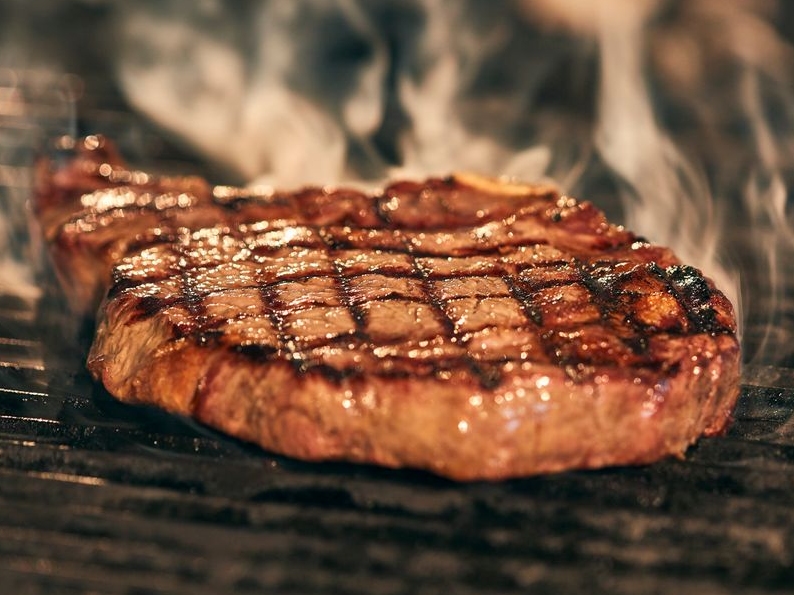
How to Cook Steak on a Griddle
This post contains affiliate links. As an Amazon Associate I earn from qualifying purchases.
Learning how to cook steak on a griddle starts with three things: a dry steak, a properly preheated cooking surface and an instant-read thermometer. Salt and black pepper are enough for a strip steak, and a light coating of oil helps it brown without sticking to the griddle. You can cook your steak indoors in a ridged grill pan or use a flat-top griddle outside.
I used a ridged griddle pan for strip steaks when I lived in the Netherlands and had no space for a barbecue on my small balcony. It gave me a way to cook steak on the stove and get those crosshatch marks. A flat griddle gives more of the steak direct contact with the cooking surface, so it produces a broader sear.
When I lived in Texas, I bought a two-sided griddle pan which was ridged on one side and flat on the other, and fit across two of the burners. I loved using it for breakfasts but also for steaks when the weather outside made the Oklahoma Joe out of the question.
The following griddle steak recipe keeps the seasoning simple and explains how to check the center before the outside overcooks. The method below uses two strip steaks, with advice for adjusting the heat, choosing a pan and handling thicker cuts. When learning how to cook steak on a griddle, the cooking time is only a guideline; your doneness preference and the internal temperature determine when the steak is ready.
How to Cook Steak on a Griddle at a Glance
Prep time: 10 minutes, including preheating
Cook time: About 8 minutes, depending on thickness and heat
Rest time: 10 minutes
Total time: About 28 minutes
Servings: 2
Main ingredients: Strip steaks, salt, black pepper and neutral oil
Method: Stovetop grill pan or flat griddle
Storage: Refrigerate cooked steak for 3 to 4 days
Why You’ll Love This Griddle Steak Recipe
- Simple seasoning: Salt and black pepper let you enjoy the beef without having to prepare a rub or make your own sauce.
- An indoor option: A stovetop grill pan lets you cook steak when an outdoor grill isn’t available.
- A clear doneness check: A thermometer takes the guesswork out of checking the center.
- Flexible serving: Serve the steaks whole with potatoes and vegetables or slice them for sandwiches and salads.
Ingredient Notes
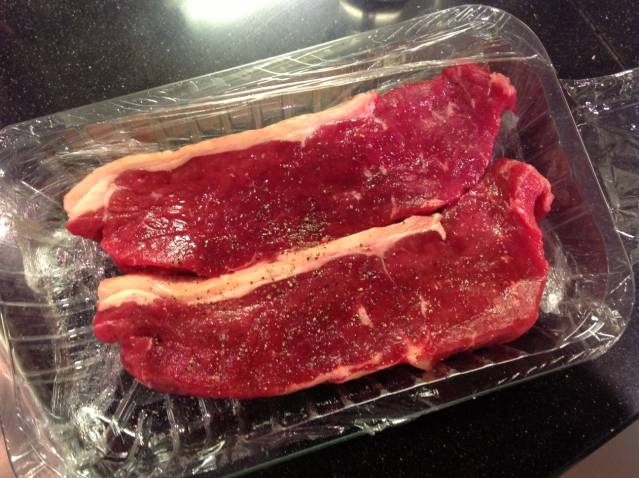
- Strip steaks: Choose two steaks of similar thickness so they cook at a similar rate. New York strip or sirloin steaks would be a good choice for this method. You could also try a rib-eye, T-bone or your preferred cut. Each cut has its own flavor and the timing also varies between cuts and thicknesses.
- Salt: I usually season just before cooking, which is the quickest approach. If you’re seasoning ahead, I recommend you salt it at least 45 minutes before cooking and keep the steaks in the fridge.
- Black pepper: Add it before cooking or after the steak rests if you prefer to avoid scorching it.
- Neutral oil: Use enough avocado, canola or vegetable oil to lightly coat the steaks. Avoid pouring a pool of oil between the ridges. I often use spray oil if using a ridged griddle. You can also brush the oil on to the steaks to prevent sticking.
Flat Griddle or Ridged Grill Pan?
In the US, a griddle usually means a flat cooking surface, including outdoor flat-top grills and electric griddles. A ridged stovetop pan is generally called a grill pan. In the UK, that same ridged pan is often called a griddle pan. Both can cook steak, but they leave different marks.
A flat surface browns more of the exterior because more meat touches the metal. A ridged pan makes narrow grill marks with less browning between them and you can rotate the steak partway through for a crosshatch pattern. Neither of these methods will give you the smoke flavor of a charcoal barbecue. Choose the equipment you have space for and preheat it according to its instructions.
For a stovetop cast iron pan, warm it gradually over medium heat, then increase the heat as needed for searing. Use a burner that works with the size of the pan. With an electric griddle, follow its heat limits and preheating instructions; don’t treat a nonstick surface like bare cast iron. On an outdoor flat-top, keep a cooler area available so you can move a steak that is browning faster than it is cooking through.
Top Tips: How to Cook Steak on a Griddle
- Dry the surface: Pat the steaks thoroughly with paper towels before seasoning. Surface moisture delays browning so make sure you mop that up.
- Leave space: The steaks should fit without touching. You should cook in batches if your pan is too small to hold both steaks comfortably or if you’re doubling the recipe.
- Watch the heat: Turn the heat down if the seasoning scorches or the pan produces heavy smoke. Open the window and/or use your extractor fan when cooking indoors.
- Use the center temperature: Insert an instant-read thermometer from the side into the thickest part, avoiding large seams of fat.
- Handle thicker steaks differently: If the outside of the meat is browned but the center needs more cooking, I recommend that you reduce the heat and turn the steak as needed. A thick steak can take much longer than the timing in this recipe.
How Long Does Griddle Steak Take?
My strip steaks took about 4 minutes per side. Treat that range as a starting point, since steak thickness, the cooking surface and your heat setting all affect the result. Begin checking the center early, then cook longer as needed. A browned exterior does not tell you the temperature inside.
For food safety, USDA guidance is to cook beef steaks to at least 145°F (63°C) before removing them from the heat, followed by a rest of at least 3 minutes. I usually give mine a 10-minute rest. Common rare and medium-rare steak preferences use lower temperatures and don’t meet that USDA minimum.
Don’t rely on the color or a finger test to establish safety, if you’re not used to cooking steak. I can usually gauge medium-rare by pressing it with a fingertip but I used to double check with a thermometer until I was confident checking that way.

Troubleshooting Griddle Cooked Steak
- Pale exterior: Dry the steak more thoroughly next time, allow the pan to preheat and avoid crowding it.
- Burnt marks and an undercooked center: Reduce the heat and continue cooking, turning as needed. Very thick steaks will need a gentler finishing stage.
- Sticking: Give the steak time to brown before you try to lift it. Check that the cast iron seasoning is maintained and use a light coating of oil.
- Tough steak: Check your steak doneness sooner next time and remember to slice across the grain. The cut matters too; this quick griddle method won’t make every beef cut tender.
Seasoning Variations and Serving Ideas
You can swap the strip steak for ribeye, although I find the extra fat produces more smoke indoors. Filet mignon and other cuts need their own timing, so check them with a thermometer.
If you want to use a seasoned rub, check whether it already contains salt. Sugary rubs and marinades can scorch during searing; remove excess marinade before the steak goes onto the griddle.
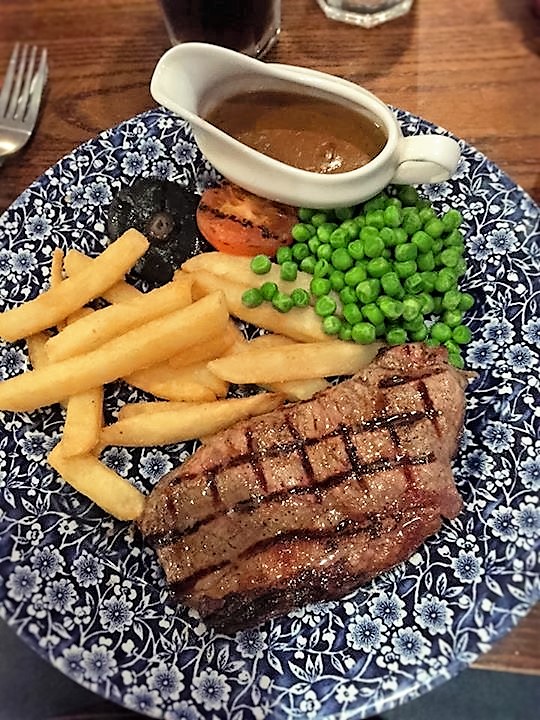
Serve the steak with fries, baked potatoes or mashed potatoes and peas, grilled tomatoes or a green salad. You can add peppercorn sauce or garlic butter at the table if you want a richer finish. Sometimes I add blue cheese on top of the meat for a black-and-blue! Keep the sides ready before the steak finishes resting. Quick sides can be made while the steaks rest.
Equipment for Griddle Steak
- Lodge 10.5-inch square cast iron grill pan: A ridged stovetop option for grill marks. Check that your steaks fit the pan with space between them.
- Alpha Grillers instant-read meat thermometer: Check the center temperature while cooking instead of judging doneness by touch.
You will also need tongs, paper towels and a clean plate for resting the cooked steaks. Use oven mitts with cast iron, including the handle. After cooking, let the pan cool enough to handle, wash it, dry it thoroughly and apply a light coating of oil. Cast iron can rust if it is left wet. And never put it in the dishwasher!
Storage, Reheating and Make-Ahead Tips
- Refrigerating: Put leftovers in a shallow covered container and refrigerate within 2 hours, or within 1 hour if the surrounding temperature is above 90°F (32°C). Keep the refrigerator at 40°F (4°C) or below and eat cooked steak within 3 to 4 days.
- Reheating: Warm leftover slices gently in a covered skillet with a splash of water or broth. Check that they reach 165°F (74°C). Reheating will cook the steak further.
- Freezing: Wrap cooled cooked steak tightly and freeze in a sealed container or freezer bag. Use within 2 to 3 months for quality.
- Thawing: Thaw in the refrigerator, keeping the meat covered.
- Making ahead: You can salt the raw steaks at least 45 minutes ahead and refrigerate them until cooking. Cook the steaks close to serving time for the best freshly seared finish.
Griddle Steak FAQs
You don’t need to bring steak fully to room temperature before cooking. Pat it dry, preheat the griddle properly and use a thermometer to check doneness. I’ve cooked steaks straight from the fridge and steaks left out. It’s more important to make sure it’s patted dry properly before you cook it.
For a ridged pan, lightly oiling the steak helps coat the areas that touch the ridges without collecting much oil in the grooves. For a flat griddle, a light film of oil on the cooking surface is another option. Follow the equipment instructions.
This method is meant for fresh or fully thawed steak, so thaw it in the refrigerator first.
Use a ridged grill pan. Once the first set of marks has formed, rotate the steak a quarter turn on the same side. Repeat on the second side if you want marks on both. Keep checking doneness so you don’t overcook it for the pattern.
A fixed sequence of three-minute cooking and resting intervals can’t account for every steak thickness or griddle. Use the timing as a rough guide only and check the internal temperature.
You can, but it’s optional. Marinate in the refrigerator, discard marinade that has touched raw meat unless it’s properly boiled before use and pat off excess liquid before searing.
Griddle Steak
Ingredients
- 2 strip steaks
- Salt and black pepper, to taste
- Neutral oil, as needed to lightly coat the steaks
Equipment
- Stovetop ridged grill pan or flat griddle
- Instant-read meat thermometer
- Tongs suitable for your cooking surface
- Paper towels
- Clean plate for resting
- Oven mitts for handling a hot pan
- Knife and cutting board if serving sliced
- Foil, optional for loosely covering during resting
Method
- Preheat your grill pan or griddle according to its instructions. For a stovetop cast iron pan, start over medium heat, then increase the heat as needed for searing. Preheating is included in the estimated prep time.
- Pat the steaks thoroughly dry with paper towels. Lightly coat them with neutral oil and season with salt and black pepper just before cooking. If you salted them in advance, do not add the salt again.
- Place the steaks on the hot cooking surface with space between them. Cook until browned on the first side and they release when lifted with tongs, then turn. This should be somewhere between 2 and 7 minutes per side, with thickness and heat determining the timing.
- Check each steak with an instant-read thermometer inserted from the side into the center of the thickest part. Continue cooking, turning as needed. Reduce the heat if the outside is browning too quickly. Cook to at least 145°F (63°C) before removing from the heat to follow USDA guidance.
- Transfer to a clean plate and rest for 10 minutes, loosely covered with foil if liked. Don't reuse the unwashed plate that held your raw steak.
- Serve whole or slice across the grain. Add more black pepper at the table if desired.
Notes
- Cooking time varies with steak thickness and griddle heat. Use a thermometer to check doneness.
- For advance salting, season at least 45 minutes before cooking and refrigerate until ready to cook.
- Refrigerate leftovers within 2 hours and use within 3 to 4 days. Reheat to 165°F (74°C).
A Juicy Steak Dinner from Your Griddle
Once you know how your pan heats, a simple steak dinner becomes much easier to judge. Keep the surface dry, adjust the heat when needed and check the center with a thermometer. Those habits help whether you want grill marks from a ridged pan or a seared steak from a flat griddle.
More Griddle and Beef Recipes to Try
If you enjoy cooking with a griddle pan, you might like my griddled chicken breast or the salmon in my easy 3-ingredient recipes. For more beef dinner ideas, there’s stuffed flank steak, coffee braised beef roast and beef stew with dumplings.
My beef wontons with cabbage and ginger are worth a look if you fancy making dumplings, while homemade beef bone broth is a great start for homemade soups and sauces and you might also be interested in cooking with an indoor smoker.
I never get tired of this marinade!