How to Steam Chicken Breast
This post contains affiliate links. As an Amazon Associate I earn from qualifying purchases.
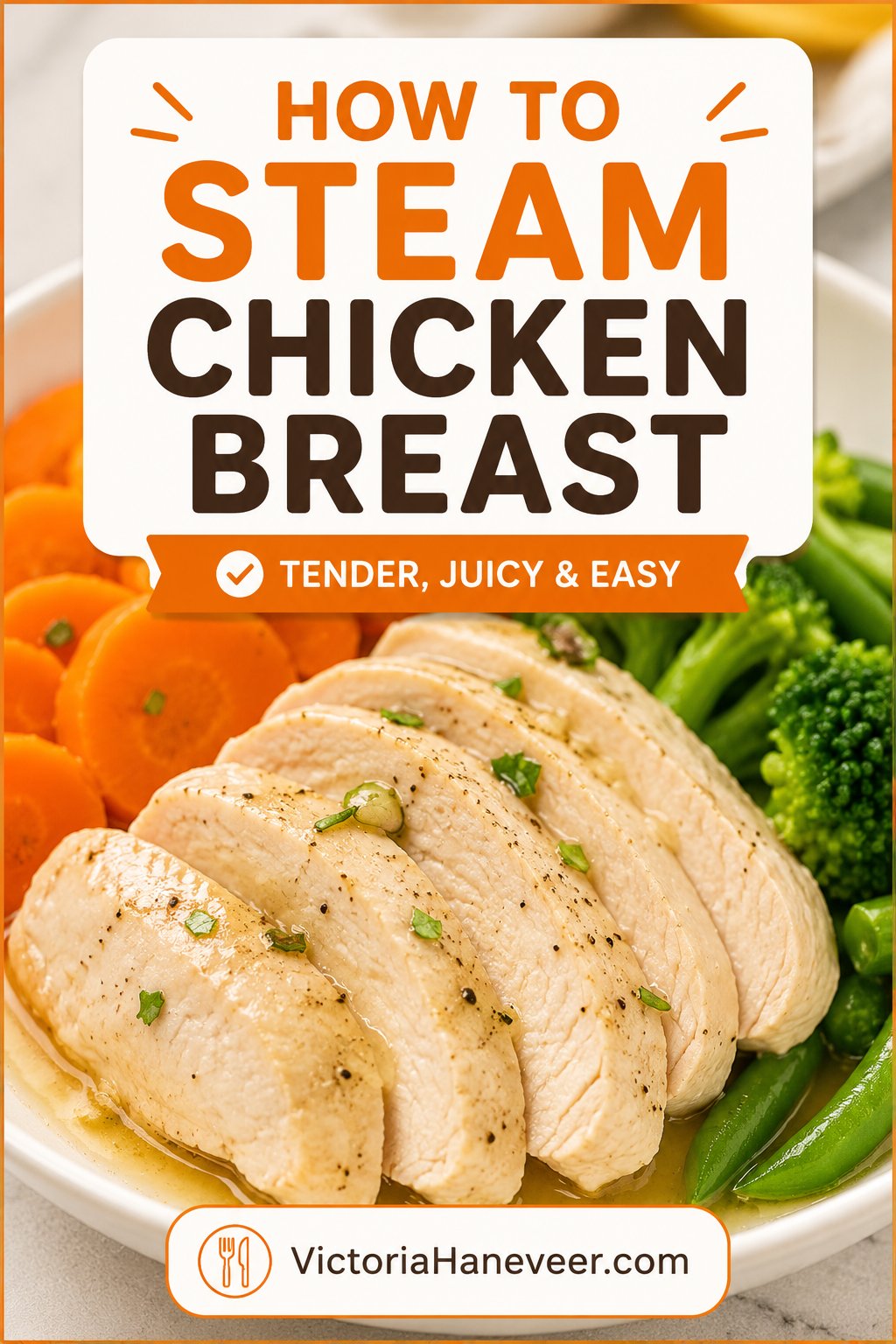
Discover how to steam chicken breast in a pan, in a steamer basket and without steaming equipment. Steaming chicken breast is one of the gentlest ways to cook it. Moist heat cooks the meat with no added oil, while a tightly covered pan helps keep it tender.
I use this method when I want simply seasoned chicken for salads, sandwiches or another recipe where a browned exterior isn’t all that important but juiciness is!
Steamed Chicken Breast at a Glance
- Prep time: 10 minutes
- Cook time: 20 minutes
- Servings: 2, depending on the size of the chicken breast
- Main ingredients: Chicken breast, onion, bay leaf, thyme and water or white wine
- Best cooking method: A tightly covered, heavy-bottomed pan on the stovetop
- Safe internal temperature: 165°F (74°C) in the thickest part
Why It’s Worth Steaming Chicken Breast
Steaming gives chicken breast a soft, moist texture with no crust or browning. I like using this method when the chicken’s going to be be sliced for sandwiches, shredded for a rice dish or chilled for something like this chicken and peach salad.
The chicken cooks with only a small amount of liquid, so you don’t need an electric steamer or any other equipment.
The onion, bay leaf and thyme go in the pan with the chicken, which gives the cooking liquid a light savory flavor. I like to use a little of that liquid to moisten the sliced chicken or add it to a soup. For another steamed dish, try my steamed vegetable wontons with broccoli or steamed couscous with fruit.
Steamed Chicken Breast Ingredients
- Chicken breast: Use one boneless, skinless breast. A piece with an even thickness cooks more predictably. I sometimes have to flatten a very thick end slightly or butterfly the breast to make it even.
- Water or white wine: A small amount creates the steam inside the covered pan. Water keeps the flavor neutral, while dry white wine adds a gentle acidity and aroma.
- Yellow onion: Sliced onion flavors the cooking liquid and keeps the chicken slightly raised from the base of the pan.
- Bay leaf and thyme: These give the chicken a simple herb flavor. If you want a warmer, more aromatic result, you can swap these for some fresh ginger.
- Salt and black pepper: Season the chicken itself. Herbs added only to water in the pan below a steamer basket won’t flavor the meat as strongly.
How to Steam Chicken Breast in a Pan
The recipe below follows a covered steam-poaching method. Bring the onion, herbs and a small amount of water or wine to a gentle simmer first, then add the chicken and close the lid. After 5 minutes over low heat, take the pan off the heat and leave it covered for 15 minutes before checking the internal temperature.
If the thermometer reads below 165°F (74°C), cover the pan again and cook over low heat for another 2 minutes before checking once more. The exact timing’s going to depend on the thickness of the breast and how well your pan retains heat.
How Long to Steam Chicken Breast
Allow 20 minutes for the covered-pan method in the recipe card: 5 minutes over low heat and 15 minutes resting under the closed lid. A thin chicken breast may be ready at that point, but a thick one may need several extra minutes over low heat.
Don’t rely on time or clear juices alone. Insert an instant-read thermometer sideways into the thickest part of the breast and make sure it reaches 165°F (74°C). If you don’t have a thermometer, cut into the thickest part and check that the meat is steaming hot with no pink flesh.
How to Steam Chicken in a Steamer Basket
Bring 1 to 2 inches (2 ½ to 5cm) of water to a steady simmer in a pan. Place the seasoned chicken breast in a steamer basket or on a heatproof plate inside the basket, making sure the water doesn’t touch the chicken.
Cover tightly and keep the water simmering. Begin checking the internal temperature after 15 minutes, then continue cooking until the thickest part reaches 165°F (74°C).
Leave a little space around the chicken so steam can circulate. Seasonings have more effect when placed directly on the chicken or in the heatproof plate. Herbs added to the water below contribute little flavor.
How to Steam Chicken Without a Steamer
A heavy-bottomed saucepan with a tight lid is enough for the recipe below. Another option is to set a heatproof plate on a small metal rack inside a deep pan. Add enough water to create steam while keeping it below the plate, then cover the pan and maintain a steady simmer.
Check the water level during longer cooking only when necessary. Add boiling water around the side of the rack if the pan is close to drying out, then replace the lid promptly.
Can You Steam a Whole Chicken?
You can steam a whole chicken if you have a pot and steamer large enough to hold it with room for the steam to circulate. Timing depends on the bird’s weight, so I recommend using a thermometer in the thickest part of the breast and the innermost thigh without touching bone. A small Cornish hen is easier to fit into a home steamer than a full-sized chicken.
Chicken pieces are more practical in most kitchens and cook more evenly. Breasts, thighs, drumsticks and wings won’t all finish at the same time, so check each piece separately and remove it when it reaches a safe temperature.
Seasoning Ideas
For a ginger variation, replace the bay leaf and thyme with sliced fresh ginger and use water or Japanese sake as the liquid. Green onions (spring onions) can be added to the pan, with soy sauce served after cooking, for more of a Chinese-style steamed chicken taste.
For chicken intended for salad, use water and season lightly before cooking. You can add stronger flavors after chilling, as in my curried chicken Waldorf salad. Throw a little lemon peel, garlic or parsley into the pan if you want.
Tips for Juicy Steamed Chicken
- Don’t rinse raw chicken: Washing it can spread bacteria around the sink and nearby surfaces.
- Use an even thickness: Flatten or butterfly a very thick breast so the center cooks at a similar rate to the thinner end.
- Keep the lid closed: Opening the pan releases steam and lowers the temperature.
- Keep the simmer gentle: Vigorous boiling can make the outside of the chicken firmer before the center is cooked.
- Use a thermometer: Check the thickest point from the side and clean the probe after use.
- Let the chicken cool in some cooking liquid: This helps protect it from drying out before slicing or shredding.
More Chicken Recipes to Try
For creamy or comforting dinners, try Elizabethan chicken in cream sauce, English chicken pie or coq au vin. My chicken cacciatore and baked chicken breasts with tomatoes are good choices if you want a tomato-based dinner.
For bolder seasoning, have a look at buffalo chicken, red chicken chili, Cajun chicken pasta or my Cajun lime stir-fry. There’s also chicken drumstick biryani and homemade orange chicken.
How to Store
Cool the chicken promptly and refrigerate it in a covered container within 2 hours. Keep a little of the cooking liquid with it if you plan to reheat it. UK Food Standards Agency guidance says to eat refrigerated leftovers within 48 hours, while USDA guidance allows 3 to 4 days. I tend to keep it for up to 3 days and throw it out if it’s any older than this.
Reheat the chicken only once and make sure it is steaming hot throughout. Gentle reheating in a covered pan with a splash of water works well. You can also eat safely chilled steamed chicken cold in salads or sandwiches.
For longer storage, freeze the cooked chicken in an airtight container with a little cooking liquid. Thaw it in the refrigerator before reheating. Frozen cooked breast can get slightly drier, so it’s often better shredded into soup, pasta sauce or another moist dish.
Steamed Chicken Breast FAQs
The covered-pan method takes 20 minutes after the lid goes on: 5 minutes over low heat and 15 minutes off the heat with the lid closed. Thick chicken breasts may need extra cooking time.
Chicken can be cooked from frozen, although the covered residual-heat method in this recipe is intended for fresh or thawed chicken. For frozen chicken, keep the steam or heat on throughout and use a thermometer. Frozen poultry can take about one and a half times as long.
Steaming needs no added oil, so it can be a lower-fat cooking method than frying. The calorie and fat content still depends on the size of the chicken breast, whether the skin is attached and what is served with it.
Yes. Bone-in thighs and drumsticks take longer than boneless chicken breast. Keep steaming until the thickest part reaches at least 165°F (74°C), checking away from the bone.
The breast may have cooked for too long, boiled too vigorously or been much thinner at one end. Use gentle heat, make the thickness more even and begin checking the temperature as soon as the suggested cooking time has passed.
A Gentle Way to Cook Chicken Breast
Once you know how to steam chicken breast, you have a simple way to prepare meat for lunches, salads and quick dinners. Keep the heat gentle, leave the lid closed and let the thermometer decide when the chicken is ready. The method’s a good choice if you want cooked chicken with a neutral flavor that can be seasoned differently later.

How to Steam Chicken Breast
Ingredients
- 1 boneless, skinless chicken breast
- ½ teaspoon fine salt
- 1 bay leaf
- ¼ small yellow onion, sliced
- ¼ cup water or dry white wine (60 milliliters)
- Fresh thyme sprigs, as needed
- Black pepper, as needed
Method
- Put the sliced onion, bay leaf, thyme and water or wine in a heavy-bottomed saucepan with a tight-fitting lid. Cover the pan and bring the liquid to a gentle simmer over medium heat.
- Set the chicken breast on the onion, then season it with the salt and black pepper.
- Replace the lid, reduce the heat to low and cook for 5 minutes.
- Take the pan off the heat. Leave it covered for 15 minutes and don’t lift the lid.
- Insert an instant-read thermometer sideways into the thickest part of the breast. It must reach 165°F (74°C).
- If the chicken hasn’t reached temperature, cover the pan and cook over low heat for another 2 minutes. Check again and repeat if necessary.
- Slice or shred the chicken. Use a little of the cooking liquid to moisten it if needed.
Notes
- The exact timing will vary with the size and thickness of your chicken breast.
- This covered residual-heat method is intended for fresh or thawed chicken.
- Use water if you prefer not to cook with alcohol.
- For the ginger variation, replace the bay leaf and thyme with sliced fresh ginger.
- Japanese sake can replace the water or wine.
- Cool leftovers promptly and refrigerate within 2 hours.