Roast Pork with Crackling | Succulent Roasted Pork Loin with Cider
This post contains affiliate links. As an Amazon Associate I earn from qualifying purchases.
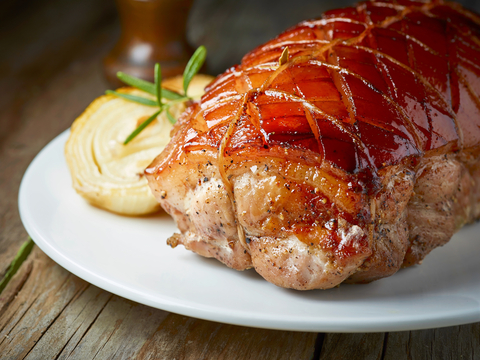
This roast pork with crackling pairs a skin-on pork loin joint with cider gravy. The skin starts in a hot oven for a crisp finish, while browned onion and pan juices flavor the gravy.
It’s a British-style roast dinner for eight, with enough meat for leftovers if you aren’t serving a large group. A thermometer is the best way to judge the loin, so you can cook the meat through without relying on its color.
Roast Pork with Crackling at a Glance
Prep: 20 minutes
Roast: Up to about 2 hours 55 minutes; check temperature earlier
Rest: 30 minutes
Total: Up to about 3 hours 45 minutes
Servings: 8
Doneness: 145°F (63°C), followed by at least 3 minutes rest
Why You’ll Love It
- Crisp crackling: Dry, scored skin and salt help it brown.
- Cider gravy: Pan juices and browned onion give the gravy flavor.
- A generous roast: Serve eight or keep portions for another meal.
- Thermometer guidance: Check the loin without waiting for all pink color to disappear.
Roast Pork with Crackling Ingredients
The complete ingredients list and quantities are in the recipe card below.
- Pork loin: Choose a skin-on joint of about 5 pounds (2¼kg), prepared by your butcher. Ask for scoring if you don’t want to do it yourself.
- Coarse salt: Rub into the dry skin and scoring. Moisture needs to escape for crisp crackling.
- Onion: The halves roast under the meat and flavor the gravy.
- Flour: This thickens the gravy after the excess fat is removed.
- Stock and cider: Dry hard cider adds apple flavor without as much sweetness as apple juice.
How to Make Roast Pork with Crackling
The full instructions with weights and measurements are in the recipe card below.
- Dry and score: Pat the skin dry and score through the skin into the fat, keeping out of the meat.
- Start hot: Salt the skin and roast briefly at the higher temperature.
- Lower the heat: Continue cooking and check the thickest part with a thermometer.
- Rest and make gravy: Rest the pork while finishing the pan juices with flour, stock and cider.
Equipment
- Chef’s knife: Score only if the knife is sharp enough, or ask the butcher; use it for carving.
- Cutting board: Use a clean board for the cooked meat.
- Measuring cups and spoons: Measure salt, flour and liquids.
- Saucepan: Make the gravy here if the roasting pan isn’t stovetop-safe.
You’ll also need a roasting pan, food thermometer and whisk. Use cookware approved for 475°F (240°C) during the hot start.
Tips for the Best Roast Pork with Crackling
- Dry the skin: Pat thoroughly before salting. Avoid wet marinades on the rind.
- Don’t cut into the meat: Scoring should reach the fat below the skin, not the loin.
- Check early: Roast shape and bone affect timing. Remove the loin at 145°F (63°C), then rest for at least 3 minutes.
- Keep steam off the crackling: If using foil while resting, leave it loose rather than sealing moisture against the skin.
- Use a safe pan for gravy: Glass bakeware mustn’t go on the stovetop. Transfer juices to a saucepan if needed.
Substitutions and Variations
- Nonalcoholic gravy: Apple juice or nonalcoholic cider can replace hard cider; the gravy may be sweeter.
- Gluten-free: Use gluten-free stock and a suitable gluten-free thickener instead of wheat flour. Follow the thickener’s instructions.
- Dairy-free: The base ingredients contain no dairy; check stock and cider labels.
Serving Suggestions
Serve with roast potatoes, caramelized carrots and applesauce. Spoon the gravy around the pork rather than over crackling you want to keep crisp.
How to Store Roast Pork with Crackling
- Refrigerate: Refrigerate pork and gravy promptly, covered; eat within 3 to 4 days.
- Freeze: Freeze in portions for up to 3 months for best quality. Store crackling separately and expect it to soften.
- Reheat: Thaw in the refrigerator and reheat leftovers to 165°F (74°C).
Roast Pork with Crackling FAQs
Yes. Color alone doesn’t establish safety. For this whole loin joint, check for 145°F (63°C) in the thickest part away from bone, then rest for at least 3 minutes.
The skin may have been too wet, or steam may have softened it during resting. Dry it well before roasting and avoid tightly covering it afterward.
No. Basting adds moisture to the surface you’re trying to crisp. The joint has its own fat.
No. The timing is a guide. Start checking early and use the thermometer reading to decide when the loin is ready.
Roast Pork with Crackling British Style
Ingredients
- 5 pounds skin-on pork loin joint (about 2¼kg, bone-in as prepared by your butcher)
- 1 peeled, halved white onion
- 1 tablespoon all-purpose flour (plain flour)
- 275 ml vegetable stock (about 1 cup plus 2½ tablespoons)
- 275 ml dry apple cider (about 1 cup plus 2½ tablespoons)
- 1 tablespoon coarse salt (for the skin, plus more to taste if needed)
- Black pepper (to taste)
Method
- Preheat the oven to 475 degrees F (240 degrees C).
- Pat the skin thoroughly dry. Score the skin with a sharp knife or ask your butcher to do it, cutting into the fat but not into the meat.
- Separate the scored lines gently so salt can reach between them.
- Put the pork in a baking pan skin side up.
- Wedge the onion halves partly underneath it.
- Rub the tablespoon of coarse salt over the skin and into the score marks.
- Roast for about 25 minutes, watching that the skin doesn’t scorch.
- Now turn the heat down to 375 degrees F (190 degrees C).
- Continue roasting until a thermometer in the thickest part of the loin, away from bone, reaches 145°F (63°C). A timing guide is about 35 minutes per pound including the first 25 minutes, but begin checking well before that estimate and remove the pork when it reaches temperature.
- Use the thermometer reading to judge doneness; pinkness or clear juices alone aren’t reliable.
- Remove the pork from the oven and put it on a platter.
- Rest for 30 minutes before carving, with any foil loosely over the meat rather than trapping steam against the crackling. The roast must rest for at least 3 minutes after reaching 145°F (63°C).
- Spoon out and discard the fat from the baking dish, leaving the onion and meat juices in there.
- If the roasting pan is stovetop-safe, set it over low heat and stir in the flour. Otherwise, transfer the skimmed juices and onion to a saucepan first. Never heat glass bakeware directly on the stove.
- Stir it using a wooden spoon. Turn the heat up a bit and add the stock and cider.
- Mix it using a balloon whisk.
- Once it reaches a simmer, the gravy should be rich and smooth.
- Grind in some salt and pepper to taste.
- Discard the pieces of onion.
- Serve the pork in slices with the gravy.
Notes
More Recipes to Try
- Funeral potatoes are a cheesy alternative to roast potatoes.
A crisp skin, carefully cooked loin and a jug of cider gravy make a classic roast dinner. Add your favorite vegetables and keep the crackling clear of steam until serving.