UK vs US Meat Cuts: A Guide to International Names
This UK vs US meat cuts guide also covers common names in Canada, Australia and New Zealand. Beef cuts and pork cuts vary from one side of The Pond to the other. A British recipe might tell you to buy sirloin, but an American meat counter can give you a different cut under the same name.
Then there’s Australian porterhouse, which isn’t the big bone-in steak many Americans expect. Knowing a few of these differences makes shopping for recipes from another country much less confusing. Some are straightforward alternatives, such as beef fillet and tenderloin. Others describe roughly comparable cuts with different trimming, so don’t use every name as an exact substitution.
Having lived in the UK, the US and various parts of Europe including the Netherlands and Spain, I’ve experienced my fair share of confusion when trying to figure out what cuts of meat to purchase and what is the local equivalent of whatever I was planning to cook.
I’ve also traveled through Australia and New Zealand, where the meat cuts and names are different again! But it’s all part of the fun, I guess. I certainly had a few mishaps, some of which turned out as happy surprises and others not so much.
Meat Names at a Glance
- British beef fillet: Look for tenderloin in the US and Canada, or eye fillet in Australia and New Zealand.
- British sirloin steak: The closest everyday US shopping term is strip steak or New York strip.
- Scotch fillet: An Australian and New Zealand name for boneless ribeye. It isn’t tenderloin.
- American pork butt: A shoulder cut, despite the name.
- Pork fillet: Usually sold as pork tenderloin in US recipes. Pork loin is a separate cut.
Beef Cuts Chart by Country
This UK vs US meat cuts chart lists common names you’ll see at the butcher’s counter. It also includes names used in Canada, Australia and New Zealand. Check whether a steak is bone-in or boneless, and compare its thickness with the recipe before cooking.
| UK cut | Names in other countries |
|---|---|
| Beef fillet | US Tenderloin; filet mignon for individual steaks Canada Tenderloin Australia Eye fillet; fillet New Zealand Eye fillet; tenderloin |
| Boneless rib-eye | US Boneless ribeye Canada Rib eye Australia Scotch fillet; rib fillet New Zealand Scotch fillet; ribeye |
| Sirloin steak | US Strip steak; New York strip Canada Strip loin steak Australia Sirloin; porterhouse; New York New Zealand Sirloin; porterhouse; striploin |
| Beef mince | US Ground beef Canada Ground beef Australia Beef mince New Zealand Beef mince |
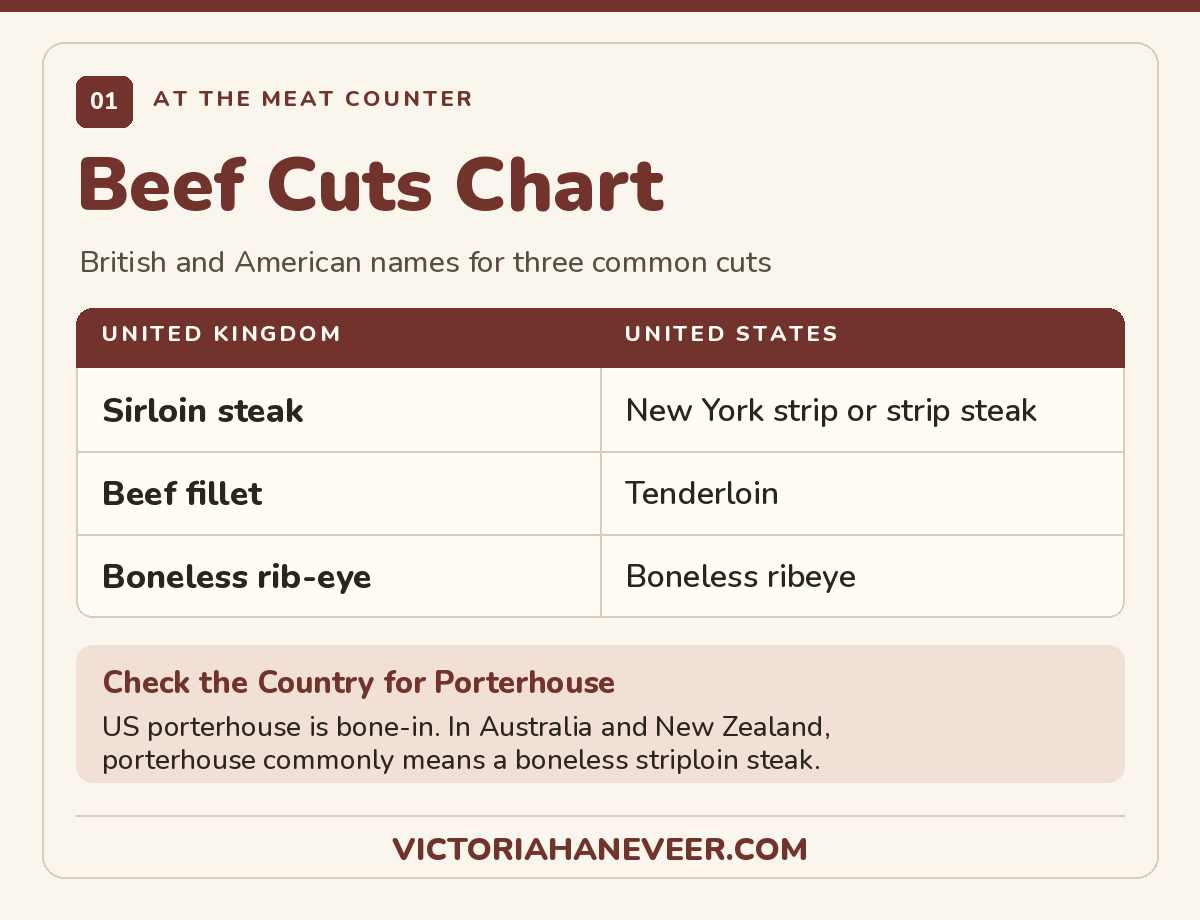
The UK AHDB striploin specification places striploin within its sirloin naming system. Australian Beef and New Zealand producer Ocean Beef explain the local steak names. Canada’s official beef cuts manual distinguishes strip loin, tenderloin and sirloin.
Why Sirloin and Porterhouse Cause Confusion
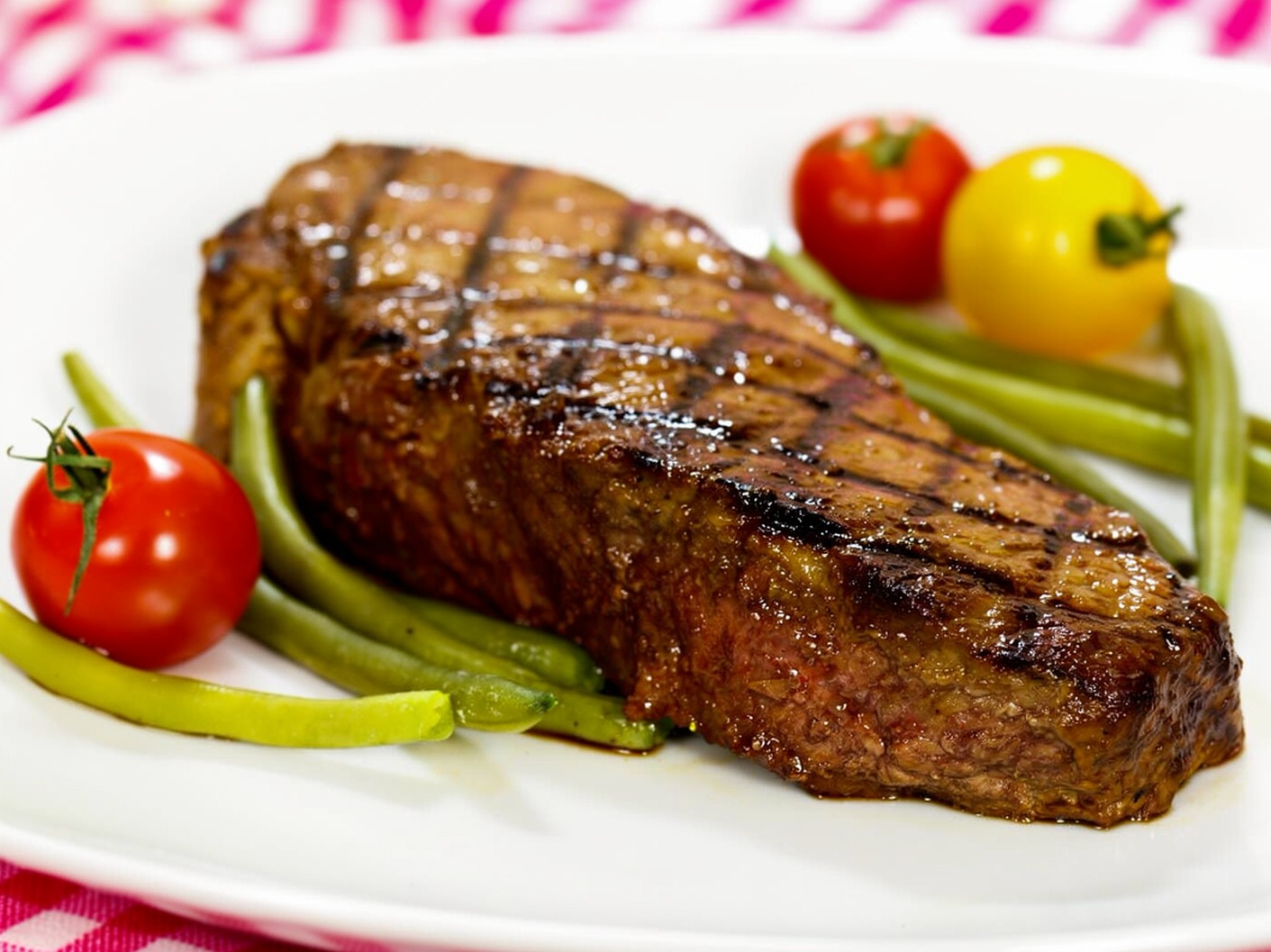
In British recipes, a sirloin steak is commonly the cut an American shopper would recognize as strip steak. An American top sirloin is a different cut. Both can be sold as steaks, but translating “sirloin” without checking the country can change what you buy.
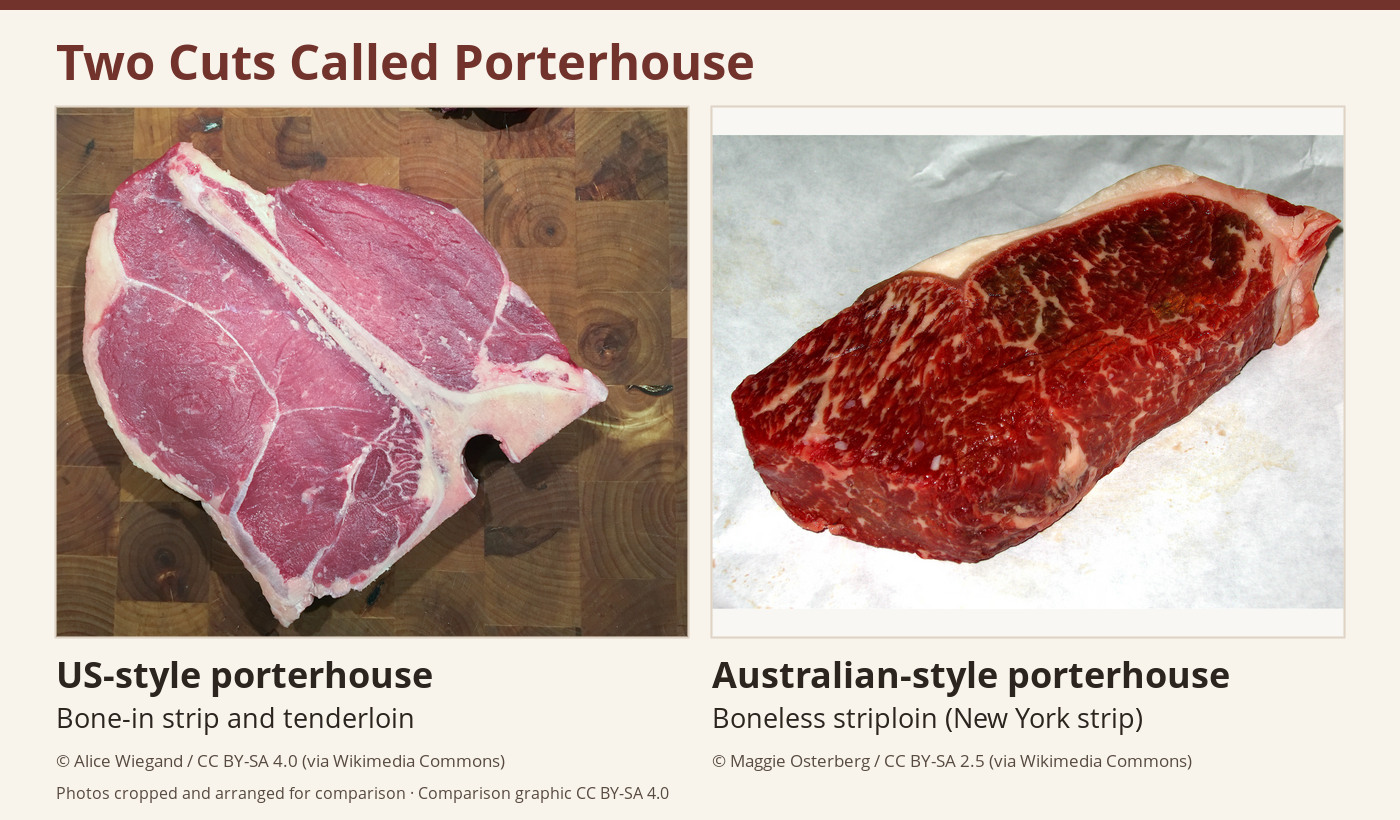
Porterhouse needs an even closer look. In Australia and New Zealand, the name commonly refers to a boneless striploin steak. In the US, a porterhouse combines strip and tenderloin on either side of a bone. It has a larger tenderloin section than a T-bone.
I’d check a photograph or ask the butcher before buying porterhouse for an overseas recipe. A thick bone-in steak and a boneless strip steak won’t necessarily need the same cooking time, even when their names match.
Topside, Silverside and Round
Topside and silverside are lean British beef cuts from the hindquarter. North American labels often use the word “round” for cuts from this area. Canadian terminology includes inside round and outside round, also associated with the US terms top round and bottom round.
That gives you a starting point at the meat counter, but the names aren’t a promise of identical trimming. Canada’s outside round may include or exclude the eye of round. Ask for a cut appropriate to the recipe’s method rather than treating the entire round as interchangeable.
The Simply Beef & Lamb topside guide also notes that the adjoining silverside needs care to avoid drying out. For a long-cooked stew, I’d look at the recipe’s recommended braising cut before choosing a lean roasting joint just because the weight is right.
Pork Cuts and What to Ask For
| Name in a Recipe | What to Check |
|---|---|
| Pork fillet or pork tenderloin | These names refer to the tenderloin. It is a different cut from pork loin. |
| Pork loin or loin roast | Don’t replace it with tenderloin and keep the same timing. The cuts differ in size and shape. |
| Pork butt or Boston butt | A US shoulder-cut name, not the hind leg. Check the recipe’s size, bone and skin requirements. |
| Gammon | Usually a cured pork leg product that needs cooking. Check the label rather than substituting ready-to-eat ham. |
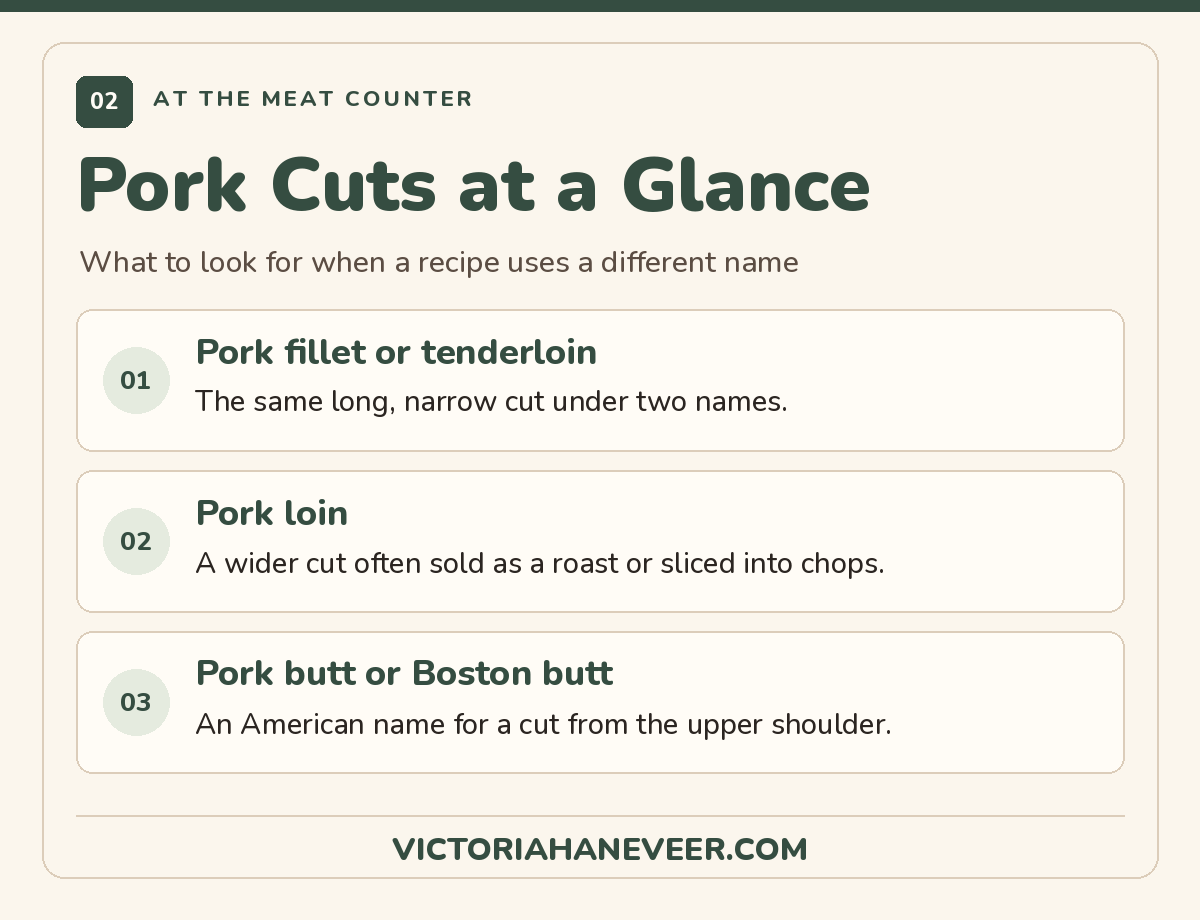
Love Pork’s UK cut guide uses fillet and tenderloin together, and the US National Pork Board explains why tenderloin and loin are different. Its shoulder guide lists Boston butt among American shoulder names.
If you’re cooking my ginger pork tenderloin, buy the tenderloin rather than a much larger loin roast. For gammon steaks, check whether the product needs cooking before following the method.
Back Bacon, Canadian Bacon and Shortcut Bacon
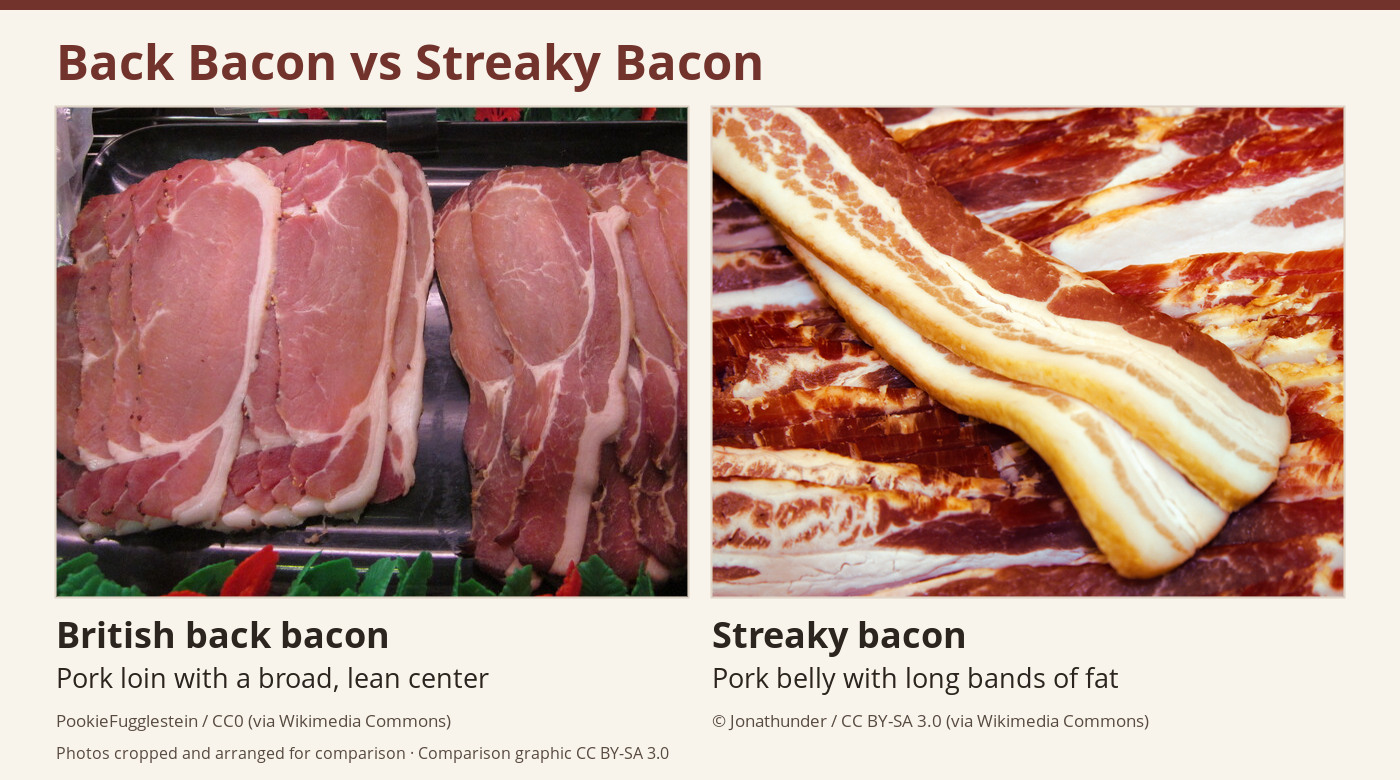
Bacon needs more than a country-to-country name swap. British back bacon comes from the loin area, and streaky bacon comes from the belly. The amount of fat, rind and belly attached to a rasher varies with the product.
In the US, Canadian-style bacon generally describes a cured loin product. Canadian peameal bacon is another loin preparation, traditionally unsmoked and coated in cornmeal. It shouldn’t automatically be treated as the same product as a packet of smoked Canadian-style bacon.
Australian shortcut or eye bacon is another name to check on the packet: it emphasizes the lean loin portion. For example, Otway’s shortcut bacon lists pork loin as its meat ingredient. Don’t assume all bacon with similar-looking slices has the same cure or is ready to eat.
The USDA bacon guide discusses back and Canadian bacon. The Dictionary of Canadianisms explains where peameal bacon gets its name. For any of these products, follow the cooking instructions on the package.
Choosing Meat for a Recipe from Another Country
- Start with the method. A quick steak recipe and a slow braise need different qualities from the meat.
- Check the full label. The cut name, bone, skin and cure matter more than a short shelf label such as “beef tips.”
- Compare the shape and thickness. Similar weights don’t guarantee similar cooking times.
- Show your butcher the recipe. A picture and the intended cooking method can explain more than a translated name alone.
UK vs US Meat Cuts FAQs
Is scotch fillet the same as eye fillet?
No. Scotch fillet is boneless ribeye. Eye fillet is tenderloin. They have different fat distribution and aren’t two names for the same steak.
Can I use American top sirloin in a British sirloin recipe?
It may work if the recipe allows alternative steaks. The two sirloin names refer to different cuts. New York strip is the more direct shopping comparison. Adjust for the actual steak’s thickness rather than relying on the name.
Does mince mean ground meat?
Yes, in ordinary recipe wording. Beef mince means ground beef and pork mince means ground pork. Check the fat percentage too, since the name alone doesn’t tell you how lean it is.
Is pork butt the same as ham?
No. Pork butt refers to a shoulder cut in American terminology. Ham is associated with the leg and may be cured or cooked. Check both the cut and its preparation before making a substitution. Pork butt, also called Boston butt, comes from the upper part of the pork shoulder.
Pork fillet vs pork loin – are they the same?
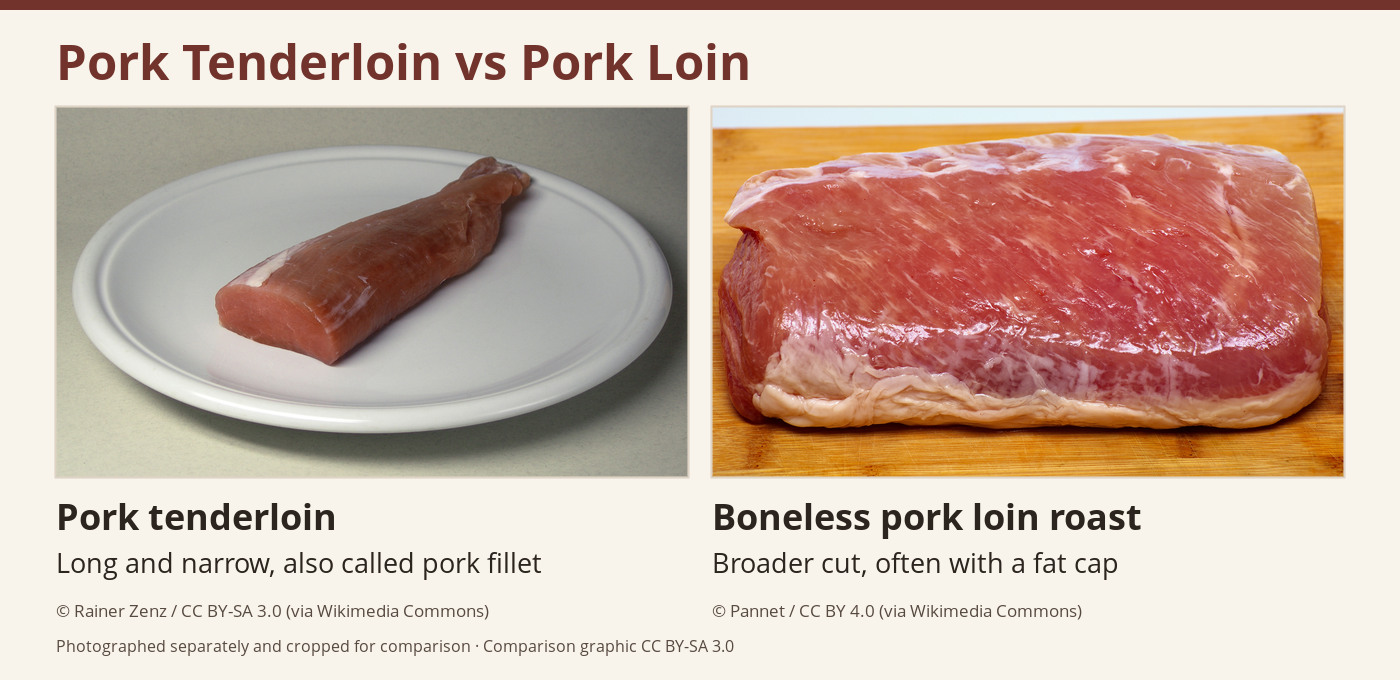
No. Pork fillet, also called pork tenderloin, is a long, narrow cut. Pork loin is wider and is often sold as a roast or sliced into chops. If a British recipe calls for pork fillet, look for pork tenderloin at a US meat counter.
Related Recipes and Guides
- How to cook steak on a griddle: A guide for cooking steaks on a hot griddle.
- Slow cooker beef stew and dumplings: A hearty beef dinner with herb dumplings.
- Dutch speklappen: One of the tastiest ways to cook pork belly slices.
- How to cook gammon steak: A popular British pork cut, explained with cooking instructions.
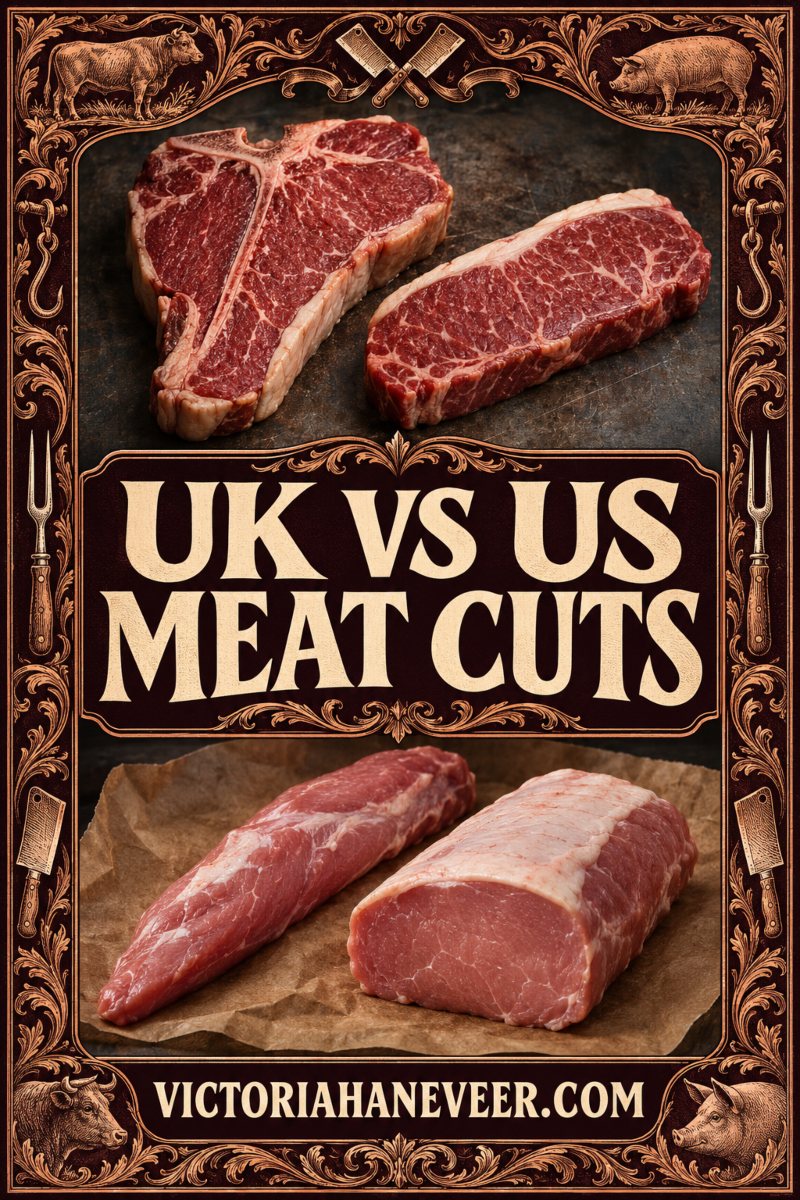
- Porterhouse images from Alice Wiegand (CC BY-SA 4.0) and Maggie Osterberg (CC BY-SA 2.5) via Wikimedia Commons.
- Bacon images from PookieFugglestein (CC0) and Jonathunder (CC BY-SA 3.0) via Wikimedia Commons.
- Pork loin and tenderloin images from Rainer Zenz (CC BY-SA 3.0) and Pannet (CC BY 4.0) via Wikimedia Commons.