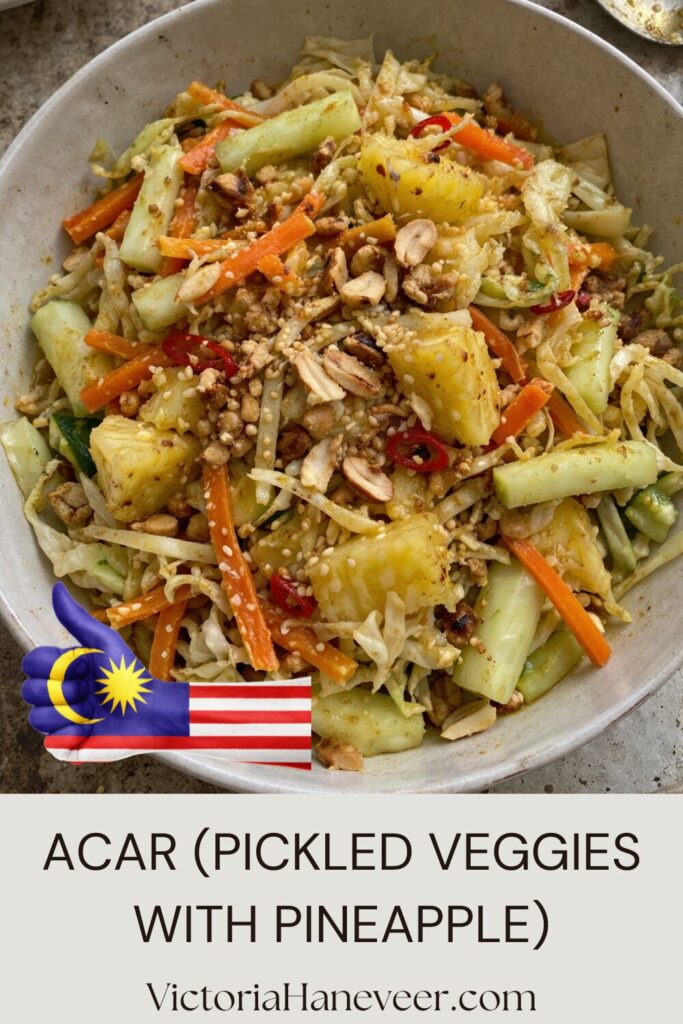
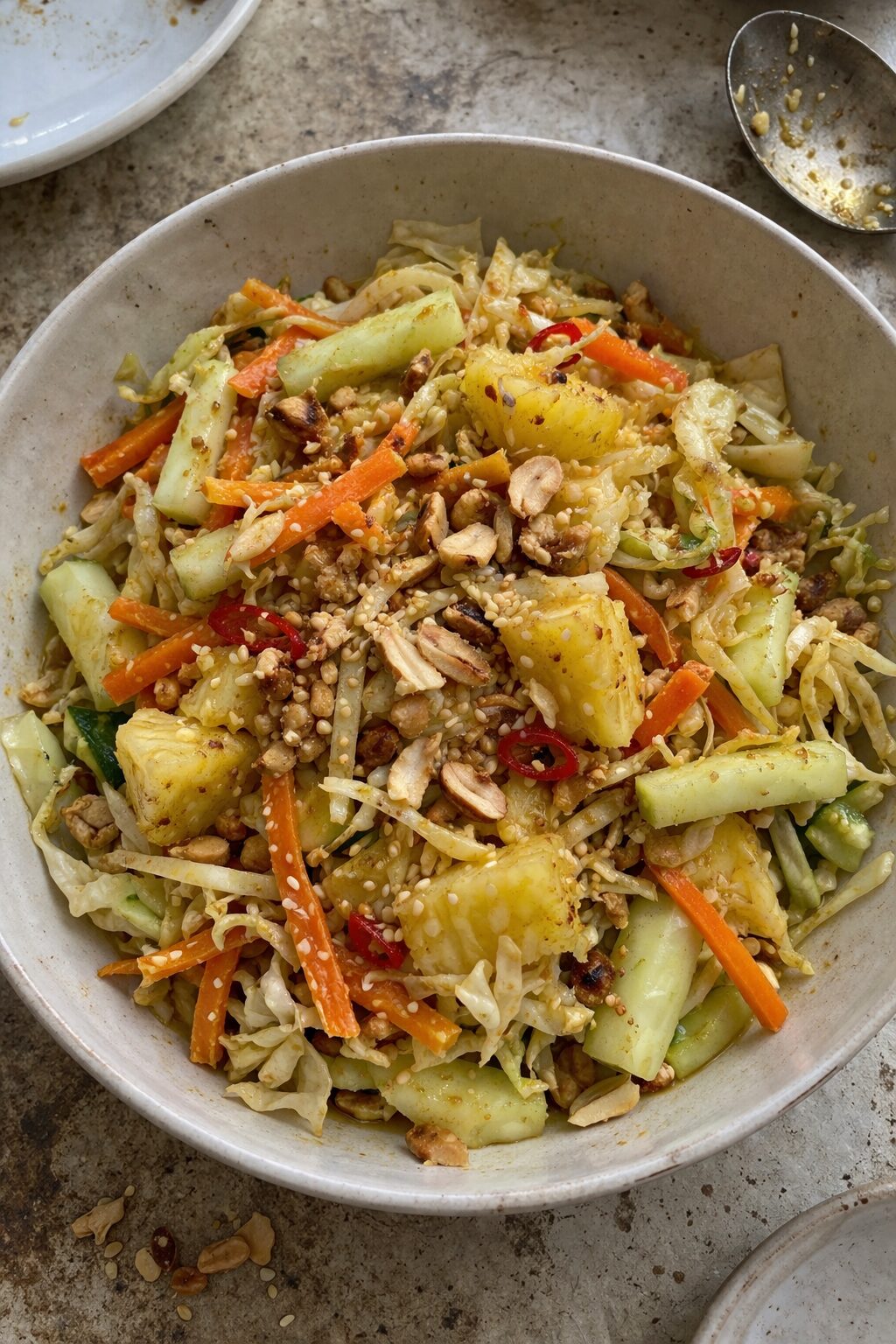
Acar brings crunch, vinegar and a little sweetness to plates that need a sharper edge. In this Malaysian version, cucumber, carrot, cabbage and pineapple sit in a turmeric-tinted pickle with chili, peanuts and sesame.
The pineapple is what makes it differ from plain pickled vegetables and gives the bowl a sweeter, juicier bite.
I always salt the vegetables first because the bowl gets watery fast if I skip that step. For me, the best Malaysian acar recipe is one that still has crunch after chilling, not one with diluted dressing sitting at the bottom.
Acar Overview
You can find acar across Malaysia in a few forms, from fuller mixed vegetable pickles with pineapple and peanuts to simpler cucumber-led versions. It’s usually served cold or at room temperature beside richer foods, where the sweet-sour dressing cuts through grilled meat, coconut rice and fried snacks.
This version is close to a Nyonya acar recipe and also works as a simple acar recipe for a home kitchen. The veggies are salted first, then dressed while still dry enough to absorb the pickling base properly.
- Cooking method: Salt the vegetables, cook a quick dressing base, then chill before serving.
- Key flavor elements: Vinegar, sugar, turmeric, pineapple, chili, peanuts and sesame.
- Typical serving style: Served cold or at room temperature beside rice dishes, grilled meats or richer mains.
What is Acar?
Acar is a pickled vegetable side dish common in Malaysia and across nearby parts of Southeast Asia. In Malaysia, mixed vegetable versions with cucumber, carrot, cabbage and pineapple are especially common in Peranakan cooking and at festive meals where sharper side dishes have a clear job.
Some versions are closer to an acar timun recipe, with cucumber doing most of the work. Others are broader and more textured, with pineapple, peanuts and sesame in the mix. This recipe is in that second group.
Why It’s a Favorite
I like acar most when the dressing clings to the vegetables and doesn’t pool. That only happens if the cucumber and cabbage are drained well first. Skip that and the whole bowl weakens within an hour.
I also prefer to cut the pineapple in small pieces. Bigger chunks throw the balance off and make the fruit the first thing you notice, when it should be evident through the pickle and not take over the whole flavor.
What It Tastes Like
Acar is sharp, lightly sweet and a little warm from turmeric and chili. The cucumber gives freshness, the cabbage gives body, the carrot gives firmer crunch and the pineapple adds a sweeter note that works especially well next to savory food.
If you like pickles, relishes or slaws with a clear sweet-sour dressing, this is easy to get into. It’s especially good next to richer food, where the cold pickle cuts through coconut milk, grilled meat or fried pastry.
What to Expect When Cooking It
There isn’t much cooking here, although the order is important. The vegetables need time with the salt, the dressing only needs a short simmer and the bowl needs chill time before serving.
Freshly mixed acar can taste harsher and feel looser than it does after an hour or so in the fridge.
The other thing to watch is moisture. Once your vegetables are salted, you need to rinse lightly and squeeze them well. That one step changes the result more than adding another spice ever will!
What Makes This Version Different
This recipe keeps the shape of a traditional acar recipe and pares it down for simple home prep. The dressing is cooked briefly with shallots, garlic, ginger and turmeric, so it tastes more rounded than raw vinegar poured over vegetables.
It also keeps the balance on the sharper side. Some versions are sweeter, especially when more pineapple is involved. I prefer my ratio because it works better next to savory mains and doesn’t drift too close to fruit salad territory.
Key Ingredients in Acar
- Cucumber: This gives the pickle its fresh bite and most of its water content, which is why salting it first helps so much.
- Carrot: Carrot adds color and a firmer crunch than cucumber.
- Cabbage: This gives the bowl more body and helps the dressing spread through the mix.
- Pineapple: Pineapple gives acar its sweeter edge and makes it taste more like Malaysian acar than a plain quick pickle.
- Vinegar: Gives the dressing its sharpness. Rice vinegar or white vinegar both work.
- Turmeric: Turmeric gives the dressing its yellow color and a light earthy note.
- Peanuts and sesame seeds: These go on at the end for nuttiness and crunch.
Ingredient Spotlight: Pineapple
Pineapple is the ingredient that changes the whole bowl. Without it, acar can slide too close to a plain vegetable pickle. With it, the dressing gets a little fruitier and the sharper ingredients have something sweeter to play against.
You don’t need loads of it or you risk unbalancing the acar. A smaller amount gives the bowl lift without taking the focus from the veggies.
How to Make It
- Salt the vegetables: Toss the cucumber, carrot and cabbage with salt and let them sit until they release some water.
- Rinse and dry: Rinse lightly, then squeeze the vegetables well.
- Cook the dressing: Warm the shallots, garlic, ginger, chili, turmeric, vinegar, sugar and water until the sugar dissolves and the dressing looks glossy.
- Mix: Toss the drained vegetables and pineapple with the warm dressing.
- Chill: Cool the acar fully and refrigerate it until the flavor settles and the vegetables absorb some of the dressing.
- Finish: Add toasted peanuts and sesame seeds just before serving.
Tips for Best Results
- Salt the cucumber and cabbage first: This keeps the dressing from turning watery later.
- Cut the vegetables fairly evenly: Big chunks pickle more slowly and make the bowl feel clumsy.
- Keep the dressing concentrated: The vegetables should be coated, not floating.
- Add peanuts at the end: They lose their crunch if they sit in the dressing too long.
- Give it chill time: The dressing settles and the vegetables taste more integrated after an hour or so.
Variations and Substitutions
- If you can’t find fresh pineapple: Use canned pineapple in juice, drain it well and cut it into smaller pieces.
- More heat: Add another fresh red chili or a little chili paste to the dressing.
- Milder flavor: Cut the chili down and let the pineapple carry more of the sweetness.
- Acar timun recipe: Increase the cucumber and reduce the cabbage for a bowl that lands more firmly in cucumber pickle territory.
How to Store Acar
- Store: Keep this vegetarian acar recipe in an airtight container in the fridge for up to 4 days.
- Freeze: I don’t recommend freezing this. The vegetables lose too much crunch once thawed.
What to Serve With It
Acar works best next to richer or heavier dishes that need something cold and sharp on the side. In Malaysian meals, acar usually turns up as a side relish, not the main event. It works especially well with Malaysian satay, where the pickle cuts through the peanut sauce, and it also makes sense with coconut rice dishes such as nasi lemak if you want another bright element on the plate. Curry puffs are good here too, especially if you want a fried snack alongside the pickle. Beef rendang is another good pairing if you want to put the pickle next to a slower-cooked main with much richer seasoning.
Acar vs Acar Timun
A mixed Malaysian acar recipe usually includes several vegetables and often pineapple too, while an acar timun recipe centers more narrowly on cucumber. The dressing can overlap, although the fuller mixed version has more texture and a wider sweet-sour range because it uses more than one vegetable.
In other words, acar timun is one type of acar, though not every acar gives cucumber the lead. This recipe goes for the fuller mixed style.
Malaysian Acar FAQs
Is this closer to a Nyonya acar recipe or a Penang acar recipe?
It’s closer to a Nyonya acar recipe. I’m not presenting it as a strict Penang acar recipe, because those details can shift from household to household and there isn’t one single version that covers everything.
Is this a simple acar recipe or a more traditional version?
I’d say it’s somewhere in the middle. The structure is close to a traditional acar recipe, although the method is trimmed for a home kitchen and doesn’t ask you to make a more involved spice paste.
Is acar Malaysian or Indonesian?
Both cuisines have versions of acar. The name and broad idea travel across the region, so this isn’t the same thing as claiming one clean origin story.
Can I make acar ahead?
Yes. It tastes better after a little time in the fridge. Just keep the peanuts separate until serving if you want them crisp.
More Malaysian Recipes
If you want more dishes from the same cooking tradition, head back to the Malaysian Recipes: Traditional Dishes, Regional Food Guide.
Acar
Ingredients
- 1 medium cucumber, seeded and cut into batons
- 2 medium carrots, peeled and cut into thin batons
- 2 cups (140g) shredded cabbage
- 1 cup (165g) fresh pineapple, cut into small pieces
- 2 teaspoons salt, for salting the vegetables
- 2 tablespoons toasted peanuts
- 1 tablespoon toasted sesame seeds
- 4 shallots, thinly sliced
- 3 garlic cloves, minced
- 1 inch (2.5cm) fresh ginger, finely chopped
- 1 red chili, thinly sliced
- ½ teaspoon ground turmeric
- ⅓ cup (80ml) rice vinegar or white vinegar
- ¼ cup (50g) sugar
- 2 tablespoons water
- 1 tablespoon neutral oil
- Extra sliced chili
- Extra sesame seeds
Method
- Salt the vegetables: Put the cucumber, carrot and cabbage in a bowl with the salt. Toss well and leave for 30 minutes.
- Drain and dry: Rinse the vegetables lightly, then squeeze out as much water as you can and set them aside.
- Cook the dressing: Heat the oil in a small pan and cook the shallots, garlic, ginger and chili for a few minutes. Stir in the turmeric, vinegar, sugar and water, then cook until the sugar dissolves.
- Mix the acar: Put the drained vegetables and pineapple in a bowl. Pour over the warm dressing and toss until coated.
- Chill: Cool completely, then refrigerate for at least 1 hour.
- Finish and serve: Scatter over the toasted peanuts and sesame seeds just before serving.
Notes
- A sharp knife is enough here. A mandoline helps if you want very even batons, although it isn’t necessary.
History of Acar
Acar exists across Malaysia, Indonesia and Singapore in forms that overlap, so pinning it to one clean origin story would be too neat. In Malaysia, it became especially tied to Peranakan cooking and to meals where a bright pickle has a clear job beside richer savory food.
Today you’ll see everything from simple cucumber pickles to fuller mixed vegetable versions with pineapple, peanuts and sesame. The core idea holds together even when the details change.
That’s also why it’s so popular served with richer mains. The pickle cuts through fat and spice in a way a softer side dish never could.