Roti canai is one of those things that looks simple until you try to make it. The dough gets stretched so thin it almost disappears, then folded over itself and cooked on a hot griddle until the layers start to separate.
Tear it apart while it’s still warm and dip it straight into dhal or curry. I go for dhal first. It’s milder, so you’ll notice the bread’s taste and texture more before moving on to something richer.
You’ll see roti canai everywhere in Malaysia, from roadside stalls to busy cafes, often made right in front of you. It usually comes with curry or dhal, sometimes both on the same plate. If you’re cooking Malaysian food at home, try this kari kapitan – it’s a great pairing.
What Makes Roti Canai Different
This isn’t rolled like most flatbreads. The dough is pulled outward until it’s paper thin, then folded into layers before cooking.
That folding step is what creates the structure. Skip it and you just get flat fried dough.
The dough starts simple, but how you treat it changes everything. Each portion is stretched out by hand into a thin sheet, then folded back over itself before hitting the pan.
If it tears while stretching, it needs more time to rest. Most of the time, that’s the reason.
Why Roti Canai Dough Needs to Rest
Resting gives the dough time to relax. Right after mixing, it’s tight and won’t stretch far. Leave it alone for a while and it becomes much easier to handle.
If you rush this step, it keeps shrinking back and won’t stretch thin enough.
What You Eat It With
Roti canai is meant for dipping.
- Dhal is the most common, mild and slightly earthy
- Chicken curry is richer and more filling
- Sambal adds heat if you want something sharper
I usually mix a bit of everything and dip as I go.
If you’re making a few Malaysian dishes, adding this changes the whole meal, especially with the spiciness of sambal belacan or something bold like beef rendang. You might also like to learn about other Malaysian recipes.
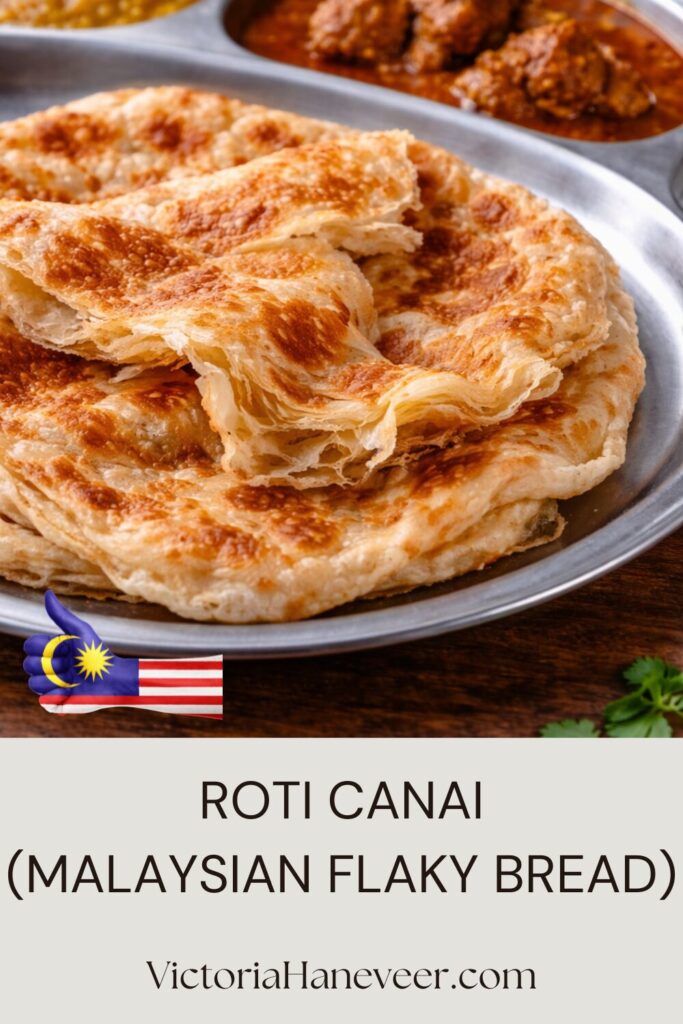
How It’s Made in Mamak Restaurants
In Mamak spots, this is all done in front of you. (Always fun to watch!)
Dough gets stretched, flipped and folded quickly, then cooked on a hot griddle.
Once it’s done, it’s often clapped between the hands to loosen the layers before serving.
Ingredient Notes
Flour: Needs enough strength to stretch thin without tearing
Oil: Helps with stretching and keeps the dough workable
Egg: Adds a bit of richness
What Happens If You Skip the Folding
If you stretch the dough and cook it without folding, you won’t get those layers. It ends up more like a basic flatbread.
The folding is what creates separation, so when you tear it, it pulls apart and doesn’t just stay dense.
Why It’s Cooked on a Flat Griddle
A flat griddle gives even contact across the surface, which helps the layers cook through without burning. If the heat is uneven, some parts crisp while others stay undercooked. That’s why most places use a wide, flat cooking surface instead of a pan with edges, so using a flat griddle works best here.
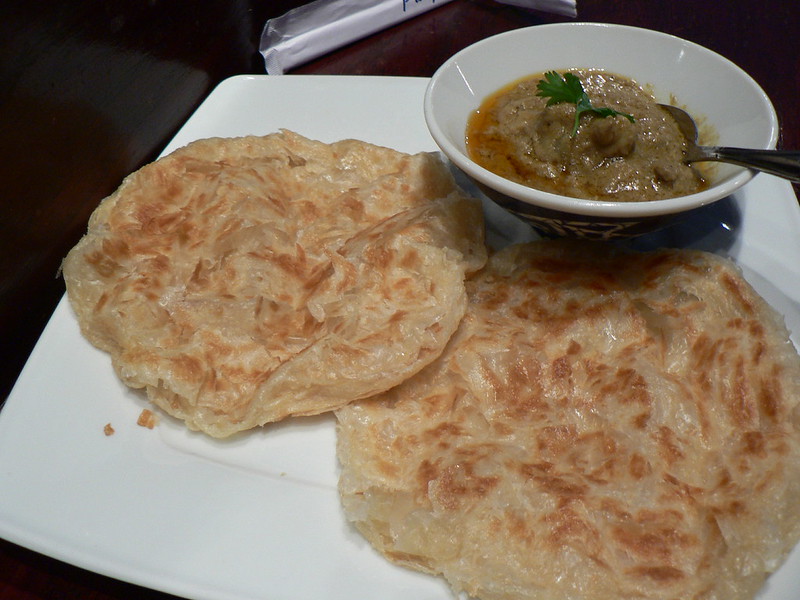
Image from Flickr
Roti Canai vs Paratha
They come from similar roots, but roti canai is stretched thinner and handled differently. The folding technique gives it more defined layers.
Paratha is usually rolled and can be thicker depending on the style.
Roti Canai vs Roti Prata
Same idea, different name depending on where you are. In Malaysia it’s roti canai, and in Singapore it’s roti prata.
Prata is sometimes thicker or filled with egg or onion, but the base method is very similar.
Common Mistakes
- Skipping the resting time
- Not stretching the dough thin enough
- Cooking on a pan that isn’t hot enough
Any of these will change the result more than the ingredients will.
How to Store and Reheat It
You can make the dough ahead and keep it in the fridge overnight.
Cooked roti canai keeps for a couple of days. Reheat in a hot pan to bring the layers back. It won’t be identical to fresh, but still works.
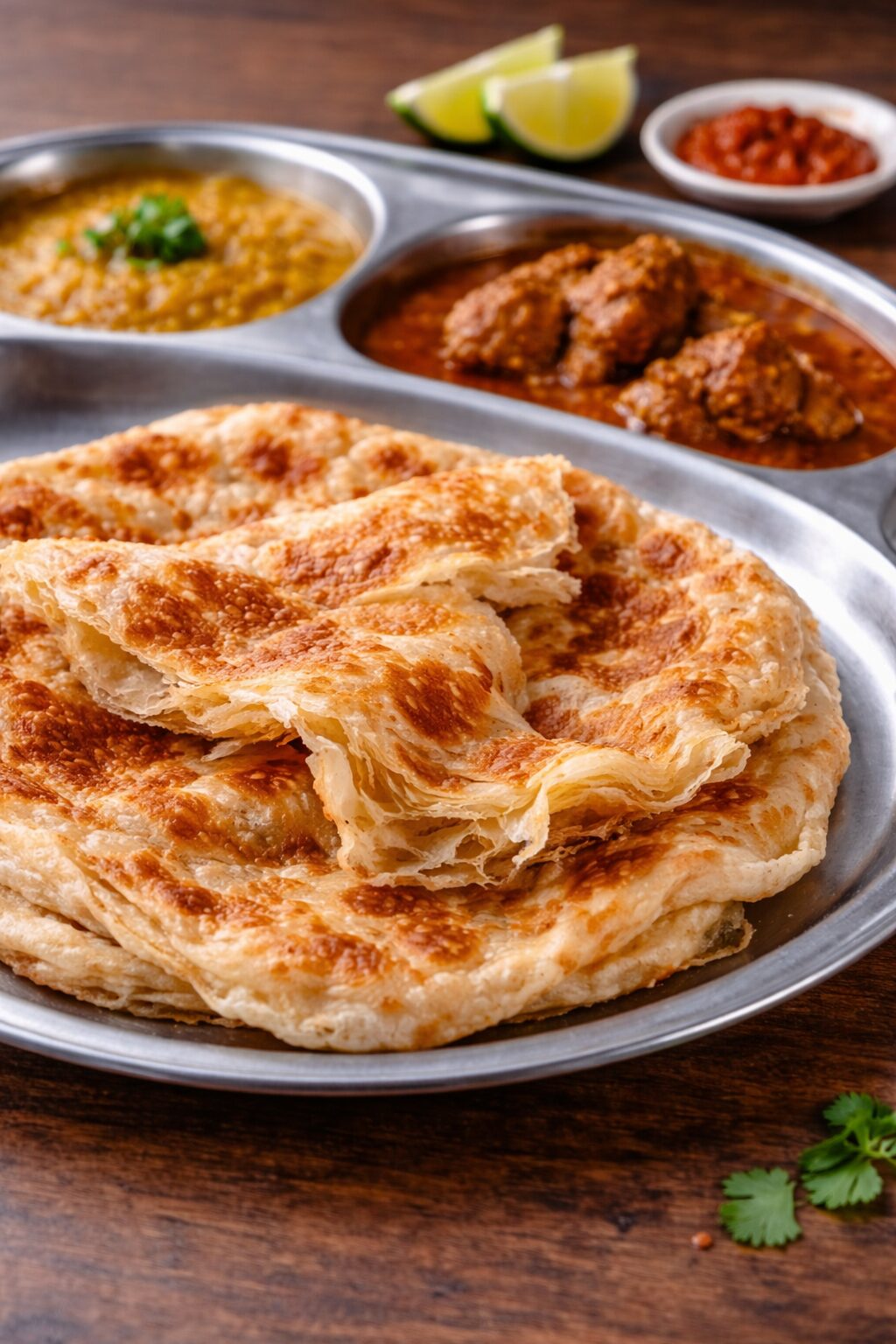
Roti Canai
Ingredients
- 2 cups (250g) all-purpose flour
- 1 teaspoon salt
- 1 egg
- 3 tablespoons oil
- ¾ cup (180ml) water
- 1 cup (240ml) dhal or curry
- Cilantro (fresh coriander)
- Lime wedges
- Sambal
Method
- Combine the flour and salt in a bowl.
- Add the egg, oil and water and mix until a soft dough forms.
- Knead until smooth and elastic.
- Divide the dough into small balls and coat lightly with oil.
- Rest the dough for at least 1 hour so it stretches easily.
- Stretch each dough ball into a thin sheet.
- Fold the sheet into layers and shape into a flat circle.
- Cook on a hot griddle until golden on both sides.
- Serve hot with curry or roti canai dhal.
Notes
History of Roti Canai
Roti canai came from Indian Muslim cooking traditions brought to Malaysia. Over time it adapted to local ingredients and cooking styles.
It became closely tied to Mamak restaurants, where it’s still made fresh in front of customers.
Now it’s eaten across Malaysia at any time of day. Breakfast, late night, quick meal, it fits anywhere!