Kari Kapitan Recipe (Penang Nyonya Chicken Curry)
This post contains affiliate links. As an Amazon Associate I earn from qualifying purchases.
This Kari kapitan recipe is a Penang Nyonya chicken curry made with chicken and a rempah of dried chilies, shallots, garlic, lemongrass, candlenuts and belacan. Cooking the rempah before the chicken goes in concentrates those ingredients and takes away the raw taste of the shallots and chilies.
Many traditional Penang versions contain coconut milk. Mine doesn’t, so expect a thicker, more concentrated sauce that cooks down closely around the chicken. Lime juice and makrut lime leaves add citrus against the chilies and fermented shrimp paste.
The rempah was the part I learned the most from when I made this. My blender’s not the best and it wasn’t handling such a small batch well. I had to add extra water to get it moving. That made the frying stage take much longer, although the paste recovered once I cooked the excess water off.
Kari Kapitan at a Glance
- Prep time: 20 minutes
- Cook time: 40 minutes
- Total time: 1 hour
- Servings: 4
- Cuisine: Malaysian, Penang Nyonya
- Main ingredients: Chicken, dried chilies, lemongrass, candlenuts and belacan
- Best cooking method: Fry the rempah, then simmer the chicken
- Storage: Refrigerate for up to 3 days or freeze for up to 2 months
Why This Kari Kapitan Penang is Worth Trying
- The rempah is important: Dried chilies, shallots, garlic, lemongrass, ginger, candlenuts and belacan all cook together before the chicken goes in.
- The sauce cooks down: This recipe uses water instead of coconut milk, so most of the liquid will evaporate as the chicken cooks.
- You can rescue an overly wet rempah: I did exactly this! But don’t worry if yours is ver wet. Extra blender water means a longer frying stage, not a ruined curry.
- It’s a Penang dish: Kari kapitan is strongly associated with Penang Nyonya cooking. Penang also officially included kari kapitan among its heritage foods in 2026.
Ingredient Notes
- Dried red chilies: Soaking softens them before blending. The type of dried chili you buy will affect the heat, so 8 chilies won’t taste identical with every brand.
- Shallots and garlic: These make up much of the bulk of the rempah. They also contain water, which is one reason the paste needs time in the pan.
- Lemongrass: I only use the tender white part because the tougher green section doesn’t blend as smoothly.
- Candlenuts: These thicken the rempah slightly and add nuttiness. Macadamia nuts work as a substitute.
- Belacan: This fermented shrimp paste has a strong smell before cooking and adds a salty fermented flavor to the curry. If you buy a block for this recipe, you can also use it to make your own sambal belacan.
- Makrut lime leaves: You might still see these sold as kaffir lime leaves. They add a distinctive citrus fragrance that lime juice alone doesn’t give you.
- Chicken: The kari kapitan Nyonya recipe calls for chicken pieces rather than one specific cut, so you can use a mixture as long as you cook the thickest pieces to 165°F (74°C).
How to Make Kari Kapitan Ayam
Blend the rempah ingredients until smooth, then fry the paste in oil until the excess moisture has gone and the paste has darkened. Add the chicken, water and makrut lime leaves and simmer until the chicken is cooked through and the liquid has reduced. Finish with lime juice and sugar.
What Should the Rempah Look Like?
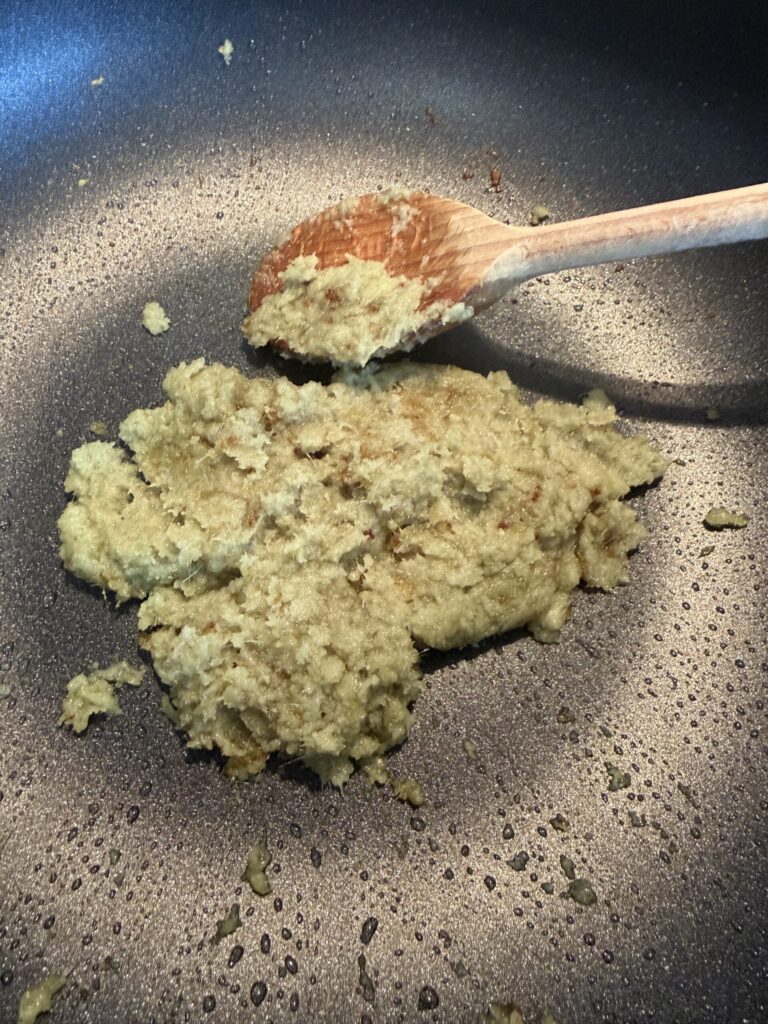
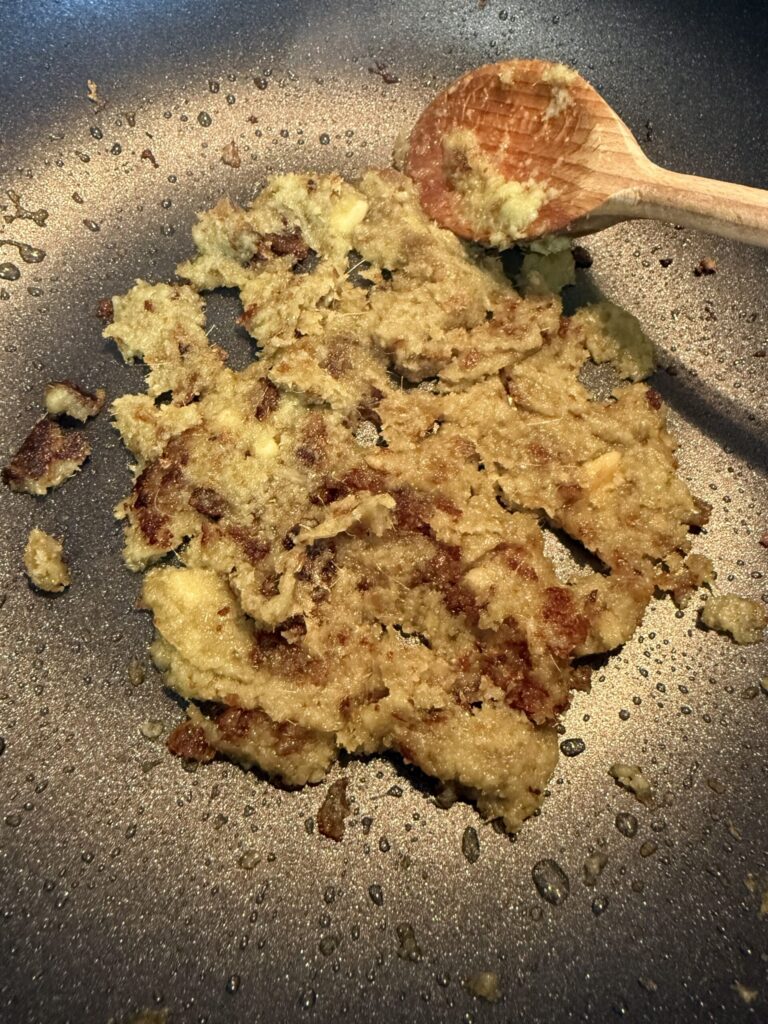
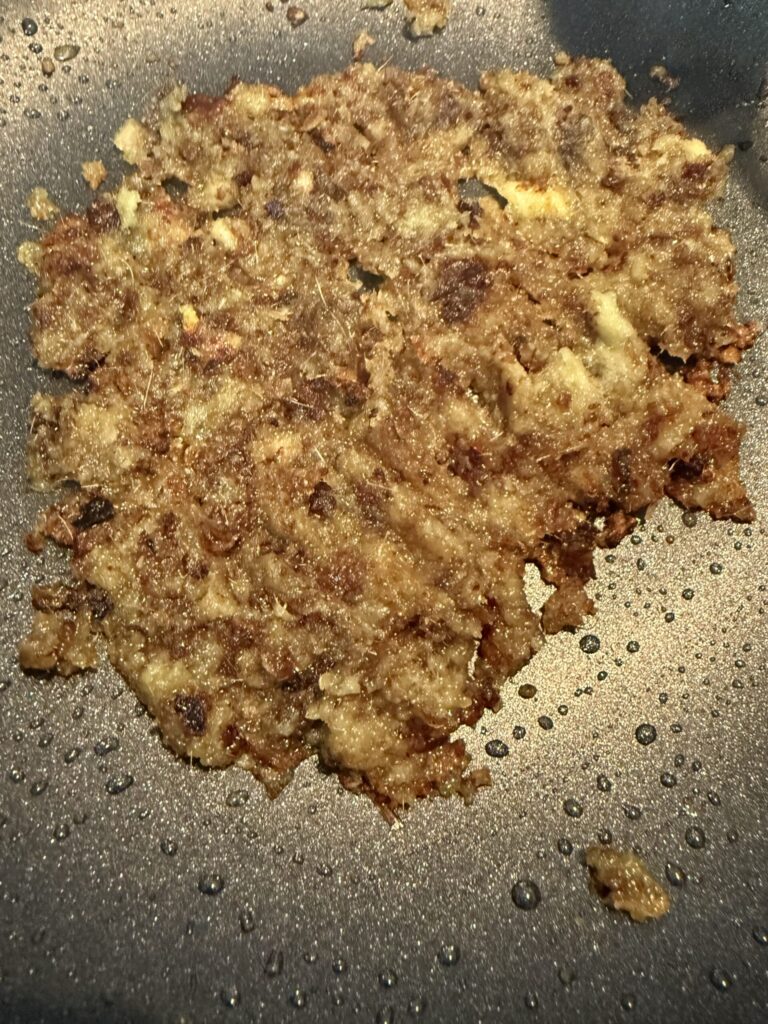
Mine started off much wetter than I wanted because I had to add extra water to get my blender moving. At first the paste was steaming more than frying. I kept cooking and stirring it until the extra water evaporated, then the rempah began to brown.
If yours looks like my first photo, don’t throw it out. It simply needs more time. Once the visible moisture has cooked off, the oil can fry the paste more effectively and the color will deepen. The second and third photos show the change as mine cooked down.
Does Kapitan Chicken Have Coconut Milk?
No, and that’s what made me want to try this Malaysian kapitan recipe. Many Penang Nyonya kari kapitan recipes do contain coconut milk. A traditional recipe collected by the Penang Peranakan Association includes thick coconut milk, and recipes vary considerably between families.
My tested recipe doesn’t contain any. I made it with water instead, so the sauce is less creamy and the rempah remains more concentrated. If you’re familiar with a coconut-milk kari kapitan, this is why mine looks different.
Tips for the Best Kari Kapitan
- Drain the chilies after soaking: There’s no reason to add their soaking water to the blender.
- Add extra blender water gradually: If 2 tablespoons isn’t enough to get your blender moving, add only what you need and allow more time for the rempah to cook afterwards.
- Wait for the water to cook off: A wet rempah will steam first. Keep stirring until it looks darker and no longer has obvious excess moisture.
- Keep the chicken at a steady simmer: Check the thickest pieces and cook them to an internal temperature of 165°F (74°C).
- Add the lime juice at the end: This gives the finished curry a vibrant citrusy taste.
Substitutions and Variations
- Macadamia nuts: Use these in place of candlenuts if you can’t find candlenuts.
- Less chili heat: Use fewer dried chilies or remove some of the seeds before soaking them.
- Dairy-free: The recipe contains no dairy ingredients as written.
- Gluten-free: The main ingredients don’t contain wheat, although you should check the label on your belacan if you need the dish to be strictly gluten-free.
- Coconut milk: Many traditional recipes contain it, although I haven’t tested a coconut-milk quantity with this exact recipe and don’t want to invent one.
Equipment
You need a blender or food processor for the rempah and a wok or large saucepan for cooking the curry. A mortar and pestle is another option for making the paste if you want to grind it by hand.
What to Serve with Kari Kapitan
- With rice: Steamed jasmine rice is an easy choice because it soaks up the reduced sauce.
- With flatbread: Tear up some roti canai and use it for scooping up the rempah.
- With something pickled: My Malaysian acar adds cucumber, carrot, cabbage and pineapple in a sweet-sour dressing.
- For more chili: Add a little sambal belacan at the table.
How to Store
- Make ahead: Make the rempah up to 2 days ahead and keep it covered in the refrigerator.
- Refrigerate: Keep leftover kari kapitan in an airtight container for up to 3 days.
- Freeze: Freeze cooled portions for up to 2 months.
- Reheat: Warm it gently on the stovetop, adding a small splash of water if the sauce has become too thick. Reheat the chicken to 165°F (74°C).
Kari Kapitan FAQs
Many Penang Nyonya recipes do contain coconut milk. This recipe doesn’t though, so the rempah and cooking liquid reduce into a more concentrated sauce.
The blender may have needed too much liquid, or the shallots and other fresh ingredients may have released plenty of moisture. Just keep cooking and stirring until the excess water evaporates before waiting for the paste to brown. Trust the process!
It should look darker than it did when it first went into the pan and shouldn’t have obvious watery liquid around it. A very wet paste needs more time before it can fry effectively in the oil.
The exact origin of the name isn’t settled. Kapitan was a historical title, including in Chinese communities in Southeast Asia, while other popular stories connect the name with a ship’s captain.
You can use boneless chicken, although smaller pieces may cook sooner than bone-in pieces. Check the thickest pieces and make sure the chicken reaches 165°F (74°C).
More Penang and Nyonya Recipes
Another tasty Nyonya main dish is babi pongteh, which gives you a different aspect of the cuisine with pork, potatoes and fermented soybean paste. Penang assam laksa gives you the sour fish-based side of Penang cooking, while char kway teow is one of its best-known noodle dishes. You can find all of these and more in my Malaysian recipes collection.

Kari Kapitan (Penang Nyonya Chicken Curry)
Ingredients
- 8 dried red chilies, soaked and drained
- 4 shallots
- 4 garlic cloves
- 2 lemongrass stalks, white part only
- 1 inch (2 ½ cm) fresh ginger
- 4 candlenuts or macadamia nuts
- 1 teaspoon toasted belacan
- 1 teaspoon ground turmeric
- 2 tablespoons water
- 2 tablespoons vegetable oil
- 1 ½ pounds (700g) chicken pieces
- 1 cup (240ml) water
- 2 makrut lime leaves (kaffir lime leaves)
- 1 tablespoon lime juice
- 1 teaspoon sugar
- Sliced scallions (spring onions)
- Chopped cilantro (fresh coriander)
- Fried shallots
Equipment
- Blender
- Food processor
- Mortar and pestle
- Wok or large saucepan
Method
- Make the Spice Paste: Blend the soaked and drained chilies, shallots, garlic, lemongrass, ginger, candlenuts, belacan, turmeric and 2 tablespoons water until smooth.
- Cook the Rempah: Heat the vegetable oil in a wok or large saucepan over medium heat.
- Add the spice paste and cook for 8 to 10 minutes, stirring frequently. If you added extra water while blending, continue cooking until that water has evaporated and the paste has darkened.
- Cook the Chicken: Add the chicken and stir until the pieces are coated in the rempah.
- Add the water and makrut lime leaves. Simmer until the chicken is cooked through and the sauce has reduced around it. Check the thickest pieces reach 165°F (74°C).
- Finish the Curry: Stir in the lime juice and sugar. Taste and adjust if needed, then serve hot with rice.
Notes
- If your blender struggles with this fairly small quantity of rempah, add extra water a little at a time. More water won’t ruin the paste, although you’ll need to cook it for longer before it begins to brown.
- Many Penang Nyonya kari kapitan recipes contain coconut milk. This tested recipe doesn’t, so the sauce is more concentrated and less creamy.
- Macadamia nuts can replace the candlenuts.
- Keep leftovers refrigerated for up to 3 days or freeze for up to 2 months.