Malaysian Beef Rendang
This post contains affiliate links. As an Amazon Associate I earn from qualifying purchases.
Beef rendang is cooked low and slow until the coconut milk reduces and the spices concentrate into a thick coating around the meat. It starts off like a curry, but keeps going until most of the liquid is gone and the flavor deepens.
My version focuses on a traditional Malaysian approach, where the paste is cooked first and the beef is left to simmer steadily until tender. The same paste works for chicken as well, although the cooking time is shorter. If you’re exploring Malaysian dishes, asam pedas is another one worth trying.
Why Beef Rendang is Different
Rendang isn’t meant to stay saucy. The liquid reduces gradually until the oil separates and the mixture thickens around the beef.
That reduction changes everything. Early on, it smells fresh and aromatic. Later, it turns darker and more concentrated, and the flavor becomes much more intense.
What Happens During Cooking
The long simmer is doing two things at once. It tenderizes the beef and reduces the coconut milk into a thick, spiced coating.
If you stop too early, the sauce will still be loose and the flavor won’t be as developed. Letting it cook longer is what gives rendang its depth.
What It Tastes Like
Rendang has a deep, savory flavor with coconut, chilies, lemongrass and warm spices running through it. It’s rich, but not in the same way as a creamy curry.
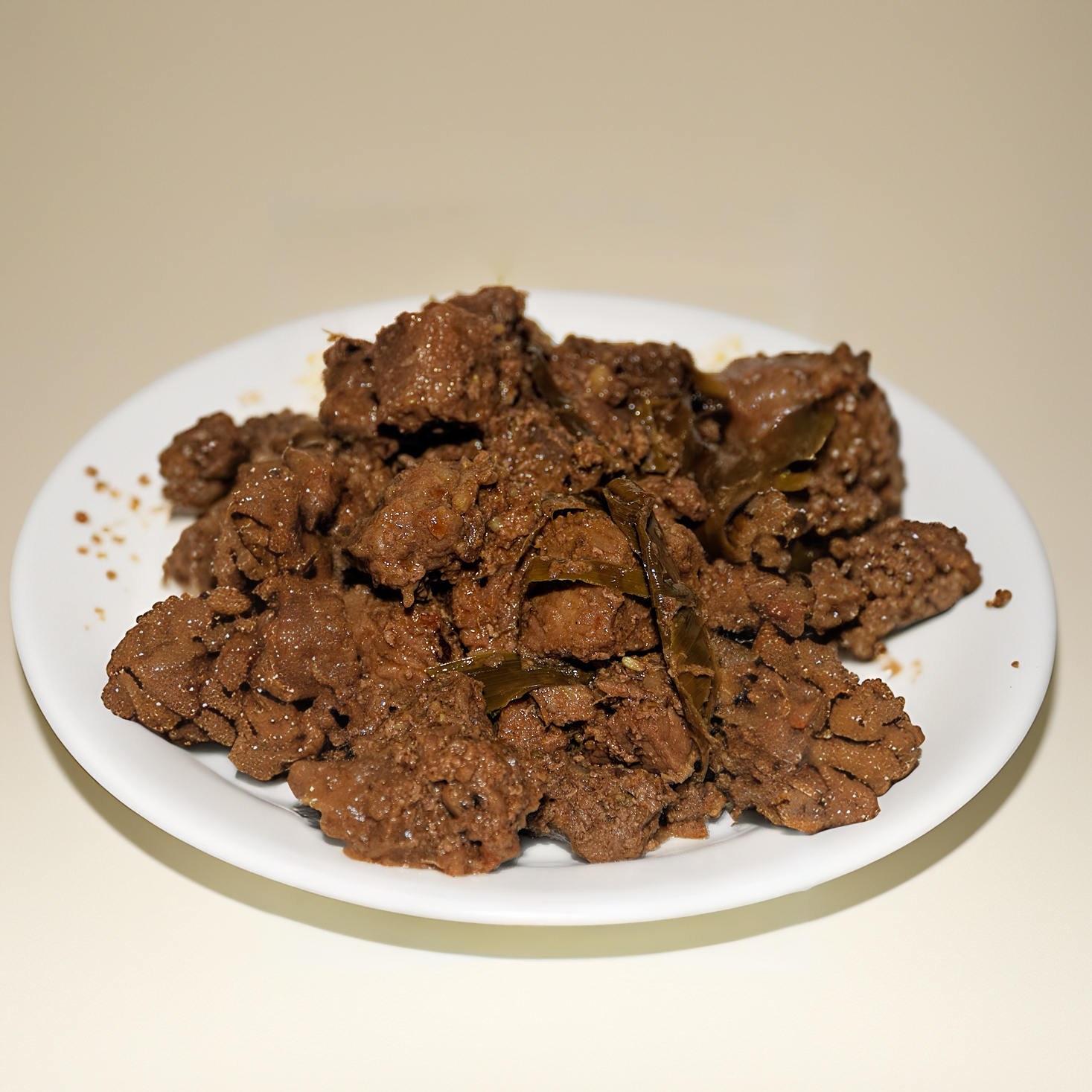
By the end, the beef is coated in a thick mixture that’s concentrated and aromatic, with a balance of heat, spice and slight sweetness.
Key Ingredients
- Beef or chicken: Beef is traditional and works best for long cooking, while chicken cooks faster
- Coconut milk: Forms the base and reduces as it cooks
- Lemongrass: Adds a citrus note that lifts the dish
- Galangal: Brings a sharper, more peppery flavor than ginger
- Dried chilies: Provide heat and color
Ingredient Spotlight: Beef
Cuts with some connective tissue work best here. They hold up during the long cooking time and become tender as the sauce reduces.
As the liquid cooks down, the beef absorbs the paste and ends up coated rather than sitting in a sauce.
What Makes the Biggest Difference?
The paste needs to be smooth and properly cooked at the start. If it’s undercooked, the final dish won’t have the same depth.
After that, it’s about steady heat. Not rushed, not aggressively boiling, just enough to keep it reducing.
Tips for Best Results
- Blend the paste well: A smooth paste cooks more evenly
- Cook the paste first: This deepens the flavor before adding liquid
- Simmer gently: Strong heat can dry it out too quickly
- Stir occasionally: Helps prevent sticking as it thickens
Variations and Substitutions
If you can’t find galangal, ginger will get you close, although the flavor is slightly different.
For a milder version, reduce the dried chilies, but not too much or the paste loses character.
Chicken, lamb or tofu can also be used instead of beef, with adjustments to cooking time.
How to Tell When Rendang is Done
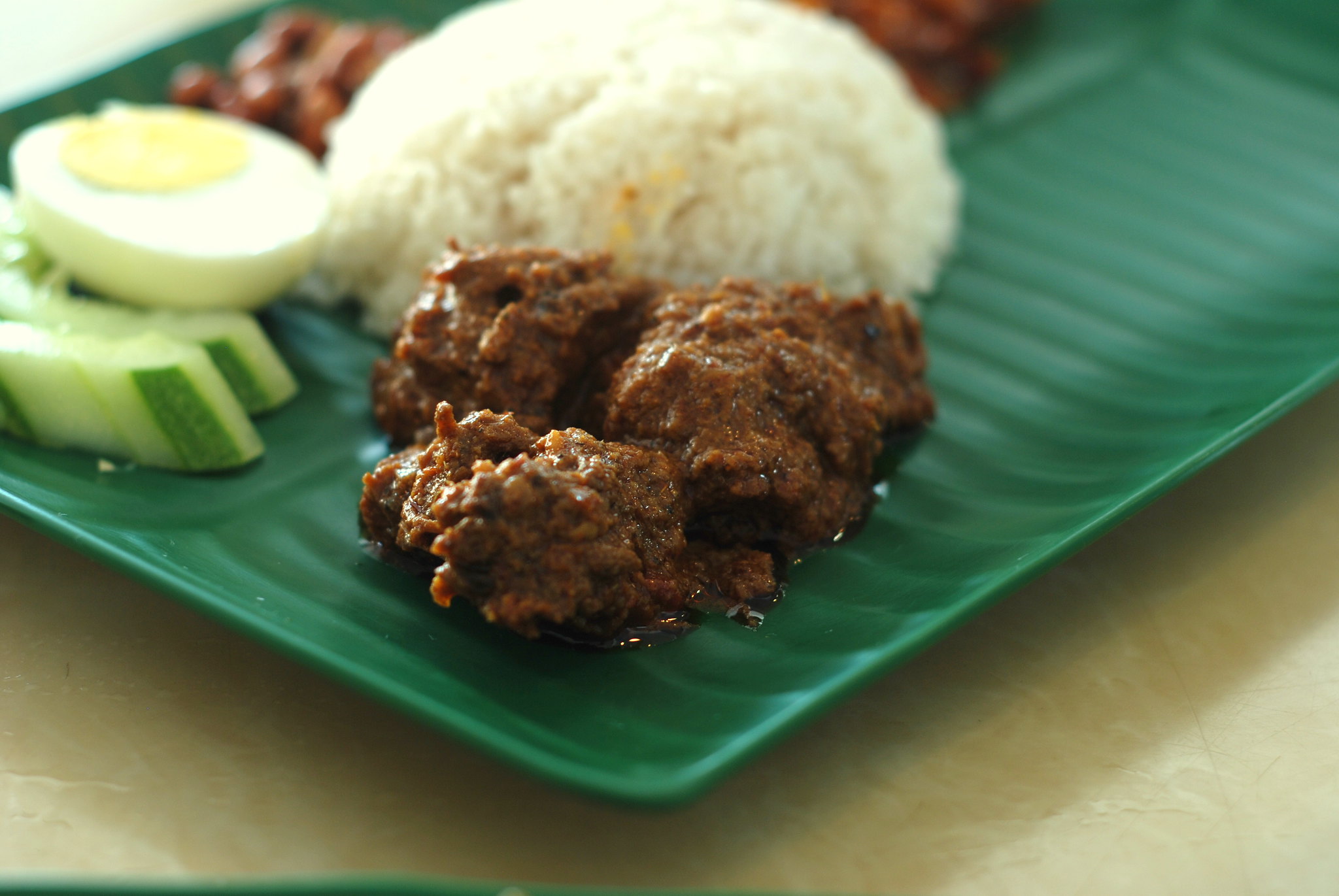
The sauce should be thick and clinging to the beef rather than pooling in the pan.
You should also see some oil separating at the edges.
If it still looks like a curry, give it some more time.
What to Serve with Beef Rendang
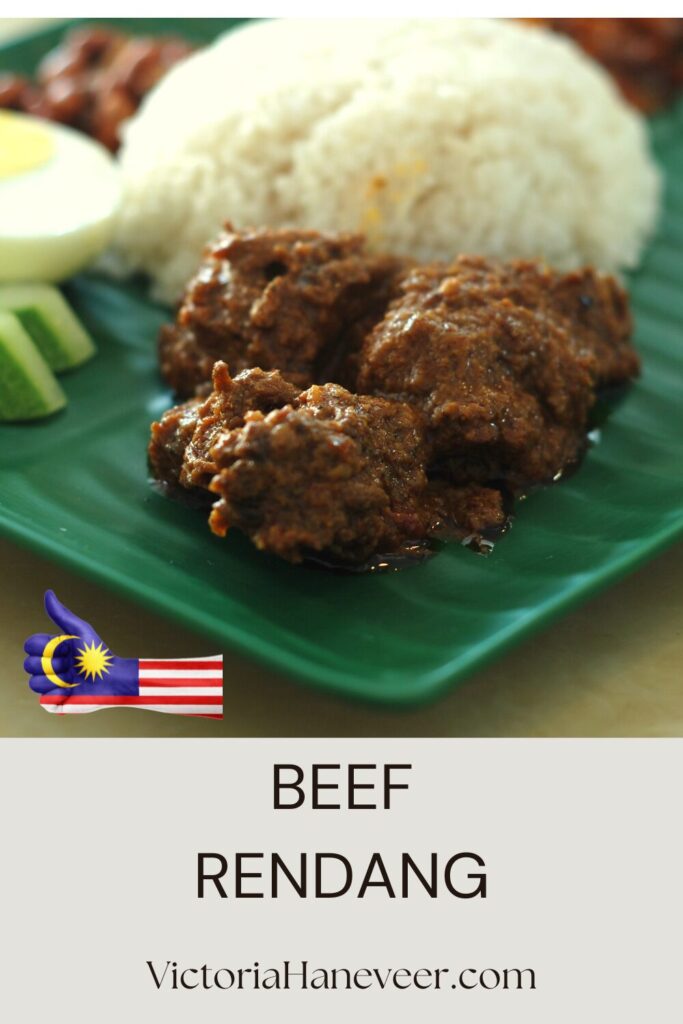
Rice is the standard pairing because it balances the richness.
It’s also commonly served with sambal, cucumber or other Malaysian dishes. Nasi lemak works well alongside it, and sambal belacan adds extra heat. If you prefer tangy pickled veggies, pair it with acar.
Rendang vs Curry
Rendang starts like a curry but doesn’t stay that way. The liquid keeps reducing until the sauce thickens and coats the meat.
A curry usually keeps more sauce in the pan. Rendang keeps cooking until the mixture becomes concentrated and clings to the beef.
Make Ahead and Storage
- Make Ahead: Rendang often tastes better the next day as the flavors settle and deepen.
- Fridge: Store in a sealed container for up to 3 days.
- Freezer: Freeze for up to 2 months.
- Reheat: Reheat gently on the stove. Add a splash of water if it has thickened too much.
Rendang FAQs
Is beef rendang supposed to be dry?
It shouldn’t be dry, but it should be much thicker than a typical curry, with very little loose sauce left.
Can I make rendang with chicken?
Yes. Chicken rendang is common and cooks faster while still absorbing the same flavors.
More Malaysian Recipes
You might also enjoy otak otak, kari kapitan and nasi goreng. Babi pongteh is another slow-cooked Malaysian main, using pork belly and tauchu in place of rendang’s spice and coconut base.
More Beef Recipes to Try
If steak and beef recipes make you happy, you might also enjoy this easy Crockpot coffee braised beef roast, homemade beef broth in a slow cooker, beef stew and dumplings, or these beef and cabbage wontons with ginger. Not in a beef mood? Try Hainanese chicken rice.
Malaysian Beef Rendang
Ingredients
- 1 ½ pounds (680g) beef chuck, cut into cubes
- 1 ½ cups (360ml) coconut milk
- 1 cup (240ml) water
- 2 kaffir lime leaves
- 1 tablespoon tamarind paste
- 1 teaspoon sugar
- Salt, to taste
- 6 dried red chilies
- 6 shallots
- 4 garlic cloves
- 1 inch (2 ½ cm) galangal
- 1 inch (2 ½ cm) ginger
- 2 stalks lemongrass
- 1 tablespoon shrimp paste
- 1 tablespoon vegetable oil
- Sliced red chili
- Cilantro (fresh coriander)
- Lime wedges
Method
- Blend the spice paste ingredients until smooth.
- Heat oil in a pan and cook the spice paste until fragrant.
- Add the beef and stir to coat it with the paste.
- Pour in the coconut milk and water and add the lime leaves.
- Simmer gently for 1 ½ to 2 hours until the beef is pull-apart tender.
- Continue cooking until the sauce thickens and coats the meat.
- Taste and adjust seasoning before serving.
Notes
History of Beef Rendang
Rendang originated with the Minangkabau people of Sumatra and spread across the Malay world through trade and migration.
The cooking method developed as a way to preserve meat by slowly reducing coconut milk and spices until the mixture became concentrated.
Today it appears across Malaysia in both everyday cooking and special occasions, with variations using different proteins but the same slow reduction technique.
Images from Flickr