Roti Canai – Flaky Malaysian Flatbread

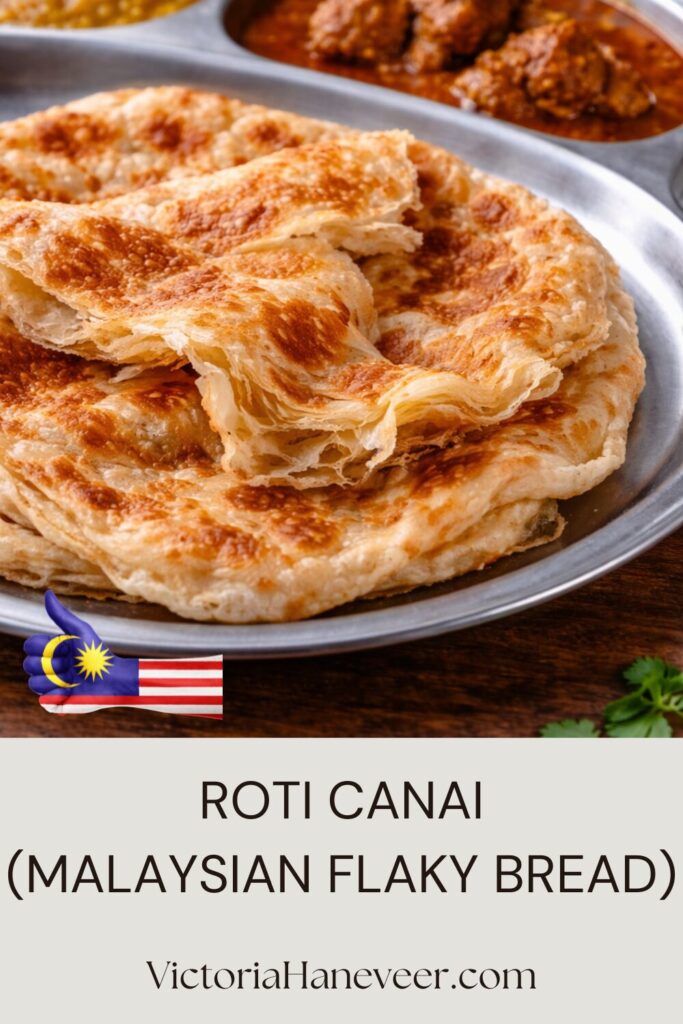
Malaysian roti canai on a metal platter with curry in the background.

Roti canai is a flaky Malaysian flatbread cooked on a hot griddle and served with curry or dhal for dipping. The dough is stretched thin, folded and fried so the finished bread develops crisp layers outside and soft layers inside.

It’s one of the most recognizable Malaysian breakfast foods and appears in restaurants, street stalls, hawker centers and neighborhood cafes across the country.

You’ll often see this flat bread served with dhal or chicken curry, sometimes alongside sambal or sugar depending on the style. The dough rests before cooking so it can be stretched into very thin sheets, which creates the layered texture once it’s folded and cooked.

If you’re exploring Malaysian cooking, you might also enjoy dishes like kari kapitan, which is another curry commonly served with roti.

Dish Overview

Roti canai is cooked on a flat griddle and flipped until crisp and golden. The dough is stretched very thin before being folded, which creates the layered structure that makes the bread flaky.

It’s commonly eaten for breakfast in Malaysia but also appears as a snack or casual meal throughout the day. Many people order it with dhal, curry or a simple dipping sauce.

Roti Canai Takeaways

Cooking method: Thin dough stretched, folded and pan-fried on a hot griddle
Key flavor elements: Buttery dough, crisp layers, mild saltiness
Typical serving style: Served with dhal, curry or sambal for dipping

About Malaysian Cuisine

This dish is part of Malaysia’s diverse culinary tradition, which blends Malay, Chinese, Indian and Peranakan influences. If you’re exploring Malaysian cooking, see the full guide to traditional dishes here: Malaysian Recipes: Traditional Regional Dishes Explained.

What This Dish Is

This bread is associated with Malaysian Indian Muslim cooking, often called Mamak cuisine. It developed from Indian flatbread traditions but evolved locally into its own style.

You’ll find it across Malaysia in casual restaurants where cooks stretch the dough by hand and cook it quickly on a hot griddle.

What It Tastes Like

Roti canai has a crisp exterior and soft layered interior. The flavor is mild and slightly buttery, which makes it work well with rich curries and spicy sauces.

People who enjoy flatbreads like paratha will usually like this bread as well. The layered texture and hot griddle cooking give it a distinctive bite.

Key Ingredients

Flour: Forms the base of the dough and creates the layered structure once stretched and folded
Water: Hydrates the dough and helps develop elasticity
Egg: Adds richness and softness to the bread
Oil: Helps the dough stretch thin and contributes to crisp layers
Salt: Balances the dough and brings out the flavor of the bread

Ingredient Spotlight: Flour

Flour is the structural foundation of this flat bread. The dough must develop enough elasticity to stretch very thin without tearing. This elasticity is what allows cooks to pull the dough into large sheets before folding it.

Similar dough techniques appear in other Malaysian breads influenced by Indian cooking traditions.

Tips for Best Results

Rest the dough: Let the dough rest long enough so it stretches easily without tearing
Use enough oil: Oil keeps the dough flexible and prevents sticking during stretching
Cook on high heat: A hot griddle creates the crisp exterior that defines good roti canai

Freshly cooked roti canai flaky flatbread on griddle.

Variations and Substitutions

If you can’t find Malaysian curry: Serve it with any mild curry or lentil dhal
If you want roti canai dhal: Prepare a simple lentil curry for dipping
If you want a sweet version: Sprinkle sugar over the hot bread and fold before serving

Make Ahead and Storage

Make Ahead: The dough can be mixed and refrigerated overnight before stretching and cooking
Fridge: Cooked roti canai can be stored for up to 2 days
Freezer: Freeze cooked roti between sheets of parchment for up to 2 months
Reheat: Warm in a skillet until the layers crisp again

What to Serve with It

This authentic Malaysian roti canai recipe is most often eaten with dhal or curry. Many Malaysian meals include it alongside sambal or simple vegetable dishes.

Roti Canai vs Paratha

Roti canai and paratha both come from Indian flatbread traditions, but the Malaysian version is stretched thinner and folded differently. The cooking style and layering technique create a lighter texture compared to many paratha versions.

Malaysian roti canai is also strongly associated with curry dipping sauces such as roti canai dhal.

Roti Canai Sauce and Curry Pairings

Roti canai is rarely eaten on its own. The flatbread is usually served with small bowls of curry or dhal for dipping, and many people mix the sauces together on the plate.

One of the most common pairings is roti canai dhal, a lentil curry that balances the richness of the bread. Chicken curry is another popular option, especially in Mamak restaurants where roti canai and curry are cooked side by side.

Some versions of roti canai sauce include a light fish curry, while others use a thicker Malaysian chicken curry. The bread works well with both because the layered dough absorbs the sauce easily.

Malaysian Roti Canai Dhal

Dhal is one of the most traditional accompaniments for this bread. The lentils are simmered with spices, onion and sometimes coconut milk until soft and slightly thick.

The mild flavor of dhal contrasts with the buttery bread, which is why this combination appears in many Malaysian breakfasts. A small bowl of dhal is usually served next to the bread so pieces of roti canai can be torn off and dipped.

Curry Pairing Options

Many restaurants offer several curry options alongside. The bread can be dipped into whichever curry the diner prefers.

Chicken curry is the most common pairing, but fish curry and vegetable curry also appear frequently. These sauces are often thinner than typical curries so the bread absorbs the flavor easily.

If you want to recreate the experience at home, serve it with Malaysian chicken curry or dhal and a small spoonful of sambal on the side.

Authentic Malaysian Roti Canai Technique

The distinctive texture of this flaky bread comes from the way the dough is stretched. Instead of rolling it with a pin, cooks pull the dough outward until it becomes very thin.

The sheet is then folded repeatedly before cooking on a hot griddle. This folding process creates the flaky layers that define an authentic Malaysian roti canai recipe.

In Malaysia the bread is often flipped and folded again after cooking, which separates the layers slightly before serving.

Why Roti Canai is So Popular in Malaysia

It’s widely available across Malaysia, from roadside stalls to busy city cafes. It is especially associated with Mamak restaurants, where cooks prepare the bread in view of customers.

The combination of crisp bread and curry dipping sauces makes it appealing at any time of day. Many people eat it for breakfast, but it also appears as a late-night snack or casual meal.

Roti Canai FAQs

What is this bread like?
Roti canai is a Malaysian flatbread made from a stretchy dough that is folded and cooked on a griddle until crisp and layered.

Is roti canai the same as paratha?
They are related but not identical. Roti canai developed in Malaysia while paratha originates in India and uses slightly different dough handling techniques.

More Malaysian Recipes

Explore more traditional dishes in the Malaysian recipe collection:
Beef Rendang
Sambal Belacan
Char Kway Teow

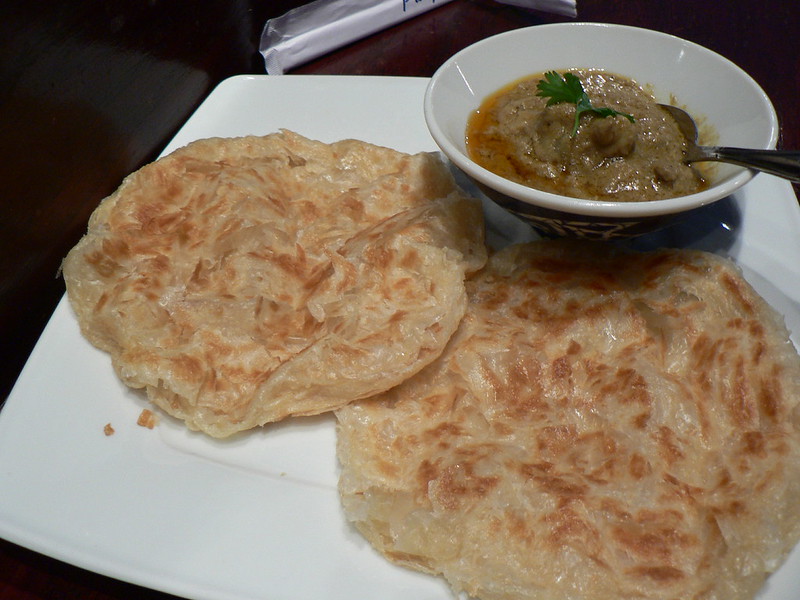
Roti canai on a white plate with a bowl of curry for dipping.

Image from Flickr

Roti Canai vs Roti Prata

These two breads are closely related flatbreads with the same origins in South Indian cooking traditions. Both are made from a stretchy dough that is pulled thin, folded into layers and cooked on a hot griddle.

The main difference is regional naming. In Malaysia the bread is known as roti canai, while in Singapore it’s usually called roti prata. The cooking method is very similar, although prata is sometimes made slightly thicker and may include fillings such as egg, onion or cheese.

Both versions are served with curry or dhal and eaten by tearing pieces of the bread and dipping them into the sauce.

How It’s Made in Mamak Restaurants

In Malaysian Mamak restaurants, roti canai is prepared in front of customers using a stretching technique that turns small balls of dough into thin sheets.

The cook presses and pulls the dough outward until it becomes almost translucent. The sheet is then folded into layers and placed on a hot flat griddle.

Once cooked, the bread is often clapped between the hands to loosen the layers before serving. This step separates the flaky layers and gives roti canai its recognizable texture.

Why the Dough Needs to Rest

Resting the dough is one of the most important steps when making roti canai. The resting period allows the gluten in the dough to relax so the dough stretches without tearing.

If the dough is used too soon, it will shrink back and resist stretching. After resting, it becomes flexible enough to pull into the thin sheets required for layered roti canai.

Many cooks rest the dough for at least one hour, though longer resting times can make the stretching process even easier.

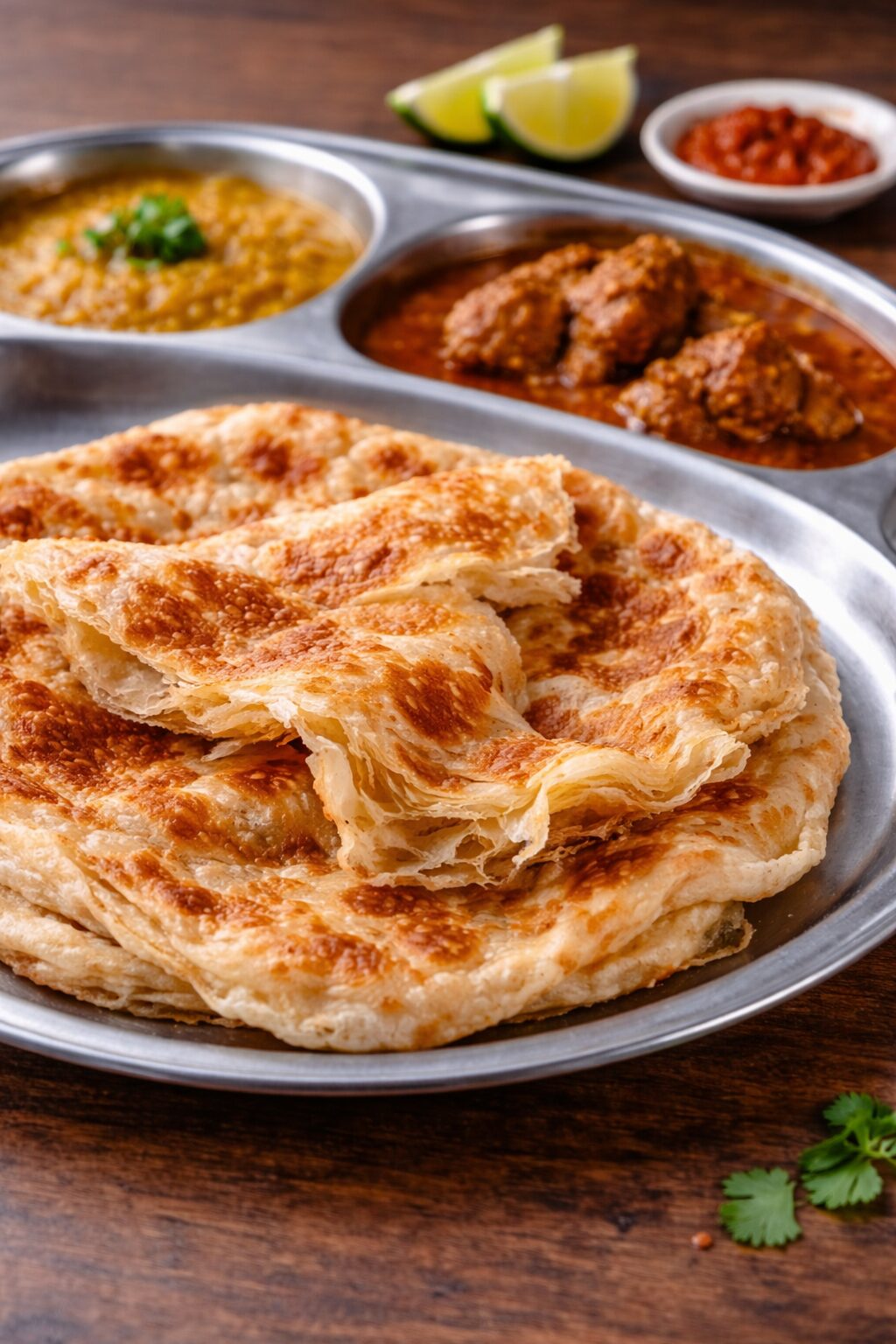
Malaysian roti canai on a metal platter with curry in the background.

Roti Canai

Roti canai is a Malaysian flatbread made from a simple dough that's stretched thin, folded and cooked on a hot griddle. The finished bread has crisp outer layers and soft inner layers and is usually served with dhal or curry.
Prep Time 30 minutes
Cook Time 20 minutes
Resting Time 1 hour 30 minutes
Total Time 2 hours 20 minutes
Servings: 6
Course: Bread, Side Dish
Cuisine: Malaysian

Ingredients
 

  • 2 cups (250g) all-purpose flour
  • 1 teaspoon salt
  • 1 egg
  • 3 tablespoons oil
  • ¾ cup (180ml) water
For Serving
  • 1 cup (240ml) dhal or curry
Optional Garnishes
  • Cilantro (fresh coriander)
  • Lime wedges
  • Sambal

Method
 

  1. Combine the flour and salt in a bowl.
  2. Add the egg, oil and water and mix until a soft dough forms.
  3. Knead until smooth and elastic.
  4. Divide the dough into small balls and coat lightly with oil.
  5. Rest the dough for at least 1 hour so it stretches easily.
  6. Stretch each dough ball into a thin sheet.
  7. Fold the sheet into layers and shape into a flat circle.
  8. Cook on a hot griddle until golden on both sides.
  9. Serve hot with curry or roti canai dhal.

Notes

A flat griddle or heavy skillet works best for cooking roti canai.

History of Roti Canai

Roti canai developed in Malaysia through Indian Muslim cooking traditions. Early migrants from South India brought flatbread techniques with them, particularly the methods used for layered breads such as paratha.

Over time these techniques adapted to local ingredients and cooking styles, eventually evolving into the Malaysian version known as roti canai.

Rise of Mamak Restaurants

As the dish spread across Malaysia, it became closely linked with Mamak restaurants, casual eateries run by Malaysian Indian Muslim communities.

These restaurants often prepare roti canai in open kitchens where cooks stretch and flip the dough in full view of customers before cooking it on a hot griddle.

A Malaysian Everyday Food

The bread gradually became popular beyond its original community. Its simple ingredients and satisfying texture made it a natural fit for street stalls and neighborhood cafes.

Today roti canai is eaten across Malaysia at any time of day, especially for breakfast or late-night meals.

Roti canai is commonly served with dhal, chicken curry or other Malaysian curries, and many people tear pieces of the bread and dip them directly into the sauce.

Although its roots come from Indian flatbread traditions, the Malaysian version has developed its own identity and remains one of the most recognizable dishes in Malaysian Indian Muslim cuisine.


Leave a Reply

Your email address will not be published. Required fields are marked *

Recipe Rating