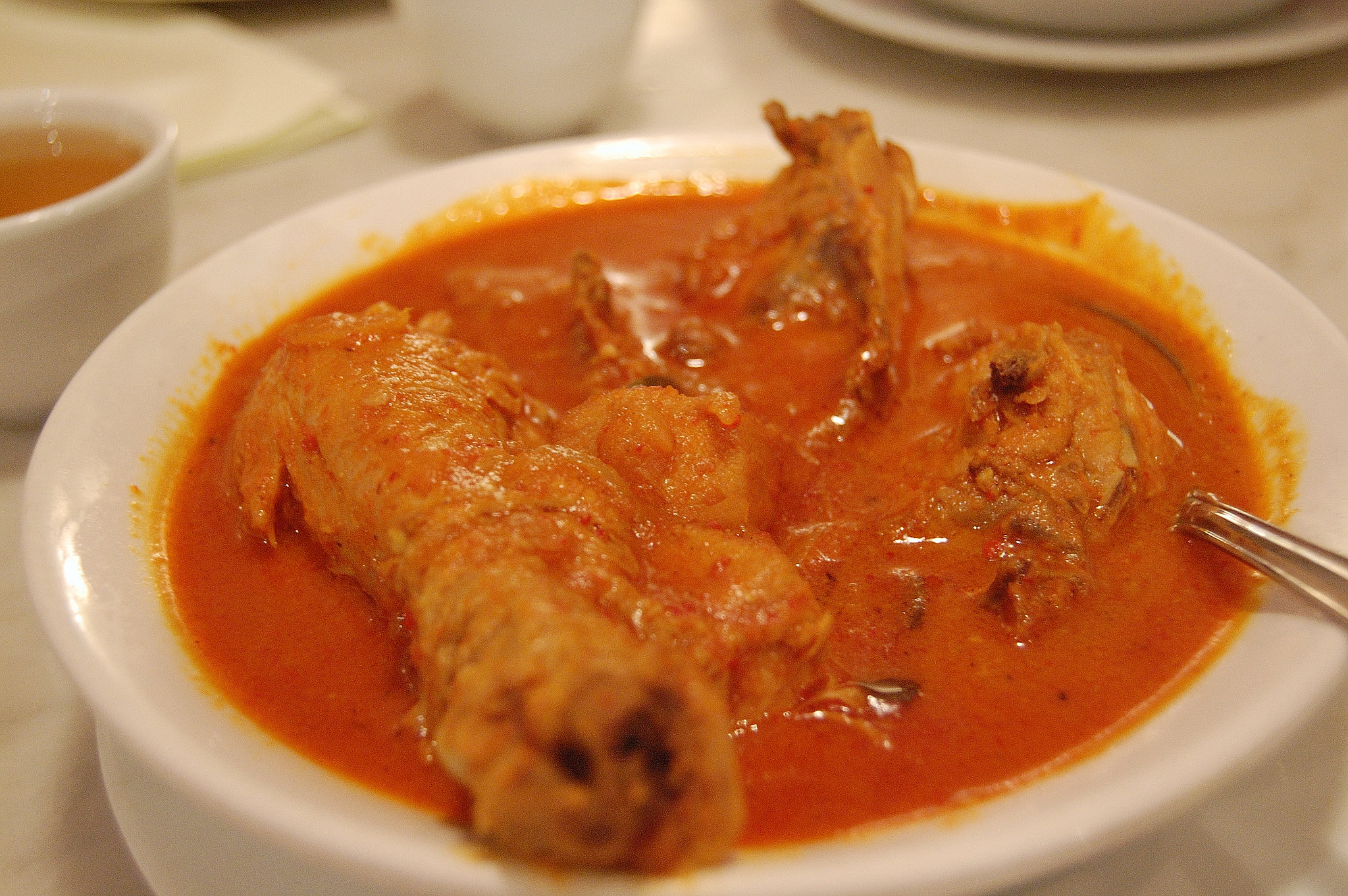
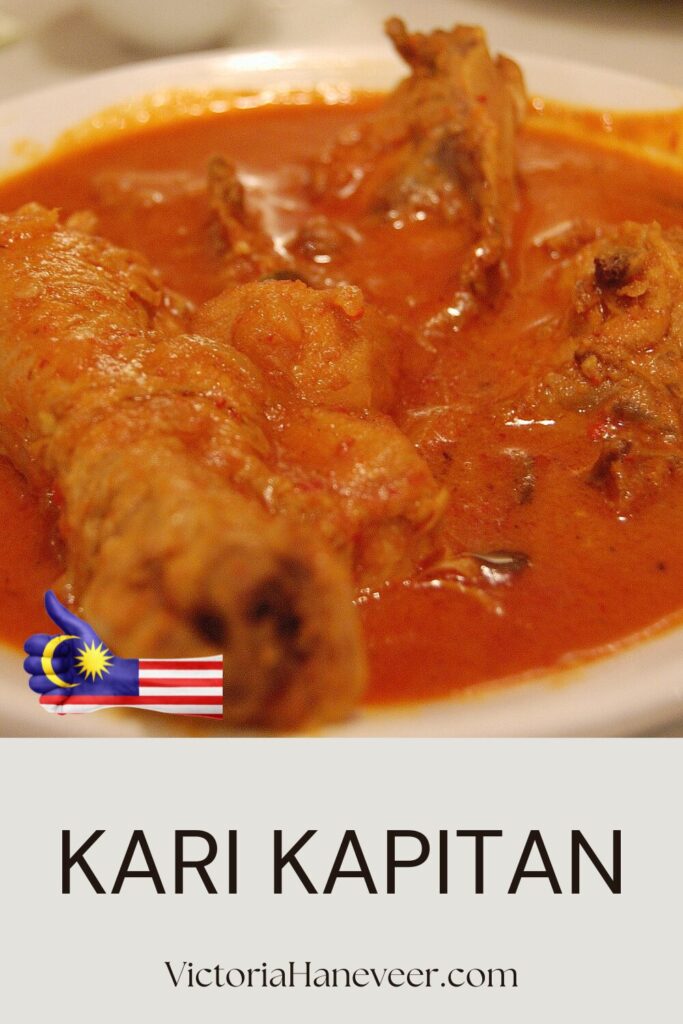
Kari kapitan is a thick, aromatic Peranakan chicken curry built around a cooked spice paste rather than a sauce heavy with coconut milk. The paste coats the chicken closely and carries the flavors of chilies, lemongrass and toasted aromatics.
This curry has a deeper, more concentrated flavor compared to looser coconut-based versions. The shrimp paste adds savoriness, dried chilies bring warmth, and lime leaves lift everything with a fresh citrus note.
It’s often described as a Penang Nyonya chicken curry and is one of the dishes closely linked to Peranakan cooking traditions. For more traditional dishes from across the country, visit the Malaysian recipes hub.
What This Dish Is
Kari kapitan, also known as ayam kapitan, is a Peranakan chicken curry from Penang and other regions where Nyonya cuisine developed. It combines Chinese cooking techniques with Malay ingredients and flavors.
It’s usually served with rice and often appears as part of a larger meal with condiments and side dishes.
What It Tastes Like
The flavor is savory, aromatic and moderately spicy. The spice paste gives it depth, while lemongrass and lime leaves add a fresher edge.
If you enjoy curries where the paste does most of the work rather than the liquid, this is a good one to try.
Key Ingredients
Dried red chilies: Provide the base heat and color for the paste. They’re usually soaked before blending.
Belacan: Fermented shrimp paste that adds strong savory depth. It’s typically toasted first.
Candlenuts: Help thicken the paste and give it a slightly creamy texture.
Lemongrass: Adds a citrusy aroma. Only the softer inner portion is used.
Lime leaves: Bring a distinct fresh citrus fragrance that lifts the curry.
Tips for Best Results
Toast the belacan: This mellows the aroma and deepens the flavor.
Blend the paste well: A smoother paste cooks more evenly and gives a better texture.
Cook the paste slowly: Fry until fragrant and slightly darker to remove any raw taste.
Use bone-in chicken: It adds more flavor as the curry simmers.
Variations and Substitutions
If candlenuts aren’t available: Macadamia nuts work as a substitute and give a similar texture.
If you want less heat: Reduce the dried chilies or remove their seeds before soaking.
For a different protein: Shrimp, firm white fish or tofu can be used instead of chicken.
How Kari Kapitan Is Made
The spice paste is blended, then cooked until fragrant and slightly darker. Chicken is added and simmered until coated and cooked through, with the sauce reducing and thickening as it cooks.
The final curry is thick enough to cling to the chicken rather than pooling around it.
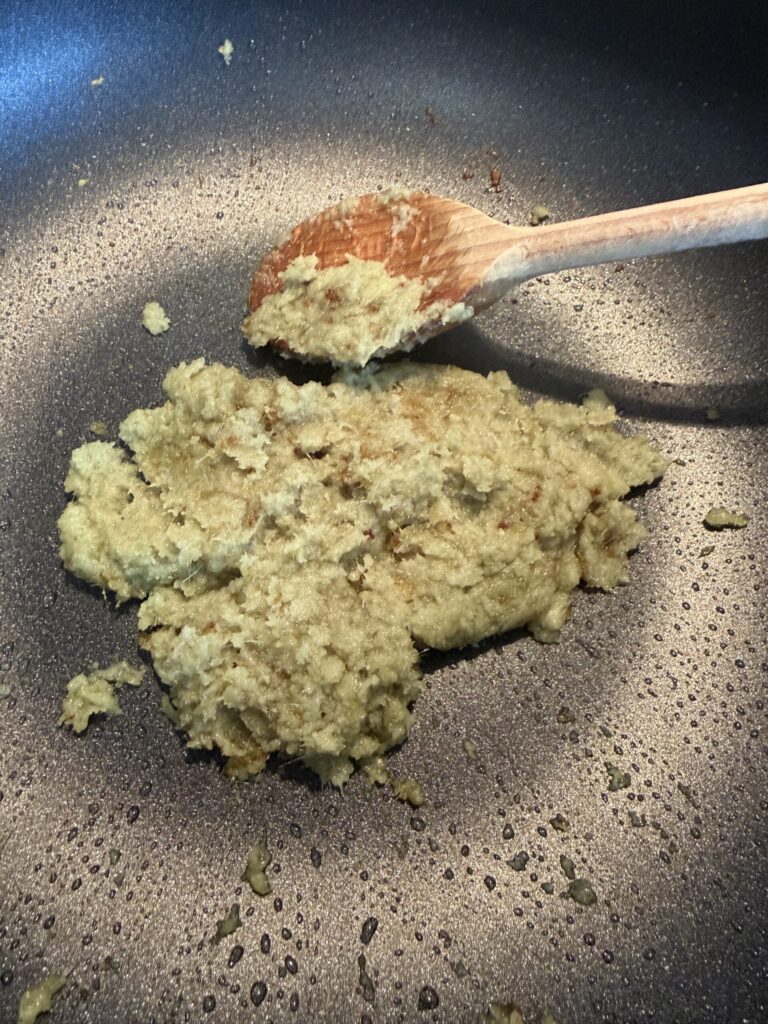
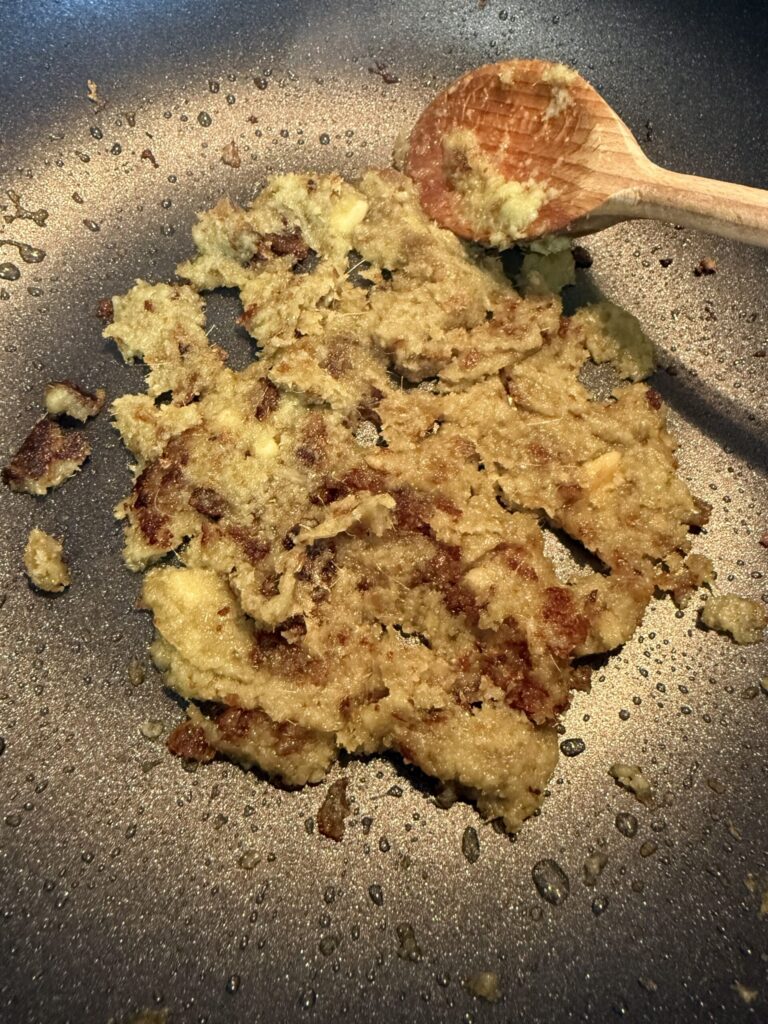
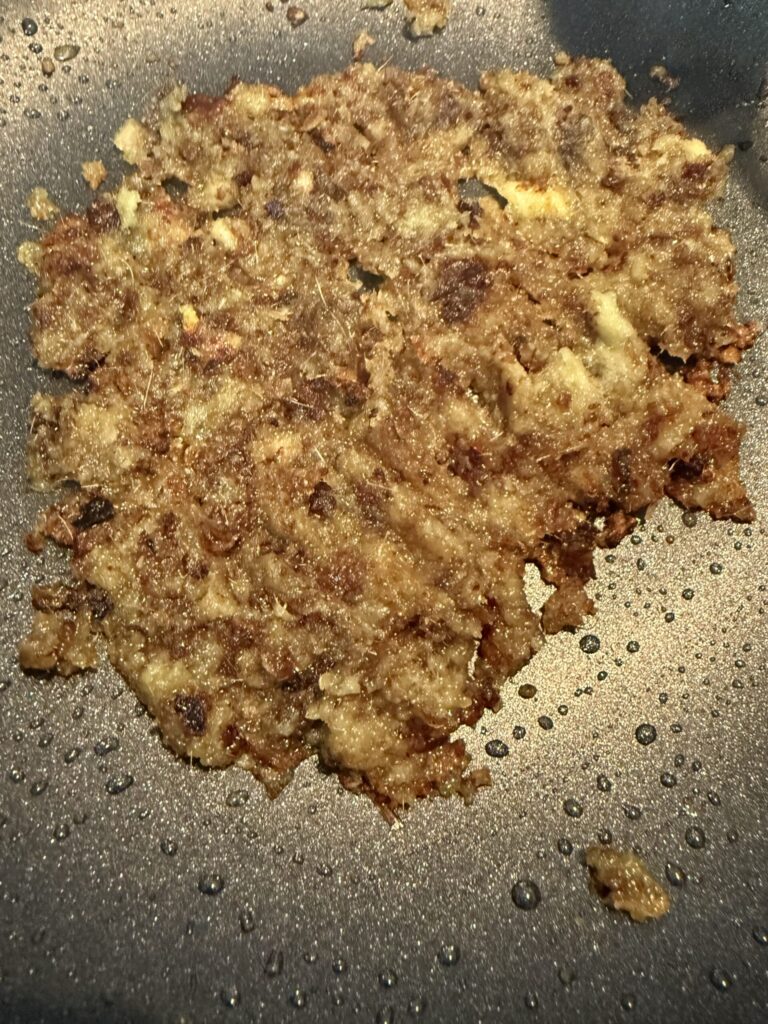
I had to add a little water to get my rempah to blend smoothly. If you also do that, cook it for longer in the pan. The water will evaporate and the mixture will gradually brown.
Kari Kapitan
Ingredients
- 8 dried red chilies, soaked
- 4 shallots
- 4 cloves garlic
- 2 stalks lemongrass, white part only
- 1 inch (2 ½ cm) ginger
- 4 candlenuts (or macadamia nuts)
- 1 teaspoon toasted belacan
- 1 teaspoon ground turmeric
- 2 tablespoons water
- 2 tablespoons vegetable oil
- 1 ½ pounds (700 g) chicken pieces
- 1 cup (240 ml) water
- 2 kaffir lime leaves
- 1 tablespoon lime juice
- 1 teaspoon sugar
- sliced scallions
- chopped cilantro
- fried shallots
Method
- Blend the soaked chilies, shallots, garlic, lemongrass, ginger, candlenuts, belacan, turmeric and water until smooth.
- Heat oil in a wok or saucepan over medium heat.
- Cook the spice paste for about 8 to 10 minutes, stirring frequently until fragrant and slightly darker.
- Add the chicken and stir to coat it with the paste. Add water and kaffir lime leaves.
- Simmer until the chicken is fully cooked and the sauce thickens.
- Stir in lime juice and sugar. Taste and adjust seasoning if needed.
- Serve hot with rice.
Notes
- A blender or food processor makes the spice paste easiest to prepare. A mortar and pestle can also be used for a more traditional method.
- Image Credit: Old China Cafe by chee.hong
How to Store It
Make Ahead: The spice paste can be prepared up to 2 days in advance and kept refrigerated.
Fridge: Store leftovers in an airtight container for up to 3 days.
Freezer: Freeze portions for up to 2 months.
Reheat: Warm on the stovetop over low heat, adding a little water if needed.
What to Serve with It
Steamed jasmine rice is the usual pairing. It also works with sambal belacan on the side, and something fresh or pickled can help balance the stronger flavors.
Kari Kapitan FAQs
Is kari kapitan the same as Malaysian chicken curry?
No. It’s thicker and more focused on the spice paste rather than a coconut-based sauce.
Why is it called kapitan curry?
The name is linked to the historical title Kapitan Cina, used for leaders of Chinese communities.
Is kari kapitan spicy?
It’s moderately spicy, but the heat level depends on how many chilies are used.
Can it be made with coconut milk?
Some versions include a small amount, but it’s not the main base of the curry.
More Malaysian Recipes
If you’re exploring Malaysian cooking further, try dishes like Penang assam laksa, sambal belacan, asam pedas and char kway teow.
History of Kari Kapitan
Kari kapitan comes from the Peranakan or Nyonya culinary tradition, where Chinese cooking methods were adapted using local Malaysian ingredients. This style of cooking developed in places like Penang and Malacca.
The name “kapitan” is often linked to the historical title “Kapitan Cina,” which referred to leaders within Chinese communities during colonial times. One explanation is that this dish was prepared for important guests or community figures, although the exact origin isn’t fully documented.
What sets it apart from many Southeast Asian curries is the emphasis on a cooked spice paste rather than a coconut-heavy sauce. Today it remains a well-known example of Peranakan cooking, with variations between households but the same core approach.