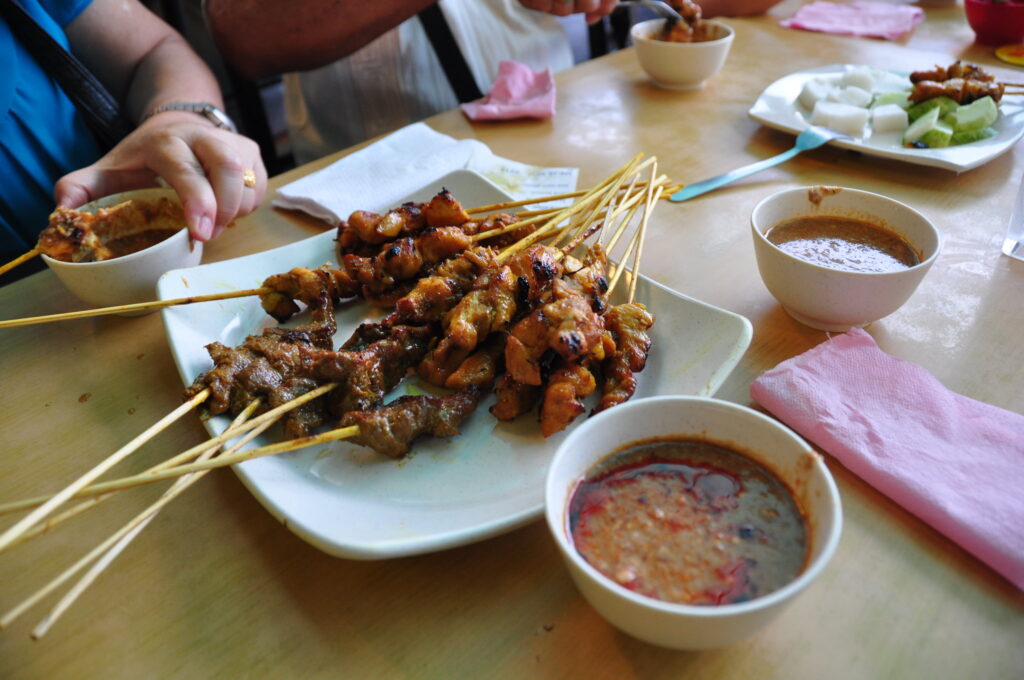
Satay is one of those dishes you notice before you even see it. The skewers hit the grill and you get that mix of smoke, caramelized marinade and fat dripping onto the heat. It’s usually served in small batches, straight off the grill, with peanut sauce, cucumber and onion on the side.
What makes it memorable isn’t just the meat. It’s the contrast. The skewers pick up a bit of char, the sauce is rich and nutty, and the fresh sides keep everything from getting too heavy. After a few bites, you start to notice how balanced it is.
What is Satay?
Satay is a Southeast Asian dish of marinated meat threaded onto skewers and grilled over high heat. In Malaysia, it’s most often made with chicken or beef and served with a peanut-based dipping sauce. You’ll find it at markets, hawker stalls and restaurants, usually cooked over charcoal and served hot in small batches.
The meat is marinated first, usually with turmeric, garlic, shallots, soy sauce and a little sugar. Some versions also use lemongrass or coriander for extra flavor. It’s then grilled quickly so the outside picks up some color while the inside stays juicy. For more dishes like this, take a look at the Malaysian recipes hub.
Why I Keep Coming Back to This Dish
This is one of those dishes that doesn’t need much explaining once you’ve had it. The marinade is simple, the cooking is quick, and the result is consistent every time.
It’s also very hands-on. You’re turning skewers, watching the heat, brushing the meat as it cooks. It feels more like cooking than just putting something in the oven and waiting.
Satay at a Glance
- Cooking method: Grilled skewered meat
- Key flavors: Savory marinade, light char and nutty peanut sauce
- Typical serving style: Skewers served hot with peanut sauce, cucumber and onion
What It Tastes Like
The meat has a slightly smoky edge from the grill, with a gentle spice from the marinade rather than anything overpowering. The peanut sauce adds most of the richness, with a mix of sweet, salty and a bit of heat from ingredients like chili, sugar and sometimes tamarind.
When you add cucumber or onion between bites, it resets everything so nothing builds up too much.
What to Expect When Cooking It
Most of your time will go into slicing and marinating the meat. Once it’s on the grill, it cooks quickly, so keep an eye on it and don’t let it burn.
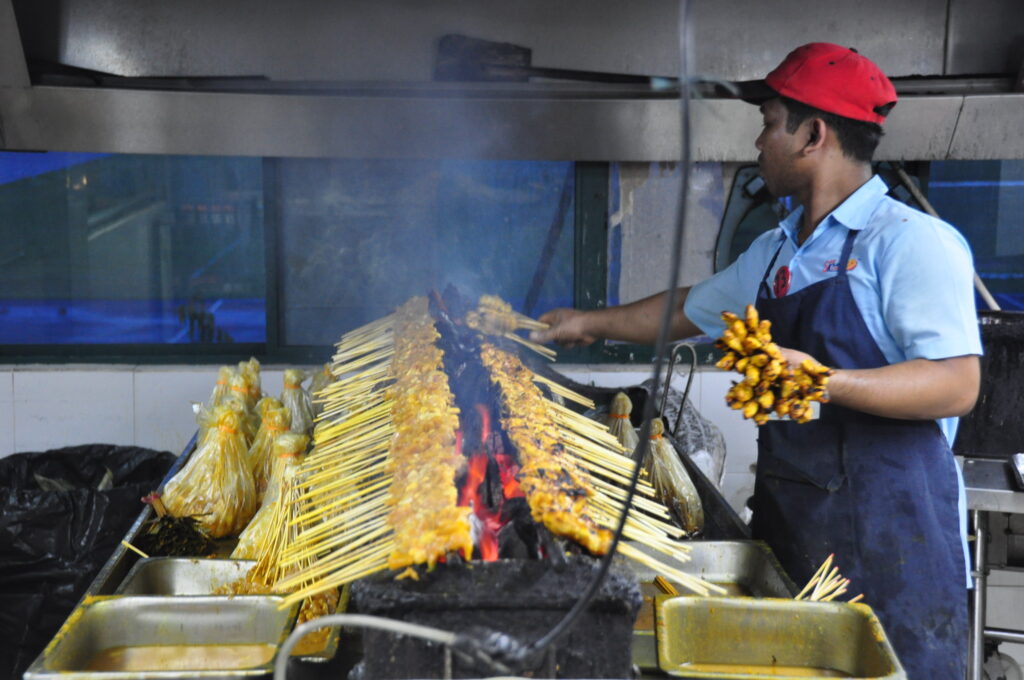
If you’re grilling over charcoal, you’ll hear the fat hitting the coals and smell the marinade catching at the edges.
If you’re using wooden skewers, soak them first or they’ll scorch before the meat is done. It also helps to keep a little oil or reserved marinade nearby for light basting while the satay cooks.
Key Ingredients
- Chicken or beef: Cut into small, even pieces so they cook quickly.
- Turmeric: Adds color and a mild earthy note.
- Garlic and shallots: Form the base of the marinade.
- Soy sauce and sugar: Add seasoning and a little sweetness to the meat.
- Peanut butter: Used for the sauce, giving it body and richness.
- Coconut milk: Helps bring the sauce together and smooth it out.
Ingredient Spotlight: Peanut Sauce
Peanut sauce is what most people remember. It’s not just peanut butter. It’s built with aromatics, a bit of sweetness and enough liquid to loosen it into a spoonable sauce. Depending on the version, you might also taste chili, tamarind or soy in the background.
If you want a faster option, you can use this shortcut version:
How to Make Satay Sauce in 2 Minutes Using 3 Ingredients
How to Make Satay
- Prepare the marinade: Blend or finely chop garlic, shallots and turmeric, then mix with soy sauce, sugar and oil.
- Marinate the meat: Coat the meat and leave it so the flavor soaks in.
- Skewer the meat: Thread onto skewers in small, even pieces.
- Make the sauce: Heat peanut butter with coconut milk and seasonings until smooth.
- Baste as needed: Brush lightly with oil or marinade while grilling to keep the surface glossy and flavorful.
- Grill: Cook over medium-high heat, turning often.
- Serve: Plate with sauce and fresh sides.
Tips for Best Results
- Cut evenly: Smaller, even pieces cook at the same rate.
- Leave space on skewers: Helps the heat reach all sides.
- Control the heat: Too high and the outside burns before the inside cooks.
- Keep the sauce moving: Stir gently so it stays smooth.
- Use the right skewers: Bamboo skewers are traditional, but metal skewers work well too and won’t need soaking.
Variations and Substitutions
- Different protein options: Chicken, beef or tofu all work.
- No grill available: Use a grill pan or broiler.
- Milder version preferred: Reduce the chili in the sauce.
How to Store It
- Make ahead option: Marinate the meat in advance and keep it chilled.
- Refrigerate: Cooked satay keeps for up to 2 days.
- Freeze: Marinated raw meat can be frozen for up to 1 month.
- Reheat gently: Warm without overcooking.
Common Mistakes to Avoid
- Skipping the marinade time: The flavor won’t develop properly.
- Using large chunks: They cook unevenly and stay pale.
- Overcooking: The meat dries out quickly if left too long.
- Thick sauce: If it gets too thick, add a splash of coconut milk or water to loosen it.
What to Serve with Satay
Satay is often served with rice cakes, cucumber and onion. It also works alongside dishes like curry puffs, nasi goreng or roti canai if you’re putting together a larger spread. A spoonful of sambal on the side works well too if you want a little more heat.
Malaysian vs Indonesian Satay
The first time I tried satay was in Malaysia. Later I had it in Indonesia, and then again in Holland where Indonesian food is very well known. There are some clear differences between these styles once you’ve eaten both.
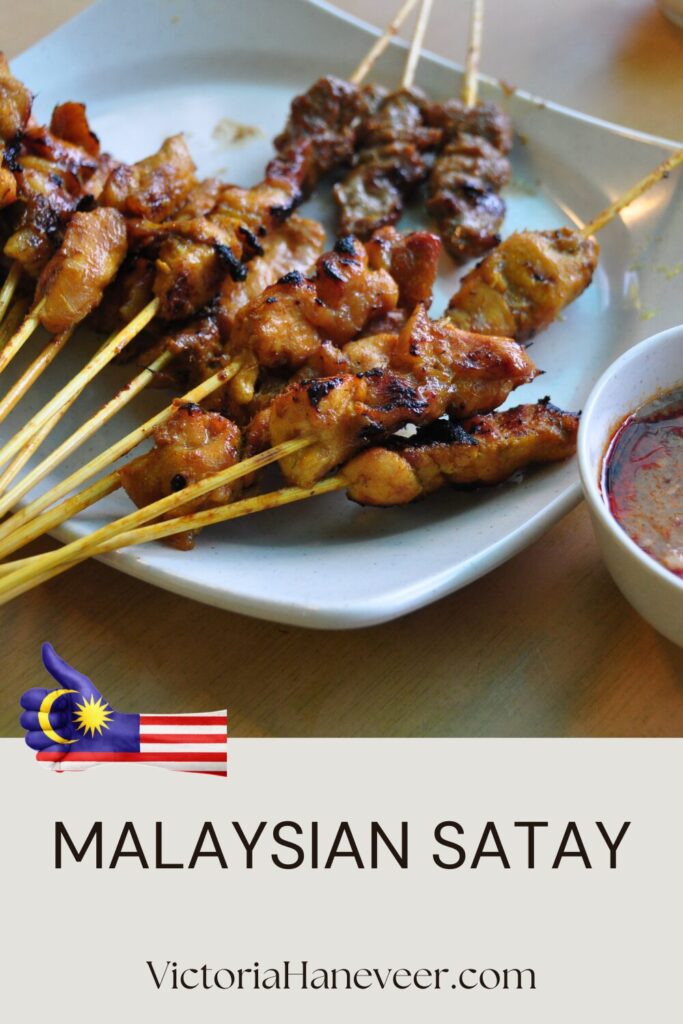
Malaysian satay tends to be lighter and more uniform. The marinade usually has turmeric with a gentle sweetness and a fairly simple spice mix that won’t overpower the meat.
The skewers are neat and tightly packed with small, even pieces, most often chicken or beef. They’re grilled over charcoal and lightly basted, giving a clean, slightly smoky finish without too much caramelization.
The peanut sauce is a big part of the experience here, thick and smooth with coconut milk, balanced between sweet, salty and a mild heat, and served generously on the side with cucumber, onion and often ketupat (compressed rice cubes).
Indonesian satay varies a lot more depending on the region, and that shows in both flavor and presentation. Marinades can include kecap manis or richer spice pastes, which gives a deeper, sweeter and more intense taste. The meat choices are broader too, from chicken and beef to goat, lamb or even offal, and the cuts can be larger or more irregular, sometimes even minced and shaped onto skewers.
It’s often basted repeatedly while grilling, so the outside turns darker, stickier and more caramelized. The sauces also differ, with some using peanut sauce, others soy-based sauces, sambal or even broth.
A quick way to tell which you’re eating is this: neat skewers with pale golden meat and a thick peanut sauce usually point to Malaysian, while a darker glaze, sweeter aroma and wider variety usually signal Indonesian.
When I lived in the Netherlands, the satay I usually came across was Indonesian in style, which makes sense given the colonial history between Holland and Indonesia. It often came with a generous pour of peanut sauce that was slightly sweeter than the Malaysian version, sometimes with a stronger hit of soy from kecap manis. The sauce was a bit looser too.
I remember seeing it everywhere from casual cafes to takeout counters, often paired with fries or bread instead of rice cakes, and it tended to have a darker, more glazed finish than the Malaysian satay recipes.
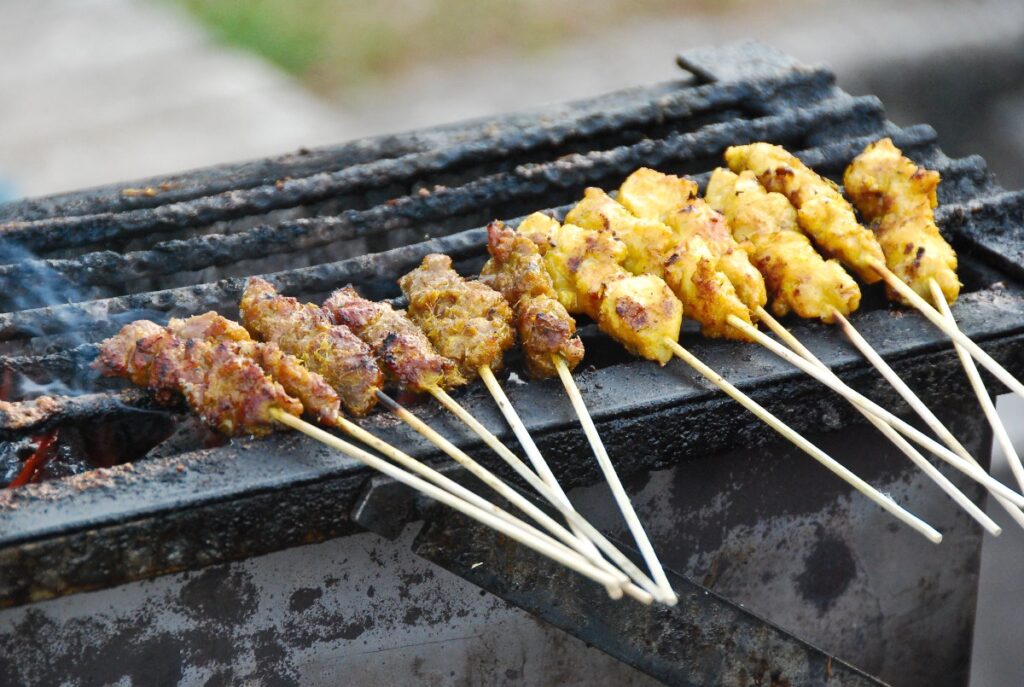
Photo Credit: 7041260 © Adlin Bin Hisyamuddin | Dreamstime.com
Satay FAQs
What meat is best for satay?
I’d say chicken thigh because it stays juicy, but beef works well too as long as you use something tender.
Is satay spicy?
It can be, but most of the heat comes from the sauce, so you can adjust it. I usually make mine mild to medium.
Can you make satay without a grill?
Yes. A grill pan or oven broiler works well if you don’t have an outdoor grill.
Can you freeze satay?
Yes. The marinated raw meat freezes well, and you can thaw it before skewering or grilling.
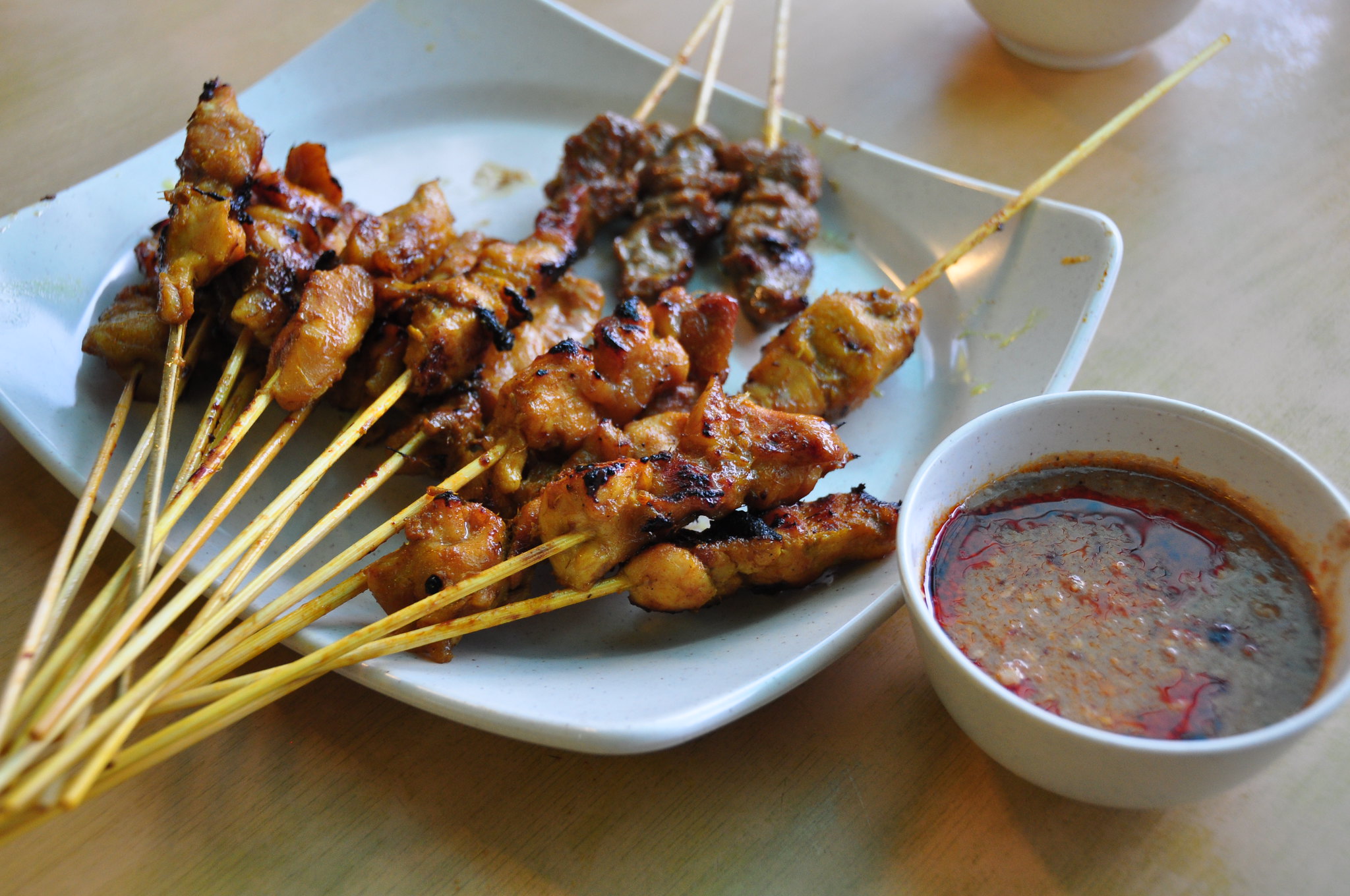
Satay with Malaysian Peanut Sauce
Ingredients
- 14 ounces (400g) chicken thighs, cut into small chunks
- 14 ounces (400g) beef, cut into small chunks
- 3 tablespoons coconut milk
- 2 tablespoons soy sauce
- 1 tablespoon sugar
- 1 tablespoon oil
- 2 cloves garlic, minced
- 1 tablespoon grated ginger
- 1 teaspoon ground turmeric
- 1 teaspoon ground coriander
- ½ teaspoon cumin
- ½ teaspoon chili powder
- Bamboo skewers, soaked in water
- 1 cup (250g) roasted peanuts, unsalted
- 1 cup (240ml) water
- 2 tablespoons oil
- 2 tablespoons finely chopped shallots
- 2 cloves garlic, minced
- 2 tablespoons tamarind water
- 1 to 2 tablespoons sugar
- 1 tablespoon soy sauce
- 2 tablespoons chili paste or sambal
- ½ teaspoon ground turmeric
- ½ cup (120ml) coconut milk
- ½ cucumber, sliced
- ½ red onion, cut into wedges
- Rice cakes (optional)
Method
- Mix the coconut milk, soy sauce, sugar, oil, garlic, ginger, turmeric, coriander, cumin and chili powder in a bowl.
- Add the chicken and beef, turning to coat well. Leave to marinate for at least 20 minutes.
- Thread the meat onto skewers, pressing pieces close together without compacting them.
- Blend the peanuts with water until smooth but slightly textured.
- Heat oil in a pan and cook the shallots and garlic until fragrant.
- Add the chili paste and turmeric, stirring briefly to release the aroma.
- Pour in the peanut mixture, then add tamarind water, sugar and soy sauce. Stir to combine.
- Simmer the sauce, stirring often, until thickened.
- Stir in the coconut milk and cook a few more minutes until smooth.
- Heat a grill pan or outdoor grill until hot.
- Cook the skewers, turning often, until the meat is cooked through with light charring on the edges.
- Serve the satay hot with peanut sauce, cucumber, red onion and rice cakes if using.
Notes
- Cut the meat into evenly sized pieces so it cooks at the same rate.
- If the sauce gets too thick, add a little water to loosen it.
- The finished sauce should balance sweet, savory, tangy and a gentle heat.
- For a shortcut, you can use this 3-ingredient satay sauce instead.
More Malaysian Recipes
If you’re exploring Malaysian cooking and like this recipe for Malaysian satay, nasi goreng is another well-known rice dish, while roti canai is a popular flatbread. You can find more in the Malaysian recipes hub.
History of Satay
Satay is widely thought to have developed in Indonesia before spreading across Southeast Asia and becoming a staple in Malaysia. Although I first tried it in Malaysia, its roots are generally traced back to Indonesia.
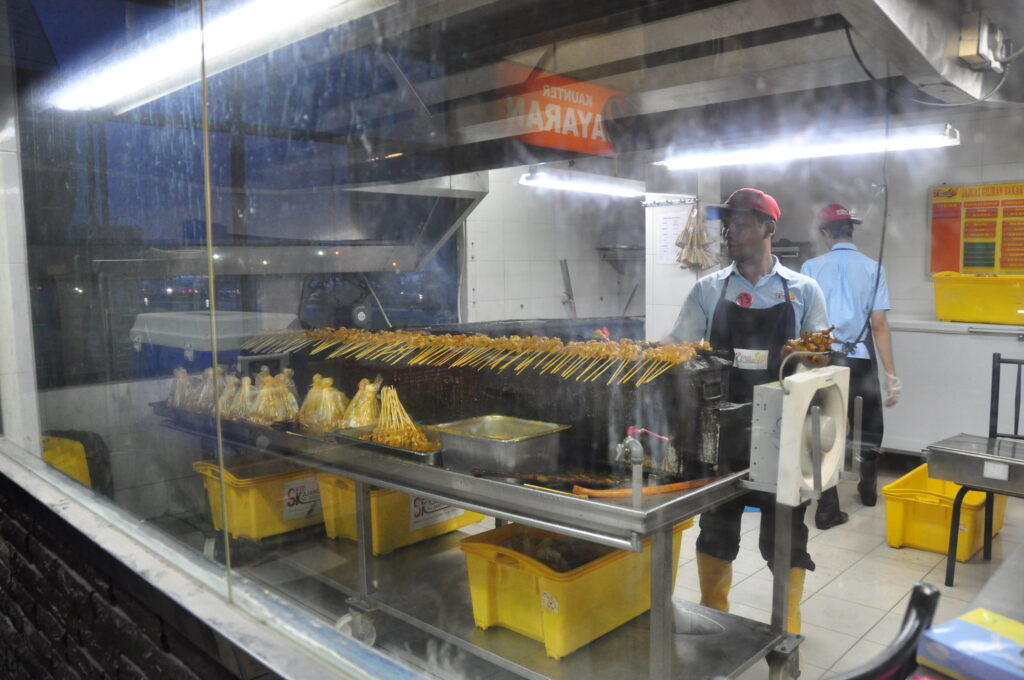
In Malaysia, satay became closely tied to street food culture, with vendors grilling skewers over charcoal and serving them fresh with peanut sauce and simple sides. Over time, it developed its own recognizable style, especially in places like Kajang, which is strongly associated with satay today.
Images from: Marufish on Flickr