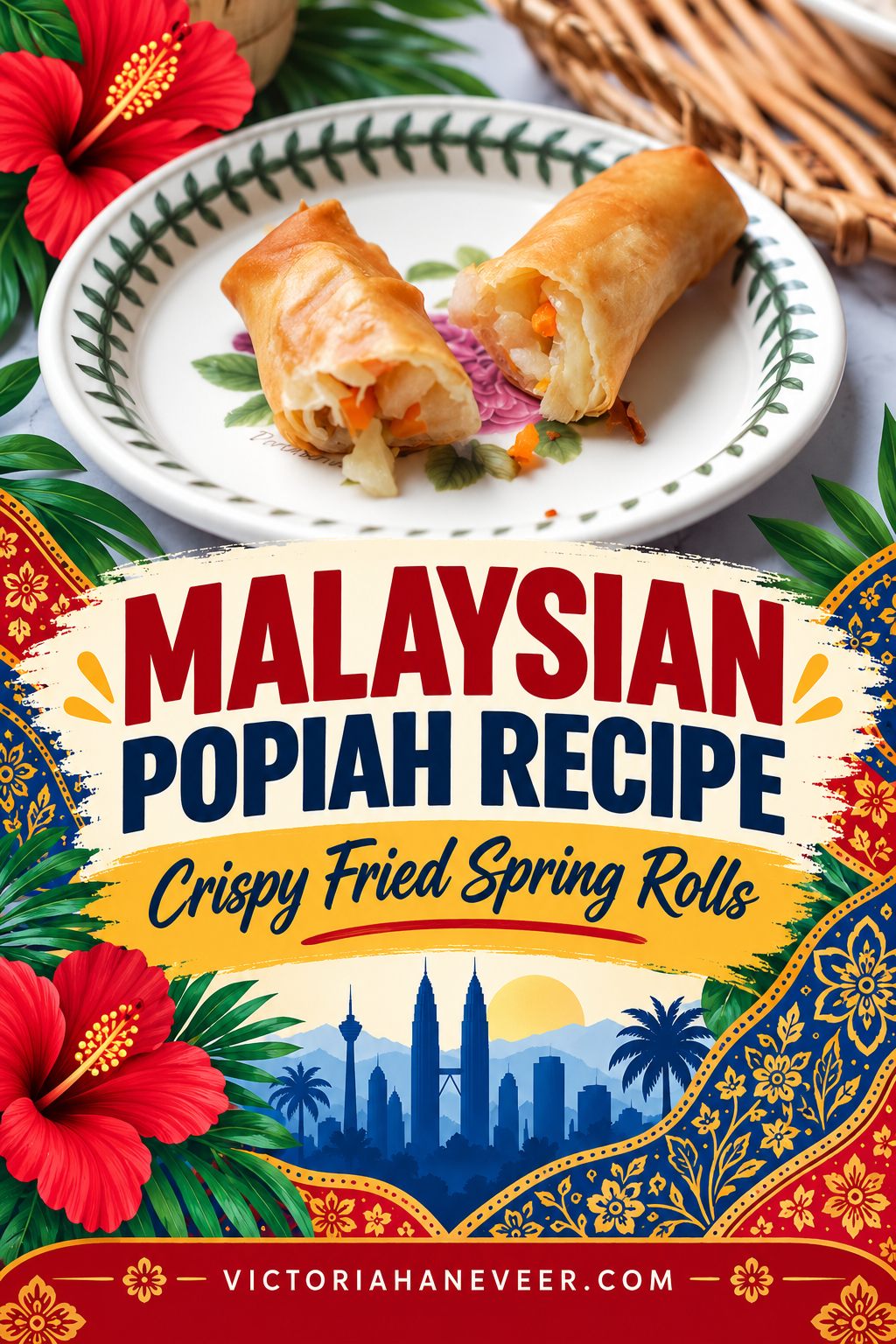
Malaysian Popiah Recipe (Crispy Fried Spring Rolls)
This post contains affiliate links. As an Amazon Associate I earn from qualifying purchases.
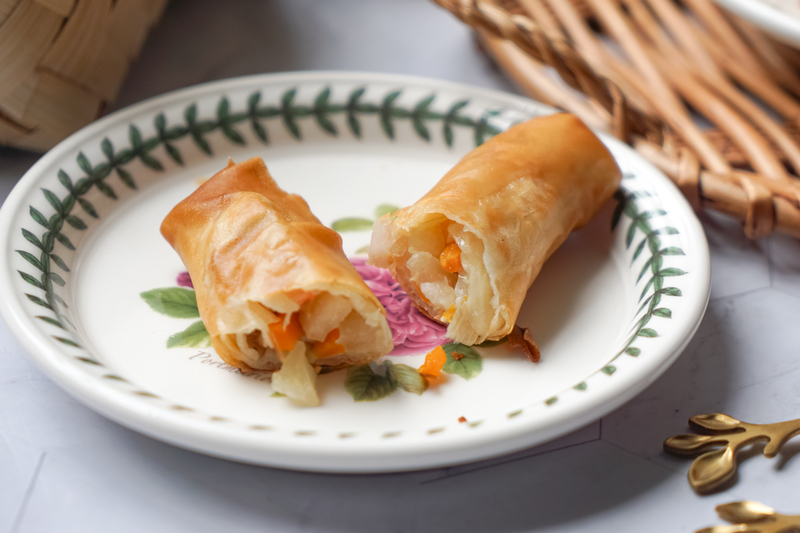
Malaysian popiah are little egg rolls, or spring rolls, filled with finely cut vegetables. Sometimes they’re served fresh, but this recipe is for fried popiah, so the wrappers get crisp and golden around a tender vegetable filling.
Jicama makes up most of the filling, with carrot, green beans, shiitake mushrooms and garlic mixed through. A little soy sauce, sugar and black pepper give the vegetables subtle flavor.
If you like Malaysian cuisine, you can find plenty more dishes in my Malaysian recipes collection.
Malaysian Popiah at a Glance
- Prep time: 25 minutes
- Cook time: About 20 minutes, including 3 frying batches
- Cooling time: About 20 to 30 minutes
- Total time: About 1 hour 5 minutes to 1 hour 15 minutes
- Yield: 12 popiah
- Cuisine: Malaysian
- Main ingredients: Popiah wrappers, jicama, carrot, green beans and shiitake mushrooms
- Best cooking method: Stir-fry the filling, then deep-fry the wrapped popiah
- Storage: Refrigerate cooked popiah for 3 to 4 days and reheat thoroughly
Why You’ll Love This Fried Popiah Recipe
- Plenty of crunch: The wrappers fry up crisp while the vegetables inside come out tender.
- Easy to roll: A couple of tablespoons of filling is enough for each wrapper, so they should close neatly without splitting. This is actually a really good recipe if you’re new to making egg rolls, spring rolls or summer rolls, because it’s pretty simple.
- Mostly vegetables: Jicama makes up the bulk of the filling, with carrot, green beans and mushrooms mixed through.
- No guessing about the filling: It’s cooked before you start wrapping, so the frying step is really about getting that crisp golden outside with having to worry about the filling cooking through too.
What are Popiah?
Popiah originated in Fujian in China and spread through Southeast Asia with Chinese migration. These little appetizers became well established in places including Malaysia and Singapore, where I’ve seen both fresh and fried versions.
The wrappers are thin and flexible, with vegetable-heavy fillings common in many popiah recipes. Jicama, also known as bangkwang in this part of Southeast Asia, is a nice filling because it keeps some bite after cooking.
Fresh popiah has a soft wrapper and often includes sauces and additional fillings inside the roll. This recipe is for fried popiah, with a cooked vegetable filling wrapped and fried until crisp.
Ingredient Notes
- Popiah wrappers: Look for thin flour-based popiah or spring roll wrappers, usually in the freezer section of an Asian grocery store. Vietnamese rice paper isn’t a direct substitute because it behaves differently during frying.
- Jicama: This mild, crunchy root vegetable makes up most of the filling. Peel it before cutting it into fine strips. I like it because it’s very neutral-tasting which makes it versatile.
- Carrot: Julienne it fairly finely so the pieces soften at the same rate as the other vegetables.
- Green beans: Slice these thinly rather than leaving them in long pieces that might poke through the wrappers.
- Shiitake mushrooms: Dried mushrooms work well here. Soak them until soft, squeeze out the excess water and slice them finely.
- Light soy sauce: This seasons the filling without making it too salty.
- Cornstarch: I mix it with a little water to make a simple paste for sealing the final edge of each wrapper.
How to Make Malaysian Popiah
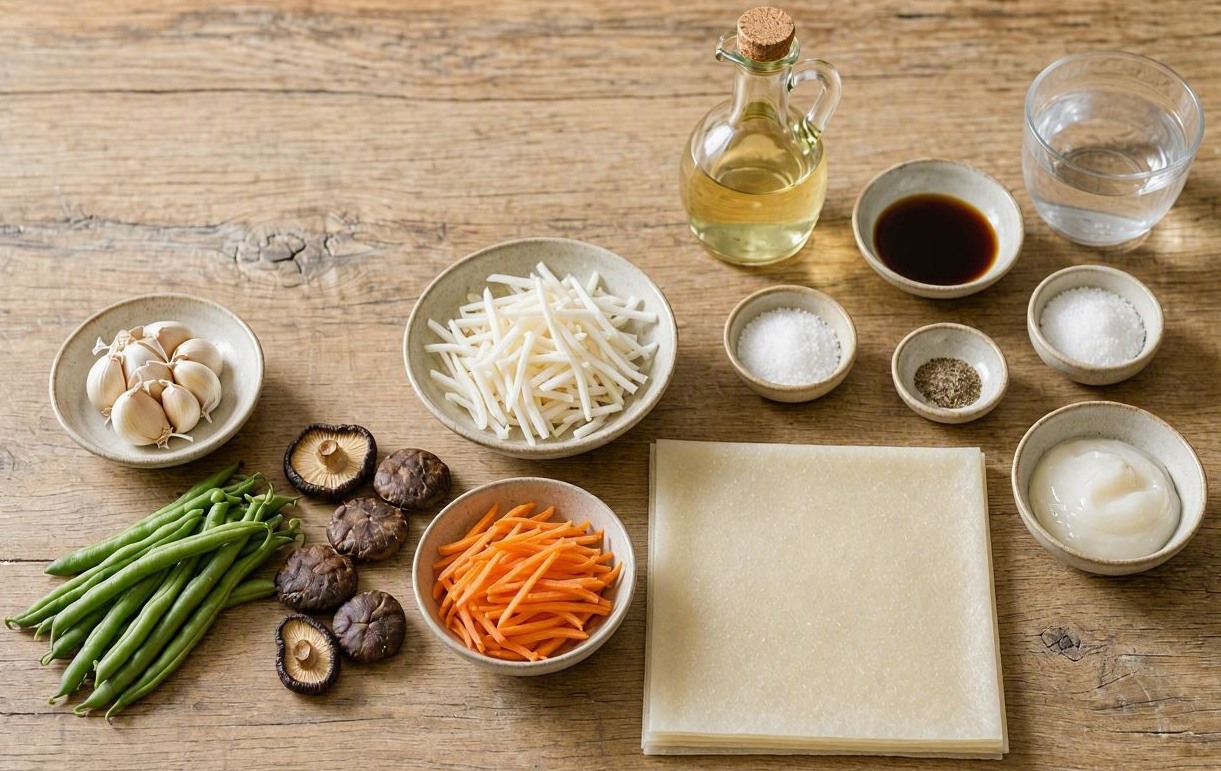
Cook the filling first, starting with the garlic and mushrooms before adding the jicama, carrot and green beans. A small amount of water helps to get the vegetables tender, but the filling shouldn’t be wet when you start wrapping.
Let the vegetables cool completely, then add about 2 tablespoons to each wrapper. Fold in the sides, roll snugly and seal the edge with cornstarch paste. Fry the popiah at 350°F (175°C) until golden and crisp, then drain them on paper towels and serve hot.
The first time I made these, I overfilled them and they split as soon as they went into the oil. Using less filling and rolling them snugly fixed that straight away.
Popiah vs Lumpia vs Egg Rolls
Popiah, lumpia and egg rolls all belong to the wider family of filled rolls, but the wrappers, fillings and cooking methods aren’t identical.
- Popiah: Thin wrappers and vegetable-heavy fillings are common. Popiah may be served fresh or fried.
- Lumpia: This term covers several types of rolls found in Southeast Asian cooking, with both fresh and fried varieties.
- Egg rolls: American-style egg rolls normally have a thicker wrapper that develops a thicker, bubbly crust when fried.
You can use egg roll wrappers if that’s all you can find, but the finished rolls will have a thicker shell. Thin spring roll pastry is a closer substitute for popiah wrappers.
Tips for the Best Fried Popiah
- Don’t overfill them: About 2 tablespoons of filling is enough for an 8-inch (20cm) wrapper.
- Cool the filling: Hot filling gives off steam that can soften the wrappers before you fry them.
- Keep excess liquid out: If there’s liquid left in the wok, drain the filling rather than spooning the liquid into the wrappers.
- Roll them snugly: Tucking the sides in firmly helps keep the filling inside while they fry.
- Seal the edge: Brush the final corner with the cornstarch mixture so the wrapper doesn’t unravel.
- Fry in batches: Give the popiah enough room in the oil rather than crowding the wok.
- Drain them straight away: Transfer fried popiah to paper towels as soon as they’re cooked.
Substitutions and Variations
- Spring roll pastry: Thin frozen spring roll wrappers are the easiest substitute if genuine popiah skins aren’t available. I’ve had success using them, and they come out very close to the original.
- Egg roll wrappers: These will work in a pinch, although they’ll give you a thicker and heavier fried wrapper. They’re still good but not really like popiah.
- Extra sesame flavor: Add a small splash of sesame oil to the cooked filling if you like.
- Fresh popiah: Don’t simply skip the frying step with this recipe. Fresh popiah normally has a different balance of fillings, sauces and wrappers, so it’s better treated as a separate recipe.
Kitchen Equipment
- Carbon steel wok: Use it to cook the filling and then fry the finished popiah.
- 8-inch chef’s knife: A sharp knife makes it much easier to cut the jicama, carrot and other vegetables into thin, even pieces.
- Large cutting board: You’ll need enough room to prepare all the vegetables without crowding the board.
- 12-inch kitchen tongs: These are handy for flipping the popiah and lifting them safely from the hot oil.
- Digital kitchen thermometer: Use it to check that the frying oil is around 350°F (175°C). If using an electric deep fat fryer, you won’t need this.
- Colander: Drain excess liquid from the cooked filling. You can spread the filling on a wide plate to cool.
- Small mixing bowl: To mix the cornstarch sealing paste.
- Measuring cups and spoons: For measuring the vegetables, seasonings and sealing paste.
What to Serve with Malaysian Popiah
Serve the popiah hot with chili sauce or another dipping sauce you like. A small dish of sambal belacan is a good choice if you want more heat.
These are also nice as one part of a larger Malaysian meal. If you’re serving several dishes, I find that one or two popiah per person is usually plenty for an appetizer.
How to Store
- Refrigerate: Put leftover cooked popiah in a covered container within 2 hours and refrigerate for 3 to 4 days.
- Reheat: Reheat leftovers until they reach 165°F (74°C). The oven or air fryer will do a better job of restoring some crispness than the microwave.
- Freeze: I have frozen cooked popiah but found the wrappers weren’t quite as crisp once thawed and reheated.
- Uncooked rolls: Check the wrapper package before freezing assembled rolls. Some frozen spring roll wrappers shouldn’t be refrozen after thawing.
- Make ahead: You can cook and cool the vegetable filling earlier, then refrigerate it separately and wrap the popiah closer to frying time.
Malaysian Popiah FAQs
Jicama is a mild, crunchy root vegetable. It’s also known as bangkwang in Malaysian and Singaporean cooking and is commonly used as the main vegetable in popiah filling.
The filling can be cooked and cooled ahead of time, then refrigerated separately. Wrap the popiah near to frying so the vegetable filling doesn’t make the wrappers soggy while they’re sitting in the fridge.
Usually not. Traditional popiah skins and most frozen spring roll pastries are wheat-based, so check the packaging carefully if you need a gluten-free option.
Malaysian Popiah Recipe
Ingredients
- 12 thin popiah or spring roll wrappers, about 8 inches (20cm) square
- 2 cups (250g) jicama, peeled and finely julienned
- 1 medium-large carrot, about 100g, finely julienned
- ¾ cup (75g) green beans, finely sliced
- 3 dried shiitake mushrooms, soaked, squeezed dry and finely sliced
- 2 garlic cloves, minced
- 1 tablespoon (15ml) neutral oil
- 2 teaspoons (10ml) light soy sauce
- ½ teaspoon sugar
- ¼ teaspoon black pepper
- Salt, if needed
- 2 to 3 tablespoons (30 to 45ml) water
- 1 teaspoon cornstarch
- 2 tablespoons (30ml) water, for mixing with the cornstarch
- Neutral oil, for frying
Equipment
- Wok
- Sharp knife
- Cutting board
- Slotted spoon or tongs
- Kitchen thermometer, optional
- Colander or wide plate
- Small mixing bowl
- Measuring Cups and Spoons
Method
- Heat the 1 tablespoon of neutral oil in a wok over medium-high heat.
- Add the garlic and stir-fry for about 30 seconds.
- Add the shiitake mushrooms and cook for 1 minute.
- Add the jicama, carrot and green beans.
- Add the light soy sauce, sugar, black pepper and 2 tablespoons of water.
- Stir-fry for 4 to 6 minutes, until the vegetables are tender but still have a little bite. Add the final tablespoon of water only if the filling starts to dry out before the vegetables are ready.
- Taste and add salt only if needed. Transfer the filling to a wide plate or colander and let it cool completely. Drain off any excess liquid.
- Mix the cornstarch with the 2 tablespoons of water to make a sealing paste.
- Put about 2 tablespoons of filling near one corner of a wrapper. Fold the corner over the filling, tuck in both sides and roll snugly.
- Brush the final corner with the cornstarch paste and finish rolling. Repeat with the remaining wrappers and filling.
- Heat the frying oil to 350°F (175°C).
- Fry the popiah in batches for about 2 to 3 minutes, flipping as needed, until crisp and golden.
- Remove with a slotted spoon or tongs and drain on paper towels.
- Serve hot with chili sauce or sambal belacan if liked.
Notes
What I Learned from Making Popiah
The biggest improvement I made was simply adding less filling to each popiah wrapper. I know it’s tempting to squeeze in another spoonful, but a modest amount makes the rolls much easier to fold, seal and fry without splitting.
It’s actually a bad habit of mine. I have to restrain myself from overfilling egg rolls, spring rolls and steamed wontons!
I like these best straight from the fryer, when the wrapper is crisp and the vegetable filling is still hot. Sweet chili sauce is ideal for dipping, or you can serve sambal belacan if you want considerably more heat.
More Malaysian and Asian Recipes
Char kway teow is a Malaysian wok-fried noodle dish, while nasi lemak pairs coconut rice with sambal and traditional accompaniments. Ikan bakar is one of my favorite Malaysian grilled fish recipes with a chili-based marinade.
Meat-free options include Thai vegetarian crackslaw and these vegetable jeon. You can also read more about tofu or browse other vegetarian appetizers.