Butter Swim Biscuits Recipe (Easy Homemade Buttermilk Biscuits)
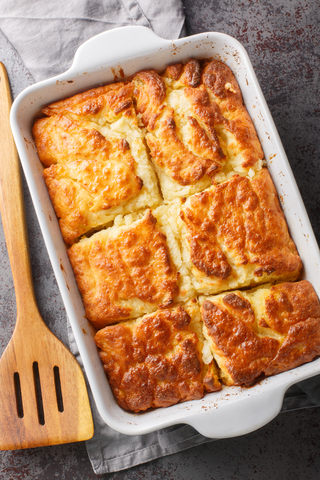
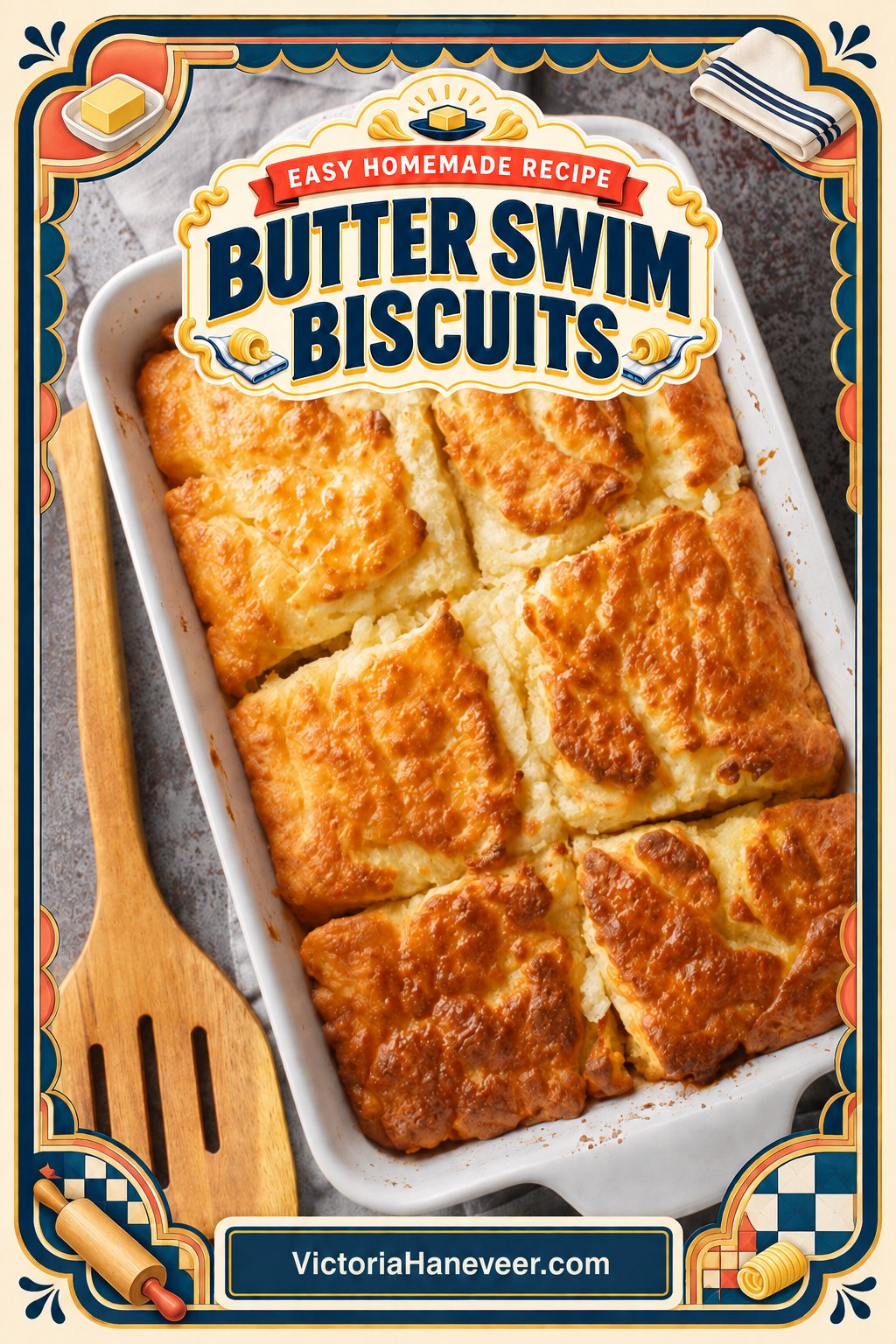
If you want a fast homemade biscuit that comes out tall, buttery and golden, this butter swim biscuits recipe is pretty hard to beat. The soft dough goes straight into a baking dish filled with melted butter, so there’s no cold butter to cut into the flour and no rolling, kneading or biscuit cutter required!
I love the contrast between the fluffy middle and those rich, crisp corners where the dough meets the pan. These old-fashioned butter swim biscuits are easy enough for breakfast and hearty enough to serve with soup, chili or a main meal. Split one while it’s warm and add jam or honey for a satisfying snack.
Butter Swim Biscuits at a Glance
- Prep time: 15 minutes
- Cook time: 20 minutes
- Total time: 35 minutes
- Servings: 9 biscuits
- Cuisine: American
- Main ingredients: All-purpose flour, buttermilk and butter
- Best cooking method: Bake in a baking dish at 450°F (230°C)
- Storage: Up to 2 days at room temperature, 5 days refrigerated or 3 months frozen
Why You’ll Love This Butter Swim Biscuit Recipe
- No special biscuit technique: Stir the dough, spread it in the dish, score it and bake.
- Six basic ingredients: Everything in the recipe is a common baking or refrigerator staple that home bakers are likely to already have.
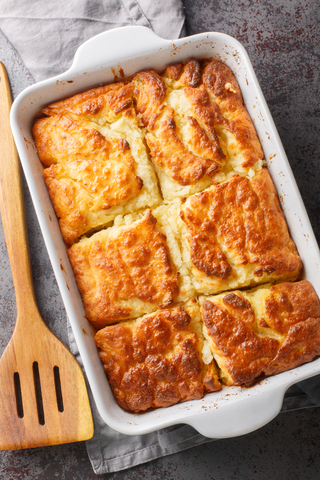
- Crisp, buttery edges and soft centers: Melted butter surrounds the dough as it bakes and gives the outside its distinctive finish. The buttermilk helps the thick dough bake into tender, fluffy squares.
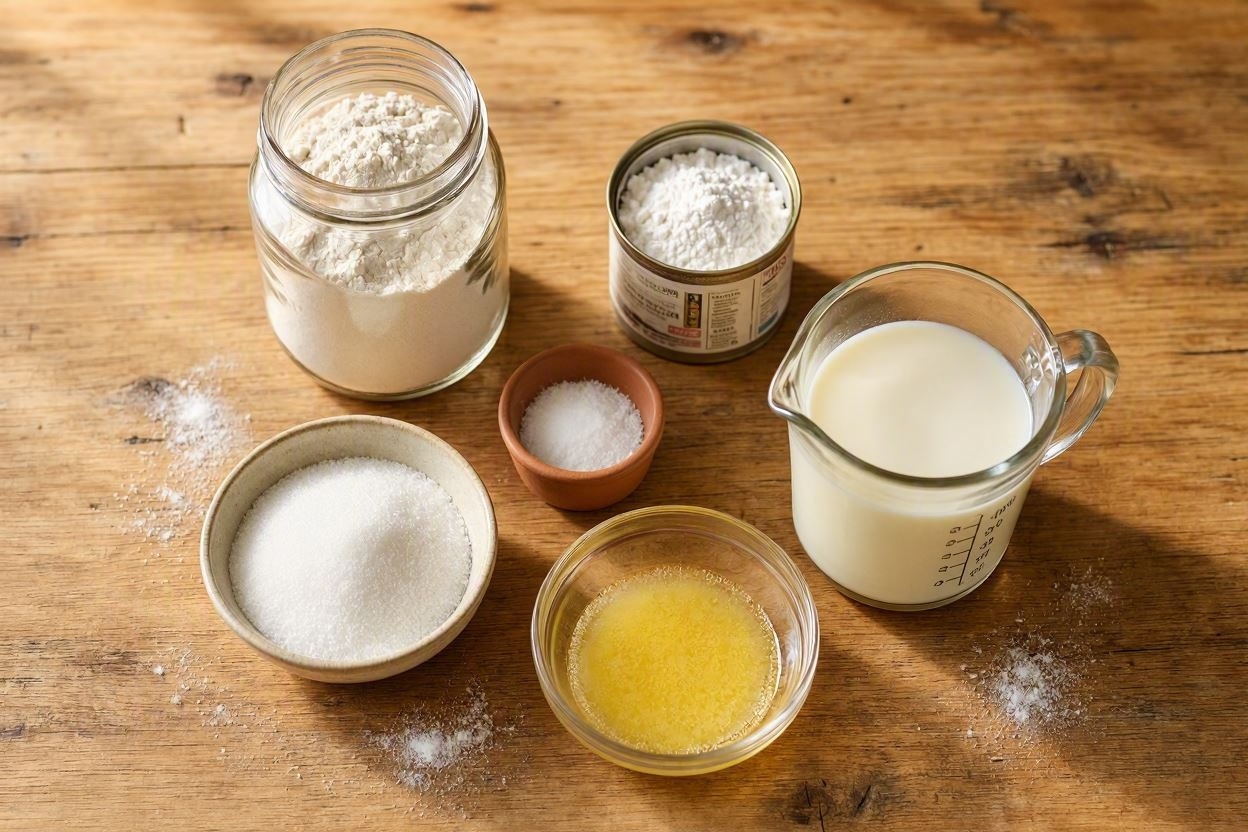
Butter Swim Biscuits Ingredients
- All-purpose flour: This provides the structure. I recommend that you measure it carefully so the dough doesn’t dry out or stiffen.
- Baking powder: This is the only leavener in the recipe, so check the date before baking if the container’s been open for a while.
- Buttermilk: Real buttermilk gives the biscuits their tang and tender crumb. Shake the carton before measuring it.
- Butter: The melted butter goes into the dish before the dough. It creates the crisp bottom, rich sides and buttery crevices that distinguish swim biscuits from rolled biscuits.
- Sugar and salt: Sugar adds mild sweetness and encourages browning. I like to add a pinch of salt to balance the rich dough. Salt crystal size varies, so use the volume in the recipe card unless you know the correct weight for your brand.
How to Make Butter Swim Biscuits
This is a thick, moist biscuit dough rather than a rollable dough. Mix the dry ingredients first, stir in the buttermilk only until the flour is incorporated and transfer the dough to the melted butter. Spread it to the edges without stirring the butter into the dough, score nine squares and bake.
Why are They Called Butter Swim Biscuits?
The name comes from the way the dough bakes in a pool of melted butter. Some of the butter rises around the edges and into the scored lines while the rest cooks beneath the dough. Instead of brushing butter over individual biscuits after baking, this method forms the buttery crust in the pan.
Butter Swim Biscuits vs Traditional Rolled Biscuits
Traditional biscuits usually depend on small pieces of cold butter worked into flour, followed by folding, rolling and cutting. Butter swim biscuits have melted butter in the baking dish.
The dough is mixed in one bowl, spread in one piece and divided into squares before it goes into the oven. The result has a softer, more uniform crumb and beautifully crisp edges instead of the flaky layers of a carefully folded biscuit.
American Biscuits vs British Scones
For British readers, these are American biscuits rather than the crisp sweet biscuits known as cookies in the US. American biscuits are soft, bread-like quick breads made with baking powder or another leavener. They’re usually served with savory meals, breakfast or gravy, though jam and honey are also popular toppings.
British scones are their closest familiar relative, but I wouldn’t say they’re exactly the same. Scone dough is usually rolled or patted out and cut into individual rounds before baking. It may contain more sugar and is often served with jam and clotted cream.
Butter swim biscuits are softer, richer at the edges and baked together in a dish of melted butter, then separated into squares. Their texture’s more like a tender savory quick bread than a traditional British cream tea scone.
Tips for Tall, Fluffy Biscuits
- Preheat the oven fully: The high initial heat helps the baking powder begin lifting the dough promptly.
- Measure the flour carefully: Spoon it into the measuring cup and level the top rather than packing it down.
- Stop mixing promptly: Stir only until no dry pockets remain. The dough should look thick and soft. You don’t want it smooth or stiff.
- Spread gently: Push the dough to the corners of the dish without deliberately mixing the melted butter into it.
- Score before baking: Cut a three-by-three grid through the unbaked dough so each biscuit will separate more easily.
- Watch the top: If it browns before the center is ready, cover the dish loosely with foil near the end of the cooking time.
- Rest briefly: Leave the baked biscuits in the dish for about five minutes so the crumb settles and the remaining butter can be absorbed.
Why Didn’t My Biscuits Rise?
Flat or dense biscuits usually point to too much flour or overmixing. The last time mine were a flop (literally) it was down to old baking powder which had been open for a while.
Check that the baking powder is fresh, measure the flour without compressing it and stop stirring as soon as the dry ingredients disappear. It’s also important that the oven reaches 450°F (230°C) before the dish goes in. If the dough is stiff instead of soft and thick, you might have used too much flour.
Butter Swim Biscuits without Buttermilk
Regular milk works, though the finished biscuits have a milder flavor. For a closer substitute, put 2 tablespoons of lemon juice or white vinegar in a measuring jug, then add enough milk to reach 2 cups. Let it stand for 5 minutes before adding it to the dough.
This acidulated milk recipe is handy to know if buttermilk isn’t available, though I always prefer real buttermilk for its stronger tang and softer crumb.
Flavor Variations
- Cheddar swim biscuits: Fold shredded sharp cheddar gently into the finished dough.
- Herb swim biscuits: Add chopped chives, parsley or rosemary before transferring the dough to the dish.
- Garlic swim biscuits: Mix in garlic powder, then brush the baked tops with garlic butter if you want a stronger flavor.
- Cinnamon sugar swim biscuits: Sprinkle cinnamon sugar over the top before baking for a sweeter biscuit.
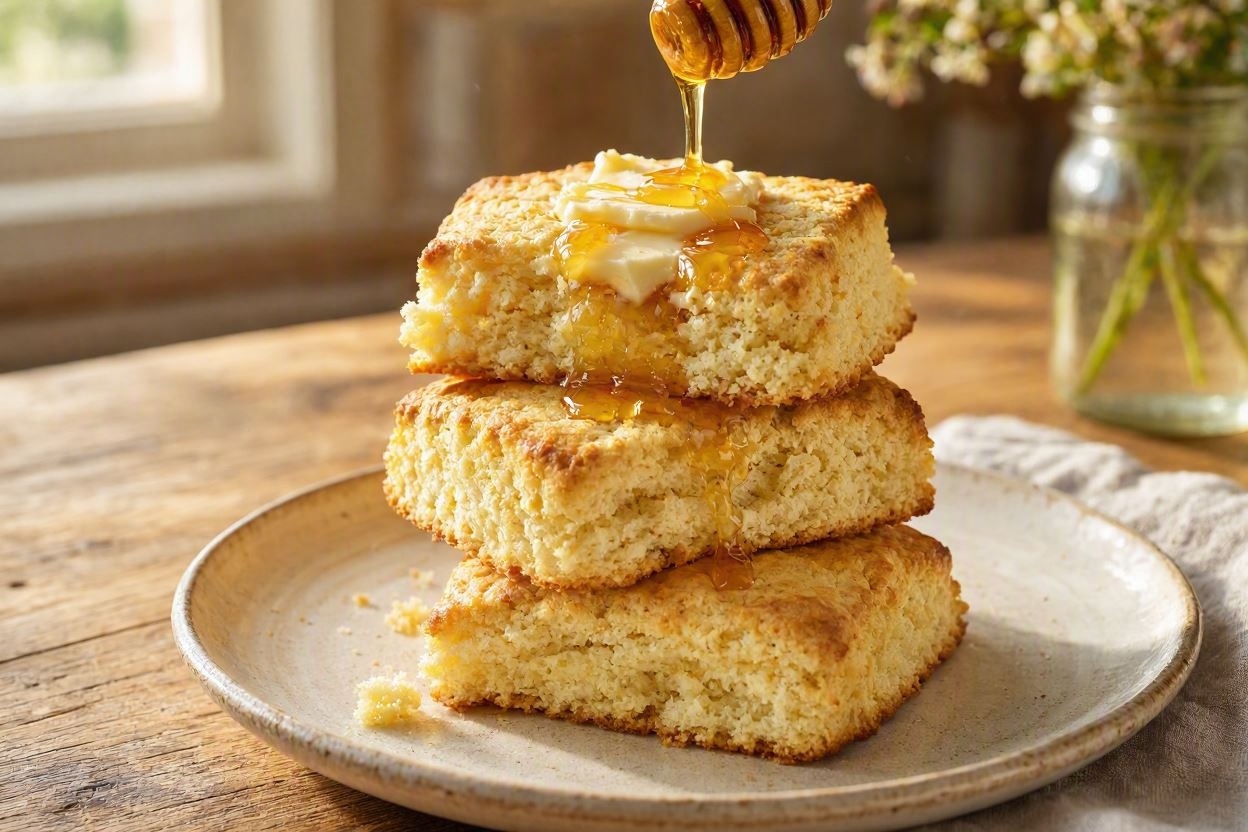
- Honey swim biscuits: Keep the basic dough unchanged and drizzle honey over the warm biscuits when serving.
What to Serve with Butter Swim Biscuits
For breakfast, serve them with eggs and bacon or use them instead of English muffins for eggs Benedict. They can also join a full English breakfast or pair with breakfast burritos. For something sweet, offer butter, jam, honey or even grilled pears on the table too.
At dinner, the biscuits go well with saucy dishes like my braised lamb shanks. They also work as an extra bread with Devon squab pie, fried chicken, soup or chili. If prime rib’s on the menu, serve swim biscuits with that and also offer homemade horseradish sauce on the side for a decadent feast.
How to Store
- Store: Let the biscuits cool completely, then keep them tightly wrapped or in an airtight container at room temperature for up to 2 days. You can refrigerate them for up to 5 days, although I find chilling makes them less soft.
- Reheat: Give them 8 to 10 minutes in a 350°F (175°C) oven to refresh the crust. A brief spell in the microwave works if you’re in a hurry, though overheating can make them tough.
- Freeze: For longer storage, freeze the cooled biscuits in a freezer-safe bag or container for up to 3 months. Thaw them overnight in the refrigerator, then reheat them in the oven.
- Make ahead: Don’t mix the dough ahead because the baking powder begins working after the buttermilk is added. If you need to get ahead, bake the biscuits fully, cool them and reheat them shortly before serving.
Butter Swim Biscuits FAQs
I used a 7 x 9-inch (18 x 23cm) baking dish. You can also use an 8-inch (20cm) square baking dish for nine tall, thick biscuits. A 9-inch (23cm) square dish also works, though the biscuits will be thinner and may finish baking sooner, so start checking them early.
Yes, though self-rising flour (self-raising flour in UK) already contains leavening and salt. Omit the baking powder and added salt only if the flour package directs that substitution. Since blends vary by brand, I recommend using all-purpose flour, because it gives the most predictable result.
I wouldn’t. Baking powder begins reacting once the liquid is added, so it’s best to bake the dough immediately after mixing. Bake the biscuits ahead and reheat them if you need to save time.
Yes. Salted butter works, though you may want to reduce the added salt slightly if using that. The amount of salt in butter varies by brand, so adjust according to your preference.
Yes. Mix a double batch and use a larger baking dish that gives the dough a similar depth. The baking time may change, so look for a golden top and a set center rather than relying only on the clock.
A Homemade Biscuit Recipe Worth Keeping
Butter swim biscuits are a great pick if you’re looking for a homemade bread recipe with very little shaping or cleanup. Keep the basic recipe savory for breakfast or dinner, or add honey or cinnamon sugar if you want something sweeter.
And if you’re looking for another baking project, these Japanese milk bread buns make soft individual rolls. For a quick cheese-based option served on toast, try my Welsh rarebit.
Butter Swim Biscuits Recipe Card
Butter Swim Biscuits Recipe
Ingredients
- 2 ½ cups (310 g) all-purpose flour
- 4 teaspoons (16 g) baking powder
- 1 ½ tablespoons (19 g) granulated sugar
- 2 teaspoons salt (salt weights vary by type and brand)
- 2 cups (500 ml) buttermilk
- ½ cup or 1 stick (115 g) butter, melted
Equipment
- Large mixing bowl
- Whisk
- Measuring cups and spoons or kitchen scale
- Rubber spatula
- 7 x 9-inch (18 x 23cm) or 8-inch (20cm) square baking dish
- Sharp knife
Method
- Preheat the oven to 450°F (230°C).
- Whisk the flour, baking powder, sugar and salt together in a large mixing bowl.
- Pour in the buttermilk. Stir with a rubber spatula just until no dry flour remains and a thick, moist dough forms. Don’t overmix.
- Pour the melted butter into an 8-inch square baking dish. Spoon the dough into the dish over the butter.
- Spread the dough gently and evenly to the sides and corners of the dish. Don’t stir the butter into the dough.
- Use a sharp knife to score the dough into 9 equal rectangles or squares (depending on pan shape) in a three-by-three grid.
- Bake for 20 minutes or until the top is golden brown and the center is set. Rest in the dish for 5 minutes before separating the squares and serving.
Notes
- For the best rise, use fresh baking powder and stir the dough only until combined.
- If the top browns too quickly, cover the dish loosely with foil near the end of baking.
- To replace the buttermilk, put 2 tablespoons lemon juice or white vinegar in a measuring jug, then add enough milk to reach 2 cups. Let it stand for 5 minutes before using.
- Store cooled biscuits airtight for up to 2 days at room temperature or 5 days in the refrigerator. Freeze for up to 3 months. Reheat in a 350°F oven for 8 to 10 minutes.