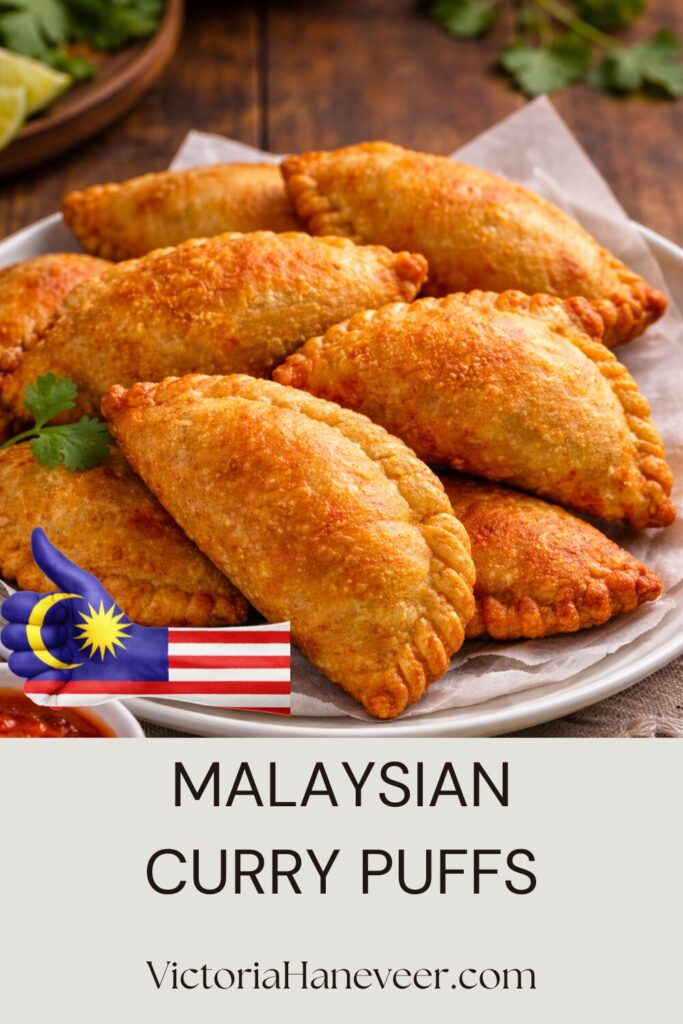
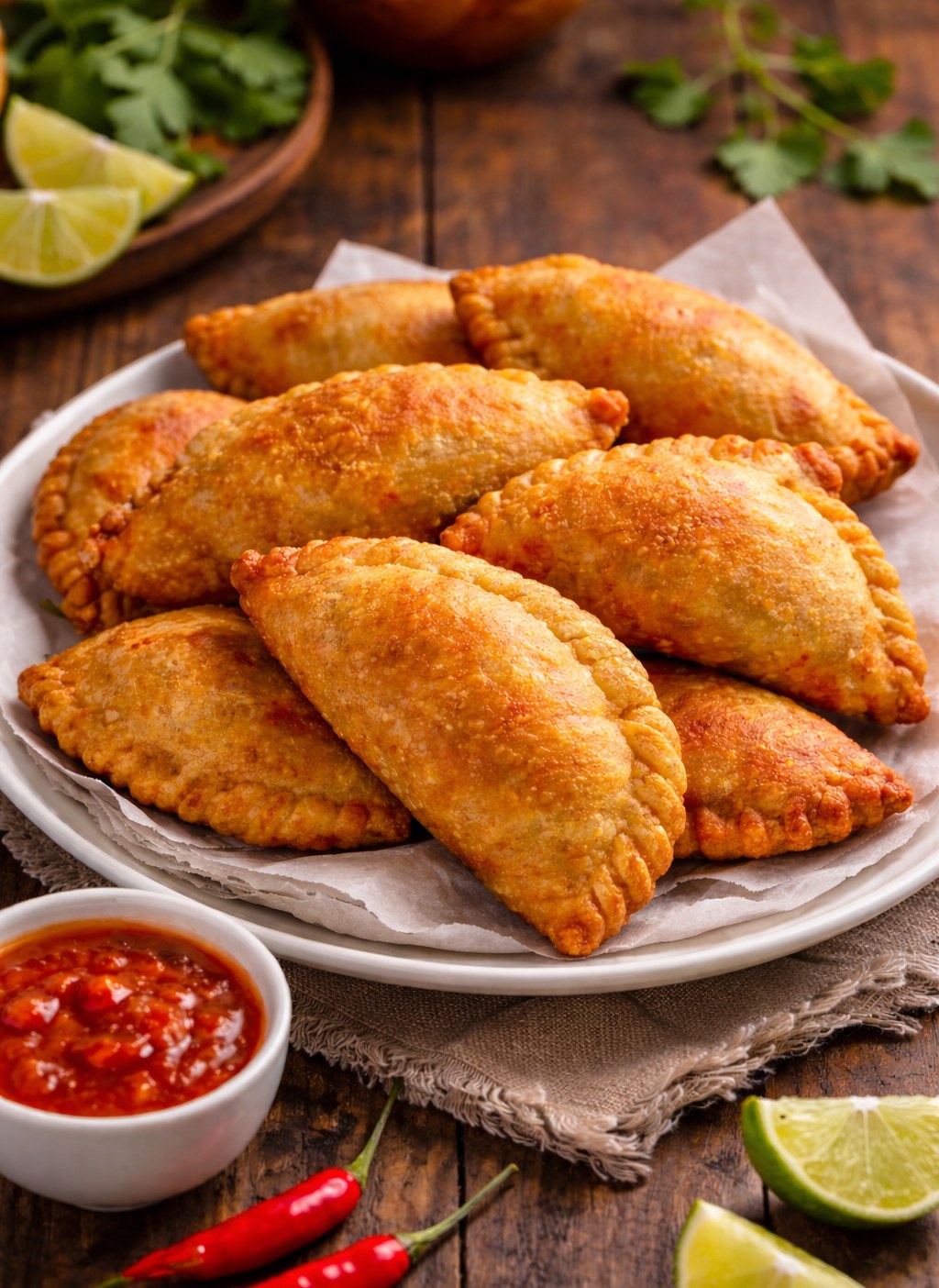
Curry puffs, usually called kari puff in Malaysia, are small fried pastries filled with curried potato, onion and often some chicken or egg. They’re a well-loved bakery and market snack, with a crisp shell, a soft filling and a sealed edge that keeps everything inside while they fry.
This curry puff recipe uses a handmade dough rather than a puff pastry shortcut, so the shell comes out firmer and more like the Malaysian version sold at stalls and bakery counters. For another Malaysian dish with a very different texture and flavor profile, take a look at Penang asam laksa. You might also like these Finnish hand pies.
Curry Puffs Overview
Malaysian curry puffs are usually eaten as a snack instead of a full meal. I’ve seen them in bakeries, pasar malam stalls and Ramadan bazaars, and the filling does tend to change from place to place, although potato is at the center of many versions.
This kari puff recipe makes a chicken curry puff with potato, onion and curry powder in a dry filling that spoons neatly into the pastry. That dry texture is important, because the filling should look more like spiced hash than curry before it goes into the dough. Too wet and it will become soggy, so you want to avoid that.
Curry Puffs Takeaways
- Cooking method: Filled pastry is folded into half-moons, sealed and deep-fried until golden.
- Key flavor elements: Curry powder, potato, onion and chicken combined to make a dry savory filling.
- Typical serving style: Eaten as a snack with chili sauce and perhaps other small bites. Typically paired with tea.
The Malaysian version of curry puffs is usually fried and made with a sturdier dough than laminated puff pastry. That gives it the crisp shell and crimped edge associated with a traditional Malaysian curry puff pastry.
What It Tastes Like
The shell is crisp and lightly layered, while the filling is soft from the potato and onion. Curry powder gives the center a warm savory flavor, and the chicken adds body and another flavor.
If you’re a fan of samosas, savory hand pies or pastries with a dry spiced filling, I think you’ll like these. The contrast between the crisp shell and the soft center is what makes these aromatic bites so satisfying.
Key Ingredients
- Potatoes: These make up most of the filling and give it the soft texture curry puffs are known for.
- Chicken thighs: Small pieces of chicken add more savoriness and help achieve a tender filling.
- Onion: Onion adds sweetness and moisture without making the mixture sloppy.
- Curry powder: Curry powder gives the filling its color and most of its flavor. I like Ducros but you can use any brand you want.
- Flour and butter: These form the dough and help create the crisp shell. Don’t use margarine, it won’t taste authentic.
- Oil for frying: Deep-frying gives the pastry its color and firm crust. Any frying oil works here.
Ingredient Spotlight: Curry Powder
Curry powder does most of the heavy lifting in the filling, so it needs to coat the potato and onion evenly. If the seasoning’s only stirred in at the end or the filling’s too wet, the flavor ends up patchy. so I’d avoid that.
Different brands give different results. Some are earthier, while others are brighter and more turmeric-forward, so it’s worth using one you already know you like. I love the Ducros brand best.
Tips for Best Results
- Cool the filling fully: Warm filling softens the dough fast and makes sealing messy.
- Dice the filling small: Small pieces of potato and chicken make the puffs easier to shape and less likely to split.
- Keep the filling dry: It should hold together on a spoon, not spread like curry.
- Don’t overfill them: Too much filling makes the edges harder to close and easier to burst.
- Press out trapped air: Air pockets can open the pastry during frying.
- Cover the dough: Dough that dries out at the edges is more likely to crack.
Common Mistakes
- Filling that’s too wet: This is the most common problem and the main reason pastry splits in the oil.
- Large potato chunks: Big pieces make the pastry harder to fold neatly and can tear the dough.
- Oil that’s too hot: The outside colors too fast while the pastry underneath stays pale and less crisp.
- Puffs packed too tightly in the pan: Crowding drops the oil temperature and can leave the pastry greasy.
Variations and Substitutions
- Beef version: Use finely chopped or minced beef in place of the chicken and cook off any extra moisture before filling the pastry.
- Vegetarian version: Leave out the chicken and add more potato, a little diced carrot or some finely chopped mushrooms.
- Milder filling: Use a mild curry powder and skip any fresh chilies.
- Store-bought puff pastry: This works for a quicker curry puff pastry recipe, but the result is lighter and more buttery than a traditional Malaysian curry puff pastry.
- Baked version: A puff pastry curry puff recipe is better baked than fried. The shell is drier and flakier than the fried style used here.
- Curry powder swap: If you can’t find a Malaysian-style curry powder, use a mild curry powder and add a pinch of turmeric for color.
How to Store
- Make Ahead: The filling can be made 1 day ahead and chilled, or the shaped un-fried puffs can be held in the fridge for several hours.
- Fridge: Store cooked curry puffs in an airtight container for up to 3 days.
- Freezer: Freeze shaped un-fried curry puffs on a tray, then transfer them to a container or bag for up to 2 months.
- Reheat: Warm cooked curry puffs in the oven or air fryer until the shell is crisp again.
Serving Suggestions
Curry puffs are usually eaten on their own with bottled chili sauce and hot tea. You could also make some other snacks for a snack spread.
Serve them with a little sambal belacan for extra heat, or alongside otak-otak if you want another Malaysian snack with a completely different texture.
In Malaysia, they’re more often a tea-time or market snack than something served with rice as a full meal.
Traditional Curry Puffs vs Puff Pastry Curry Puffs
A traditional Malaysian curry puff uses a sturdier dough that fries into a crisp shell with a firmer bite. Puff pastry versions are lighter, flakier and more layered, which changes the texture quite a bit.
The filling often changes too. A classic kari puff filling is usually dry and compact, while puff pastry versions can be looser because the pastry itself is more delicate and handled less. Both work, but they don’t taste the same.
Curry Puffs FAQs
Can I freeze them before cooking?
Yes. Freeze them in a single layer first, then move them to a container once firm. Fry them from cold or thaw them slightly first.
Why did my curry puffs split while frying?
This usually happens when the filling is too wet, the pastry is overfilled or trapped air is left inside before sealing.
How do I keep the pastry crisp after frying?
Drain the curry puffs on a rack rather than stacking them on a plate, and reheat them in the oven or air fryer if needed.
More Malaysian Recipes
Explore more traditional dishes in the Malaysian Recipes: Traditional Regional Dishes Explained collection if you want to build out the snack, noodle and street food side of the hub.
- Satay is a good next dish if you want another street food favorite. It brings grilled meat and peanut sauce into the mix, which gives the page a very different cooking method from fried pastry.
- Roti canai belongs in the same broad snack-and-stall world, but it takes things in a flatter, chewier direction and is usually eaten with curry on the side.
- Nasi lemak gives you a rice-based contrast if you want to balance the page with something more substantial and more closely tied to breakfast and hawker culture.
Malaysian Curry Puffs
Ingredients
- Neutral oil, for deep-frying
- 1 hard-boiled egg, cut into 10 small wedges, optional
- 14 ounces (400g) potatoes, peeled and diced
- 8 ounces (225g) boneless skinless chicken thighs, finely diced
- 1 small onion, finely chopped
- 2 garlic cloves, minced
- 2 tablespoons curry powder
- ½ teaspoon ground turmeric
- ½ teaspoon salt, or to taste
- ¼ teaspoon sugar
- 2 tablespoons neutral oil
- 2 tablespoons water
- 2½ cups (300g) all-purpose flour
- ½ teaspoon salt
- 5 tablespoons (70g) cold unsalted butter, cut into small pieces
- 2 tablespoons neutral oil
- ½ cup (120ml) cold water, plus a little more if needed
Method
- Heat the oil for the filling in a pan and cook the onion until softened.
- Add the garlic, curry powder and turmeric, and stir until fragrant.
- Add the chicken and cook until the outside is no longer raw.
- Stir in the potato, salt, sugar and water, then cook until the potatoes are tender and the mixture is fairly dry.
- Mash a few of the potato pieces lightly so the filling holds together better, then let it cool completely.
- Put the flour and salt in a bowl, rub in the butter, then mix in the oil and enough cold water to make a smooth dough.
- Knead briefly until the dough comes together, cover it and let it rest for 20 minutes.
- Divide the dough into 10 pieces and roll each one into a thin circle.
- Place a spoonful of filling in the center of each circle and add a small wedge of egg if using.
- Fold each piece over into a half-moon, press out any trapped air and crimp the edges firmly to seal.
- Heat enough oil in a deep pan for frying and cook the curry puffs in batches until golden brown and crisp.
- Drain them on paper towels or a rack and serve warm or at room temperature.
- Serve with chili sauce or sambal for dipping.
Notes
- A rolling pin is useful here, and a deep heavy pan makes frying easier.
- A thermometer helps, but it isn’t essential if you’re used to frying by sight and sound.
History of Curry Puffs
Curry puffs belong to a wider family of filled savory pastries found across Malaysia, Singapore and Indonesia. In Malaysia they became a familiar bakery snack, market snack and home-cooked treat with fillings that vary by household and community.
The Malaysian version often centers on potato because it holds the filling together well and carries curry seasoning without becoming wet. Chicken, sardines and egg are all common additions, and the crimped half-moon shape is one of the details many people associate with kari puff.
Today you’ll see both homemade dough versions and shortcut puff pastry versions. The shortcut is common in home kitchens, but the older fried style of shell is firmer and more crumbly.