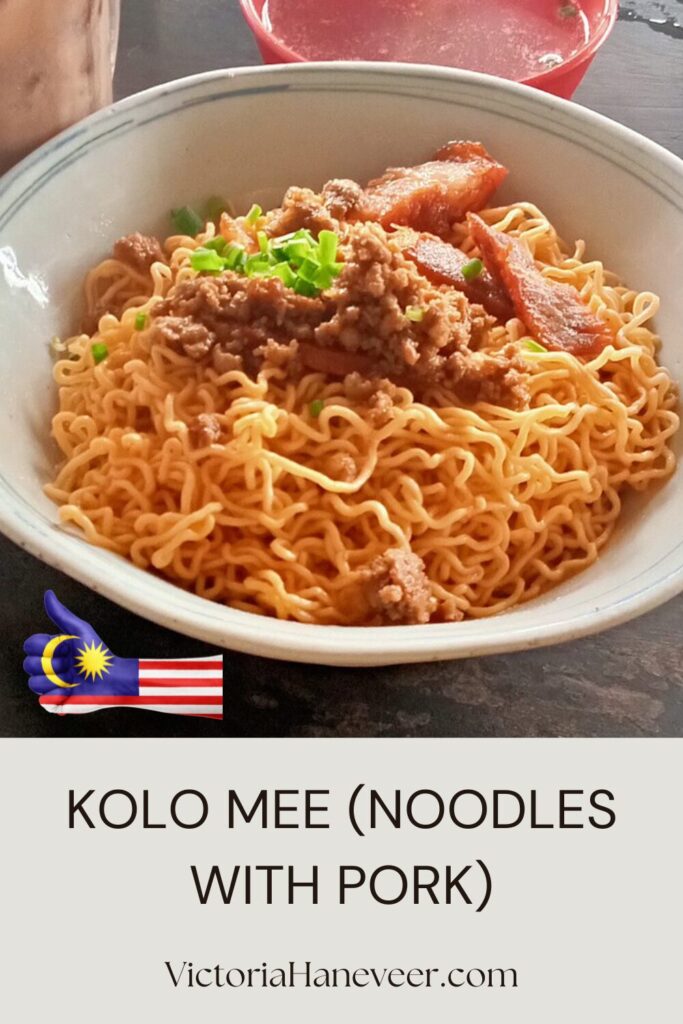
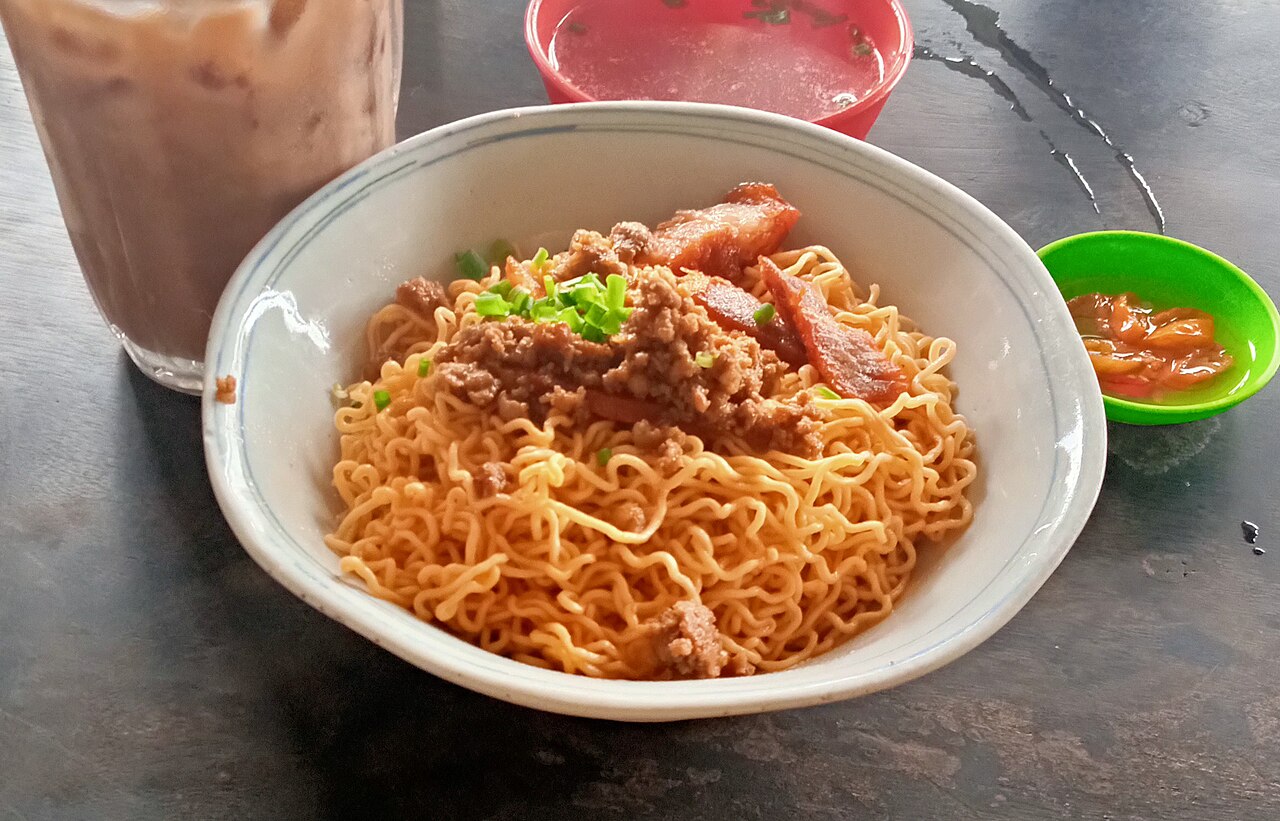
Kolo mee is a dry noodle dish from Sarawak, most closely linked with Kuching. Egg noodles are tossed with a light savory sauce, then topped with minced pork, char siu and fried shallots.
The texture’s what makes it work. The noodles need to stay springy and lightly coated, not wet. If they end up sitting too long or picking up too much sauce, they lose their bite and the whole bowl changes.
The sauce is pretty light, but it still needs enough oil to coat every strand. If it’s too dry, the noodles clump fast.
For more dishes from around the country, visit the Malaysian recipes hub.
Dish Overview
Kolo mee is a tossed noodle dish served dry, not in broth. First you boil egg noodles, then drain them and mix with a light sauce. Top with pork and garnishes and it’s done!
It’s a common hawker dish in Sarawak and I’ve seen people enjoying it for breakfast or lunch.
Kolo Mee Takeaways
Cooking method: Boiled noodles tossed with sauce.
Key flavor elements: Soy sauce, pork, fried shallots and aromatic oil.
Typical serving style: Dry noodles topped with minced pork and char siu.
What This Dish Is
Kolo mee is a Sarawak noodle dish made with springy egg noodles and pork toppings. It reflects the Chinese influence in Sarawak cooking and is one of the dishes most people associate with Kuching.
The noodles are served dry with just enough sauce to coat them, which means every part of the bowl needs to be ready to assemble before you start tossing.
What It Tastes Like
The noodles have a savory coating from soy sauce and oil, while the char siu brings sweetness and the minced pork adds a more straightforward salty depth. Fried shallots give the bowl a smell you notice straight away.
I like this dish best when the noodles are still slightly chewy and the sauce is barely visible. Too much sauce pools at the bottom and the noodles turn soft faster.
Key Ingredients
Egg noodles: Thin, springy noodles that hold the sauce well if they’re not overcooked.
Minced pork: Adds savory flavor and a softer texture alongside the noodles.
Char siu: Sliced roast pork that brings sweetness, color and a little chew.
Soy sauce: Gives the sauce its salty base.
Fried shallots: Add aroma and crisp bits through the bowl.
Ingredient Spotlight: Egg Noodles
Egg noodles are central here because they hold their texture after tossing. A softer noodle won’t give you the same result. If you rinse them too much after boiling, they lose heat fast and the sauce doesn’t cling as well.
Tips for Best Results
Boil the noodles briefly: A minute too long is enough to dull the texture, so start checking early.
Drain them well: Any extra water thins the sauce and leaves the bowl bland.
Toss while hot: The sauce coats better before the noodles cool down.
Have the toppings ready first: Once the noodles are cooked, you don’t have time to pause and prep anything else.
Variations and Substitutions
If you can’t find egg noodles: Use thin wheat noodles or plain ramen noodles.
If you want it less salty: Cut back on the soy sauce and add a touch more oil so the noodles still coat properly.
If you want a different protein: Ground chicken or mushrooms can replace the minced pork.
How Kolo Mee Is Made
The noodles are boiled and drained, then tossed with sauce while still hot. The toppings are added after that, with char siu, minced pork and fried shallots going on just before serving.
The bowl comes together fast, which is why getting everything lined up first is important.
Kolo Mee
Ingredients
- 12 ounces (340g) egg noodles
- 8 ounces (225g) minced pork
- 6 ounces (170g) char siu, sliced
- 2 tablespoons soy sauce
- 1 tablespoon oyster sauce
- 1 tablespoon oil
- 2 cloves garlic, minced
- fried shallots
- sliced green onions
- chili sauce
Method
- Cook the egg noodles in boiling water until tender, then drain well.
- Heat oil in a pan and cook the garlic until fragrant.
- Add minced pork and cook until browned.
- Stir in soy sauce and oyster sauce and cook briefly.
- Place the drained noodles in serving bowls.
- Top with minced pork mixture and sliced char siu.
- Add fried shallots and green onions before serving.
Notes
- A wok or frying pan works well for cooking the minced pork topping.
How to Store It
Make Ahead: The minced pork topping can be cooked ahead and reheated later.
Fridge: Store the toppings in the refrigerator for up to 3 days.
Freezer: Cooked minced pork can be frozen for up to 1 month.
Reheat: Reheat the pork in a pan and cook the noodles fresh before serving.
What to Serve with It
Kolo mee is usually eaten as a full meal, though some stalls serve it with a small bowl of broth or chili sauce on the side. A few extra fried shallots or chopped green onions work well if you want a little more on top.
Kolo Mee vs Wanton Mee
Kolo mee is usually served dry with pork toppings and a lighter sauce. Wanton mee often comes with dumplings and has a different balance in the seasoning.
The difference is easy to notice once you eat them side by side, especially in the texture of the noodles and how heavily they’re dressed.
Kolo Mee FAQs
Is kolo mee served with soup?
Usually it’s served dry, although some places offer a small bowl of broth on the side.
What noodles are used for kolo mee?
Thin egg noodles are the traditional choice.
More Malaysian Recipes
If you’re in the mood for more Malaysian noodle dishes, Sarawak laksa gives you a completely different bowl with broth and shrimp. For rice dishes, nasi kerabu uses herbs and blue rice, while char kway teow focuses on high heat and quick cooking. Ikan bakar also works well if you want something grilled on the side. And I love Malaysian satay a lot!
History of Kolo Mee
Kolo mee originated in Sarawak and became one of the staple noodle dishes of Kuching. It reflects Chinese culinary traditions brought by immigrants who settled in the region and adapted their cooking to local ingredients.
Today it remains one of Sarawak’s best known hawker dishes and is still commonly eaten for breakfast or lunch.
Photo credit: Kolo mee via Wikimedia Commons