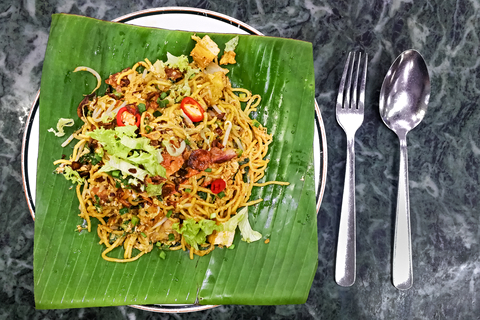
Mee goreng is a Malaysian fried noodle dish made with yellow wheat noodles, a savory sweet spicy sauce and a mix of tofu, vegetables and often egg.
The noodles are cooked quickly over high heat so they pick up the sauce properly, and the plate usually includes lime for sharpness and a little fresh crunch from greens or bean sprouts.
This Malaysian style mee goreng recipe leans toward mee goreng mamak, with tofu, egg, chili paste, sweet soy sauce and tomato ketchup in the sauce. It’s not dry in the way some stir-fried noodle dishes are.
I love how the sauce clings to the noodles in this dish and how the flavors are so balanced. I also like this when I want a speedy lunch or dinner with simple prep steps.
Recipe Overview
Mee goreng is one of the best-known Malaysian noodle dishes and is especially associated with Indian Muslim, or Mamak, cooking. It’s made by stir-frying fresh yellow noodles with a sauce that usually includes chili, soy sauce and tomato ketchup, then adding vegetables, tofu and often egg.
In Malaysia, mee goreng is sold at hawker stalls, Mamak restaurants and casual eateries, often as a full meal on its own. Some versions are dry and more concentrated, while others are saucier and softer, which is where terms like mee goreng basah come in.
Mee Goreng Takeaways
- Cooking method: Yellow noodles stir-fried quickly over high heat with sauce, tofu, vegetables and egg.
- Key flavor elements: Savory, lightly sweet, spicy and slightly tangy from chili paste, soy sauce and ketchup.
- Typical serving style: Served hot with lime wedges and often extra chili on the side.
What This Dish Is
It’s commonly linked with Malaysian Indian Muslim cooking, especially mee goreng mamak, although fried noodle dishes appear across many parts of Malaysian food culture.
The Mamak style is the one many people mean when they talk about Malaysian mee goreng, with yellow noodles, tofu, egg, greens and a sauce that has a little sweetness as well as heat.
The dish is cooked fast and eaten hot. I’d say it’s somewhere between a street food plate and an everyday meal, depending on where you get it and what is added to it.
What It Tastes Like
Mee goreng has a fuller sauce than some fried noodle dishes. You get soy, chili, a little sweetness from ketchup and sweet soy sauce, and enough oil in the pan to coat the noodles just right. The tofu soaks up some of that flavor, and the lime at the end cuts through the richer notes.
Anyone who likes saucy noodles, chili heat and a slightly sticky finish will get on with this. If you want something drier and smokier, char kway teow is closer to that lane. If you want noodles with more sauce and more direct chili sweetness, mee goreng is the better fit.
Mee Goreng Sauce
The sauce is what gives the dish its particular flavor. It usually includes chili paste, sweet soy sauce, soy sauce and tomato ketchup, which is why Malaysian style mee goreng tastes different from other stir-fried noodle dishes.
I know the ketchup might look odd on paper if you haven’t made it before, but it is part of the dish and gives the sauce some sweetness, body and that familiar red-brown finish.
In this recipe, the sauce is mixed before anything goes into the wok, to help the noodles cook quickly once they hit the heat, and it keeps the sauce from reducing unevenly while you’re still measuring things out.
If you want a wetter mee goreng basah style, feel free to add a little extra water or stock at the end. That way, the noodles are looser and more coated.
Key Ingredients
- Yellow wheat noodles: Fresh mee goreng noodles are the standard base and give the right chewy texture.
- Firm tofu: Mee goreng tofu is common, and the tofu adds bite while soaking up the sauce.
- Eggs: These make the dish fuller and help bind the sauce through the noodles.
- Bean sprouts: Added near the end for crunch and freshness.
- Chinese chives or scallions: These give the dish its fresh onion note at the end.
- Tomato ketchup: This is part of what makes mee goreng sauce taste like mee goreng, not just soy noodles.
- Sweet soy sauce: Adds depth and sweetness.
- Sambal oelek or chili paste: This gives the sauce its heat and color.
Ingredient Spotlight: Yellow Noodles
I’d say the noodles you choose are probably the most important factor when making this Malaysian dish.
Fresh yellow wheat noodles have the springy texture that makes Malaysian style mee goreng recognizable.
They need enough chew to stand up to sauce, tofu, egg and vegetables without going soft or ragged in the wok.
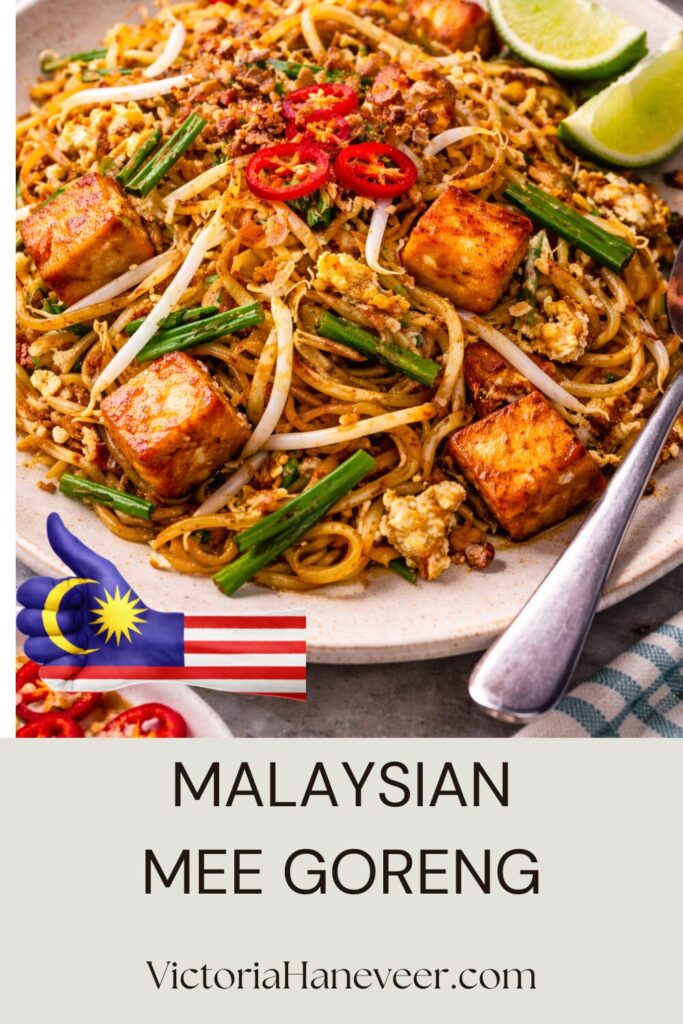
Tips for Best Results
- Loosen the noodles first: Fresh noodles often come packed tightly, so separate them before they hit the wok or they won’t fry evenly.
- Fry the tofu properly: Golden edges help it keep its shape once the sauce goes in.
- Mix the mee goreng sauce first: Have the sauce ready before cooking so the noodles don’t sit too long in the pan.
- Keep the bean sprouts for the end: They need only a brief toss or they lose their crunch.
- Use high heat: This Malaysian noodle dish needs quick cooking, not slow steaming.
Variations and Substitutions
- Can’t find yellow noodles? Use thick fresh wheat noodles. The texture will be close enough, though the result won’t be exactly the same.
- Adjust the heat: Reduce the chili paste in the mee goreng sauce and keep the sweet soy sauce and ketchup at the same level.
- Try another protein: Shrimp, chicken or beef can be added, though tofu is one of the most common inclusions.
- Tofu only: Skip meat and use extra tofu for a standard vegetarian-style pan, as long as your sauces are vegetarian too.
- Mee goreng basah: Add a little more stock or water at the end so the noodles stay softer and saucier.
- Readymade paste: A prepared mee goreng paste can be used, though the flavor will depend entirely on the brand.
How to Store It
- Make Ahead: Mix the sauce, prep the vegetables and fry the tofu earlier in the day.
- Fridge: Store leftovers for up to 2 days.
- Freezer: Not ideal. The noodles and bean sprouts lose too much texture after thawing.
- Reheat: Reheat in a wok or skillet with a small splash of water to loosen the sauce.
What to Serve with It
This dish is often eaten as a full meal on its own, with lime on the side and sometimes extra sambal.
If you want to turn it into part of a larger Malaysian spread, it goes well with roti canai or Malaysian satay, especially if you want a mix of noodles and grilled food on the table.
A little sambal belacan on the side also fits naturally if you like more heat.
Mee Goreng vs Char Kway Teow
Both of these are both stir-fried noodle dishes, but they don’t taste alike. Mee goreng uses a sweeter, saucier combination of chili, soy sauce and ketchup, and the noodles are usually yellow wheat noodles.
Char kway teow uses flat rice noodles and is more about soy, pork fat, seafood and wok hei.
Mee goreng mamak also often includes tofu and potato in some versions, which takes it in a different direction from Chinese-style stir-fried noodles. If char kway teow is darker and smokier, mee goreng is saucier and more directly spicy.
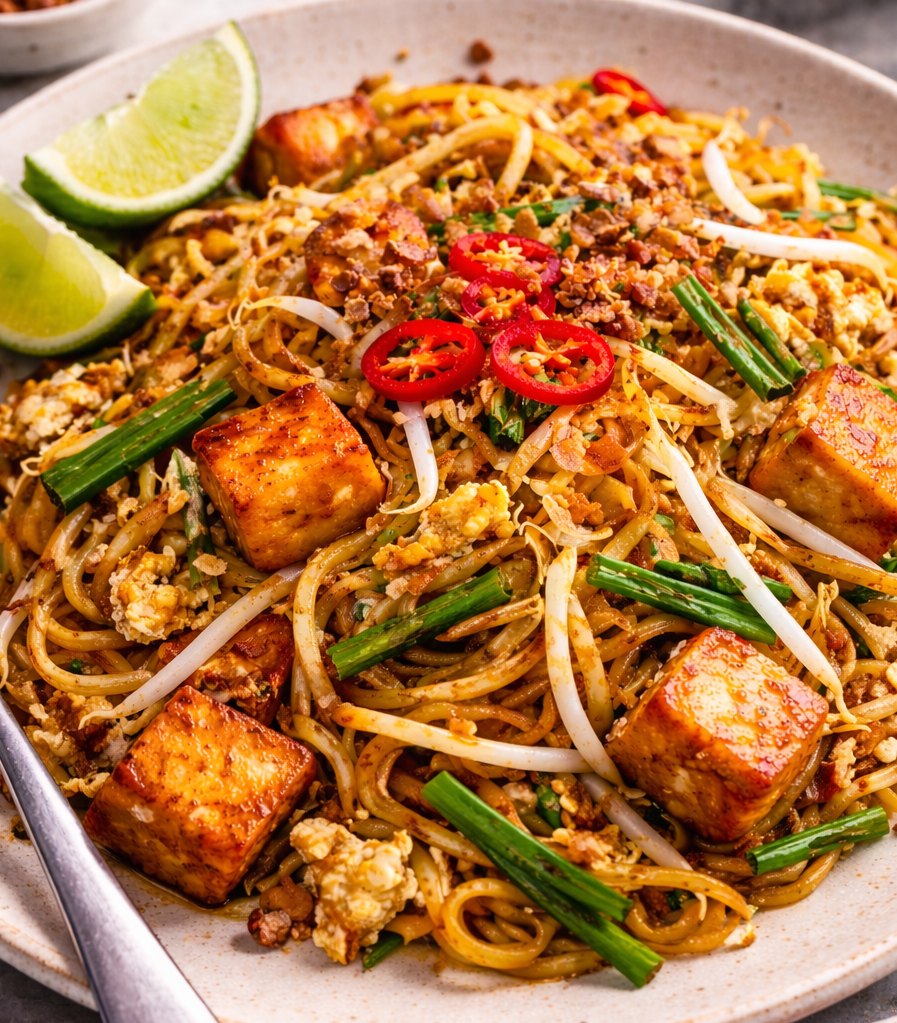
Mee Goreng FAQs
What is mee goreng mamak?
Mee goreng mamak is the Malaysian Indian Muslim style of the dish, usually made with yellow noodles, tofu, egg, vegetables and a sauce that includes chili, soy and ketchup.
What is the sauce made of?
It usually includes chili paste, sweet soy sauce, soy sauce, tomato ketchup and a little water or stock. Some versions also include oyster sauce or curry powder.
Can I make this recipe with tofu only?
Yes. Mee goreng tofu is common, and tofu works especially well because it absorbs the sauce.
What is mee goreng basah?
It’s a wetter, saucier style of the dish. The noodles are softer and the sauce is less reduced than in drier versions.
More Malaysian Recipes
Explore more traditional dishes in the Malaysian recipe collection:
- Nasi goreng goes in a rice direction with sweet soy sauce, garlic and chili, but it has a similar casual hawker-stall feel.
- For a drier noodle dish with a lighter savory seasoning, kolo mee shows a different side of Malaysian noodle cooking.
- And nasi lemak brings in coconut rice, sambal, anchovies, peanuts and egg (one of my favorites!)
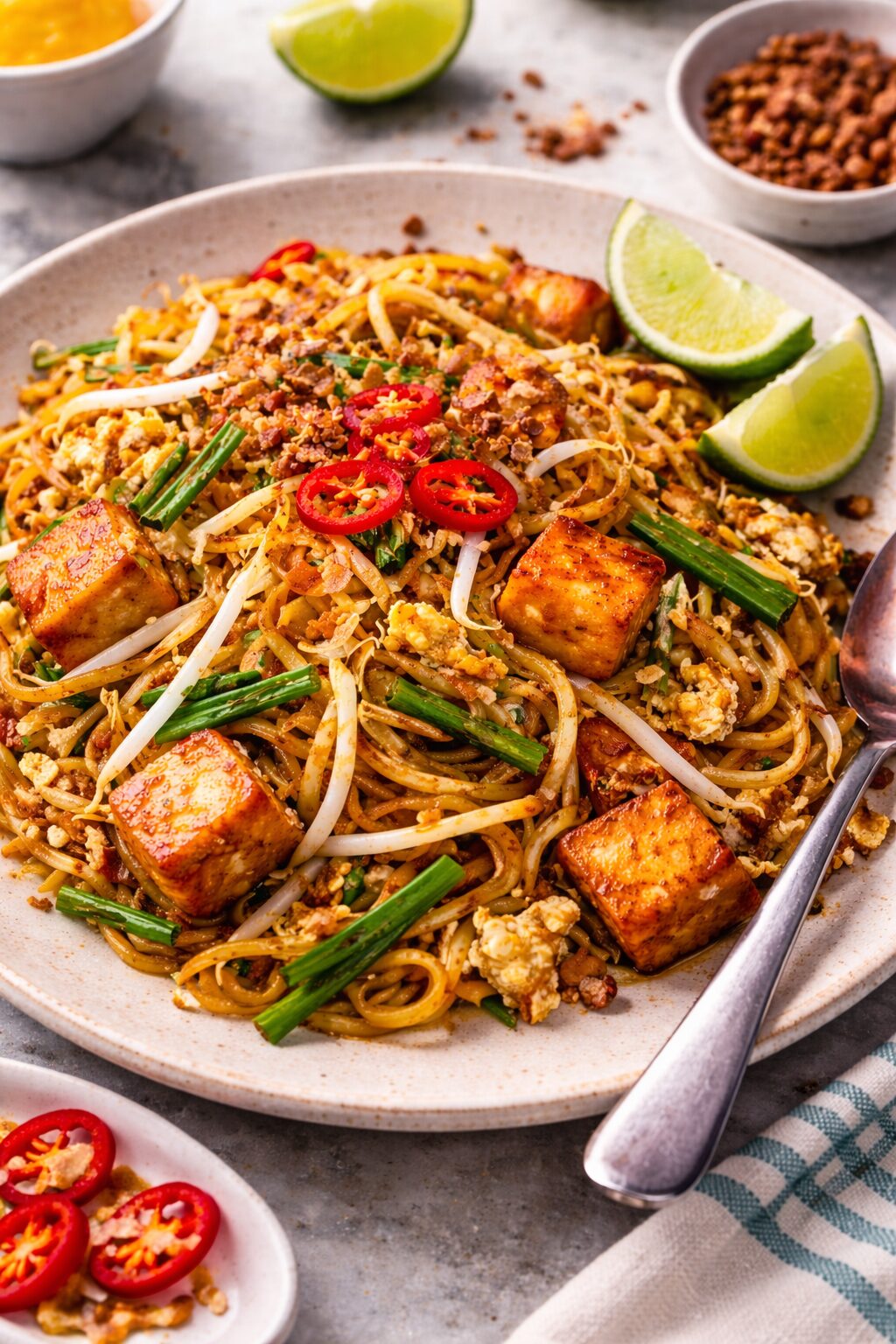
Malaysian Mee Goreng Recipe
Ingredients
- 14 ounces (400g) fresh yellow wheat noodles
- 7 ounces (200g) firm tofu, cubed
- 2 tablespoons neutral oil, plus more for frying if needed
- 2 eggs, lightly beaten
- 2 cloves garlic, finely chopped
- 1 small shallot, thinly sliced
- 1 cup (100g) shredded cabbage
- 1 cup (100g) bean sprouts
- 2 scallions or Chinese chives, cut into short lengths
- 1 lime, cut into wedges
- 2 tablespoons sambal oelek or chili paste
- 2 tablespoons sweet soy sauce
- 1 tablespoon light soy sauce
- 2 tablespoons tomato ketchup
- 1 teaspoon oyster sauce
- 1/4 cup (60ml) water or stock
- 1/2 teaspoon sugar
- Extra lime wedges
- Sliced red chili
- Fried shallots
Method
- Separate the fresh noodles gently so they are ready for the wok.
- Pat the tofu dry and fry it in a little oil until golden. Set aside.
- Mix all the mee goreng sauce ingredients in a bowl.
- Heat the oil in a wok or large skillet over high heat.
- Add the garlic and shallot and stir-fry briefly.
- Add the cabbage and toss for a short time.
- Push everything to one side and add the beaten eggs. Scramble lightly.
- Add the noodles and the mee goreng sauce.
- Toss until the noodles are evenly coated and heated through.
- Add the tofu, bean sprouts and scallions or chives.
- Toss again just until the sprouts start to soften.
- Serve immediately with lime wedges and any extra garnishes.
Notes
- A wok is best because the noodles need quick, high-heat cooking. A large skillet will still work, but don’t crowd it or the noodles will steam instead of fry.
History of Mee Goreng
This recipe has roots in the wider world of fried noodle dishes shaped by Chinese cooking traditions, but in Malaysia it took on a very specific identity through Mamak cooking.
That’s why mee goreng mamak is one of the best-known versions and is so closely linked with roadside stalls and Indian Muslim eateries.
Over time, the Malaysian version developed its own flavor profile, with ketchup, chili paste, soy sauces and tofu becoming part of the dish people now recognize. It is not just another generic fried noodle plate. The sauce alone tells you where it sits.
Today, it appears in homes, hawker centers and casual restaurants all over Malaysia. Some cooks prefer it drier, some go for mee goreng basah, and others use a ready-made mee goreng paste, but the basic identity of the dish is easy to spot.