Nasi kerabu is one of those dishes that stands out straight away because of the color. The rice is naturally dyed blue using butterfly pea flower, then served with herbs, vegetables, sambal and usually something like grilled fish or chicken.
What makes it interesting isn’t just how it looks, it’s how everything comes together on the plate. The rice is mild, the herbs are fresh and slightly sharp, and the sambal brings heat. Add a bit of toasted coconut and it all starts to make sense!
What is Nasi Kerabu?
Nasi kerabu comes from the east coast of Malaysia, especially Kelantan and Terengganu. It’s known for its blue rice and the amount of fresh herbs served with it.
You don’t cook it all together. The rice, herbs, sambal and any protein are prepared separately, then served side by side so you can mix everything together as you eat, combining the elements however you want.
This dish reflects the mix of Malay, Chinese, Indian and Peranakan influences found in Malaysian cooking. Herb-based dishes like this are especially common on the east coast.
Why I Keep Coming Back to This Dish
I keep making this because it’s a good way to use up herbs and leftover protein when you want a satisfying meal. Once the rice is done, everything else is just prep.
Nasi Kerabu at a Glance
Cooking method: Steamed rice with prepared toppings
Key flavors: Fresh herbs, chili heat, toasted coconut and aromatic rice
Typical serving style: Rice served with herbs, vegetables, sambal and grilled fish or chicken
What It Tastes Like
The rice itself is quite neutral, which is the point. The flavor comes from everything around it. Fresh herbs give it a green, slightly citrusy edge, sambal adds heat, and the toasted coconut brings a bit of richness.
It’s not a saucy dish, so nothing feels heavy or coated. Everything stays fairly clean and distinct.
What to Expect When Cooking It
The rice turns blue once you add the butterfly pea infusion, which looks more dramatic than it actually is to make. Most of the time goes into slicing herbs, prepping toppings and getting everything ready to serve.
Once that’s done, you’ll find it comes together quickly.
Key Ingredients
Butterfly pea flower: Gives the rice its blue color.
Jasmine rice: Light and fluffy, which works well with the toppings.
Fresh herbs: Mint, Thai basil and daun kesum are commonly used.
Sambal: Brings heat and depth.
Toasted coconut (kerisik): Adds a nutty finish.
Ingredient Spotlight: Butterfly Pea Flower
Butterfly pea flower is used across Southeast Asia as a natural coloring. When steeped in hot water, it releases a deep blue color that’s used for rice, drinks and desserts.
How to Make Nasi Kerabu
Prepare the rice: Cook jasmine rice using butterfly pea flower infusion.
Prepare the toppings: Slice herbs, cook your protein and make or portion the sambal.
Toast the coconut: Cook until lightly golden.
Assemble: Arrange everything around the rice.
Serve: Add sambal and any extras just before eating.
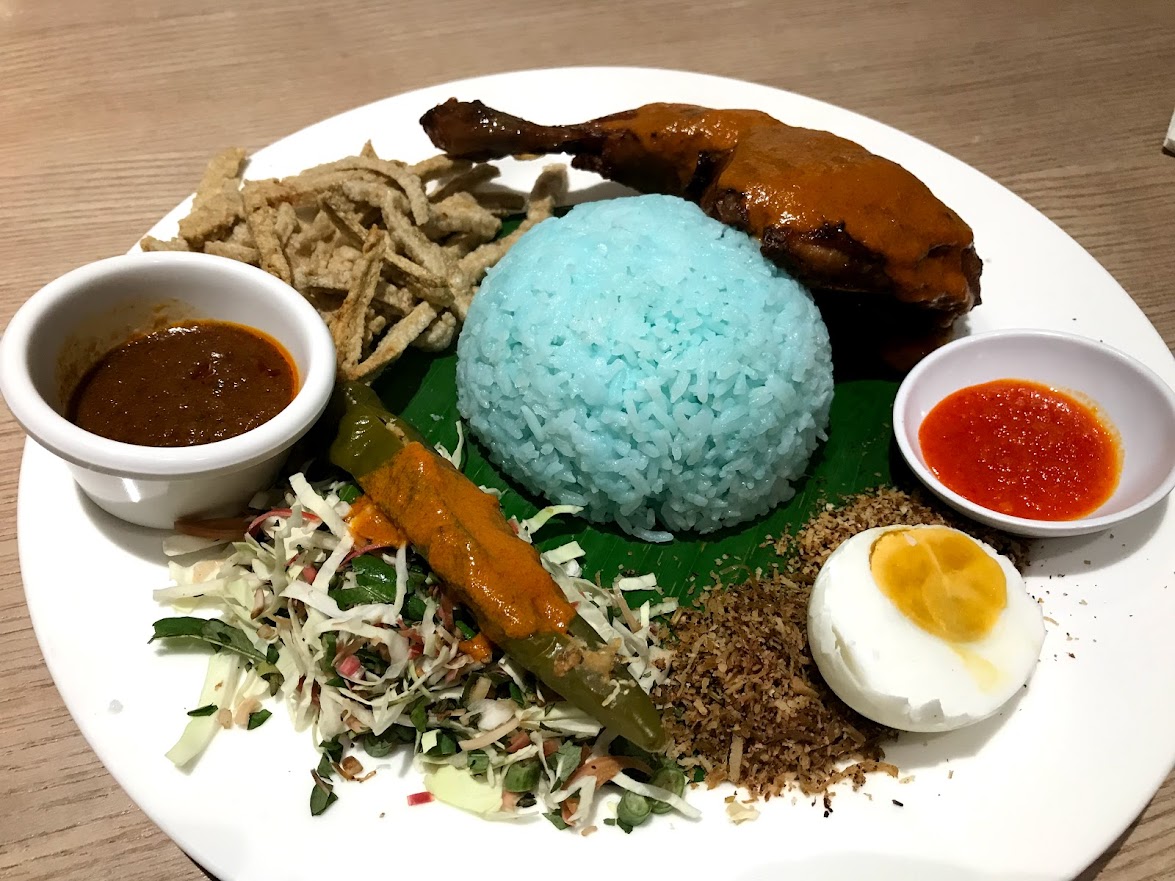
Nasi Kerabu
Ingredients
- 2 cups (400g) jasmine rice
- 2 cups (480ml) butterfly pea flower tea
- 1 cup shredded cabbage
- 1 cup bean sprouts
- ½ cup sliced cucumber
- ½ cup fresh herbs such as mint and Thai basil
- grilled fish or chicken, to serve
- 4 dried red chilies
- 2 cloves garlic
- 2 shallots
- 1 teaspoon belacan
- 1 tablespoon lime juice
- toasted coconut
- sliced chilies
Method
- Rinse the rice and cook it using the butterfly pea flower tea instead of plain water.
- Blend the dried chilies, garlic, shallots and belacan until smooth.
- Stir in the lime juice.
- Slice the vegetables and herbs thinly so they mix easily with the rice.
- Serve the blue rice on a plate and arrange the vegetables, herbs and sambal around it.
Tips for Best Results
Use fresh herbs: This makes a noticeable difference.
Steep the flowers long enough: A stronger infusion gives a deeper color.
Don’t over-toast the coconut: It can turn bitter if too dark.
Put it together last minute: Keeps everything fresh.
Variations and Substitutions
No butterfly pea flowers available: Use plain rice instead.
Milder version preferred: Serve sambal on the side.
Different protein option: Grilled chicken, fried fish or salted egg all work.
How to Store It
Make Ahead: The rice, sambal and protein can be prepared ahead and kept separate.
Fridge: Store cooked rice in an airtight container for up to 2 days.
Freezer: Rice can be frozen for up to 1 month, but herbs should be fresh.
Reheat: Warm the rice gently before serving.
What to Serve with Nasi Kerabu
This is usually served with grilled fish, fried chicken or salted egg. A spoonful of sambal belacan adds extra heat, and you can add dishes like nasi goreng or kolo mee if you’re making a larger spread.
In Kelantan, it’s often served with budu, which is a fermented anchovy sauce. It’s quite strong and salty, so it’s usually added in small amounts.
Nasi Kerabu vs Nasi Ulam
Both dishes use rice and herbs, but they’re handled differently. Nasi kerabu keeps everything separate on the plate, while nasi ulam mixes the herbs into the rice.
Nasi Kerabu FAQs
What makes nasi kerabu blue?
The rice is colored using butterfly pea flower, which releases a natural blue pigment when steeped.
Is nasi kerabu always served with fish?
No. It’s often served with fish, but chicken, salted egg or vegetarian toppings are also common.
More Malaysian Recipes
If you’re exploring Malaysian cooking, otak-otak is worth trying for a seafood option, while kolo mee is a simple noodle dish. Nasi goreng is another well-known rice dish. And you can find more in the Malaysian recipes hub.
History of Nasi Kerabu
Nasi kerabu comes from Kelantan, where herb-based dishes are common.
It developed around the use of fresh herbs available in the region and became known for its blue rice and range of toppings.
Today it’s served across Malaysia with different proteins and sides. Traditional versions often include budu along with toasted coconut and herbs, while many modern versions also include sambal.
Image credit: Nasi kerabu from Serai, Paradigm Mall via Wikimedia Commons
