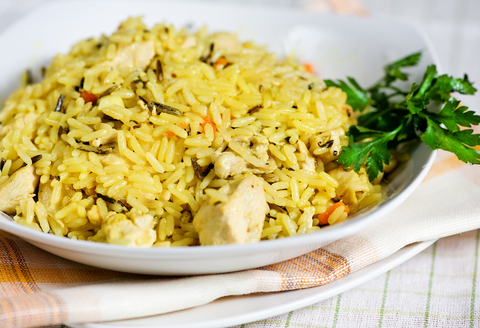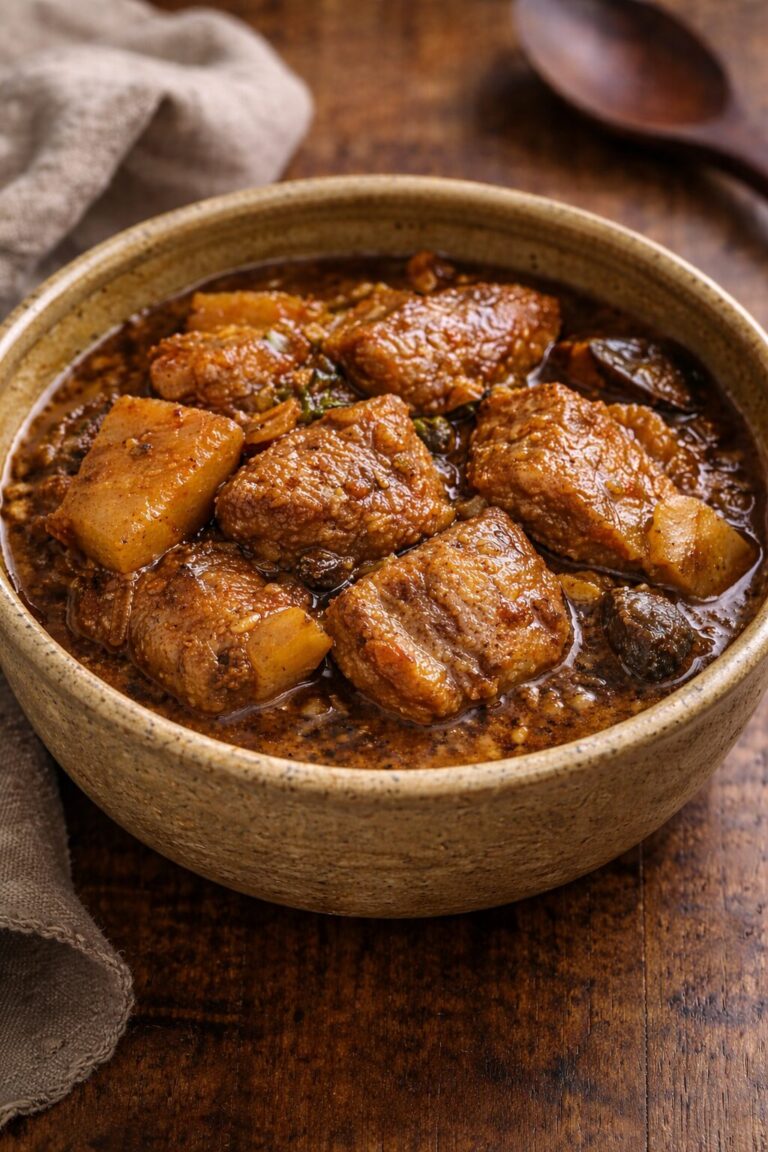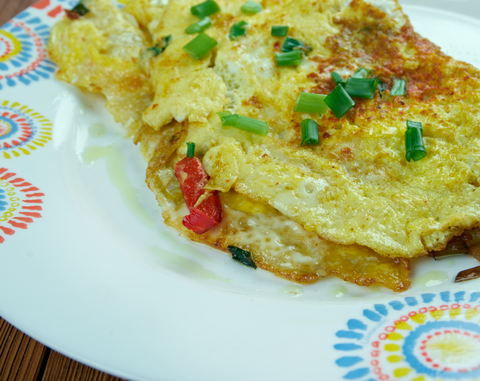
Otak-Otak Recipe (Malaysian Spiced Fish in Banana Leaves)
This post contains affiliate links. As an Amazon Associate I earn from qualifying purchases.
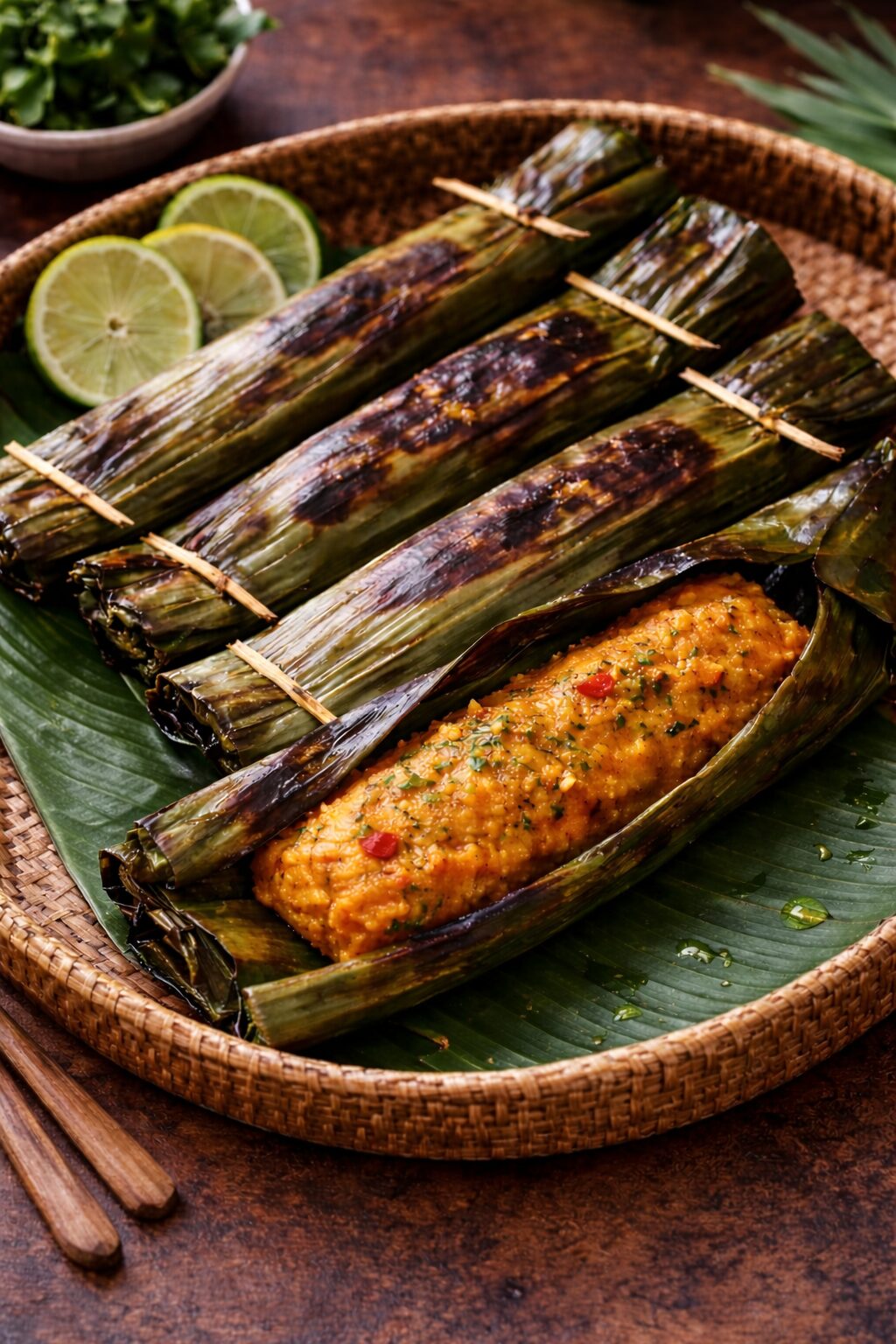
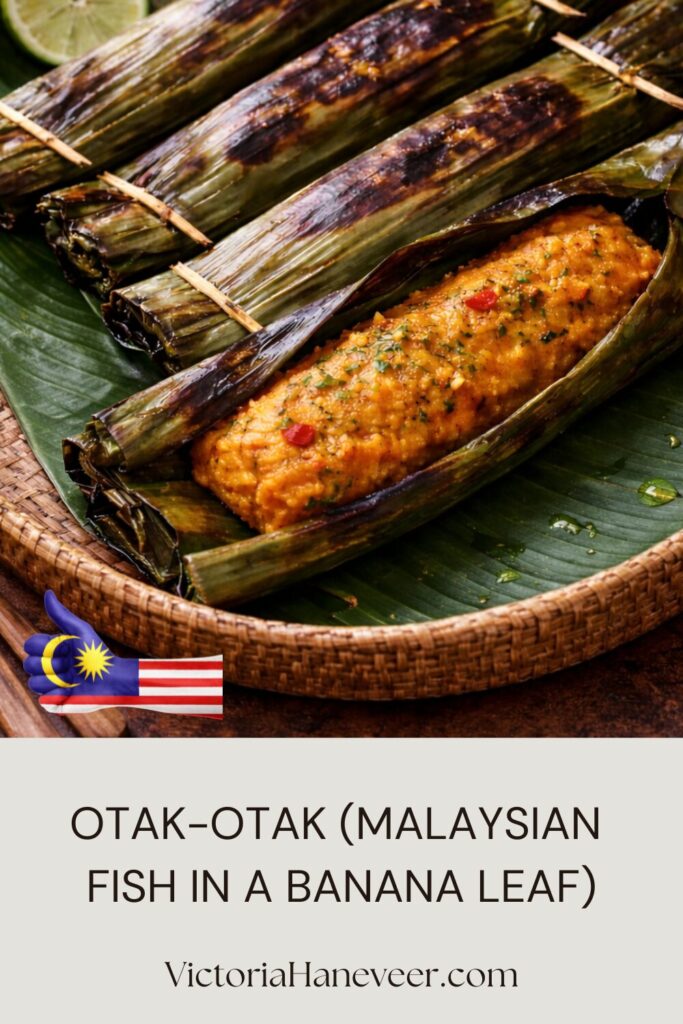
Otak-otak is a Malaysian spiced fish paste wrapped in banana leaves and cooked until the edges lightly char and the inside sets soft.
The mixture blends fish with coconut milk and spices into a thick paste, which is then wrapped and grilled in small parcels. The banana leaves hold everything together while cooking and pick up a light smoky aroma from the heat.
The finished parcels are soft inside with a slightly firmer outer layer where the leaf touches the heat. They’re often served with chili condiments such as sambal belacan. For more traditional dishes from around the country, visit the Malaysian recipes hub.
Dish Overview
Otak-otak is a grilled fish paste wrapped in banana leaves and cooked over charcoal or a grill. The mixture combines fish, coconut milk, chilies and aromatics into a paste that firms up slightly as it cooks.
Dish name: Otak-otak
Cooking method: Grilled fish paste in banana leaf parcels
Key flavor elements: Coconut milk, chilies, aromatics
Typical serving style: Served as a snack or appetizer with sambal or rice dishes
What This Dish Is
Otak-otak is commonly associated with Peranakan and coastal Malaysian cooking, particularly in Penang and Johor. The name loosely translates to “brains,” referring to the soft texture of the cooked fish paste.
Street vendors often grill the banana leaf parcels over charcoal, which adds a noticeable smoky flavor.
What It Tastes Like
The flavor is savory with mild chili heat and a light coconut base. The fish comes through clearly, with herbs and aromatics in the background.
The texture’s soft inside the parcel, with a slightly firmer edge where it touches the leaf.
Key Ingredients
White fish: Mild fish such as mackerel, snapper or cod blends smoothly into the paste.
Coconut milk: Adds richness and helps the mixture set softly.
Banana leaves: Wrap the fish paste and add a light smoky aroma.
Chilies: Provide color and gentle heat.
Lemongrass: Adds a fresh citrus note.

Ingredient Spotlight: Fish Paste
The fish paste is made by blending fresh fish with spices and coconut milk until smooth. It should be thick enough to hold its shape when spooned into the leaves but still soft.
Tips for Best Results
Blend until smooth: A finer paste gives a more even texture once cooked.
Soften the banana leaves: Pass them over heat briefly so they bend without splitting.
Cook over medium heat: This allows the paste to cook through without burning the leaves too quickly.
Keep parcels compact: Overfilling makes them harder to cook evenly.
Variations and Substitutions
If banana leaves aren’t available: Use parchment paper, though you won’t get the same aroma.
To reduce spice level: Use fewer chilies in the paste.
For a different protein option: Some versions use shrimp or a mix of fish and shrimp.
How Otak-Otak Is Made
The fish is blended with coconut milk and spices to form a thick paste. This is spooned onto banana leaves, folded into small parcels and grilled until set. The leaves protect the mixture while allowing light charring on the outside.
Otak-Otak
Ingredients
- 14 ounces (400g) white fish fillet
- ½ cup (120ml) coconut milk
- 1 egg
- 3 shallots
- 2 garlic cloves
- 2 red chilies
- 1 stalk lemongrass
- sliced cucumber
- lime wedges
- fresh herbs
Method
- Blend fish, coconut milk, egg and spice paste until smooth. The mixture should be thick and spreadable.
- Cut banana leaves into rectangles.
- Lightly toast them over heat to make them flexible.
- Spread several tablespoons of fish paste onto each leaf and fold into small parcels.
- Grill the parcels over medium heat until the fish mixture sets and the leaves become lightly charred.
- Serve hot.
Notes
How to Store It
Make Ahead: The fish paste can be blended earlier and kept chilled before wrapping.
Fridge: Store cooked parcels for up to 2 days.
Freezer: Freeze uncooked wrapped parcels for up to 1 month.
Reheat: Warm gently in a pan or oven until heated through.
What to Serve with It
This is often served as a snack or appetizer. It goes well with rice and chili condiments such as sambal belacan, or alongside grilled seafood and noodle dishes.
Otak-Otak vs Thai Fish Cakes
Both dishes use seasoned fish paste, but the preparation is different. Thai fish cakes are shaped and fried, giving a firmer texture.
Otak-otak is wrapped and grilled, which keeps the inside soft and adds a light smoky flavor. If you like fish cakes, try these tuna fish cakes.
Otak-Otak FAQs
What fish works best?
Firm white fish such as mackerel, snapper or cod blends smoothly and holds together once cooked.
Can it be baked instead of grilled?
Yes. It can be baked, though grilling gives a more traditional flavor.
More Malaysian Recipes
If you’re exploring Malaysian cooking further, try dishes like sambal belacan, kari kapitan and babi pongteh. And I love Malaysian satay a lot!
History of Otak-Otak
This dish likely developed in coastal Southeast Asia where fresh fish was widely available. Wrapping the paste in leaves allowed it to be cooked over fire without sticking.
It later became associated with Malaysian and Indonesian coastal cooking, especially in Peranakan cuisine. Today it’s sold by street vendors and made at home, with both grilled and steamed versions.