Nasi Dagang (Malaysian Coconut Rice with Fish Curry)
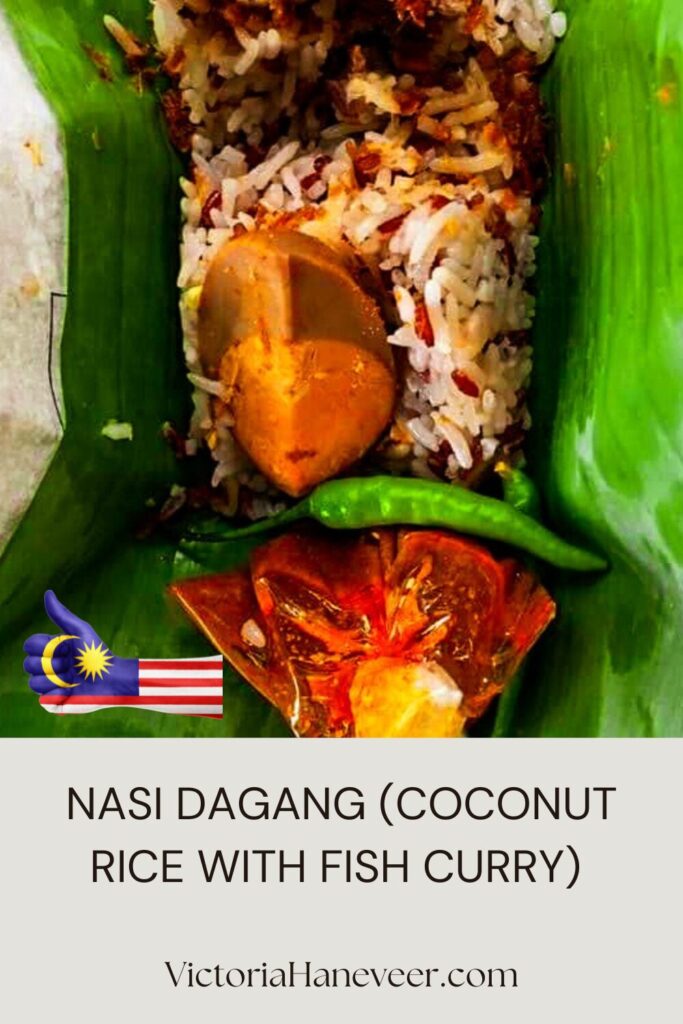
Nasi dagang is a traditional Malaysian rice dish commonly associated with the east coast states of Terengganu and Kelantan. The rice is steamed with coconut milk and served with a rich fish curry, pickled vegetables and sometimes boiled eggs.
This version of nasi dagang focuses on the classic pairing of coconut rice with tuna curry, which is one of the most recognizable combinations for this dish.
The rice grains cook up fragrant and don’t stick together, while the curry adds warmth from spices and a mild sweetness from coconut milk. For another Malaysian rice dish with bold flavors, see nasi kerabu.
Dish Overview
Nasi dagang combines coconut rice with a spiced fish curry and simple accompaniments. The rice is usually steamed in stages so it stays firm while absorbing coconut milk.
The dish is often eaten for breakfast in Terengganu and Kelantan, though it also appears as a hearty lunch meal. Pickled vegetables balance the rich curry and rice.
Nasi Dagang Takeaways
Cooking method: Steamed rice with simmered fish curry
Key flavor elements: Coconut milk, spices, turmeric, tamarind
Typical serving style: Coconut rice topped with fish curry, pickles and egg
What This Dish Is
Nasi dagang is a Malay rice dish traditionally prepared with a mixture of white rice and glutinous rice steamed in coconut milk. It’s usually served with fish curry and simple vegetable pickles.
The dish is especially popular in Terengganu, where it’s commonly eaten in the morning at small food stalls.
What It Tastes Like
The rice has a gentle coconut aroma and a slightly firm texture because of the mixture of rice varieties. The fish curry adds savory depth, mild heat and subtle sweetness.
If you like coconut-based rice dishes and fragrant curries, this is the kind of dish you’ll enjoy.
Key Ingredients
- Rice mixture: A blend of jasmine rice and glutinous rice gives nasi dagang its slightly sticky but separated texture
- Coconut milk: Provides richness and fragrance to the rice
- Fish: Tuna or mackerel are commonly used for the curry
- Turmeric: Adds warm color and earthy flavor to the curry
- Tamarind: Contributes a mild sour note that balances the coconut milk
Ingredient Spotlight: Glutinous Rice
Glutinous rice helps give nasi dagang its distinctive texture. When mixed with regular rice, it creates a slightly sticky consistency that holds together well with the curry.
Tips for Best Results
- Rinse the rice well: Washing the rice removes excess starch and helps the grains cook evenly
- Steam the rice in stages: Traditional nasi dagang rice is partially cooked, then steamed again with coconut milk
- Use firm fish pieces: Tuna or mackerel hold their shape well during simmering
- Let the curry rest briefly: Allowing the curry to sit for a few minutes deepens the flavor
Variations and Substitutions
If you can’t find glutinous rice: Use only jasmine rice, though the texture will be less sticky.
If you want it less spicy: Reduce the number of chilies in the curry paste.
If you want a different protein: Chicken can be used instead of fish in some modern versions.
Make Ahead and Storage
Make Ahead: The curry can be prepared a day in advance and reheated before serving.
Fridge: Store leftover rice and curry separately in airtight containers for up to 3 days.
Freezer: The curry freezes well for up to 1 month.
Reheat: Warm the curry gently on the stovetop and steam the rice briefly to refresh it.
What to Serve with It
Nasi dagang is typically served with fish curry, pickled vegetables and sliced boiled eggs. Some versions also include sambal or fried shallots. The dish is often eaten with additional herb salads or simple vegetable sides.
Nasi Dagang vs Nasi Lemak
Nasi dagang differs from nasi lemak in both flavor and preparation. Nasi lemak rice is cooked entirely in coconut milk and served with sambal, while nasi dagang uses a rice blend and is paired with fish curry.
Nasi Dagang FAQs
What fish is used for nasi dagang?
Tuna is one of the most common fish used in nasi dagang curry, though mackerel is also popular.
Is nasi dagang eaten for breakfast?
In Terengganu and Kelantan, nasi dagang is often eaten as a breakfast dish sold at morning food stalls.
More Malaysian Recipes
If you’re exploring Malaysian cooking, you can browse the full collection here: Malaysian recipes.
Also try the following dishes:
- Nasi kerabu is another rice dish with bold flavors and vibrant color, often served with herbs and salted fish.
- For something with a tangy, spicy profile, asam pedas features fish simmered in a tamarind-based broth packed with chili and aromatics.
- Grilled dishes like ikan bakar bring smoky flavor from the charcoal and are often served with sambal on the side.
- And if you want a more widely known option, nasi lemak pairs coconut rice with sambal, anchovies and peanuts for a balanced combination of flavors.

Nasi Dagang
Ingredients
- 2 cups (400g) jasmine rice
- 1 cup (200g) glutinous rice
- 1 cup (240ml) coconut milk
- 1 cup (240ml) water
- 1 teaspoon salt
- 2 cups (480ml) coconut milk
- 12 ounces (340g) tuna or mackerel, cut into chunks
- 3 shallots
- 3 cloves garlic
- 1 inch (2 ½ cm) fresh ginger
- 2 dried red chilies
- 1 teaspoon turmeric powder
- 1 tablespoon tamarind paste
- fried shallots
- sliced boiled eggs
- pickled vegetables
Method
- Rinse the jasmine rice and glutinous rice until the water runs mostly clear.
- Soak the rice mixture in water for about 30 minutes, then drain.
- Steam the rice mixture for about 20 minutes until partially cooked.
- Mix the coconut milk, water and salt, then gently combine with the rice and steam again until the grains are fully tender.
- Blend the shallots, garlic, ginger and dried chilies into a paste for the curry.
- Heat the paste in a pan until fragrant, then add coconut milk, turmeric and tamarind paste.
- Add the fish pieces and simmer gently until cooked through and the curry thickens slightly.
- Serve the coconut rice with fish curry and garnish with fried shallots, eggs and pickled vegetables.
Notes
- A steamer helps achieve the traditional texture for nasi dagang rice, though a rice cooker can also be used.
History of Nasi Dagang
Nasi dagang developed along Malaysia’s east coast, particularly in Terengganu, where fishing communities had easy access to fresh seafood.
The dish became associated with morning markets and roadside stalls where vendors prepared large batches of rice and curry for breakfast.
It’s now enjoyed throughout Malaysia with regional variations in the curry and side dishes.
Image credit: “Nasi Dagang PSU” via Wikimedia Commons, licensed under CC BY-SA 4.0