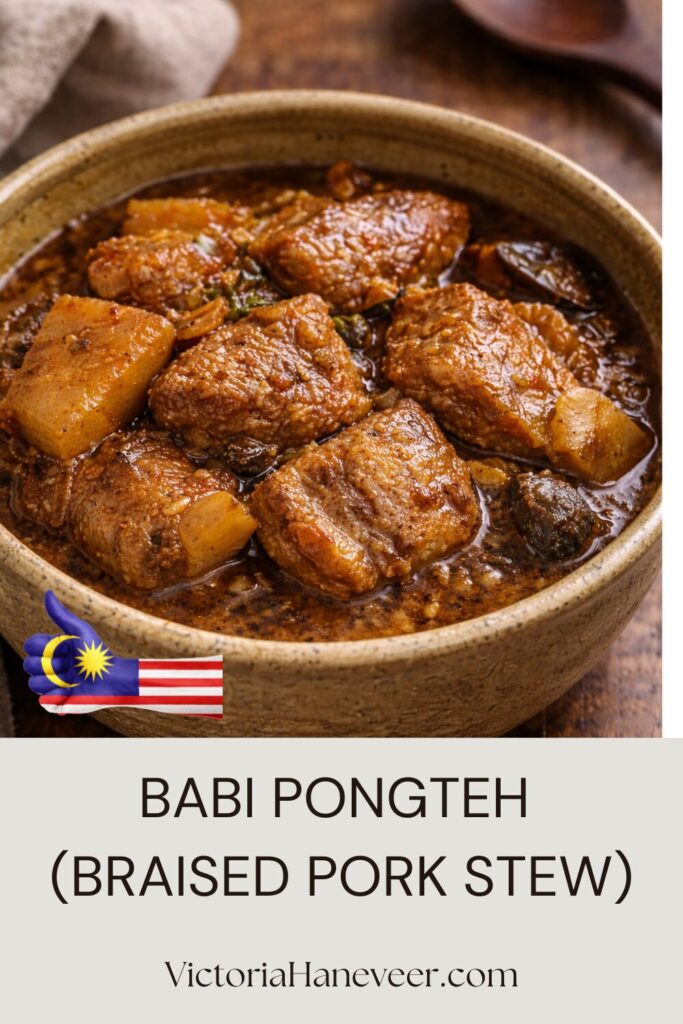
Babi pongteh is a classic Peranakan braised pork dish made with fermented soybean paste, garlic and palm sugar. It’s cooked slowly until the pork turns tender and the sauce thickens into a rich, savory gravy.
Unlike many Southeast Asian pork dishes that rely on chilies, this one focuses on depth and balance. The fermented soybean paste gives it a strong savory base, while palm sugar softens it slightly without making it sweet.
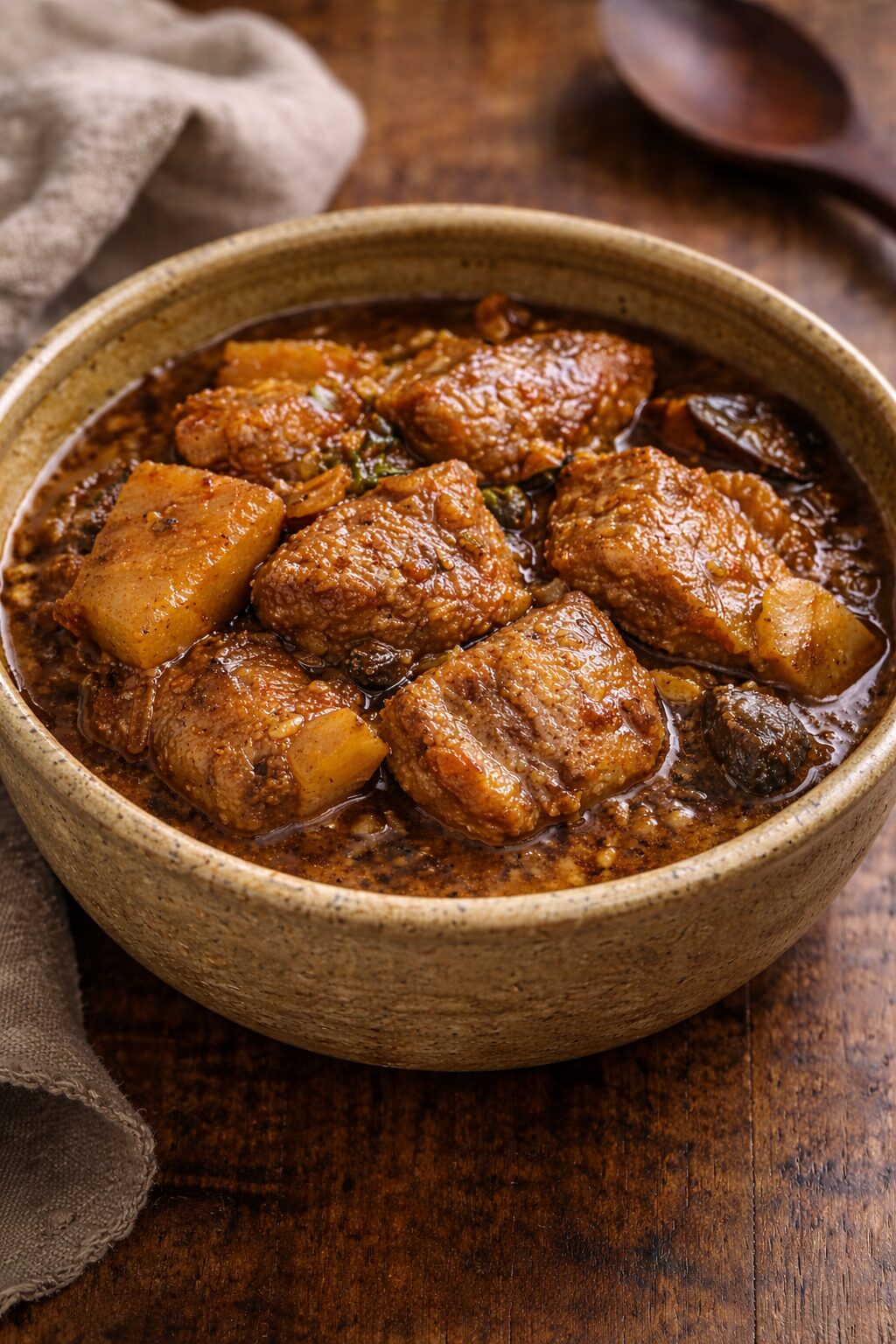
The finished dish has tender pork, soft potatoes and a thick sauce that clings to everything. It’s the kind of meal that’s best served with rice so nothing goes to waste. For more traditional dishes from across the country, visit the Malaysian recipes hub.
What This Dish Is
Babi pongteh is a traditional Peranakan pork stew from the Chinese-Malay communities of Penang and Melaka. It combines Chinese-style braising with local ingredients like fermented soybean paste and palm sugar.
It’s often cooked for family meals and gatherings, and it’s one of the dishes people come back to because the flavors develop well over time.
What It Tastes Like
The flavor is savory with a slight sweetness and a deep umami base from the fermented soybeans. Garlic runs through the sauce and gives it a strong, familiar aroma.
If you’ve had Chinese braised pork before, this sits in a similar space, but the soybean paste gives it a different kind of depth and a thicker finish.
Key Ingredients
Tauchu (fermented soybean paste): This is what defines the dish. It brings saltiness, depth and a slightly fermented flavor.
Pork belly: The traditional cut. The fat renders during cooking and keeps the meat tender.
Palm sugar: Adds a mild sweetness that balances the saltiness.
Garlic: Used generously and forms the base of the sauce.
Potatoes: Absorb the sauce and add texture to the finished dish.
Understanding Tauchu
Tauchu is a fermented soybean paste made from salted soybeans. Unlike smooth pastes, it usually contains whole or partially broken beans, which gives the sauce more texture.
As it cooks, it breaks down into the sauce and creates that deep savory base the dish is known for. It’s different from soy sauce and not interchangeable.
Tauchu vs Natto
Both are fermented soybeans, but they’re used very differently. Tauchu is salty and used in cooking, especially in braises and sauces.
Natto is Japanese, sticky and much stronger in aroma. It’s eaten as-is rather than cooked into dishes, so it doesn’t work as a substitute here.
Tips for Best Results
Brown the pork first: This adds extra flavor and improves the texture.
Mash the tauchu slightly: Breaking up the beans helps release more flavor into the sauce.
Simmer gently: Keep the heat low so the pork becomes tender without drying out.
Let it rest: The flavor improves after sitting for a bit before serving.
Variations and Substitutions
If tauchu isn’t available: A mix of miso and light soy sauce can work, though the flavor won’t be identical.
If you want it less salty: Use a bit less soybean paste and add water or stock.
For a different protein: Pork shoulder or chicken thighs can be used instead of pork belly.
How Babi Pongteh Is Made
The pork is first browned, then simmered with garlic, tauchu, palm sugar and water or stock. Potatoes are added partway through cooking so they soften and absorb the sauce.
As it cooks, the liquid reduces into a thicker gravy that coats the pork and potatoes evenly.
Babi Pongteh
Ingredients
- 1 pound (450g) pork belly, cut into chunks
- 2 tablespoons tauchu (fermented soybean paste)
- 6 cloves garlic, chopped
- 1 tablespoon palm sugar, chopped
- 1 tablespoon soy sauce
- 1½ cups (360ml) water
- 2 medium potatoes, peeled and cut into chunks
- fried shallots
- sliced green onions
- fresh cilantro
Method
- Heat a pot over medium heat and lightly brown the pork pieces to develop flavor.
- Add the garlic and cook briefly until fragrant. Stir in the tauchu and mash the beans slightly.
- Add palm sugar, soy sauce and water. Bring to a gentle simmer and cook until the pork begins to soften.
- Add the potatoes and continue simmering until the pork is tender and the sauce thickens.
- Transfer to a bowl and garnish with fried shallots if desired. Serve hot with steamed rice.
Notes
How to Store It
Make Ahead: This dish can be made a day in advance and often tastes better the next day.
Fridge: Store in an airtight container for up to 3 days.
Freezer: Freeze portions for up to 2 months.
Reheat: Warm on the stovetop over low heat, adding a little water if needed.
What to Serve with It
It’s usually served with steamed white rice so the sauce can be soaked up. It also works alongside simple vegetable dishes or something fresh on the side to balance the richness.
Babi Pongteh vs Chinese Braised Pork
Chinese braised pork typically relies on soy sauce, sugar and spices. Babi pongteh uses fermented soybean paste as the main seasoning, which gives it a thicker texture and a different kind of savory depth.
The end result is less glossy and more stew-like, with a stronger fermented flavor.
Babi Pongteh FAQs
What is tauchu in babi pongteh?
It’s a fermented soybean paste made from salted soybeans. It gives the dish its main savory flavor.
Is it spicy?
No. This dish isn’t spicy and focuses more on savory and slightly sweet flavors.
If you’re exploring Malaysian cooking further, try dishes like popiah, beef rendang and Penang assam laksa.
History of Babi Pongteh
Babi pongteh comes from the Peranakan or Nyonya community, where Chinese cooking techniques were adapted using local Malaysian ingredients. The use of fermented soybean paste alongside palm sugar reflects that blend.
It became a regular home-cooked dish in places like Penang and Melaka, often made for family meals and gatherings because it can be cooked in large batches and holds well.
Today it’s still widely cooked in homes and served in restaurants, with some variations using different cuts of pork or added ingredients, but the core method stays the same.