Cold shaved ice, slippery green cendol strands, salted coconut milk and dark gula melaka syrup are what make cendol so tied to hot afternoons in Malaysia. The bowl looks simple at first, although the balance is easy to throw off. Too much coconut milk and it tastes flat. Too little syrup and the ice washes everything out.
This version keeps the base close to the Malaysian stall style, with homemade pandan cendol, a darker palm sugar syrup and coconut milk seasoned with salt. If you’re exploring more hawker dishes and desserts, keep the Malaysian Recipes: Traditional Dishes, Regional Food Guide nearby while you cook.
What is Cendol?
This shaved ice dessert is eaten across Malaysia, with strong associations with hawker food and warm afternoons. Penang and Melaka are especially well known for it, though you’ll see it far beyond those places.
It’s usually sold from hawker stalls, food courts and dessert counters, often in bowls or tall glasses packed with ice. The core version stays fairly tight: green cendol jelly, coconut milk and palm sugar syrup, with red beans or sweet corn added in some stalls. I’ve also seen it with glutinous rice or durian, but I find the plain version shows the base flavors best.
At home, the part that needs the most attention is the cendol mixture. It has to cook until thick and glossy before you press it, or the strands dissolve into the ice water and you end up with green sludge rather than cendol. And yes, I’ve made that mistake before!
- Cooking method: Cook the jelly mixture on the stove, chill the strands, then assemble over shaved ice.
- Key flavor elements: Pandan, coconut milk, gula melaka and a little salt.
- Typical serving style: Served cold in a bowl or glass, usually as a dessert or afternoon stall treat.
Why This Dish Sticks with Me
The coconut milk needs salt – that’s important! A lot of home versions miss that and end up tasting sugary and a bit flat, like something’s missing. Once the coconut milk is lightly salted, the palm sugar tastes richer and the ice tastes cleaner.
Another tip: the syrup also needs to be a little stronger than you might think. Ice melts fast in cendol, so a weak syrup is going to disappear in minutes, especially in the heat.
What It Tastes Like
The green strands are cool, soft and slightly chewy. Coconut milk gives the bowl a rounder edge, while the gula melaka brings a darker sweetness with more depth than white sugar. The ice keeps everything loose and cold, so each spoonful shifts a little as the syrup runs down through the bowl.
If you like shaved ice desserts, pandan desserts or sweet dishes with a little salt in them, this is an easy one to get into. It’s a relatively light dessert after a spicy or heavy main course.
What to Expect when Cooking It
The cendol mixture thickens quickly once the starches cook through. At first it looks thin and cloudy. Then it turns glossy, heavier and hard to stir. That’s the point where you need to move fast and press it into cold water.
The syrup is the easy part. You only need to dissolve the sugars, simmer briefly and strain if there are bits left behind. And the coconut milk needs even less work. Warm it only if you need to dissolve the salt, then chill it well before serving.
What Makes This Version Different
This recipe uses rice flour and tapioca starch for the cendol strands. The rice flour gives them their body, while the tapioca keeps them from getting chalky. I’m also using pandan paste, which is easier to find in the UK than enough fresh pandan leaves to blend and strain for one dessert.
The syrup stays darker and slightly loose, because that gives you better flavor once it hits the ice. I also keep the coconut milk separate until the last minute, so the dessert doesn’t get that muddy look too early.
Key Ingredients in Cendol
- Rice flour: This forms the base of the cendol strands and gives them their shape.
- Tapioca starch: Adds a little elasticity so the strands aren’t dry or crumbly.
- Pandan paste: To give the cendol its green color and its grassy vanilla-like note.
- Gula melaka: This is the sugar that gives the syrup its darker flavor. I find palm sugar blocks easiest to use.
- Coconut milk: Use a thick coconut milk here. Thin coconut milk tastes washed out once it hits the ice, so don’t use light coconut milk. I like Amoy coconut milk for the high coconut to water ratio. A lot of cheaper ones are mostly water and thickener.
- Shaved ice: Use fine ice for the best result. Big cubes make the syrup slide straight to the bottom.
Ingredient Spotlight: Gula Melaka
Gula melaka is the ingredient that gives cendol its darker sweetness. White sugar can make the bowl sweet. Gula melaka gives it more character.
You’ll see it across Malaysian sweets and desserts, especially where coconut is an ingredient. If you already have it around for kuih or sweet sauces, cendol is a very good place to use it.
How to Make It
- Make the syrup: Simmer the palm sugar, brown sugar, water and pandan and then cool it.
- Salt the coconut milk: Stir the salt into the coconut milk and chill.
- Cook the cendol batter: Whisk the rice flour, tapioca starch, pandan and water, then cook.
- Press the strands: Push the hot mixture through a cendol press, potato ricer or colander into ice water.
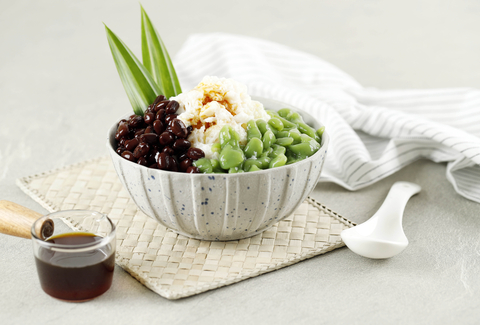
- Assemble the bowls: Add red beans if using, then cendol, shaved ice, coconut milk and syrup.
Top Tips for Best Results
- Use ice water for the strands: Warm water leaves them soft and sticky.
- Press the cendol while it’s still hot: Once the mixture cools, it tightens and becomes hard to push through the holes.
- Strain the syrup if needed: Some gula melaka leaves behind bits that don’t dissolve cleanly.
- Chill the coconut milk: Cold coconut milk keeps the bowl cold longer and stops the ice melting too fast.
- Keep the syrup stronger than a drink syrup: Shaved ice will dilute it quickly.
Variations and Substitutions
- If you can’t find gula melaka: Use a dark palm sugar or a mix of dark brown sugar and a little molasses. The syrup will lose some of its smoky depth.
- If you can’t find pandan paste: Use pandan extract with a drop of green food coloring, or blend fresh pandan leaves with water and strain them.
- For extra toppings: Add sweetened red beans, sweet corn or a little glutinous rice.
- For a simpler bowl: Leave out the beans and serve only the cendol, syrup, coconut milk and ice.
- For an Indonesian-style angle: Some es cendol versions use a slightly different jelly texture or regional syrup style, though the broad idea is close.
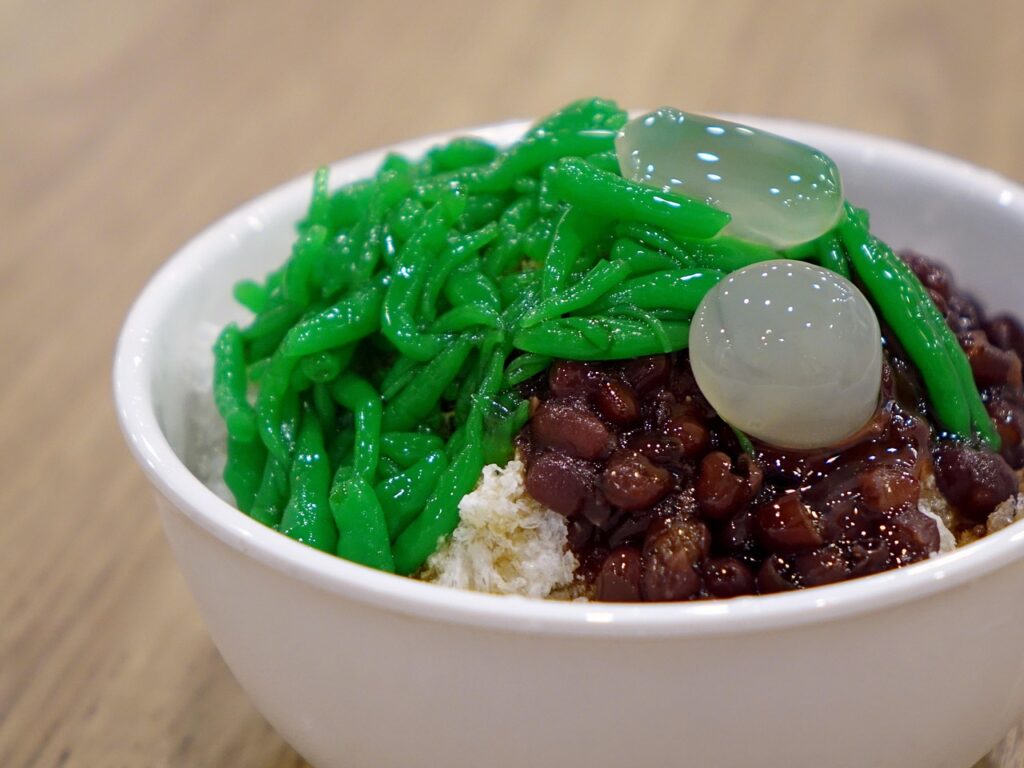
Image by Jason Goh from Pixabay
How to Store It
- Store: Keep the cendol strands, syrup and coconut milk in separate containers in the fridge for up to 2 days.
- Freeze: Do not freeze assembled cendol. The ice and coconut milk won’t recover well. The syrup can be frozen for up to 1 month.
- Thaw: Defrost frozen syrup in the fridge, then stir before using.
- Reheat: Warm the syrup gently if it has thickened too much in the fridge. Serve the coconut milk and cendol cold.
What to Serve with Cendol
Cendol is usually eaten on its own as a dessert or a hot-weather break from the rest of the meal. It’s a good pick after spicier hawker-style dishes such as nasi lemak or after something fried like curry puffs. In Malaysia, you usually order it as a stall dessert rather than part of the main plate.
Cendol vs Es Cendol
Malaysian cendol and Indonesian es cendol share the same broad idea: green jelly, ice, coconut milk and palm sugar. The names, toppings and exact jelly base can shift from place to place.
For this recipe, the goal is the Malaysian stall style with pandan cendol strands and gula melaka syrup. If you’ve had Indonesian versions before, the difference is usually in the syrup, the starch base or the toppings rather than in the whole structure of the dish.
Cendol FAQs
What is cendol in English?
There isn’t a neat English name that people use consistently. The clearest description is Malaysian shaved ice dessert with green pandan jelly, coconut milk and palm sugar syrup.
What is cendol made of?
The core ingredients are green cendol strands, coconut milk, palm sugar syrup and shaved ice. Many bowls also include red beans.
Is cendol a drink or a dessert?
I’d say it’s more like a dessert, even when it’s served in a glass. You scoop and sip it rather than drinking it like juice.
Can I make cendol without a cendol press?
Yes. A potato ricer or colander with round holes can do the job. You just need to press while the mixture is still hot.
Can I use gula jawa instead of gula melaka?
Yes. They aren’t exactly the same, although they’re close enough that gula jawa works well in cendol. Gula melaka is Malaysian palm sugar, while gula jawa is usually Indonesian and can taste a little darker or smokier depending on the brand. I found it to be a good substitute in this recipe. Just make sure to taste the syrup as it cooks, because some blocks are stronger than others or have a different amount of sweetness.
Cendol
Ingredients
- 4 cups (960ml) finely shaved or crushed ice
- 1 cup (170g) cooked sweet red beans, optional
- 1 cup (120g) rice flour
- ¼ cup (30g) tapioca starch
- 3 cups (720ml) water
- 1 teaspoon pandan paste
- ¼ teaspoon salt
- Green food coloring, optional
- 7 ounces (200g) gula melaka, chopped
- ¼ cup (50g) dark brown sugar
- 1 cup (240ml) water
- 1 pandan leaf, knotted, optional
- Pinch of salt
- 1½ cups (360ml) thick coconut milk
- ¼ teaspoon salt
- 2 tablespoons water, only if needed to loosen it slightly
- Sweet corn
- Extra red beans
- Extra gula melaka syrup
Method
- Make the syrup: Put the gula melaka, brown sugar, water, pandan leaf and salt in a small pan. Bring to a gentle simmer and stir until the sugar has dissolved. Cook for 3 to 5 minutes, then strain if needed and cool completely.
- Prepare the coconut milk: Stir the salt into the coconut milk. Add the water only if the coconut milk is very thick. Chill until needed.
- Mix the jelly batter: Whisk the rice flour, tapioca starch, water, pandan paste, salt and a drop or two of coloring if using until smooth.
- Cook the jelly: Pour the mixture into a saucepan and cook over medium heat, stirring constantly, until it turns thick, glossy and heavy.
- Press the cendol: Fill a large bowl with ice water. Press the hot mixture through a cendol press, potato ricer or colander into the ice water. Let the strands sit in the cold water for 5 minutes, then drain.
- Assemble: Divide the red beans between 4 bowls or glasses if using. Add the cendol strands, top with shaved ice, then pour over the coconut milk and gula melaka syrup.
- Serve: Spoon and stir lightly at the table so the syrup runs through the ice before eating.
Notes
- A cendol press is useful if you have one. A potato ricer with medium holes works well in a home kitchen.
- For the ice, a blender or ice crusher is enough if you don’t have an ice shaver.
History of Cendol
Cendol is eaten across Malaysia and across nearby parts of Southeast Asia, but the exact origin is debated. In Malaysia, it became closely tied to hawker culture, roadside stalls and afternoon dessert stops, with Melaka (Malacca) especially well known for its vibrant cendol stalls.
The basic structure has stayed remarkably stable: green strands, coconut milk, palm sugar and ice. Regional versions change the toppings, the starch used for the jelly or the balance of syrup and coconut milk.
For another hawker-friendly staple, try roti canai. If you want something hotter and more savory before dessert, curry laksa gives you a completely different side of Malaysian food.