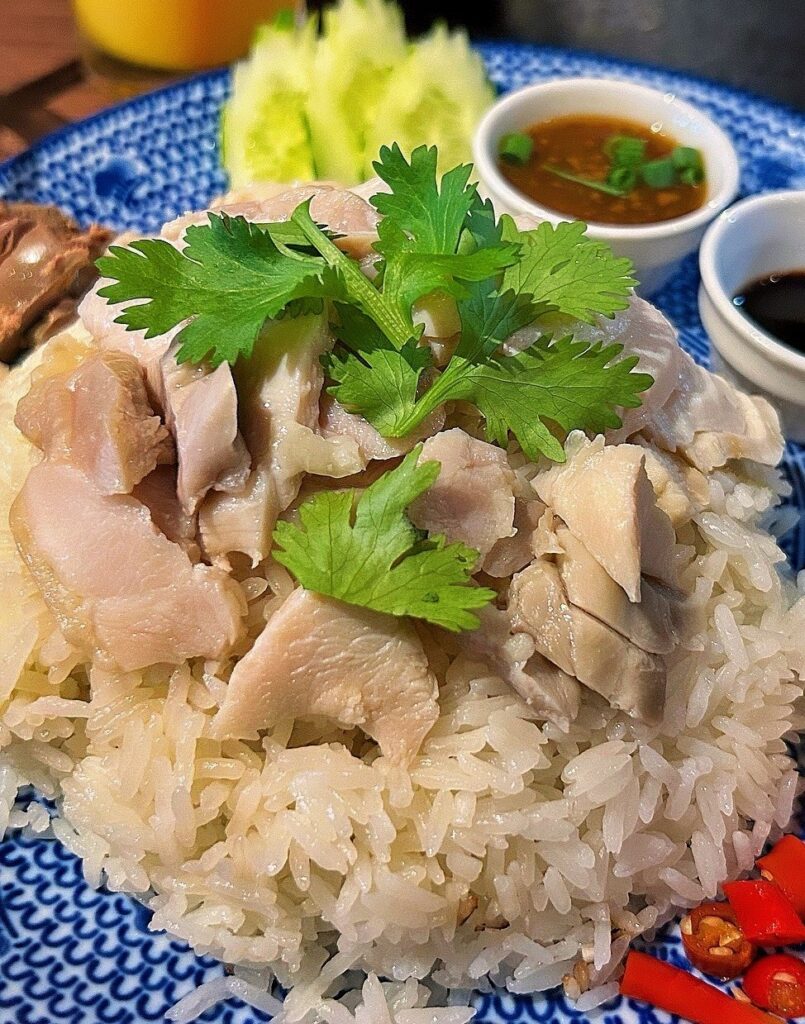
Hainanese chicken rice is one of the best known Malaysian chicken dishes, with poached chicken, fragrant rice cooked in broth, and sauces that give the plate its edge.
The rice carries ginger, garlic and stock all the way through, and the chili sauce brings the heat and sharpness to tie everything together.
A good Malaysian Hainanese chicken rice recipe gets the basics right. The chicken should be moist, the rice should already taste good before anything else hits the plate, and the sauces should add enough salt, heat and acidity to ensure a balanced flavor.
The focus belongs on strong broth, well-cooked rice and sauces with enough punch to wake everything up.
Hainanese Chicken and Rice Overview
Hainanese chicken rice is tied to Hainanese Chinese cooking and is widely eaten in Malaysia where it’s known as nasi ayam. The chicken’s gently poached, the broth is used to cook the rice and the finished dish is served with sauces, cucumber and often a light bowl of soup for a complete, satisfying meal.
Across Malaysia, the dish does vary from place to place. Some places serve neatly chopped poached chicken with glossy, fragrant rice, while others are known for stronger chili sauce, dark soy sauce on the side or regional versions such as chicken rice balls in Melaka and Muar.
Hainanese Chicken Rice Takeaways
- Cooking method: Whole chicken poached gently, then rice cooked in the broth with ginger, garlic and fat.
- Key flavor elements: Tender chicken, savory rice, fresh cucumber, chili sauce and ginger-scallion sauce.
- Typical serving style: Chopped chicken with rice, dipping sauces and a small bowl of clear broth.
What This Dish Is
Hainanese chicken rice grew out of Hainanese cooking traditions and became firmly rooted in Southeast Asia. In Malaysia, it sits within the broader world of Malaysian Chinese food and is now one of the country’s most familiar everyday dishes.
It’s usually served as poached chicken with seasoned rice, a couple of sauces, cucumber and soup. The ingredients do sound kind of plain at first glance, but the dish depends on careful cooking and a good broth more than heavy seasoning or a long ingredient list.
The chicken has a clean flavor and a soft, juicy texture when it’s poached properly. There’s nothing to cover up dryness here, so keeping an eye on it while cooking is key. The skin and broth add richness, while the cucumber and sauces add contrast.
The rice does a huge amount of work in this recipe. It absorbs the broth, fat, ginger and garlic, so it brings far more flavor than plain white rice served next to chicken. If you appreciate clear chicken flavor, fragrant rice and sharp sauces, it’s understandable why this dish has stayed popular for so long.
Key Ingredients
- Whole chicken: Poaching a whole bird gives you the meat and the broth needed for the full dish.
- Jasmine rice: This gives the soft, separate texture that works best for chicken rice.
- Ginger: Used in the broth, rice and sauces for a fresh, warm bite.
- Garlic: Essential for the rice and chili sauce.
- Pandan leaves: Often added to the rice in Malaysian versions for extra aroma.
- Scallions: These go into the broth and ginger sauce and help round out the plate.
- Lime juice: Gives the chili sauce its sharp edge.
- Sesame oil: Adds depth to the ginger-scallion sauce.
Ingredient Spotlight: Chicken Broth and Fat
The broth is what gives Hainanese chicken rice its backbone. Once the chicken has poached, that liquid carries the flavor of the bird, the ginger, the scallions and the onion.
Using it for the rice is what separates real chicken rice from just plain rice served with chicken.
A little chicken fat also makes a difference. When it is used to cook the garlic and ginger before the rice goes in, the finished rice comes out glossier, richer and more recognizable as chicken rice. Malaysian rice dishes often work this way, with the rice treated as part of the flavor, not just the base.
Tips for Best Results
- Keep the poach gentle: A hard boil tightens the meat and makes the breast more likely to dry out.
- Salt the broth well: If the broth tastes weak, the rice will too.
- Rinse the rice well: This helps the grains cook up lighter and more separate.
- Rest the chicken before chopping: The juices settle back into the meat and the skin holds together better.
- Make the sauces bold: The chicken itself is mild, so the sauces need enough punch to carry their part of the plate.
Variations and Substitutions
- No pandan leaves: Leave them out if needed. The rice loses some aroma, but the dish still works well. I can never find pandan leaves here but the chicken rice dish is still tasty.
- Milder chili sauce: Use fewer chilies and keep the ginger, garlic and lime so the sauce still has bite.
- Chicken thighs instead of a whole bird: This is a good shortcut for an easy Hainanese chicken and rice version, although you’ll need extra stock for the rice. Readymade stock will work. I like using chicken thighs if I crave this on a busy weeknight. It’s easy to make that way.
- One-pot Hainanese chicken and rice: Chicken pieces can be cooked with the rice in broth for a simpler method, but the texture isn’t quite the same as classic poached chicken.
- Instant Pot Hainanese chicken and rice: This works well for speed. Pressure cook the chicken briefly, use the cooking liquid for the rice and make the sauces separately.
How to Store It
- Make Ahead: Poach the chicken, strain the broth and mix the sauces for up to 1 day ahead.
- Fridge: Store the chicken, rice and sauces separately for up to 3 days.
- Freezer: Freeze the chicken and broth for up to 2 months. The rice is better fresh because freezing changes the texture.
- Reheat: Warm the chicken gently with a little broth, and reheat the rice covered with a splash of broth or water.
What to Serve with It
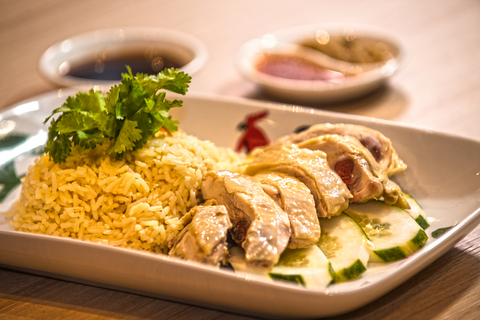
Hainanese chicken rice is usually served with cucumber, chili sauce, ginger-scallion sauce and a light bowl of soup made from the poaching broth. That’s enough for a full plate on its own.
As part of a broader Malaysian meal, it also works alongside Malaysian satay, which brings smoke and a peanut-based sauce to the table. You can also explore the wider Malaysian recipe collection for other dishes that would sit naturally in the same meal.
Hainanese Chicken Rice vs Chicken Rice Balls
Standard Hainanese chicken rice is served with loose rice on the plate or in a bowl. The rice is soft, fragrant and separate.
Chicken rice balls use the same general flavor base, but the rice is shaped into compact balls. That style is especially associated with parts of Malaysia such as Melaka and Muar, and the change is more about format and texture than a completely different set of ingredients.
Hainanese Chicken Rice FAQs
Is Hainanese chicken rice healthy?
It can be, depending on portion size and how much chicken fat is used in the rice. The dish is based on poached chicken, rice and fresh condiments, so it’s definitely lighter than a lot of fried chicken dishes.
How do you eat Hainanese chicken rice?
Take some rice, some chicken and a little sauce in the same bite. Most people mix and match as they go, using the chili sauce and ginger-scallion sauce to season each mouthful.
Top Tip for Malaysian Chicken Rice
The rice is a big part of it and I always take care to ensure it’s flavored well! If not, the whole dish tastes like it’s still missing something, even if the chicken’s cooked well.
More Malaysian Recipes
- If you want to branch out from Hainanese chicken rice, nasi lemak is another essential Malaysian rice dish, this time built around coconut rice, sambal and the usual accompaniments. It gives you a very different kind of rice-based meal and shows how broad Malaysian cooking can be.
- Nasi goreng is worth a look too if you want something faster and more direct, with fried rice, bolder seasoning and a more savory finish. It comes from a different cooking style, but it sits naturally on the same hub.
- Sambal belacan is useful once you start cooking more Malaysian food at home. It is not part of classic Hainanese chicken rice, but it helps explain how Malaysian heat, shrimp paste and acidity often come together in condiments.
- Kari kapitan shows a completely different side of the cuisine, with a thicker, spiced curry that comes from Peranakan cooking. It is a good contrast if you want to move from cleaner, broth-based dishes into something fuller and more spice-driven.
Hainanese Chicken and Rice
Ingredients
- 1 whole chicken, about 3 ½ pounds (1.6 kg)
- 10 cups (2.4 liters) water
- 1 tablespoon salt, plus more to taste
- 6 scallions (spring onions) cut into large lengths
- 1 small yellow onion, halved
- 2 inches fresh ginger, sliced
- 1 cucumber, sliced, to serve
- 2 cups (400g) jasmine rice, rinsed
- 2 tablespoons chicken fat or neutral oil
- 4 cloves garlic, finely chopped
- 1 tablespoon finely grated ginger
- 2 pandan leaves, tied in knots
- 3 ¼ cups (780ml) poaching broth
- 4 red chilies, de-seeded for less heat if needed
- 2 cloves garlic
- 1 inch fresh ginger
- 2 tablespoons lime juice
- 2 tablespoons poaching broth
- 1 teaspoon sugar
- ½ teaspoon salt
- 4 scallions (spring onions), finely chopped
- 2 tablespoons finely grated ginger
- 3 tablespoons neutral oil
- 1 teaspoon sesame oil
- ½ teaspoon salt
- Cilantro (fresh coriander)
- Light soy sauce
- Extra sliced cucumber
Method
- Rub the chicken all over with a little salt and rinse it clean.
- Put the chicken in a large pot with the water, salt, scallions, onion and sliced ginger.
- Bring the liquid just to a gentle simmer and skim off any foam.
- Lower the heat so the broth barely moves and poach the chicken for 35 to 45 minutes, depending on size, until cooked through.
- Lift the chicken out carefully and rest it on a tray. For firmer skin, dip it briefly in iced water, then pat dry.
- Strain the broth and keep it hot. Taste it and add more salt if needed.
- Heat the chicken fat or oil in a pot.
- Add the garlic and grated ginger for the rice and cook briefly until fragrant.
- Add the rinsed rice and stir to coat the grains.
- Pour in 3 ¼ cups (780 ml) poaching broth and add the pandan leaves.
- Bring to a boil, cover, lower the heat and cook until the rice is done. Let it sit covered for 10 minutes, then fluff.
- Blend the chilies, garlic, ginger, lime juice, broth, sugar and salt until smooth for the chili sauce.
- Mix the chopped scallions, grated ginger, neutral oil, sesame oil and salt for the ginger-scallion sauce.
- Chop the chicken into serving pieces.
- Serve the chicken with the rice, cucumber, sauces and a little hot broth on the side.
Notes
- A large stockpot, heavy pot or Dutch oven is helpful because the chicken needs enough room to poach evenly. A fine mesh strainer also helps keep the broth clear for both the rice and the soup.
History of Hainanese Chicken Rice
Hainanese chicken rice grew out of dishes brought by Hainanese migrants from southern China, especially Wenchang chicken. As Hainanese communities settled across Southeast Asia, the dish changed to fit local ingredients, eating habits and cooking styles.
In Malaysia, it became part of the broader Malaysian Chinese food tradition and spread far beyond one single community. Over time it settled into hawker centers, kopitiams and everyday restaurants, where it is now one of the most familiar rice dishes on the menu.
Today, Malaysian Hainanese chicken rice is served in several forms, from classic chopped poached chicken with fragrant rice to chicken rice balls in places with a strong local identity around the dish. What remains constant is the combination of tender chicken, seasoned rice and sauces that sharpen the whole plate.
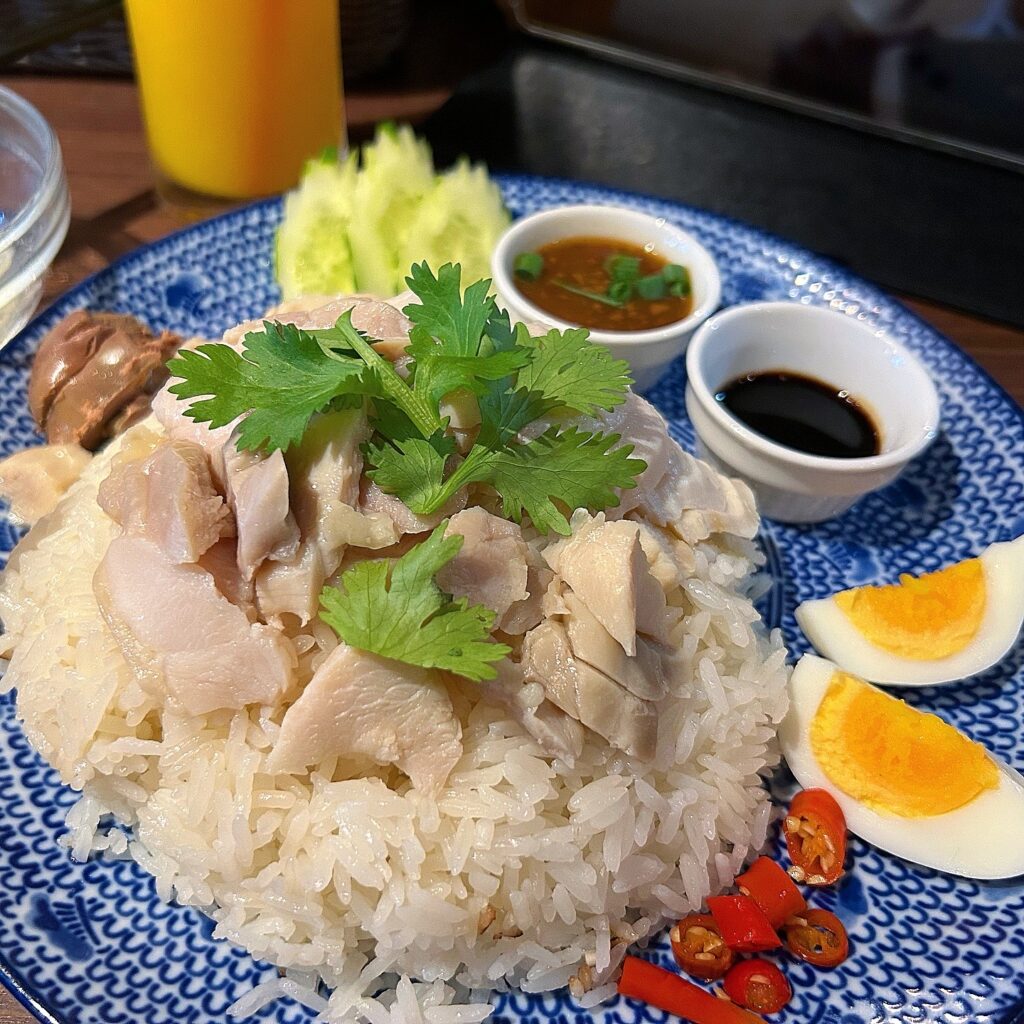
Image Credit: Kanesue, on Flickr