This recipe for Penang asam laksa is a Malaysian noodle soup built around a tamarind broth and flaked fish. The broth is sharp, savory and slightly spicy, with a clean finish that keeps it from feeling heavy.
The tamarind needs to be added gradually. If too much goes in early, the broth turns harsh and masks everything else. It’s easier to build the sourness in stages and stop once it tastes balanced.
The fish breaks down as it cooks, which gives the broth body without needing anything thickened. For more dishes like this, see the Malaysian recipes hub.
What is Penang Asam Laksa?
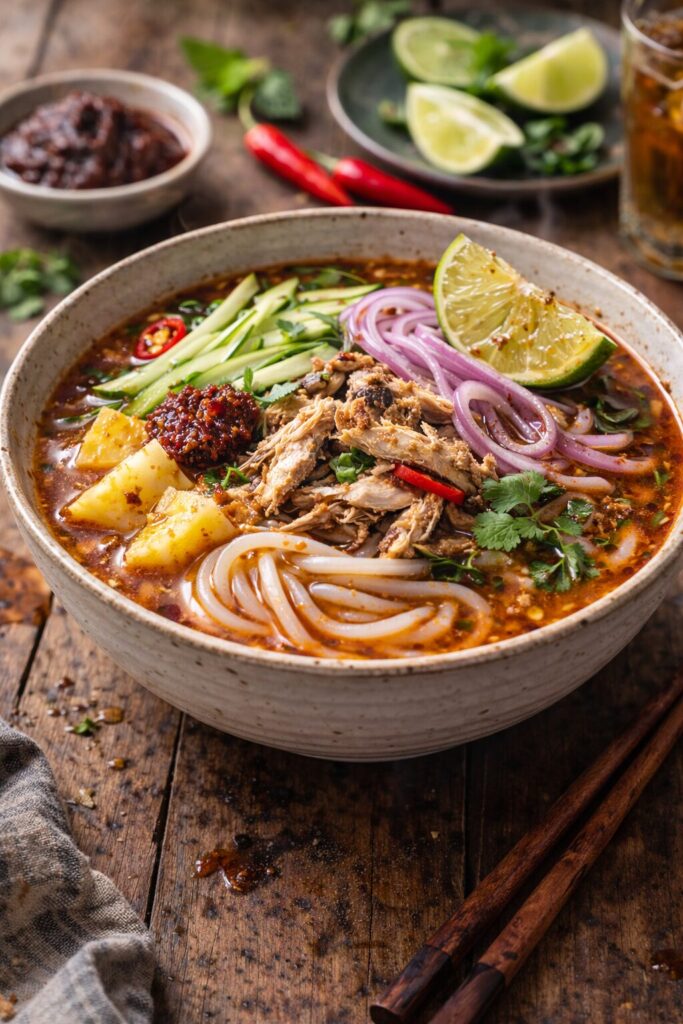
Penang asam laksa is a sour fish noodle soup from northern Malaysia. It’s made with tamarind, mackerel and a chili-based paste, then served with thick rice noodles and fresh toppings.
The broth is prepared first and the noodles are added when serving.
What It Tastes Like
The broth is sour from tamarind with a savory base from the fish and shrimp paste. Chili adds heat and the fresh toppings keep the bowl from tasting flat.
The balance shifts depending on how much tamarind is used. A small adjustment can change the whole bowl, so tasting as you go matters.
Key Ingredients in Asam Laksa Penang
Tamarind pulp: This sets the flavor of the broth. Adding it slowly gives better control over the final taste. The first time I made it, I added all the tamarind at once and had to dilute the whole pot!
Mackerel: Boiled and flaked into the broth. It softens as it cooks and blends into the liquid.
Torch ginger flower: Adds a sharp, citrusy note that lifts the broth.
Shrimp paste: Also called belacan. I find that toasting it before use helps it mix through without leaving a strong aftertaste.
Thick rice noodles: These hold up better in the broth and don’t fall apart as quickly.
Tips for Best Results
Add tamarind gradually: The sourness builds quickly and can’t be reversed once it’s too strong.
Use oily fish: Mackerel gives a fuller broth. Lean fish leaves it thinner.
Keep toppings fresh: Raw onion, herbs and cucumber should be added just before serving so they stay crisp.
Assemble at the last minute: The noodles absorb liquid quickly and can become too soft if left sitting.
Variations and Substitutions
If torch ginger isn’t available: Use finely sliced fresh ginger with a little lime zest. It won’t match exactly but still adds lift.
If you want it less spicy: Reduce the dried chilies or serve chili paste on the side.
Alternative fish options: Sardines or canned tuna can be used, though the broth will be lighter.
Make Ahead and Storage
Make ahead: The broth can be made up to 2 days in advance.
Fridge: Store in an airtight container for up to 3 days.
Freezer: Freeze the broth for up to 2 months.
Reheat: Warm gently on the stove and assemble fresh bowls. The broth thickens slightly after chilling because of the fish.
What to Serve With It
Serve with Malaysian roti or popiah, along with lime wedges and extra herbs so each bowl can be adjusted while eating.
Penang Asam Laksa FAQs
Is asam laksa very sour?
It can be, depending on how much tamarind is used.
Can I make it ahead?
Yes, but keep the noodles and toppings separate until serving.
Why does my broth taste flat?
It usually needs more tamarind or a longer simmer to develop the fish base.
History of the Dish
Penang asam laksa developed in northern Malaysia, particularly on the island of Penang, where coastal cooking shaped its identity. It reflects Peranakan influence, combining Chinese noodle traditions with Malay ingredients.
The broth is built around tamarind, which gives the dish its sour base. The word “asam” refers to that sour element. Fish is used heavily due to Penang’s coastal location and fishing culture.
Penang became a major trading port during the 18th and 19th centuries. Ingredients such as dried chilies, shrimp paste and spices were widely available, shaping the layered flavors used today.
Over time, regional versions developed across Malaysia, but the Penang style remains the most widely known and closely associated with hawker cooking.
More Malaysian Recipes
If you enjoyed this, curry laksa is another noodle dish with a completely different broth built around coconut and spice paste.
This chicken laksa is another variation.
For something simpler, nasi lemak focuses on coconut rice with a mix of small sides.
Char kway teow takes a different direction with stir-fried noodles cooked over high heat.
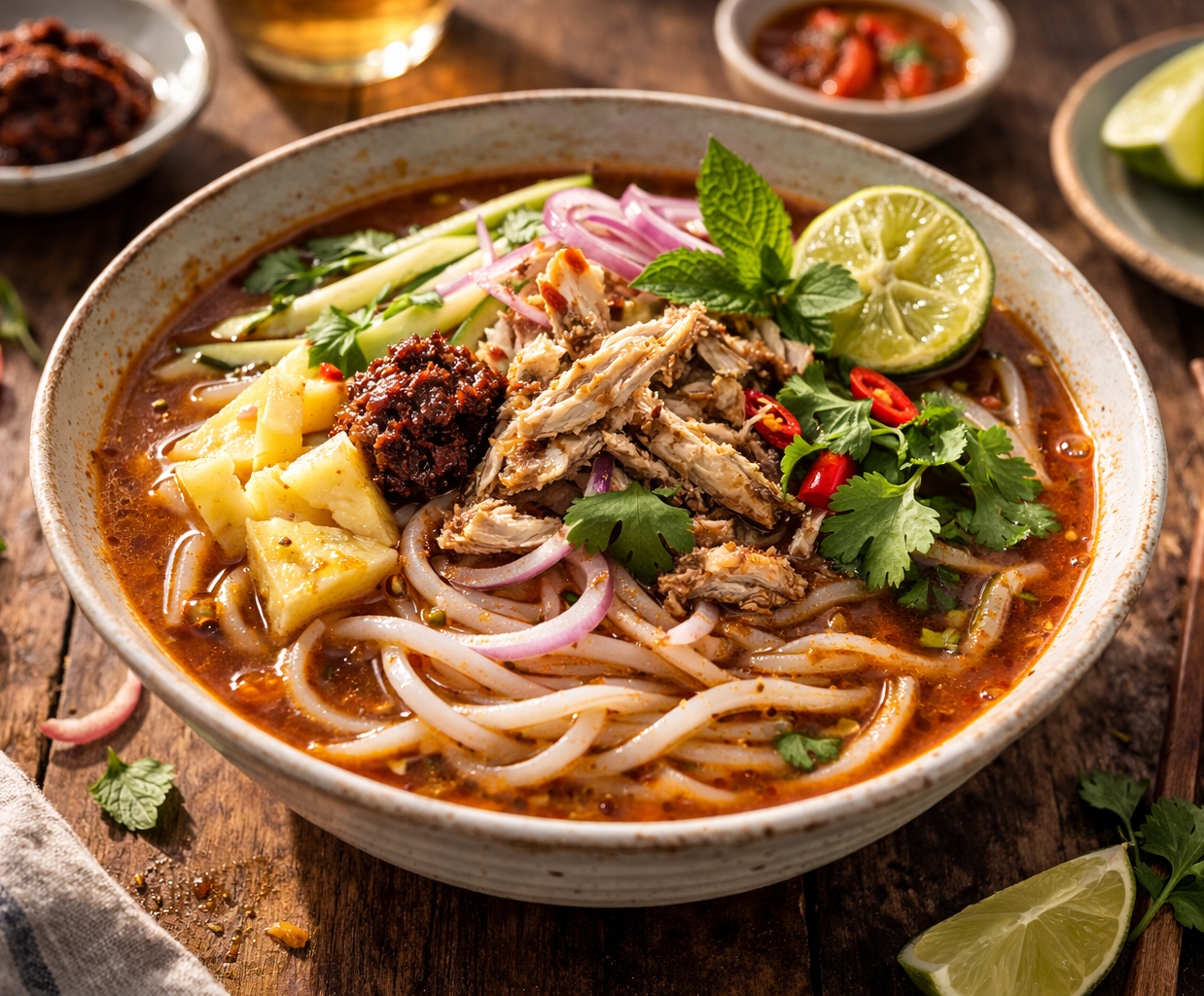
Penang Asam Laksa
Ingredients
- 2 whole mackerel, cleaned
- 1 ⅓ quarts (1 ½ liters) water
- 3 tablespoons tamarind pulp
- 2 stalks lemongrass, bruised
- 1 torch ginger flower, sliced
- 1 tablespoon shrimp paste
- 6 dried red chilies, soaked
- 3 fresh red chilies
- 4 shallots
- 3 garlic cloves
- ¾ inch (2 cm) fresh ginger
- 1 teaspoon ground turmeric
- 14 oz (400g) thick rice noodles
- 1 small cucumber, julienned
- 1 small red onion, thinly sliced
- Fresh mint leaves
- Fresh cilantro
- Pineapple slices, thinly cut
- Extra chili paste
- Lime wedges
- Additional shrimp paste sauce
Method
- Simmer the mackerel in water until cooked through. Remove it, cool slightly and flake the flesh. Strain the stock carefully to remove bones. A common mistake is leaving tiny bones behind, so take your time with the straining.
- Blend the soaked dried chilies, fresh chilies, shallots, garlic, ginger and turmeric into a smooth paste. Add a small splash of water if your blender needs help moving things along.
- Return the strained stock to the pot and stir in the spice paste, tamarind, lemongrass, torch ginger and shrimp paste. Simmer gently, then add the flaked fish back in. Taste and adjust the sourness slowly to ensure it tastes balanced.
- Divide the noodles into bowls and ladle the hot broth over the top. Add cucumber, onion, herbs and pineapple. Serve with lime and extra chili paste on the side so everyone can adjust to taste.
Notes
- A blender or food processor is useful for the spice paste.
- A fine sieve helps strain fish bones from the broth.
2 thoughts on “Penang Asam Laksa (Malaysian Tamarind Fish Noodle Soup)”