Sambal belacan is a Malaysian chili condiment made with fresh chilies, lime juice and toasted fermented shrimp paste. It’s sharp, spicy and beautifully savory, and even a small spoonful can completely change a dish.
It’s made by crushing everything together for a chunky mixture. The paste doesn’t break down evenly, so you end up with small bits of chili and shallot throughout.
Be warned – when the belacan hits the heat, the smell can be very strong at first, so don’t be concerned when that happens. Once it’s mixed with lime and chilies, it settles and blends into the rest of the paste.
What This Dish Is
Sambal belacan is a Malaysian chili condiment made with fresh chilies and fermented shrimp paste. It’s served alongside rice dishes, grilled fish, vegetables, popiah and noodle dishes.
It’s usually made fresh and brought to the table as a side.
What It Tastes Like
The flavor is hot, salty and citrusy with a strong savory base from the shrimp paste. The lime keeps it sharp and cuts through the heat.
The first time you’re working with sambal belacan, it’s easy to add too much. A small amount goes a long way and can take over the whole plate if you’re not careful!
Key Ingredients
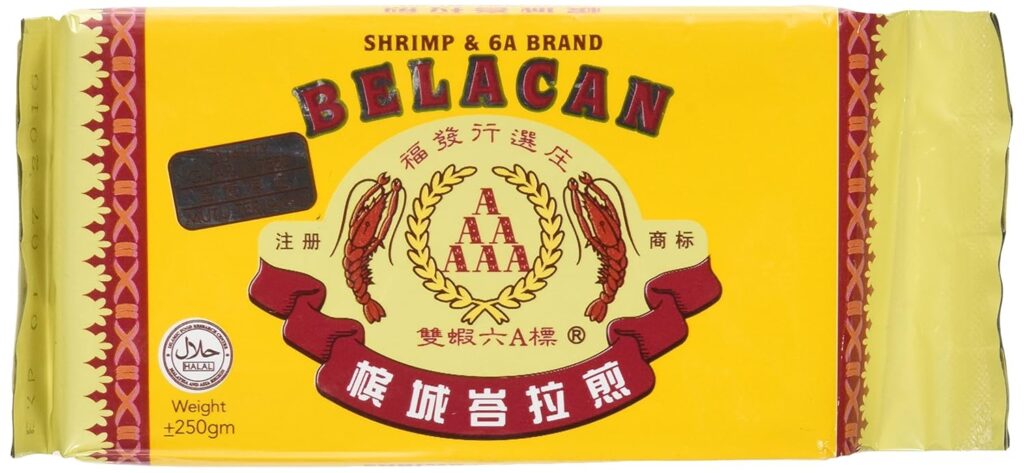
Belacan: A Malaysian fermented shrimp paste sold in firm blocks. Toasting it changes the aroma and helps it mix through evenly.
Red chilies: Fresh bird’s eye or red spur chilies provide heat and color. You can adjust the mix depending on how spicy you want it.
Calamansi or lime: Adds acidity and lifts the flavor.
Sugar: A small amount rounds everything out.
Shallots: Add a bit of sweetness and body.
Tips for Best Results
Toast the belacan: If it isn’t toasted, the flavor stays sharper and doesn’t settle once everything is mixed.
Use a mortar and pestle: Crushing it by hand gives a stronger aroma and keeps the texture uneven.
Add citrus last: Mixing in the lime juice at the end keeps the flavor noticeable.
Variations and Substitutions
If belacan isn’t available: Thai shrimp paste or Indonesian terasi can be used, though the flavor will be slightly different.
If you want it less spicy: Use fewer bird’s eye chilies and replace some with milder red chilies.
How Sambal Belacan Is Made
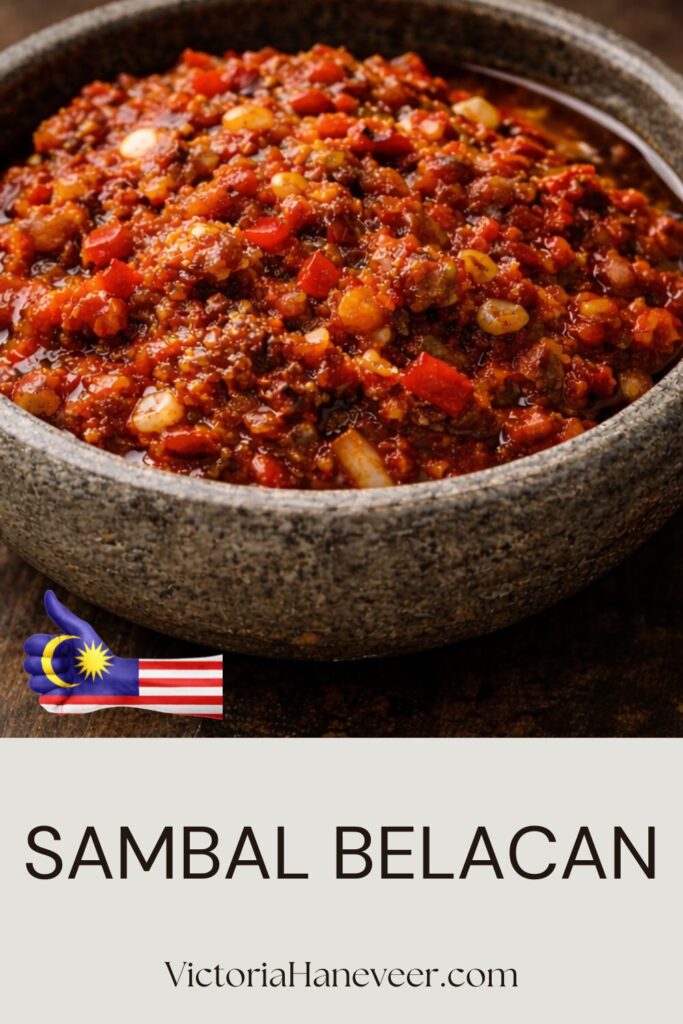
The belacan is toasted first, then crushed with chilies and shallots. Lime juice and sugar are mixed in at the end.
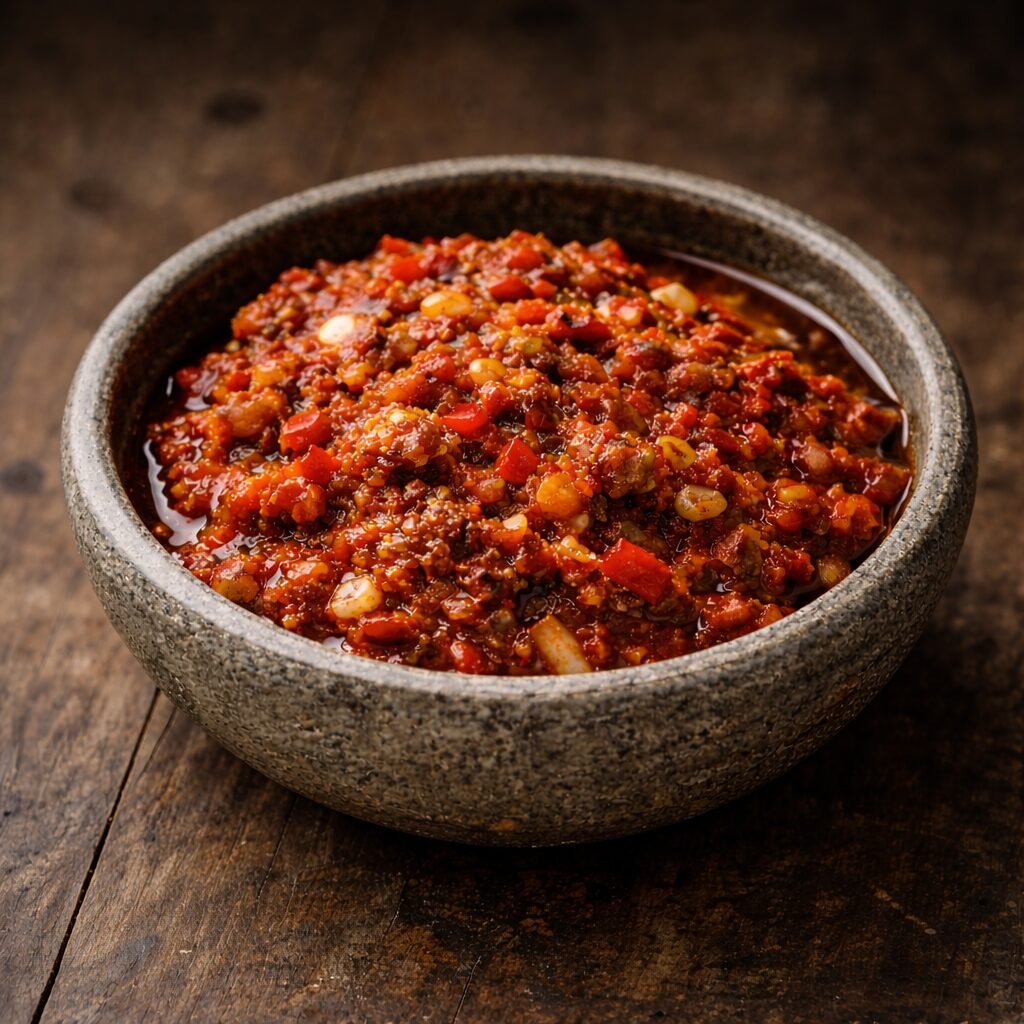
The paste keeps some texture, with visible pieces throughout.
Sambal Belacan
Ingredients
- 6 red bird’s eye chilies (about 30 grams)
- 1 small shallot (chopped)
- 1 teaspoon toasted belacan
- 1 teaspoon sugar
- 1 to 2 tablespoons lime or calamansi juice
- 1 tablespoon water (if needed, for grinding)
- Lime wedges
- Sliced red chilies
- Cucumber slices
Method
- Place the shrimp paste in a small dry pan over medium heat.
- Toast briefly until fragrant and slightly crumbly. Let cool.
- Add chilies and shallot to a mortar and pestle.
- Pound until a coarse paste forms.
- Add toasted belacan and sugar.
- Continue pounding until the paste is evenly mixed.
- Stir in lime or calamansi juice. Taste and adjust salt, sugar or citrus.
- Spoon into a small dish and serve alongside rice or grilled foods.
Notes
- A mortar and pestle is traditional and produces the best texture. A small food processor can be used if necessary, but pulse briefly so the sambal stays coarse rather than smooth.
- This is a small batch recipe (about 3 Tbsps) because the condiment is very intense and typically used a teaspoon at a time alongside rice, grilled fish or vegetables. If needed, the recipe can easily be doubled or tripled without changing the method.
- I used this shrimp paste (belacan).
How to Store It
Make Ahead: It can be made a few hours ahead so the flavors settle slightly.
Fridge: Store in an airtight container for up to 4 days.
Freezer: Not recommended, since the texture of fresh chilies changes.
What to Serve with It
Serve it with plain rice so you can control how much you add. It also goes well with grilled fish like ikan bakar, vegetable dishes or noodle bowls.
Sambal Belacan FAQs
Is sambal belacan very spicy?
Yes, it can be quite spicy depending on the chilies used.
Does it need to be cooked?
No. It’s usually made fresh, aside from toasting the shrimp paste.
Can it be made without shrimp paste?
You can leave it out, but the flavor will be much milder.
More Malaysian Recipes
If you’re exploring Malaysian cooking further, try dishes like Penang assam laksa, kari kapitan and asam pedas.
History of Sambal Belacan
Sambal belacan comes from Malay cooking traditions where sambal in many forms has long been part of everyday meals. The word “sambal” refers to chili-based pastes or relishes found across Southeast Asia.
Chilies were introduced to the region in the 16th century and gradually became a core ingredient. Before that, heat came from ingredients like pepper and ginger.
Belacan has been made for generations in coastal communities by fermenting small shrimp with salt and drying them into dense blocks.
Combining chilies with belacan created a condiment that adds strong flavor to rice, grilled fish and vegetables. It’s still widely used, with small variations depending on the cook.