Asam pedas is a Malaysian fish stew built around tamarind and a chili-based spice paste. The broth is thin, sharp and quite punchy, with the fish simmered directly in it so it takes on all that flavor.
This version includes tomatoes and okra, which you’ll often see in Melaka and Johor styles. The tomatoes soften into the broth, while the okra gives it a bit more body. You can leave either one out if you prefer.
What Is Asam Pedas
Asam pedas comes from Malay cooking traditions and is especially associated with Melaka and Johor. The name translates to “sour spicy,” which sums it up pretty well.
It’s usually made with fish and served with rice. You might see it called asam pedas ikan, and if stingray is used, it’s often referred to as asam pedas ikan pari.
Why I Keep Coming Back to This Dish
I keep making this when I want something easy but with a lot going on. The broth comes out sharp and warming, and it’s a good way to use fish if you don’t want to pan fry it or grill it.
Asam Pedas at a Glance
Cooking method: Simmered fish stew
Key flavors: Tamarind sourness, chili heat, garlic and lemongrass
Typical serving style: Served hot with steamed rice
What It Tastes Like
The broth is noticeably sour from tamarind, with a steady chili heat underneath. Garlic, shallots and lemongrass round things out, and the fish adds a bit of richness as it cooks.
It’s not creamy or thick. The flavor is clean and direct, more like a sharp soup than a curry.
What to Expect When Cooking It
The spice paste forms the base, and once that’s cooked out, the rest comes together fairly quickly. The broth stays quite light, so it doesn’t take long for the fish to cook through.
You’ll want to keep the heat gentle once the fish is in, otherwise it can break apart.
Key Ingredients
Fish: Firm fish such as mackerel, snapper or stingray works well. You could also use something more affordable like basa or pangasius.
Tamarind paste: Gives the broth its sour base.
Dried red chilies: Blended into the paste for heat and color.
Belacan: Fermented shrimp paste that adds depth.
Lemongrass: Adds a light citrus note.
Ingredient Spotlight: Tamarind
Tamarind is used across Malaysian cooking for its sour flavor. In asam pedas, it’s what defines the broth. You can use tamarind paste or pulp depending on what you have.
How to Make Asam Pedas
Blend the paste: Combine chilies, aromatics and belacan into a smooth paste.
Cook the paste: Fry until fragrant and slightly darkened.
Add liquid and tamarind: Build the broth and adjust the sourness.
Add vegetables: Include tomatoes and okra if using.
Simmer the fish: Cook gently until just done.
Serve: Ladle into bowls and serve hot.
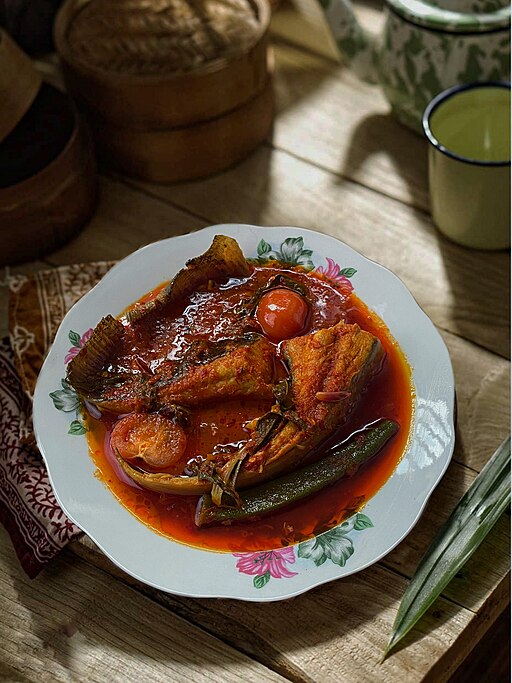
Asam Pedas
Ingredients
- 1 pound (450g) firm fish, cut into pieces
- 3 cups (720ml) water
- 2 tablespoons tamarind paste
- 1 lemongrass stalk, bruised
- 1 tomato, quartered
- 2 okra pods, halved
- 6 dried red chilies
- 3 cloves garlic
- 2 shallots
- 1 inch (2½ cm) fresh ginger
- 1 teaspoon belacan
- sliced red chilies
- fresh herbs
Method
- Blend the dried chilies, garlic, shallots, ginger and belacan with a small amount of water until smooth.
- Bring the water to a gentle simmer in a pot. Add the spice paste, tamarind paste and bruised lemongrass.
- Add the fish pieces and simmer until the fish is just cooked through.
- Add the tomato wedges and okra and cook briefly until tender.
- Serve the stew hot with steamed rice.
Tips for Best Results
Blend the paste well: A smoother paste gives a better broth.
Keep the heat moderate: Boiling too hard can break the fish apart.
Add tamarind gradually: It’s easier to adjust than to fix if it’s too sour.
Add okra later: Helps it keep its shape.
Variations and Substitutions
No belacan available: Use a small amount of shrimp paste or leave it out.
Milder version preferred: Reduce the dried chilies.
Different protein option: Shrimp or tofu can be used instead of fish.
How to Store It
Make Ahead: The spice paste can be made in advance and kept refrigerated.
Fridge: Store leftovers in an airtight container for up to 2 days.
Freezer: The broth can be frozen without the fish for up to 1 month.
Reheat: Warm gently on the stovetop.
What to Serve with Asam Pedas
This is almost always served with steamed white rice, which balances the sour and spicy broth. You can add a spoonful of sambal belacan on the side or keep it simple with vegetables.
Asam Pedas vs Assam Laksa
Both dishes use tamarind, but they’re quite different. Asam pedas is a fish stew, while assam laksa is a noodle soup with a fish-based broth and herbs.
Asam Pedas FAQs
What fish is best for asam pedas?
Firm fish such as mackerel, snapper or stingray works best because it holds its shape.
Is asam pedas very spicy?
It depends on the chilies used. It’s usually moderately spicy with a noticeable sour edge.
More Malaysian Recipes
If you’re exploring Malaysian cooking, otak-otak is a good seafood dish to try, while kolo mee offers a simple noodle option. Char kway teow is another popular choice, and babi pongteh brings a richer, slow-cooked contrast. You can find more in the Malaysian recipes hub.
History of Asam Pedas
Asam pedas comes from Malay cooking traditions along the west coast of the Malay peninsula.
It became closely associated with the Melaka and Johor regions, where it’s often served with fish and rice as part of everyday meals.
Today it’s made across Malaysia with small variations depending on region and family preferences.
Image credit: Elly Suhailee / Wikimedia Commons / CC BY-SA 4.0
