Nasi goreng is one of the most recognizable Malaysian fried rice dishes. Cooked rice is stir-fried in a hot wok with aromatics, chili paste and savory sauces until every grain is coated.
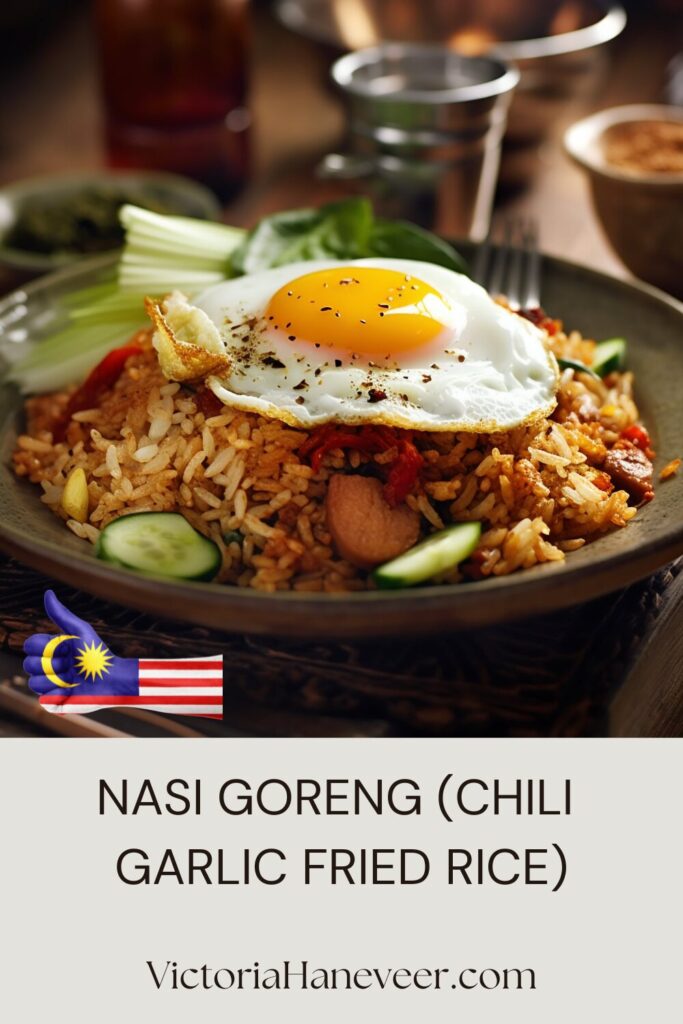
A fried egg on top is common for more protein and flavor, along with cucumber for freshness and sometimes sambal on the side.
My version uses a classic belacan-based paste for depth and a mix of soy sauces for the sweet-savory balance typical of Malaysian fried rice.
Dish Overview
Nasi goreng is a wok-fried rice dish cooked with chili paste, garlic, belacan and sweet soy sauce. It is commonly prepared using leftover rice so the grains stay separate while frying.
In Malaysia it is often served with a fried egg, sliced cucumber and sometimes sambal or pickled vegetables on the side.
Nasi Goreng Takeaways
Cooking method: High heat wok-fried rice
Key flavor elements: Garlic, chili, belacan, sweet soy sauce
Typical serving style: Fried egg on top with cucumber and sambal
About Malaysian Cuisine
This dish is part of Malaysia’s diverse culinary tradition, which blends Malay, Chinese, Indian and Peranakan influences. If you’re exploring Malaysian cooking, see the full guide to traditional dishes here:
Malaysian Recipes: Traditional Regional Dishes Explained
What This Dish Is
Nasi goreng literally means fried rice in Malay and Indonesian. The dish appears across Malaysia in hawker stalls, cafes and home kitchens, often with small regional tweaks depending on the cook.
Many Malaysian versions include belacan, the fermented shrimp paste that gives the rice a savory depth.
What It Tastes Like
Nasi goreng is savory, slightly smoky and gently spicy. Garlic and chili form the base while sweet soy sauce adds caramel notes.
Anyone who enjoys fried rice with bold Southeast Asian flavors will likely enjoy this dish.
Key Ingredients
Cooked jasmine rice: Day-old rice works best because the grains stay firm during stir-frying.
Belacan: Fermented shrimp paste that adds a deep savory flavor typical in Malaysian cooking.
Sweet soy sauce (kecap manis): Thick soy sauce with palm sugar that adds sweetness and color.
Garlic: A key aromatic used in most nasi goreng recipes.
Red chili: Adds mild heat and a bright flavor.
Ingredient Spotlight: Belacan
Belacan is a fermented shrimp paste used widely in Malaysian cooking. It is usually toasted briefly before use to bring out its aroma.
In nasi goreng, a small amount of belacan adds depth and complexity that distinguishes the dish from standard fried rice.
Tips for Best Results
Use day-old rice: Fresh rice is too soft and can clump in the wok.
Cook over high heat: High heat helps the rice fry instead of steam.
Break up the rice first: Separate the grains before adding them to the wok.
Variations and Substitutions
If you can’t find belacan: Use a small amount of shrimp paste or omit it and add a splash of fish sauce.
If you want it less spicy: Reduce the chili or remove the seeds before blending.
If you want a different protein: Add chicken, shrimp or sliced sausage.
A lower carb version: Although rice is the main component, I have made this dish with cauliflower rice too. You might enjoy my cauliflower nasi goreng. It’s not traditional by any means but it’s still pretty good if you want a keto nasi goreng recipe.
How to Store It
Make ahead: Cook the rice a day ahead and refrigerate it overnight.
Fridge: Store leftover nasi goreng in an airtight container for up to 3 days.
Freezer: Fried rice can be frozen for up to 1 month, though the texture may soften slightly.
Reheat: Warm it back up in a hot skillet with a small splash of oil.
What to Serve with It
Nasi goreng is often served as a complete meal with a fried egg on top and sliced cucumber on the side. In Malaysia it may also appear with sambal belacan, pickled vegetables or simple stir-fried greens. You could also pair some crispy popiah with yours.
Nasi Goreng vs Indonesian Nasi Goreng
Malaysian nasi goreng and Indonesian nasi goreng share similar roots but differ slightly in seasoning. Malaysian versions often include belacan and a balance of soy sauces.
Indonesian versions frequently use more kecap manis and sometimes include additional spice pastes.
Nasi Goreng FAQs
Can I use freshly cooked rice?
Fresh rice can be used, but it should be cooled first so the grains do not stick together.
Is nasi goreng always spicy?
Not always. The level of chili can be adjusted depending on preference.
More Malaysian Recipes
If you’re exploring Malaysian rice dishes, nasi dagang is made with coconut rice and fish, while nasi lemak pairs fragrant rice with sambal and classic sides. Nasi kerabu stands out with its blue rice and fresh herbs, giving it a completely different flavor profile.

Nasi Goreng
Ingredients
- 3 cups (600g) cooked jasmine rice
- 2 tablespoons oil
- 2 eggs
- 2 tablespoons sweet soy sauce (kecap manis)
- 1 tablespoon light soy sauce
- 1 small shallot, finely chopped
- 1 tablespoon chopped scallions
- 3 garlic cloves
- 1 red chili
- 1 teaspoon belacan
- fried egg
- cucumber slices
- sambal
Method
- Heat oil in a wok over high heat.
- Blend the spice paste ingredients into a rough paste.
- Cook the paste in the wok until fragrant.
- Add the shallot and cook briefly.
- Add the rice and stir fry until the grains separate.
- Stir in sweet soy sauce and light soy sauce and continue stir frying until the rice is evenly coated.
- Serve immediately, topped with a fried egg and cucumber slices.
Notes
Why Day-Old Rice Works Best
Freshly cooked rice contains more moisture, which causes the grains to stick together in the wok. Day-old rice dries slightly in the refrigerator, which allows the grains to separate and fry evenly.
When the rice hits the hot oil it can pick up flavor from the aromatics and sauces without becoming mushy. This is why most nasi goreng recipes start with leftover rice.
The Role of Belacan in Malaysian Fried Rice
Belacan is a fermented shrimp paste that appears in many Malaysian dishes. It brings a concentrated savory flavor that deepens sauces, sambals and fried rice.
In nasi goreng it’s usually blended with garlic and chili to form the base paste that flavors the rice.
How Nasi Goreng Is Cooked in Hawker Stalls
In Malaysia nasi goreng is often prepared in large woks over very high heat. The cook moves quickly, tossing the rice so it fries evenly while picking up smoky flavor from the wok.
This technique gives the rice its signature aroma and keeps the grains separate.
Garnishes Commonly Served with Nasi Goreng
Several garnishes frequently appear alongside the dish in Malaysia. These add freshness and contrast to the savory rice.
Fried egg: A runny yolk mixes into the rice when eaten.
Cucumber slices: Fresh cucumber balances the heat and saltiness.
Sambal: Chili paste adds extra spice for those who want it.
Anchovies: Crispy fried anchovies sometimes appear as a topping.
Nasi Goreng in Malaysian Street Food Culture
Nasi goreng is a staple at Malaysian night markets and roadside stalls. Vendors often cook it to order in a hot wok and customize it with seafood, chicken or sausage depending on the customer.
Because it uses simple ingredients and leftover rice, it has long been considered a practical everyday dish in Malaysian cooking.
History of Nasi Goreng
Nasi goreng likely developed as a way to reuse leftover rice. Fried rice techniques spread through Southeast Asia through Chinese culinary influence.
Over time Malaysian cooks adapted the dish with local ingredients such as belacan and sweet soy sauce (kecap manis).
Today nasi goreng is one of the most widely eaten rice dishes in Malaysia and appears in homes, restaurants and street food stalls.